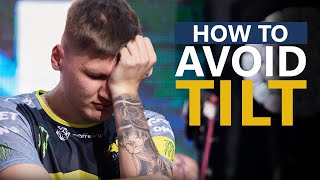

What is Tilt? The Invisible Virus
45sDefines tilt in a relatable way and lists common triggers, making viewers self-identify.
▶ Play Clip"The title accurately promises tips from pro gamers, and the video delivers exactly that."
Tilt is a poker term describing a state of mental or emotional confusion leading to suboptimal decisions. In gaming, tilt is triggered by factors like losing, bad luck, or toxic teammates, and it can ruin performance and team morale. This video shares tips from professional gamers on how to prevent and manage tilt.
Tilt originated as a poker term for a state of mental or emotional confusion where a player adopts a less optimal strategy, often becoming overaggressive.
Common triggers include unfriendly teammates, losing, bad luck, bad manners from opponents, nerves, pressure, and overly competitive expectations.
Former CS pro Warden suggests internalizing anger and controlling physical reactions to prevent tilt from spreading to the team.
Top CS player Automatic advises focusing on personal improvement and not setting expectations for unknown teammates, maintaining a learner's mentality.
Former pro shaGuar emphasizes gratitude and using teammates to lift each other up when someone is tilting.
Tilt is a common issue in gaming that can be managed through self-awareness, internalizing reactions, focusing on personal growth, and practicing gratitude. Pro gamers recommend these strategies to maintain a positive mindset and improve performance.
What is the origin of the term 'tilt'?
It originated as a poker term for a state of mental or emotional confusion leading to suboptimal play.
0:04
List three common triggers of tilt in gaming.
Unfriendly teammates, losing, bad luck, bad manners from opponents, nerves, pressure, or overly competitive expectations.
0:36
What strategy does Warden recommend to prevent tilt from spreading?
Internalize anger and control physical reactions so it doesn't affect the team.
1:24
What mentality does Automatic suggest to avoid tilt?
Adopt a learner's mentality, focus on personal improvement, and don't set expectations for teammates.
2:03
What does shaGuar use to counter negative states of mind?
Gratitude and appreciation for basic life necessities.
3:18
Definition of Tilt
Provides a clear, foundational understanding of the core concept.
0:04Warden's Internalization Strategy
Offers a practical technique from a pro to prevent tilt from affecting the team.
1:24Automatic's Learner's Mentality
Highlights the importance of personal growth over external factors.
2:03shaGuar's Gratitude Practice
Connects tilt management to broader life perspective.
3:18[00:01] (upbeat music)
[00:04] - Tilt, originated as a poker
[00:07] emotional confusion or frustration
[00:11] a less than optimal
[00:14] in the player, becoming over aggressive.
[00:16] When someone enters the state
[00:19] lost balance of their
[00:21] What, once was a neutral
[00:25] has now shifted into the negatives
[00:27] and all decisions afterwards
[00:30] because you are starting
[00:32] There's nothing more killer
[00:35] than being in the state of tilt.
[00:36] I think why tilt is so common
[00:39] lots of triggers some
[00:42] more than others.
[00:43] Things like unfriendly or
[00:46] bad luck and timing, bad
[00:49] nerves and pressure setting expectations,
[00:52] overly competitive and
[00:54] Tilt is like an invisible virus and
[00:57] if you don't treat it
[00:59] your entire being and even worse in fact,
[01:02] everyone around you, it is
[01:05] It causes fights, deranks or
[01:09] So how can we prevent it?
[01:11] What can we do when we feel
[01:14] negative mindset?
[01:15] Well, because tilt affects
[01:18] I've asked a few of my former teammates,
[01:20] how they deal with tilt.
[01:24] Warden, a former
[01:27] and now the manager of Complexity
[01:30] understood that tilt will
[01:33] performance in a negative way.
[01:35] So if he ever felt angry or
[01:39] to internalize and think
[01:41] his physical reactions
[01:44] to the rest of the team.
[01:45] This is a great habit to
[01:48] first reactions when entering
[01:51] something harsh or slam the
[01:55] body language.
[01:56] So to be able to withhold these
[01:59] the team's chances in winning
[02:03] top 20 CS go player and
[02:07] told me that when he's
[02:08] he doesn't know he doesn't set
[02:12] And instead focuses on his own game play.
[02:15] He approaches each day with
[02:18] concerned more with things
[02:21] learning from his mistakes
[02:23] and focusing on how he can improve.
[02:25] Whereas some players who get
[02:28] concerned about their stats, rank
[02:30] and position on the ladder,
[02:33] to blame their teammates for mistakes,
[02:35] with less emphasis on their
[02:38] having a student mentality and
[02:42] is essential for improvement
[02:45] mind, shaGuar, a former
[02:48] And now a very successful
[02:51] beauty of team games is that
[02:55] each other up and bail each other out.
[02:57] If someone enters tilt from
[03:01] compared to poker, where it
[03:04] with only yourself to rely on
[03:05] whether you're in a public
[03:07] you've never met before
[03:09] or playing with your regular teammates,
[03:11] it would be a good reminder
[03:14] have your notice them slipping
[03:16] you can meet the person
[03:18] shaGuar, go to reminder
[03:21] of tilt or generally just
[03:24] is gratitude a feeling of thankfulness
[03:27] and appreciation because let's be real.
[03:29] If you're lucky enough to
[03:31] a safe place to sleep and your health,
[03:34] is it really justified being frustrated
[03:36] and angry over a video game.
[03:38] I want to end this video sharing
[03:41] And if you ever feel yourself
[03:44] tilt, feeling flustered and frustrated,
[03:47] hopefully remember back to
[03:50] find your balance.
[03:51] (mood music)
⚡ Saved you 0h 04m reading this? Transcribe any YouTube video for free — no signup needed.