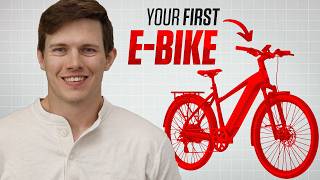

E-Bike Tire Guide: Which One is Right for You?
45sQuick, relatable breakdown of tire types with clear pros and cons, perfect for beginners deciding on their first e-bike.
▶ Play Clip"Delivers a thorough, practical guide that matches the title's promise, with only minor sponsor interruption."
This video serves as a comprehensive guide to choosing an e-bike, covering essential factors such as tire types, frame styles, drive systems, sensors, motor configurations, and e-bike classes. The presenter aims to equip viewers with the knowledge to make an informed decision based on their specific needs and riding conditions.
The video begins by highlighting the growing popularity of e-bikes as winter ends and emphasizes the need to understand key terms like torque vs. cadence sensors, hub vs. mid drives, and tire types to choose the right e-bike.
Three main tire categories are discussed: road tires for efficient pavement riding, all-terrain/trail tires offering a balance of range and off-road capability, and fat tires for maximum comfort and stability on sand or rocky terrain, though they are harder to pedal and reduce range.
Frame styles include standard e-bikes for road riding, ultra-light models for commuting and easy transport, moped-style bikes for throttle-oriented cruising, and folding e-bikes for versatility and storage. Riding position (upright vs. bent over) is also a key consideration.
Hub drive motors are simple, affordable, and durable, best for casual riders on flat ground. Mid drive motors are more efficient, natural, and better for steep hills and cargo hauling, but they are more expensive and require more maintenance.
Cadence sensors simply turn on the motor when pedaling, offering a less responsive feel. Torque sensors adjust motor power based on pedaling force, providing a more natural and efficient ride. Torque sensors are generally recommended for a superior experience.
Dual motor e-bikes offer better traction on obstacles and mud but add weight and reduce range. For most riders, a single motor is sufficient, especially for high-speed riding. Dual motors are most beneficial for off-road or hunting scenarios.
Class 1: pedal-assist up to 20 mph. Class 2: throttle up to 20 mph. Class 3: pedal-assist up to 28 mph (throttle may vary). Unrestricted off-road mode allows higher speeds but is not legal on public trails or roads.
Check helmet ratings, as many bicycle helmets are only rated to 20 mph. Also, research local laws to avoid riding too fast on bike trails, which could lead to bans. Respectful riding helps keep e-bikes allowed in public areas.
Consider available accessories like cargo racks and seats, and whether the e-bike has a companion app for adjusting settings. These features enhance usability and convenience.
Choosing the right e-bike involves balancing tire type, frame style, drive system, sensor type, and class to match your riding needs. By understanding these key factors, you can make an informed purchase that suits your lifestyle and budget.
What are the three main tire categories for e-bikes?
Road tires, all-terrain/trail tires, and fat tires.
00:14
What is the main advantage of a mid-drive motor over a hub-drive motor?
Mid-drive motors are more efficient and provide better torque for steep hills and cargo hauling.
04:32
What is the difference between a cadence sensor and a torque sensor?
A cadence sensor turns on the motor when pedaling, while a torque sensor adjusts motor power based on pedaling force.
07:43
What is the speed limit for Class 1 e-bikes?
Pedal-assist up to 20 mph.
10:29
Why might a dual motor e-bike be beneficial?
It provides better traction on obstacles and mud, useful for off-road or hunting scenarios.
09:22
What is a key safety consideration for riding e-bikes at speeds above 20 mph?
Ensure your helmet is rated for higher speeds, as many bicycle helmets are only rated to 20 mph.
11:53
Hub vs. Mid Drive Explained
Clearly distinguishes the two motor types, helping viewers choose based on cost and performance needs.
04:32Torque Sensor Superiority
Highlights the significant ride quality difference between sensor types, guiding buyers toward a better experience.
07:43E-Bike Class Breakdown
Provides a clear, legal classification system that is essential for compliance and safety.
10:29Helmet Safety Warning
A crucial safety tip often overlooked, emphasizing the need for appropriate gear at higher speeds.
11:53[00:01] means you can do stuff outside, right? Winter's almost over. A lot of people are probably going to be buying e-bikes now, but picking the right e-bike is not many things to know, like torque sensor versus cadence sensor, hub drive, mid
[00:14] drive, different tires. There's so much to consider. So, my goal is to make this video your comprehensive guide. So, by the end of this video, you not only understand all the terms and what implications they have, but also you
[00:27] best for your needs. So, let's just get into step number one, which for me I would say is to decide what kind of tire you want. There's a lot of different tires on e-bikes. Uh one would be road tires. If you are only riding on the
[00:40] efficient way of getting around. It also usually means you have a much lighter bike. And with these, they're often just ultra light bikes in general, which trying to carry them up to your apartment. But, if you plan on riding on
[00:53] gravel trails, they don't really do that well. And if you're riding off-road in grass or mud, they absolutely do not do well at all. I think most people would do better with trail kind of all-terrain kind of mountainous tires like you can
[01:06] you some close-up B-roll of that one. But, essentially, this is a tire that still gives you like 90 to 100 miles of range on most of this style of e-bike, but it also kind of rides a little bit smoother, a little bit of a wider tire.
[01:19] off-road if you want. You can ride it on a trail, but you're not really bound to any one specific thing. So, I think those are probably the best for a lot of fat tires, kind of a third category here. This is going to be better if you
[01:33] want to just sit back and cruise and ride long distances on the smoothest in sand, you're going to want a really would be the way to go there. Or, again, anytime you're riding on like an
[01:46] it's just like really rocky, this could be a great option there. The downside of fat tires is that they're just gigantic tires, which means they're a lot harder to pedal, and they require much larger batteries, and they usually don't have
[02:00] as long of a range or as fast of acceleration. Nonetheless, a lot of comfortable. But, but like I said, keep in mind it's going to be tougher to carry this bike around if you ever need to. All right. Sorry guys, I got to wear
[02:14] once you choose the tires, the second step is to choose the frame style. You purpose of your e-bike and where are you going to be storing it? If you're doing lot of road riding, you're doing a lot of speed stuff or workouts, all of those
[02:28] you'll be fine with a very standard style e-bike as you see here with the battery stored in this main column. There are also more affordable e-bikes they're going to be a pretty mid-weight bike. A lot of these are like 60-ish
[02:42] racks. You can lift them. Sometimes a two-person lift might be necessary, but there. There are ultra-light e-bikes if The Tenways e-bike that I've been using for a little while is great for
[02:56] commuting. You get a shorter range, but it's a lot easier to bring on a train, put on the front of a bus, carry up to your apartment, and things like that. If and you want the smoothest ride, the most throttle-oriented riding
[03:09] experience, then a moped style such as the Segway Cyber is going to be an excellent option there. This is similar to like Super 73. It's a whole class of really cool. You're not really going to be pedaling. Most of them don't even
[03:22] have more than one gear on them, but again, they are really fun to ride. And opinion, which fits a lot of people quite well as a jack of all trades, but also not requiring a bike rack. This could fit in the back of, say, an SUV
[03:38] had these in the front seat of my truck when I was filming my e-bike comparison video, and I had like, you know, seven in the truck bed. I put one up in the front seat because folding e-bikes give you that flexibility to fold it into a
[03:51] smaller you know, closet in your house or in the trunk of a car, in an SUV. Folding e-bikes still give you good range and good speed, but, you know, you don't need to use them. You also want to consider the riding position.
[04:05] So, do you want something that's more of a power position, wider handlebars? Uh mountain style bike, as if I have right here, which is the Velotric Summit 2. I made a video on that very recently. Or, behind me, I have the Velotric Discover
[04:18] style bike, where you're not going to be bending over getting nearly as much sitting more upright is going to be comfortable for really long rides. It has a very large, very cushy seat. Again, kind of more like a beach cruiser
[04:32] style, which many people, like my wife for example, would much prefer over the the bent over cycling style position. Then we have the drive. Do you want hub drive or mid drive? What is the difference on hub drive and mid drive?
[04:45] right here, this is a fundamental difference. This one, the Summit 2, has a hub drive motor. You can see the motor is in the rear wheel. Hub drive motors are simple, therefore they're a lot cheaper. They're pretty durable cuz
[04:57] on them, so there's really not much upkeep and they last a pretty long time, acceleration and they usually give you less torque. Obviously, everyone is going to be slightly different, um but
[05:10] they include They almost always include a throttle as long as you have the that later in the video. It is I would say these are best for casual riders, those on a budget, those riding on flat ground. If you don't have a specific
[05:23] need for a mid drive motor, a lot of people would love a hub drive motor. I you find are going to be hub drive e-bike in the past, if you've rented one, it almost definitely was a hub
[05:36] drive motor. But what's interesting is a mid drive motor is a very different experience. The mid drive motor, instead of being in the back wheel, is up in line with the the which means that your pedaling and the motor's turning on the
[05:48] same axis, and they're both using the same chain. So, this means that it's a little bit more efficient for longer range because your motor is able to utilize the gears you have on the rear wheel. So, you're able to drive and
[06:00] shift, and both the motor and your pedaling take advantage of the different gears on the back. It feels very natural and responsive, but it can be a little more expensive because, again, you're going to have a chain that is, you know,
[06:13] from the motor and your pedaling together. But, the lighter wheels on the back mean it's a little bit more natural and easy to handle. Uh it's better for steep riding, heavy cargo hauling, or cyclists who are looking to go a little
[06:26] bit faster and further while still feeling not like, you know, your bike is you're doing all the work uh because, like I said, it's coming from the want to buy, an important thing to consider is price, which is why I wanted
[06:39] to mention the sponsor of today's video, which is Upway. E-bikes can range in price from a few hundred dollars to many thousands of dollars. Often times, you get what you pay for, meaning the more expensive bikes are simply better. But,
[06:51] Upway helps to make those more approachable. Upway is like the Carvana or Back Market of e-bikes. They're selling refurbished e-bikes at up to 60% off the retail price. All their bikes are certified by professional mechanics,
[07:03] to ensure there's no structural damage to the frame, mechanical components, drive system, battery, and accessories. They replace all worn parts that are not in like-new condition, think tires and brakes, and they lubricate moving parts.
[07:16] before they're shipped. They have premium electric bikes from some of my favorite brands, like Aventon, Rad, Specialized, Tenways, Velotric, Super73, and more. But, that's not all. Upway is also buying older e-bikes or regular
[07:30] bikes as well. Their process is super easy, super fast, and hassle-free. You just need to fill out the online form on their website, link down below. Then, They arrange for pick up at your doorstep. So, after this video, once you
[07:43] consider checking out the link in the description to see how much you could save by buying from Upway. All right, now we have torque and cadence sensor. This is something that I think is so important and you're going to see a huge
[07:56] Typically, more affordable bikes are going to be cadence sensor. Usually, the logic in the bike is if you're pedaling, turn on the motor to a certain level, turning the pedals, the bike just like takes over. It's not really correlated
[08:11] cadence sensor would have a difference in how fast you pedal. It's going to but like I said, most of these are just like if the pedal's turning, just turn on the motor and it kind of takes over. So, it's going to be more of like a
[08:25] want to like turn your legs, but not really push the bike. Like you don't sensor is going to be just fine. But, I would say the far superior experience comes from torque sensors, which basically, the logic on that is how hard
[08:39] are you pushing? And then, turn on the motor to the level correlated to how if you're just casually riding, it's not going to turn on the motor that much. and you're still going to get a bit of a workout. If you want to go fast, if you
[08:52] push harder on the pedals, the motor cranks up. And no matter which one you usually they have like three to five different assistance levels. So, if level five, it's still going to do a lot of the the driving for you, but again,
[09:07] to how you're actually pedaling. Some bikes, like the Velotric ones I have behind me, have a kind of a dual option. So, like this Summit 2, you can set it how they kind of have that logic built in there. But again, I would highly
[09:22] to get a torque sensor. Then, we have single versus dual motor drive. This one's a little counterintuitive. I think a lot of people think, "Oh, I want two-wheel drive in my e-bike." But, if you think about it, like a dirt bike,
[09:36] the the people going up absolute cliffs, they just have one. They drive in the not a huge advantage to having in the front if you're driving up a steep hill. And I think the same can be said about e-bikes. A lot of times you're just
[09:48] faster. I've tried dual motor e-bikes. Some of them are very impressive. Some of them are not. I find that they're most impressive when there's obstacles wheel on. If you're going over, you know, a curb on the front, having the
[10:02] front wheel drive is pretty beneficial for that. If you are in some mud, maybe, real quickly. Again, a dual drive motor could be beneficial for that. I would from a dual motor e-bike would probably be those using their e-bike to go
[10:15] hunting, which is actually very common. Um this would just be a little more going through some mud, and you're not going at high speeds. Like you could see one, leave a comment below and let me know you think. For my own testing, I
[10:29] a little bit It just added unnecessary weight and decreased the range. Now, of course, I haven't mentioned one of the most important aspects yet, which is the that some people might be a little bit confused by. There's three, well, kind
[10:44] of four classes for e-bikes. Class one means that your e-bike and you could always limit this lower in the app or in the settings on these e-bikes, but technically class one means that you can pedal with assistance up to 20 mph. You
[10:56] can pedal faster if you want, but the e-bike's not going to assist you after 20 mph. And some states, that's all you're allowed to do. That doesn't mean just have to limit it in the app down to class one. Class two, then, is the same
[11:11] but there's also a throttle, which typically also goes up to 20 mph. Class three allows you to pedal up to 28 mph, and depending on Like this is a little bit of a gray area. Some Some bikes also have a throttle here as well. Some do
[11:25] not. So, class three sometimes means throttle up to 20, pedal up to 28. Sometimes it just means pedal up to 28. And then the fourth mode is unrestricted off-road mode, which is generally not allowed on bike trails or roads um in
[11:39] laws, but if you have your own property, your woods, a little track around your yeah, definitely it's really fun. Some bikes go like this one here I I got it up to about 32 mph um on some private property, and yeah, it's really fun to
[11:53] ride. And one really important suggestion I would make Well, okay, I'll make two important suggestions. But one is for your own safety here. Check the rating of helmets. A lot of people think a regular bicycle helmet is going to be
[12:05] sufficient, but typically a lot of bike helmets are only rated up to about 20 mph. And if you're riding 28 mph on asphalt and you fall, yeah, maybe the it's not. So, you want to make sure you do the research and maybe spend an extra
[12:20] couple dollars on a better helmet if you're riding a bike at a faster speed. I said, look into your local laws. You don't want to be riding too fast on a bike trail because obviously somebody could get hurt then, and you could end
[12:33] up getting bikes or e-bikes banned in your local area. This is something that having problems with, and they start letting them in certain areas. So, if you're good, respectful rider, you
[12:46] those are the main categories of e-bikes. A couple other things you want to consider when getting your bike is can you put other accessories on? A lot of bikes, like Electric for example, have a huge selection of accessories.
[12:58] like seats on the back of your bike. There's little cargo bikes you can bring riding, or, you know, a bunch of pizzas if you're if you're looking to do that racks on the back you can mount things on them. Most e-bikes have really good
[13:13] the little battery-powered ones because obviously you have a huge battery on this e-bike, but you want to consider is there an app for your bike? Sometimes an app is nice that you can change all the settings on your bike without going
[13:27] you know, kind of low-level buttons there, but some people don't like have a pretty good idea of what kind of e-bike you want, I actually have my top, I think, seven or eight e-bikes broken down by category. I'll link that video,
[13:41] I guess, right here. It's nice open space. Uh check out that video. I talked so many e-bikes, and those are the ones that I think are definitely worth your that I think are definitely worth your time.


⚡ Saved you 0h 13m reading this? Transcribe any YouTube video for free — no signup needed.