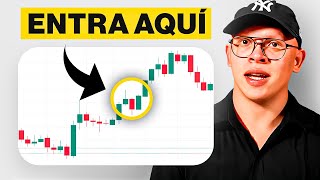

What Are Order Blocks? The Secret of Strong Reactions
43sExplains a core trading concept using an analogy of banks accumulating orders, making it easy to understand for beginners.
▶ Play Clip"Delivers solid educational content on order blocks, but the '2025' tag is unnecessary and the title oversells a common concept."
This video teaches beginners how to identify and use order blocks in forex trading, emphasizing the key concept of the last opposing candle before a strong move. It explains the difference between order blocks and traditional support/resistance, and provides real-time examples with a group of learners.
An order block is the last opposing candle before a strong move. If the subsequent move is bullish, the last opposing candle is bearish; if bearish, it is bullish.
Order blocks represent a concentration of buy or sell orders from institutions. When price reaches that zone, the orders trigger a strong reaction in the opposite direction.
To validate, compare the strength of the move after the opposing candle to the move before it. The subsequent move must be significantly stronger; otherwise, the block is low probability.
Unlike support/resistance, an order block is used only once. After price touches it and reacts, the block is no longer relevant because the orders have been executed.
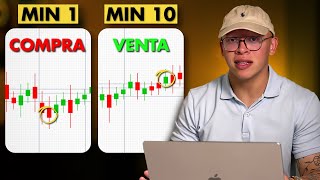
Identify order blocks on higher timeframes (e.g., 1-hour) for direction, then zoom into 15-minute and 5-minute charts to find corresponding blocks for precise entry.
Even a perfectly identified order block can fail. Trading involves probability; always combine with other confirmations.
Mastering order blocks requires practice in identifying the last opposing candle and validating strength relative to prior moves. While powerful, they are not infallible and should be used within a broader trading strategy.
What is an order block?
The last opposing candle before a strong directional move.
02:49
How do you validate an order block?
Compare the strength of the subsequent move to the previous move; the subsequent move must be stronger.
05:55
Can you use an order block multiple times like support/resistance?
No, once the price touches it and triggers a reaction, the block is discarded because orders are already executed.
09:07
What is a continuation order block?
When the opposing candle is preceded and followed by candles in the same direction as the subsequent move, indicating trend continuation.
14:28
Why do order blocks cause price reactions?
They represent accumulated buy/sell orders from institutions; when price reaches the zone, the trigger of these orders causes a strong move.
01:54
Core Definition
Clear, actionable rule for identifying order blocks.
02:49Validation Rule
Emphasizes need for relative strength comparison, reducing false signals.
05:55One-Time Use
Differentiates order blocks from traditional support/resistance levels.
09:07Multi-Timeframe Approach
Practical tips for precise entries by layering blocks across timeframes.
16:06Probability Mindset
Reminds traders that no tool works 100% of the time.
21:23[00:01] identify where the price will go when it's going to go up and when it's going to go down. To make this concept correctly, I've brought three people who know absolutely nothing about trading to explain it to you in the simplest way possible. I'm going to explain the
[00:14] concept of order blocks and how you can make money using them. Let's start the video. Here in front, as in previous videos, we have Aitor, Adrián, and Chis. They arrived at my house 7 days ago and are learning to trade to complete
[00:27] the 21-day challenge of earning $1,000 in 21 days. Today I'm going to teach them the lesson learn it, and so you can learn it too. In real time, they'll be doubts that come up, simulating that you're the ones
[00:43] asking me. When we talk about support and resistance, those are like two specific points where we expect the price to bounce. There's a difference between support and resistance, and the concept of order blocks—I don't know if
[00:56] why sometimes when it reaches a specific point, it ends up reacting very strongly in one direction. And that's why banks and market leave points, they leave traces. These are specific points
[01:13] that we can't see, but when the price reaches them, it ends up having strong reactions. These points are already marked even before we know about the coming movement. We're going to call these points
[01:26] order blocks. They're a small square—we'll represent it with a square—where different amounts of money are accumulated. For example, we'll have a bank that wants to exchange
[01:39] 10,000,000, we'll have one that wants to exchange 15, another 25, another 16. And we'll see that the set of all those orders at the same point will be called an order block. Because what will happen when the market is moving
[01:54] and it reaches that point? When a large number of buy orders are opened, the price will end up moving quickly. If there are many buy orders opening at a specific point, the price goes up; if there are many sell orders
[02:07] opening at a specific point, the price goes down. In the case of an order block, the objective is to have many buy or sell orders. They accumulate, then the price reaches and ends up having a strong reaction. In this case, all these
[02:21] millions accumulated, when it arrived, we saw the strong reaction because a lot of money entered the game, and that's what we're going to learn to identify. Order blocks are generally found in this way. We're going to look at the
[02:34] structure and see that at key points there are specific moments where there are different order blocks. What happens is that when the candles touch or activate, it's like a mine that you touch and it explodes. It's the
[02:49] same objective, and there are different ways to mark these points. We're going to see how it would be represented graphically so you understand the concept. First, I want you to be—and I want you to take this
[03:03] definition home with you—the last opposing candle before the strong move. That is, if the movement is bullish, before the strong bullish move, the last opposing candle would be a bearish candle. If the movement is
[03:17] bearish, before the strong bearish move, the last opposing candle would be a bearish candle. And that's what both cases will consist of. How do we identify this in the real market? When we see A strong move in one
[03:33] direction—we're going to look for the last opposing candle before that strong move. This confirms that it's an order block because the objective of that last opposing candle is to completely enclose it and use it
[03:47] as a zone. That's why we see that when the price reaches that specific point and triggers the orders, it ends up going up. The objective of the order block is to have a specific, precise zone to wait for the price to arrive and
[04:01] have a certain reaction. So far, no question. The last opposing candle before the strong move will always be, for example, this is a last opposing candle, and this here is a strong move. This here is a
[04:16] last opposing candle, and this here is a strong move. In the opposite case, if it were a sell, what would the last opposing candle be? The green one or the red one? The green one, because it's
[04:30] a sell. The opposite one has to be a buy. Exactly, the last V, the opposite one. we're talking about a buy, and the last V, the opposite one. It should be a buy if we're talking about a sell. I don't know if you've noticed, but some days the price
[04:43] does this, everything is perfectly fine, and then it reaches a point where Specifically, that point is n't support, it isn't resistance, it isn't a trend line, it has nothing to do with
[04:56] traditional technical analysis. But we see that it reaches the point and suddenly it reacts very strongly. It reaches that point and the reaction is so strong in the opposite direction that it seems like magic. This is due to the case of an order block,
[05:11] and here we can see it. This is this red candle. Let's zoom in a little. This red candle would be the last opposing candle before the strong move, and we must learn to identify when a movement is strong or weak. We ca
[05:26] n't say that something is strong if there is n't something weaker to compare it to; otherwise, the definition of strong wouldn't exist. It's a dual definition. We see that this movement, in a certain
[05:39] sense, and now we see this movement, which is stronger, the bullish one? That's why this is an order block. That's why not all opposing candles are order blocks. It's the last opposing candle before the strong move, for example.
[05:55] Look at this. This is the last opposing candle, and this move would be strong. Yes, it's a strong move. We need comparison to be able to understand what
[06:07] a strong move is or what is weak. Notice that the magic happens when it reaches the order block; it ends up having a certain reaction that makes the movement much stronger. So observe this
[06:20] same order block. If I mark the last opposing candle before the strong movement, it would be this red candle here. And look how perfectly it works here in the previous example. Yes, it is the last opposing candle before the
[06:35] strong movement, and it reaches the last opposing candle and has another strong movement that ends up surpassing that last high. The market works perfectly, and if we know how to follow these kinds of patterns, our result will be better and more
[06:48] precise than before. Order block, last opposing candle, strong movement, key fundamental, Observe the difference between the movements. Look at the size of the opposing candle
[07:02] and look at the strong movement. You can see that there is strength at first glance. In a second, we identify that there is strength, and that is the order block. Let's continue looking at some examples because sometimes it's not so clear, and we have to
[07:14] learn to identify this. Here, my dear friends, is the last opposing candle, but I ask you, is this a this a strong movement? Compare this one here. Is this a
[07:28] movement? The movement of the last opposing candle here is stronger than... The previous one wasn't valid, so this order block would be valid? No, it wouldn't be valid because even though it's the last opposing candle, the movement that
[07:41] last opposing candle, the movement that originated it isn't a strong movement. Sometimes the concept will work even without a strong movement, but it will have a lower probability of success. The goal of all this is to find
[07:54] the point of highest probability, and if we're going to decrease the probability by removing the degree of c, it's better not to use it. So, is this order block valid or not? No, no, it isn't. Why is there a much larger one? Why much larger?
[08:11] Explain more. Basically, the previous one makes more noise than the one we're seeing. Okay, perfect. That is to say, the previous movement is stronger than the subsequent one, therefore it's not valid. Look,
[08:26] here we have the last opposing candle before the strong movement. It's valid. Look at the previous movement. Look at the subsequent movement. It looks valid. Yes, and notice that the price reaches precisely towards the last
[08:40] opposing candle. And then it has a strong reaction. That's the magic of the lord block. It's like a mysterious point that isn't really so mysterious, and we're going to call it the footprint, the footprint left by institutions, explaining to us.
[08:52] Something is going to happen at that point; we don't know when or at what moment, but we do know that when the TOC is reached, the point can have a strong reaction, and we can take advantage of that analysis. You'll see
[09:07] of that analysis. You'll see next time. It's all there, all those wicks. Good question, because look, here's a clarification of a very general doubt: the order block isn't going to be the same as support or resistance levels, which
[09:20] we extend and continue using. Once an order block is used for the first time, we don't use it anymore because, remember, the order block represents purchases made here, and those purchases were closed
[09:40] mean there are more purchases there because they've already been opened. That is to say, the order block isn't like support or resistance levels, which we use frequently. The order block was used here, and it doesn't matter in the future. That's why
[09:55] we don't extend order blocks like support or blocks like support or resistance levels. Once it's used, I don't want to know anything more about that order block, understood? Let's see here. This
[10:08] previous example: That's the last contrarian candle before the strong move. What What do you think before the strong move. What What do you think of this order block? They're small candles, analyze it well, but they're continuous candles. I don't like it. And here's
[10:22] the previous movement, but the previous movement is stronger than the subsequent movement. So I would discard it. Well, it could be discarded; it's if we had to give it a score from 1 to 10, I would give it a six. It's an
[10:37] order block that can be used because the previous movement is less small, or rather, smaller than the subsequent movement. But the subsequent movement has a certain weakness in its formation, like it comes with
[10:49] very small candles and takes a long time. Let's see here, we have the previous movement and the subsequent movement. What do you think of this order block?
[11:04] contrarian candles, a strong movement, and here it's used. Look at the previous movement. Look at the movement that comes after. What do you think? It after. What do you think? It looks better. What do you think?
[11:24] here, when it touches it, that's where the magic happens. We're always going to look for a we're going to use the smaller timeframes to confirm. Let's see here, for example, look at this. Last opposing candle,
[11:40] strong movement. What do you think of this? The strong movement isn't that strong, but neither was the previous one, which was also stronger. It is longer in terms of the direction of accumulated movement. The order manipulates it and then
[11:56] distributes it, and here is the opening of the order. But notice that after the order. But notice that after the opening of the order, the path is long. What does this mean when an order block is activated and starts moving for a
[12:09] long time? What happened here? Precisely because there were many banks with many sell orders. In this case, correct, at this point there were many accumulated sell orders, like sell limits, and that's why when it arrived, it
[12:23] ended up distributing itself in that way. The bank's objective is to make money, and we're going to see that at these specific points it will literally arrive and distribute. Because if it arrives and doesn't distribute, and they sold there, they won't
[12:37] make money. They'll lose money, and we'll always find this type of pattern in the market. Observe this other example here. Here I want you to pay attention: last opposing candle, strong movement. What do you think
[12:50] of this order block? Look at the block? Look at the previous movement. Look at the subsequent movement, previous movement. Look at the subsequent movement, which is not valid. What do you think? I think it
[13:04] which is not valid. What do you think? I think it is Valid? Yes, because it has is Valid? Yes, because it has a strong candle and then the trend is noticeable. The banks finished selling and it continued its course. But
[13:18] notice that the previous movement is stronger than the movement that follows, so that would invalidate the block because a block is supposed to be the last contrarian candle before the strong movement, and this is only strong if the previous movement
[13:32] is weak, and that phenomenon isn't happening here. That wick is quite revealing, I think. Yes, that wick is very revealing. And notice good enough for us to say that it's a valid order block,
[13:48] so we basically discard this order block. And it's very important that you understand this concept of an order block exactly as defined because that's the correct way to mark it on the chart. If you understand its definition, because many
[14:02] will make the mistake that when they start to understand this concept, they'll start seeing order blocks everywhere and they'll think any contrarian candle is an order block. But if we don't have criteria for their selection, we'll
[14:14] finding order blocks, and that's not what we want because we'll get confused and fall into call block addiction, where all you see are confused by so many order blocks that you do
[14:28] n't know what to do. Look here, interesting: last contrarian candle, strong movement. What do you think of this order block? Well, that one is good. And notice that it's also good because of this phenomenon, because the last
[14:44] contrarian candles before had green candles and then green candles. Basically, that's a continuation order block. The previous candles weren't all red; it went from green candles to small red candles to small green candles. The
[14:58] trend was already well-defined by the direction of the candles. And a question: uh, you direction of the candles. And a question: uh, you said it's a continuation order block, but you could say there are two order blocks.
[15:13] One that activates a series of buys, which reaches another point where the banks also wanted to buy and activates another series of buys. Which would be the second one? series of buys. Which would be the second one? What do you say, the one below? No, no, the one below? That one?
[15:25] What do you say, the one below? No, no, the one below? That one? Yes, in this case it would be a little more difficult because, look, here there are too many candles. It's difficult to choose the last contrarian candle here, okay,
[15:37] because there's too much noise, too much movement. That case will definitely happen to you. I would trust this one a little more, maybe, but it didn't arrive. But in that case, choosing an order block in this area would be very difficult because there are too many
[15:52] opposing candles. It would be a bit confusing and more difficult to enter from down there. It's accumulating a lot, isn't it? Exactly. So then we see that orders open when it reaches the order
[16:06] block and then ends up distributing strongly. The trick to understanding this concept 100% is to see what's happening and understand that in the smaller timeframes, they're going to have similar reactions. For example,
[16:18] if we go to 5 minutes, notice that when we go to the 5- minute timeframe, the first thing it does is create a new order block. Notice that here, when it reaches the one-hour order block, it created this new one in 5 minutes. You can
[16:31] see it: last opposing candle, strong movement. This would be like a translation of order blocks because the main objective now is to find them in the one- hour timeframe, then go to 15 minutes to find them at the same point, and then
[16:45] go to five minutes to find them at the same point, and so on. We could spend the whole day looking and looking for order blocks. That's why I want you to practice it go to the one-hour timeframe, which will be our directional timeframe,
[16:59] and on that one-hour timeframe, your initial main objective and what you're going to concentrate on is to look for the last opposing candles before strong moves. For example, here, I see a last opposing candle before a
[17:13] strong move, and notice that even though it did n't reach the target and I didn't use it, I still because there are some days when exactly this will happen. Look here, if I mark this last candle, notice that it didn't
[17:25] reach the target by a tiny bit. That happens some days. I want you to get used to this happening to you all the time, and there are many people who try to be very precise with order blocks, which sometimes means that their entries don't open,
[17:38] like here. Notice that here the entry literally didn't open; it came close, but it didn't open. There are other days when the order blocks look super small and tight. What do you do in this case? The block here
[17:53] looks super tiny and tight. So what do we do? Yes, what harem would they choose? Would they look for another one? What would they do here? Would they look for other timeframes? For example, look here, it's the last opposing candle before a
[18:08] previous move is like stronger, right? So, is this block valid or not? No, it's not valid. stronger, right? So, is this block valid or not? No, it's not valid. Well, let's review. Last opposite strong move.
[18:24] In a certain sense, it is valid, but here we see that it arrives and it doesn't seem to be used; it goes to the opposite side. That would be a failed order block. The good thing is that for us, using order blocks at the entry point isn't about taking the
[18:38] block. The point is to find the order block on a high timeframe, like an hour. Then we go to 15 minutes to look for another one, and then to confirm on smaller timeframes. For example, look at this one
[18:59] opposing strong move. Last opposing strong move candle. Activated. That one looks nice, and notice that once the order block is activated, its distribution towards the buy area is strong. Let's see other examples.
[19:15] Opposing candle, strong movement. What do you think of this one here? It looks kind of weird, of this one here? It looks kind of weird, right? Eliminated. What do you think, Adri? It looks weird. Eliminated. And this criterion of finding the best order blocks is going to
[19:29] because many people think that finding the order block is only the the main definition. Let's see another example. I'd like to see an example of a failed order block. Look, here are some times when
[19:44] we'll have this super perfect, but it won't arrive. That's totally normal. I've had hundreds of entries that look super perfect, and the order block doesn't end up arriving. There are other entries like this. What's this
[19:57] type of order block called? We saw a little while ago that the previous candles were green, and the subsequent ones were also green. A continuation order block only you have to keep in mind that it comes from a continuation; it had already
[20:10] started moving. And what do you think of this order block? Last opposing candle, strong movement. Is it valid? Let's see, last opposing candle. Look, the
[20:24] previous and subsequent movement is strong. Yes, it's strong. Let's put it more strong. Yes, it's strong. Let's put it more nicely: Is this order block valid? Because when it arrives, it only... It moves a little and doesn't work strongly
[20:39] little and doesn't work strongly downwards, why do you combine them? Yes, many things influence this, it could be that we are in the middle of an upward structure in The daily timeframe, and remember that we're looking at an hourly chart,
[20:53] maybe there aren't any confirmations on shorter timeframes, or a very common pattern that's totally normal is an order block that didn't work. Just because you always work in trading; nothing always works. It's an
[21:08] abstract concept that will work for us on certain occasions when we have more confirmations. Last example: the last contrarian candlestick with a strong movement. Is contrarian candlestick with a strong movement. Is this order block valid? Yes,
[21:23] this order block valid? Yes, because the movement is good and it also collides with the high. When it touches the high again, the price triggers. Correct. So it's a correct order block in
[21:38] this part. We've reached the end of our lesson, guys. The goal is to learn how to use order blocks. And if you want to continue, friends, the challenge we 're doing with them is to get you to withdraw $1,000 in 21 days. I'll leave the
[21:51] link below this video. See you in the next video. I hope you've learned how to use order blocks correctly. Bye bye, and leave me a more guides on how to use order blocks.



⚡ Saved you 0h 22m reading this? Transcribe any YouTube video for free — no signup needed.