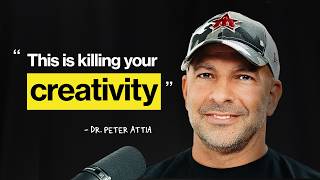

YouTuber Burnout: The Silent Killer
45sRelatable hook for creators who feel exhausted but can't stop.
▶ Play Clip"Title accurately reflects the core topics: creativity, burnout, and Dr. Attia's insights, though the show also covers broader health and longevity."
Dr. Peter Attia discusses the science of burnout, creativity, and peak performance for content creators. He explains how dopamine, negativity bias, and stress impact creators' mental and physical health, offering strategies to sustain a long, enjoyable career.
Burnout is hard to define but recognizable; it involves losing the joy and purpose in your work, often due to transactional, high-pressure environments.
Key signs include lack of desire to do the work, joy disappearing, and distraction spilling into personal life.
Casey Neistat's definition: burnout is creative output without direction, often fueled by platform algorithms rewarding constant uploads.
The body seeks equilibrium; dopamine highs from social media or gambling lead to crashes, while natural sources like exercise provide gentle, sustained elevation.
Evolution wired us to focus on negative feedback to avoid tribal expulsion; this makes creators hyper-sensitive to criticism despite positive comments.
Evolution didn't select for happiness or purpose; maintaining them requires conscious effort, unlike survival instincts like eating or sleeping.
To build habits, start with small, achievable goals (e.g., 15-minute walks) and gradually increase; additive habits are easier than subtractive ones.
Parkinson's principle: work expands to fill available time; schedule non-negotiables (exercise, family) first to prevent work from consuming everything.
Lifespan is how long you live; healthspan is quality of life (physical, cognitive, emotional). Healthspan is more malleable and can be improved.
Many trade health for wealth early in their careers, but health cannot be bought back later; it's important to question unsustainable patterns.
Chronic six hours of sleep per night is equivalent to being legally drunk, impairing cognitive performance significantly.
Creators are deliberate about their work but often neglect health; being intentional about sleep, nutrition, and exercise is equally important.
Creativity cannot be forced on demand; it requires creating space for boredom and stillness, such as rucking or sitting in a sauna without stimulation.
Excessive task switching indicates you're past your optimal stress level; the solution is to stop and sit in silence, not push through.
Performance follows an inverted U-shaped curve with stress; optimal stress varies per person and is influenced by sleep, exercise, and relationships.
Disagreements aren't damaging; lack of reconciliation is. Teams that fight and make up quickly are stronger.
To reach 100, you need good genes, perfect management of biomarkers, exercise, sleep, nutrition, and aggressive cancer screening—but it's rare.
Creators must treat their health as a performance investment, not an afterthought. By understanding evolutionary biases, managing dopamine, and prioritizing sleep, exercise, and stillness, they can sustain creativity and avoid burnout.
What is the definition of burnout according to Casey Neistat?
Creative output without direction.
07:28
What is negativity bias and why does it exist?
Negativity bias is the tendency to focus on negative feedback; it evolved because being attuned to dislike from tribe members was crucial for survival.
15:55
How does the body maintain dopamine homeostasis?
The body offsets high dopamine spikes (e.g., from social media) by lowering dopamine, leading to a crash; natural sources like exercise produce gentle, sustained elevation.
11:00
What is the difference between lifespan and healthspan?
Lifespan is how long you live; healthspan is the quality of life (physical, cognitive, emotional) free of disability and disease.
34:39
What is the effect of chronic six hours of sleep per night on cognitive performance?
It is equivalent to being legally drunk (blood alcohol above 0.08).
43:30
What is Parkinson's principle regarding work?
Work expands to fill available time.
24:27
What is the stress-performance curve?
Performance follows an inverted U-shaped curve with stress; optimal stress varies per person and is influenced by sleep, exercise, and relationships.
70:00
What is the key to creativity according to Dr. Attia?
Creating room for stillness and boredom; creativity cannot be forced on demand.
55:00
What is the most important factor for living to 100?
Genetics (choosing the right parents) is crucial, but modifiable factors include perfect biomarker management, exercise, sleep, nutrition, and aggressive cancer screening.
78:00
What is the recommended approach to building additive habits?
Start small and consistent (e.g., 15-minute walks) and gradually increase; success builds momentum.
22:00
Burnout Defined
Casey Neistat's definition of burnout as 'creative output without direction' provides a clear, actionable framework for creators.
07:28Negativity Bias Explained
Explains why creators obsess over one negative comment despite thousands of positive ones, rooted in evolutionary survival.
15:55Work Expands to Fill Time
Parkinson's principle is a powerful reminder to schedule non-negotiables first to prevent work from consuming all time.
24:27Lifespan vs. Healthspan
Distinction between living long and living well; healthspan is more controllable and directly impacts career longevity.
34:39Creativity Requires Stillness
Counterintuitive advice that creativity cannot be forced; boredom and space are essential for innovative ideas.
55:00[00:00] you would never shoot a video and just
[00:01] load it without editing it but that's
[00:03] what many people are doing in their
[00:04] lives is there a scientific way to spark
[00:06] creativity on command nothing sit there
[00:09] and suffer what exactly is YouTuber
[00:11] burnout how do you know when you're
[00:13] burnt out the more public you are the
[00:15] more of a personality you are the more
[00:17] you are completely working against
[00:20] anything Evolution ever anticipated for
[00:22] you today on the Colin its Mir show we
[00:24] talked to Dr Peter AA about one of the
[00:26] biggest challenges facing YouTube
[00:28] creators burnout this is something that
[00:30] Samir and I and a lot of our friends
[00:32] have dealt with many times in our career
[00:34] we're no stranger to burnout my friend
[00:37] that's what I'm saying we've we've we've
[00:39] had some really tough times and I think
[00:41] uh you know there's been times where we
[00:43] compare being a Creator to being an
[00:45] athlete but we don't treat ourselves
[00:47] like athletes we don't think about our
[00:50] physical and mental well-being in the
[00:52] context of Peak Performance but that's
[00:55] what this conversation is all about we
[00:56] got to sit with Peter back in the
[00:57] beginning of the year at spotter Summit
[01:00] where we got to host a fireside chat
[01:02] with him in front of a ton of top
[01:04] creators and it was one of the most
[01:06] engaged sessions because you realize
[01:09] every Creator is trying to operate at
[01:12] their Peak Performance and Peter is not
[01:15] like other doctors he has a different
[01:17] perspective he's a cool doctor he's a
[01:19] cool docor he actually is really cool
[01:21] he's a cool guy yeah he is not only an
[01:24] expert in wellness and Longevity but he
[01:27] is a Creator himself right so he has an
[01:30] understanding of what it is like to
[01:32] press publish to put out multiple
[01:34] episodes and how to deal with the career
[01:39] not only that he's studied this for a
[01:40] long time he's like one of the leading
[01:42] experts in longevity he wrote a book
[01:45] called outlive which is a New York Times
[01:46] bestseller and one that you gifted me
[01:49] thank you um you're welcome but he's a
[01:51] guy who has really studied longevity and
[01:54] how not only do we live a long life but
[01:57] how do we live an enjoyable life
[02:00] and that that's something that I just
[02:01] really love about him the first time I
[02:04] ever had the chance to speak with Peter
[02:06] AA I left feeling like my life had
[02:08] completely changed yeah I will always
[02:11] look back on and remember and I'm
[02:12] excited for all of you to have a similar
[02:14] type of experience in this episode we
[02:16] sourced questions from three different
[02:18] creators for Peter and also at the end
[02:21] of this episode Colin and I come back
[02:23] and do a debrief so after Peter leaves
[02:25] the chair we sit down and give you our
[02:27] takeaways from the episode so stay tuned
[02:30] for
[02:30] [Music]
[02:35] that petera welcome to the show thank
[02:38] you for having me sir should I have said
[02:39] Dr petera no just petera okay great um
[02:45] although have you seen uh you guys are
[02:47] probably not old enough to remember meet
[02:48] the Meet the Parents no of course you of
[02:50] course you are yeah come on how old do
[02:52] you think we are I mean come on didn't
[02:54] that movie come out in like 2000 we're
[02:56] maybe older than we look yeah yeah so
[02:59] remember the scene in it with the the Dr
[03:01] Bob yes he's like please call me Bob MD
[03:04] so anytime I'm with my wife and someone
[03:07] calls me like Dr I'm like please call me
[03:09] Peter she goes
[03:11] MD so
[03:14] embarrassing um well man we we
[03:16] absolutely loved the conversation we got
[03:18] to have with you in January in Montana
[03:20] and I I think i' I don't think I've ever
[03:22] seen a room of creators that engaged
[03:24] like that that was a pretty I think we
[03:28] all could have sat in there for another
[03:30] two hours with you just raising our
[03:31] hands and asking questions so and
[03:33] multiple creators took notes there were
[03:35] Google docs on top of Google doc that
[03:37] got sent out after that talk yeah so
[03:40] that I think uh after that experience I
[03:42] think we we took a step back and we were
[03:44] like we should really have that
[03:45] conversation on the show because scaling
[03:47] that and and spreading that like I think
[03:50] the connection
[03:51] of Health creativity and also just work
[03:55] our relationship with work as creative
[03:57] people um it's just not something that
[04:00] we're discussing that much um so I
[04:03] wanted to start with just even asking
[04:06] you the question of uh this term burnout
[04:08] you know we used it a lot a lot of
[04:10] creators use it is there like a is that
[04:13] a conversation that's happening from a
[04:15] medical perspective or like how do you
[04:17] define what is
[04:19] burnout you know I don't know that I
[04:20] have a great definition for it but it is
[04:22] definitely it's one of those things that
[04:24] uh you know I don't know if it was the
[04:25] Supreme Court that said this but you I'm
[04:27] sure you've heard it it's apocryphal
[04:28] about you know it's it's hard to Define
[04:30] pornography but you know it when you see
[04:31] it I think the same is true for for for
[04:33] Burnout um so so apologies to the
[04:37] sociologists or behavioral psychologists
[04:39] who who probably actually have a
[04:40] technical definition for it um but it is
[04:42] a topic in medicine especially in
[04:44] primary care but frankly all over
[04:46] medicine uh physician burnout is you
[04:48] know it's just it's just a mammoth
[04:49] problem you know many Physicians have to
[04:51] operate in a paradigm where they they
[04:52] have to see a certain number of patients
[04:55] a day their their visits and
[04:56] interactions with the patients are very
[04:58] transactional and you've got you know
[05:01] somewhere between 10 and 15 minutes per
[05:02] patient and you're going to run through
[05:05] 10 hours of this every single day and so
[05:07] what you don't have time for in that
[05:09] situation is you don't have time to talk
[05:11] to the person you don't have time to
[05:12] strike up a rapport so that clearly
[05:14] leads to this phenomenon of burn out
[05:16] you're kind of losing the reason you did
[05:17] this thing because there's nobody who
[05:19] said I want to go into medicine because
[05:21] I want to push as many charts as as
[05:22] humanly possible in a day and come up
[05:24] with as many diagnostic codes to make
[05:26] sure that we get reimbursed etc etc
[05:28] that's not that's not really why people
[05:29] go into it
[05:30] I I think the difference between like
[05:33] doctors and creators when it comes to
[05:34] burnout is that a doctor is very much on
[05:36] the clock right like there is it's very
[05:38] long hours but there's an extended
[05:40] period of time where it's like it will
[05:41] end at some point YouTube creators and
[05:44] content creators we like make our own
[05:46] hours right so we will go and go and go
[05:49] and go and that often leads us and has
[05:52] led us to burnout what are I I wish I
[05:56] knew this in my early 20s but what are
[05:58] some of the like sure fire signs that
[06:01] you are burnt out and should take a step
[06:05] back and sort of reassess you know again
[06:07] I think there are there's probably a
[06:08] real clinical answer to this but I would
[06:10] say some some things that likely sit on
[06:13] that list would be just a a a lack of
[06:15] desire to do the thing right like if the
[06:18] Joy from the from the thing you're
[06:19] supposed to be doing is gone um that's
[06:22] that's probably a sign that you're
[06:23] burning out um so I know for me when I'm
[06:26] sort of feeling that way um like for
[06:29] example like I I sort of do you know I
[06:31] have like five different jobs um but
[06:33] like one of those jobs is the podcast
[06:35] right is content creation if I'm not
[06:37] enjoying preparing for a podcast if I'm
[06:40] feeling like I'm not prepared and you
[06:44] know all of a sudden I've lost the plot
[06:45] of why do I even want to talk to this
[06:47] person tomorrow like you know this is
[06:49] something that's been arranged for
[06:50] months and now I've lost why I'm doing
[06:52] it because I feel lost in my preparation
[06:54] it's usually a sign that I'm going too
[06:55] fast if the joy is gone then I'm I'm
[06:58] probably on that path to burn out I
[07:00] would just say if it's sort of creeping
[07:01] into other areas of your life you know
[07:03] if you know you guys are married I don't
[07:05] know if you guys have you guys have kids
[07:06] not yet not yet yeah so I think if
[07:09] you're distracted around your at least
[07:10] for me if I'm distracted around my kids
[07:12] if I'm not able to kind of if I set
[07:15] aside time to do something with my kids
[07:17] if I'm sort of being pulled into
[07:19] something else um that's that's just
[07:21] generally a bad sign for me or at least
[07:22] a warning sign that's you know it makes
[07:24] me say hey what what's going on and why
[07:26] is this happening there there's a uh
[07:28] definition of the the term that was that
[07:30] we heard from Casey nead who's like
[07:32] obviously like a storied Creator um he
[07:35] said it's burnout is creative output
[07:37] without Direction and I actually think
[07:40] it's it's interesting that you mentioned
[07:42] that of like if you lose the
[07:45] initial impetus for why you did the
[07:47] thing and I I I remember hearing that
[07:50] and recognizing that there was a lot of
[07:51] time in our career over the past 13
[07:53] years where we were just trying to work
[07:56] through the stress or work through the
[07:59] ch
[08:01] and we didn't have an end point of where
[08:03] we were going and I think that actually
[08:06] today the the platforms are can be
[08:09] designed for that where it's just about
[08:11] the next as long as you can get to the
[08:13] next upload and they keep you on the on
[08:16] the uh on the treadmill really well
[08:18] right because you're rewarded for that
[08:20] dopamine hit when you do press publish
[08:22] when something does work um you want to
[08:24] feel it again and if you don't feel it
[08:27] then you're chasing that next time that
[08:29] you do feel it your kind of time window
[08:32] shortens to your next upload and I think
[08:35] the broader macro Direction can get lost
[08:37] really easily how much have you studied
[08:40] or or you know with you even as a
[08:43] content creator yourself studied the the
[08:45] impacts
[08:46] of these kind of dopamine hits that
[08:49] we're
[08:50] receiving through the internet um I
[08:53] think about it a lot actually um I I
[08:56] recently uh interviewed a woman named
[08:58] Anna l
[09:00] in fact she wrote she's a Stanford
[09:01] psychiatrist wrote the book called
[09:03] dopamine Nation so you know really wrote
[09:06] a great book that gets into the science
[09:07] of how how dopamine works and how
[09:10] certain types of external stimuli can
[09:11] kind of hijack us right so this can be a
[09:15] really positive thing or it can be kind
[09:17] of a negative thing so it really depends
[09:19] on the nature of um how how the dopamine
[09:23] system is is sort of hijacked so let's
[09:25] start with kind of a positive example um
[09:28] so first thing is understanding that in
[09:30] every system the body really wants to be
[09:32] in equilibrium so so one of the things
[09:34] that is kind of amazing about biology
[09:37] and in human biology is realizing how
[09:39] many systems are in place to keep us in
[09:42] this point of equilibrium so take for
[09:43] example temperature the body has to be
[09:46] at 98 and A5 degrees Fahrenheit that's
[09:49] really the optimal place for every
[09:51] enzyme in the body to work plus or
[09:53] minus5° so basically 98 to 99° F
[09:58] obviously you'll get outside of that if
[09:59] you have a
[10:00] fever you're going to be 101 102 that is
[10:04] not optimal but your body's making that
[10:06] tradeoff to get rid of and kill a
[10:08] virus but what happens if you get to 104
[10:10] 105 you're dead similarly what if you
[10:13] get down to 94 93 well if you're there
[10:17] for too long you're dead so again body
[10:20] has incredible systems to keep you in
[10:23] that range regardless of the external
[10:24] temperature H okay let's think about
[10:27] something like pH so again not to get
[10:29] two sciency on it but pH is a marker of
[10:31] acid balance our bodies exist at a pH of
[10:34] 7.4 if you get much above about 7.8
[10:37] you're dead if you get below 7.1 7.0
[10:41] you're dead so regardless of what is
[10:43] going on in your body your kidneys and
[10:45] your lungs will work like crazy to
[10:48] buffer the acid in your body I could go
[10:51] on and on and on but basically every
[10:53] system in the body works this way
[10:55] whether it's the regulation of glucose
[10:57] sodium hemoglobin you name it we're
[11:00] these incredible equilibrium machines I
[11:02] think it's one of the most amazing
[11:03] things about the human body is its
[11:04] capacity for buffering anything okay so
[11:07] now let's talk about how dopamine
[11:08] factors into that so our body wants to
[11:11] sort of preserve a certain level of
[11:15] homeostasis within um kind of the way
[11:17] our brain works so when you do something
[11:21] that is actually quite uncomfortable
[11:23] that causes pain um your body will
[11:27] actually start to produce more dopamine
[11:29] to offset that so an example of that
[11:31] would be exercise so why do people most
[11:34] of the time feel actually quite good
[11:35] after Hard Exercise well it's actually
[11:38] because when you exercise really really
[11:40] hard and you're hurting yourself and I
[11:42] don't mean like in kind of a dangerous
[11:44] way but like you we were talking earlier
[11:45] when you came in you were doing dead
[11:46] hangs you were doing Farmers carries
[11:48] clearly that hurt yeah yeah so your body
[11:51] started to actually make so the pain is
[11:54] coming on your body actually has to
[11:55] start making dopamine to offset that
[11:58] pain when you stop doing that thing when
[12:00] you are done with your dead hangs and
[12:02] farmer carries you still have some of
[12:04] that dopamine lingering around you feel
[12:05] pretty good yeah but it's not obscene
[12:08] amounts such that there's a crash after
[12:10] it's just a slight elevation that kind
[12:12] of gently comes down the same is true
[12:14] actually for cold plunging um and this
[12:16] is not true for everybody there are some
[12:17] people who just get pain with no
[12:19] pleasure but most people actually get
[12:21] kind of quite a bit of pleasure after
[12:22] the fact certainly for me that's the
[12:24] caseit I get an incredible High that's
[12:27] not like out of this world but it's just
[12:29] it's almost like a beautiful Buzz of
[12:30] pleasure for a couple of hours after a a
[12:33] you know 10 minutes at 40° or something
[12:36] super
[12:37] frigid of course there's the negative
[12:39] side to this so what is it about
[12:40] gambling social media alcohol all of
[12:44] those things well those things actually
[12:46] produce the dopamine high but they do it
[12:48] at such a high level that your body now
[12:50] does the opposite it says I need to
[12:52] actually lower this I need to offset
[12:54] what's going on in the other direction
[12:56] and so now when that stimulus goes away
[12:58] you're actually in a depressed
[13:00] state so I I think being aware of this
[13:05] kind of helps you understand at least
[13:07] for me I work well when I have an
[13:10] understanding of the system so by
[13:12] understanding that I just limit the
[13:15] amount of time that I'm doing things
[13:18] that are producing intense
[13:20] stimulation um I try to get my dopamine
[13:24] I hate to use this word but I try to get
[13:25] it more naturally right that's why I
[13:28] like using cold plunge I like using
[13:29] exercise I I don't like to use social
[13:33] reinforcement I don't like to use social
[13:36] media which is not to say I don't have
[13:37] social media I just don't like to look
[13:39] at it very much as as a validation right
[13:43] I like to look at it for entertainment
[13:45] so I'm not you know I have Instagram on
[13:46] my phone I'm always scrolling looking
[13:48] for funny videos and baseball videos and
[13:50] like the things that I like but I spend
[13:53] virtually no time looking at the
[13:55] response to my content because I know
[13:58] that that's going to create that honic
[14:00] cycle where I'm going to need it and I'm
[14:02] going to be disappointed when it's not
[14:03] there and even if it is there it's just
[14:05] going to fuel the next
[14:07] high that's not an easy thing to do no
[14:10] that's incredibly challenging especially
[14:11] when it's connected to your other
[14:13] currency evaluation which is money yeah
[14:16] it's also like just not good for
[14:18] business like I wouldn't recommend a lot
[14:20] of professional creators to just not
[14:21] look at their analy no I think what you
[14:23] can do is you can have others you so
[14:25] first of all you can look at the
[14:26] analytics NE without necessarily just
[14:28] getting mired in the details of every
[14:31] comment right the other thing is you
[14:33] know you can have others who are less
[14:35] emotionally attached to it kind of help
[14:37] with some of that stuff so yeah by all
[14:40] means we should understand how content
[14:42] is performing and what's doing well and
[14:44] what's not um but in particular I think
[14:48] kind of you know getting getting um
[14:51] attaching your validation to to to
[14:55] whatever it is the number of comments
[14:56] the number of views I I think is
[14:59] slippery slope and and and honestly like
[15:00] I don't know if you're going to win I
[15:02] think you have to ask the question like
[15:04] even if it's going really well if you're
[15:06] attaching your validation to
[15:09] that you're never really going to be
[15:12] satiated there there may not be a
[15:14] scientific answer to this but I'm
[15:15] curious I was speaking with uh a Creator
[15:18] yesterday and she's a comedian and we
[15:19] were talking about how you end up seeing
[15:23] comments by accident yeah a lot of times
[15:25] you're not looking for a comment but you
[15:27] see a negative comment yeah and it can
[15:29] about your appearance it can be about
[15:30] your performance and even if there are
[15:31] 2,000 positive comments you see that one
[15:35] and it impacts you so much and for some
[15:36] reason the 2,000 positive comments are
[15:39] not able to balance out the negative one
[15:41] for sure why is that like why am I not
[15:44] able to sort of separate in a healthy
[15:46] way the one negative from the 2000
[15:48] positive yeah so whoever told you that
[15:50] is absolutely correct and he or she is
[15:52] not alone um it's called negativity bias
[15:55] and there is actually a scientific
[15:56] reason for it at least we we believe
[15:58] there is and ution would have favored
[16:00] this so think about how we evolved right
[16:02] we evolved in tribes and these tribes
[16:05] were pretty small right so probably we
[16:09] we banded together in groups of I don't
[16:11] know 20 to 100 people and that was about
[16:13] it so now think about think about how
[16:17] natural selection would have selected
[16:19] for people who were attuned to the
[16:22] negative response of others that's a
[16:24] really important feature to have so
[16:27] imagine we go back back in time it's
[16:30] 200,000 years ago we're just chilling in
[16:32] our tribe and I'm a complete
[16:36] prick it would be so important that I
[16:39] quickly figure out you guys know that
[16:42] and don't like me and I have to course
[16:43] correct my behavior CU if you guys kick
[16:46] me out of the tribe right I just died
[16:49] humans cannot survive in isolation for
[16:51] more than a couple of days so there's
[16:54] this incredible pressure to be very
[16:57] attuned to when people don't like me the
[17:00] converse is not true it's actually not
[17:02] that important that I know you like me
[17:04] from an evolutionary perspective now we
[17:06] could argue for all the reasons today it
[17:09] would be wonderful if I knew that you
[17:10] loved me and it would be so validating
[17:12] to me and it would but evolution doesn't
[17:14] care about that Evolution cares about
[17:15] survival and procreation and that's it
[17:18] and that's what's hardwired into our
[17:20] genome so that that's the reason for
[17:22] this phenomenon we are absolutely
[17:25] hardwired towards a negativity bias so
[17:28] it's explains phenomenon explains why we
[17:30] like negative news more than positive
[17:32] news um it's a great example of how
[17:35] something that
[17:36] was absolutely essential for our
[17:39] survival as a species has become so
[17:42] maladaptive in the current environment
[17:44] that negativity bias is a really
[17:46] interesting one in the context of
[17:48] survivalism I really yeah just think
[17:50] about like what it would have been like
[17:52] yeah in a tribe if you couldn't perceive
[17:55] others negative feelings towards you I I
[17:58] wonder also if like our tribes now were
[18:02] were like from an evolution perspective
[18:04] we were never meant to have such big uh
[18:08] tribes we were not absolutely tribes of
[18:10] millions of people which is what you
[18:12] have on YouTube which is what you have
[18:14] on social media right the more public
[18:16] you are the more of a personality you
[18:18] are the more you are completely working
[18:22] against anything Evolution ever
[18:24] anticipated for you now it's not to say
[18:27] if our species doesn't survive another
[18:29] 100,000 years that we won't figure out a
[18:33] way to evolve into that so then why why
[18:36] in the context of like burnout and um
[18:40] you know enjoyment of the thing is
[18:42] something that we're talking about yeah
[18:44] purpose is a thing that can keep you
[18:48] healthy why is that is there any studies
[18:51] around like why purpose and uh
[18:54] connection to your why or like enjoyment
[18:57] of that thing
[18:59] does like it's kind of interesting to me
[19:01] that that would play into a fact of like
[19:04] Evolution or even like human
[19:07] biology so again I I think you know
[19:10] Arthur do you guys know who Arthur
[19:11] Brooks is yeah Arthur Arthur's a great
[19:14] friend and and someone I spend a lot of
[19:16] time thinking about this subject with um
[19:19] so Arthur would argue that Evolution
[19:21] didn't actually care about your
[19:24] happiness um so happiness is um is like
[19:29] many things that we care about today
[19:31] that we just can't look to Evolution for
[19:33] guidance on things that are easy are
[19:36] things that Evolution has selected for
[19:38] right it's easy to eat it's easy to
[19:41] notice negative comments it's easy to go
[19:44] to sleep every night might not want to
[19:46] but you know like eventually you're
[19:47] going to have to sleep every night like
[19:49] those are the things that are hardwired
[19:51] into our genome but this other thing
[19:53] about how do I maintain a sense of
[19:55] purpose how do I you know preserve my
[19:58] pass like that just wasn't part of the
[20:00] purview of natural selection and
[20:02] therefore it will for different people
[20:04] require different degrees of expenditure
[20:07] and effort um so again there there are
[20:10] some people for whom I think these
[20:11] things come easier than others and that
[20:13] doesn't mean they're less important just
[20:15] you know there's some people like for me
[20:17] exercise comes very easily again
[20:19] Evolution didn't tell us to exercise
[20:21] like we didn't have to we were active
[20:23] naturally so anybody in the modern era
[20:25] who's going to make time to exercise is
[20:27] making a conscious decision to not be
[20:30] lazy technically Evolution wanted you
[20:32] sort of sitting around as much as
[20:33] possible conserving energy right so if
[20:35] you weren't out getting food or you know
[20:38] moving or doing something else you it's
[20:40] not like you know natural selection made
[20:43] it for your desire to carry kettle bells
[20:46] around the the campfire um but some
[20:49] people have an easier time doing it than
[20:51] others that's fine that's a question
[20:52] that I wanted to ask you specifically
[20:54] because I I often feel very
[20:56] discouraged uh at my lack of exercise or
[21:00] lack of action as it compares to the
[21:04] level of inspiration that I get in my
[21:06] life so whether that's inspiration
[21:08] through what I see on social media to
[21:10] eat this way act this way or even
[21:12] sitting with you uh at spotter Summit I
[21:15] left being like my whole life just
[21:17] changed I'm going to hang I'm going to
[21:19] cold plunge I'm going to sauna I'm going
[21:21] to eat this way I'm going to get an
[21:22] eight sleep everything is going to
[21:24] change and you know I was telling you
[21:27] I'm three4 of the way through your book
[21:29] I listen to you a lot on shows and I'm
[21:30] like I have the inspiration I have the
[21:32] motivation but I have a hard time
[21:33] staying consistent and taking action
[21:35] what advice do you have to to start
[21:37] taking those steps to be uh more active
[21:41] yeah no I think that's a great question
[21:42] Colin I think um not overdoing it and
[21:46] starting with something small that
[21:47] you're going to get a win and and some
[21:49] success with right so it might be that
[21:51] in February when we first met you you
[21:54] came away with too much ambition right
[21:56] you were like oh my God I got to change
[21:59] the way I sleep the way I eat the way I
[22:01] exercise the way I manage this that that
[22:03] well that's pretty overwhelming right
[22:05] especially for someone who's really busy
[22:07] right so it's not like you're working 9
[22:09] to5 um so what I would do is I would
[22:13] sort of you know sit down with you and
[22:15] sort of go through where you are right
[22:17] now on all the metrics so if we if we
[22:20] were to say look in an Ideal World this
[22:22] would be kind of your exercise program
[22:24] this would be how long you would sleep
[22:25] this would be how much time you devote
[22:26] to meal planning and eating um this
[22:28] would be your your mental health
[22:30] practice all these other things first
[22:32] question I want to know is where's the
[22:34] biggest opportunity so where are you
[22:36] furthest from what we might consider
[22:38] ideal and then I would marry that to
[22:42] what one thing are you willing to try
[22:44] doing first so start with a bit of
[22:46] desire and let's just assume we did that
[22:48] exercise and we realized well you're
[22:50] barely working out and as a former
[22:52] athlete I mean you played lacrosse in
[22:54] college so it's not like you're you know
[22:56] it's not like exercise is foreign to you
[22:58] um would you be willing to do 30 minutes
[22:59] a day of exercise no other change right
[23:02] let's not worry about your sleep right
[23:04] now it's not that bad let's not worry
[23:06] about all these other things and then it
[23:07] sort of just comes down to Habit
[23:09] building and I think I tal I might have
[23:11] talked about this in February but um
[23:13] when it comes to additive habits versus
[23:15] subtractive habits so subtractive habits
[23:17] are I want to quit smoking I want to
[23:19] stop eating junk food etc etc additive
[23:21] habits are I want to exercise I want to
[23:23] go to bed earlier those kinds of things
[23:25] um so on an additive habit I think the
[23:27] key is building success small and
[23:31] consistent and so if a person's not
[23:33] exercising at all I would say could we
[23:36] do 15 minutes of something a day where
[23:38] by the way at the beginning it might not
[23:40] even be going to the gym it might be
[23:41] going for a walk but if can I pull you
[23:44] away from whatever it is that's keeping
[23:46] you from exercise so if it's TV social
[23:48] media work even family time like
[23:51] whatever it is that is preventing you
[23:52] from exercise let's just create a
[23:55] circuit break that says go outside and
[23:57] walk for 15 minutes yeah and after like
[24:00] a week of that you're like huh that's
[24:02] like seven straight days where I've
[24:03] walked for 15 minutes okay great could
[24:05] we make it 20 the next week 30 the next
[24:08] week well at some point it's actually
[24:10] going to become something that you've
[24:12] just accepted like I work around this
[24:13] because remember work expands to fill
[24:15] available time never forget that work
[24:18] expands to fill available time so don't
[24:20] ever act like I just need more time to
[24:22] go and do this thing no you got to do
[24:24] this thing and then the work has to fit
[24:25] around it wait say that again work
[24:27] expands to available time work expands
[24:29] to fill available time fill available
[24:31] time yeah wow that's really interesting
[24:34] yeah it's either that's either Peter's
[24:35] principal or Parkinson's principle I
[24:36] can't remember it's one of those two uh
[24:38] but it's it's a well-known principle
[24:40] right which is um if you give a person a
[24:43] task and give them six hours or give a
[24:44] person a task and give them four hours
[24:46] it's always going to take six hours or
[24:47] four hours there's no scenario by which
[24:50] work somehow gets compressed it will
[24:52] always it's like a gas it always fills
[24:54] the room it's in so that feels like the
[24:56] opposite of working out for me like if I
[24:59] have available time it's not filled with
[25:02] that's my point so you have to take you
[25:03] have to put the workout in it because
[25:05] it's just going to compress the amount
[25:06] of time you're working anyway so that
[25:08] that note actually hits me in a really
[25:10] interesting way
[25:11] of it's very hard for me to fill
[25:14] available time with anything else like I
[25:17] I am very committed to exercise that's
[25:19] something I've been committed to since I
[25:20] was I was I was young so that's like a
[25:23] non-negotiable for me but in any other
[25:26] time I'm basically constantly fill it
[25:30] with work MH and the thing that I
[25:32] struggle with with our work and being an
[25:34] entrepreneur is that there's an
[25:36] unlimited amount of work there there's
[25:39] always an opportunity I think it was one
[25:41] of our friends um erak who was who was
[25:43] there in January as well but he said um
[25:46] we're only capped by our willingness to
[25:49] work as entrepreneurs and YouTube
[25:51] creators right like as as YouTube
[25:53] creators this ever expanding environment
[25:55] of the internet where it's like we
[25:57] always could be doing
[25:59] something to progress our careers that's
[26:02] the thing I struggle with the most of
[26:04] like how do I set those boundaries
[26:08] around that thing because I'm just I
[26:10] just am the guy who wants to if I have a
[26:13] moment I'm gonna open up my laptop and
[26:15] go what can I progress right now yeah
[26:17] and and look I don't want to be the pot
[26:19] calling the kettle black because I'm an
[26:21] entrepreneur as well I'm like I said I
[26:24] kind of have like four or five different
[26:26] businesses I'm running yeah so there's
[26:28] never a minute when one of them is not
[26:31] in desperate need of my attention um but
[26:35] because I am completely and intimately
[26:37] aware of this principle that work
[26:39] expands to fill available time I just I
[26:42] know that that's exactly what's going to
[26:44] happen if I'm not deliberate so then
[26:47] what I have to say is what are my other
[26:49] priorities what are the things that I
[26:51] can't let slip and for me that list is
[26:55] different than what it might be for you
[26:56] or what it might be for you and that's
[26:58] okay
[26:58] but I know what my list is right so for
[27:00] me exercise can't slip time with my kids
[27:04] can't slip time with my wife can't
[27:06] slip um does it Flex at some points it
[27:10] does like the past week has been brutal
[27:13] the next two weeks are going to be
[27:14] brutal um it means I'm not going to you
[27:17] know I actually didn't have date night
[27:19] with my wife this week which is unusual
[27:21] we always have one night to go
[27:23] out um you know I only got to see one of
[27:26] my kids games or practices I'd like to
[27:28] see two you know like there are certain
[27:30] things that they got squeezed but I have
[27:33] a pretty clear sense during the week of
[27:35] what has to get done and those things
[27:37] are immovable because if they're not if
[27:39] I try to put them in after the fact
[27:41] they're not going to
[27:42] happen yeah so what is it so if I put
[27:45] those immovable objects in place then
[27:48] it's not the end of the world if a
[27:50] little extra work Creeps in right
[27:52] because I've already taken care of my
[27:54] foundational stuff so your found
[27:58] foundational stuff is going to change
[27:59] like you guys don't have kids yet when
[28:01] you have kids you will have more
[28:03] foundational things that are going to
[28:05] matter to you um someone listening to us
[28:08] might be single that's great so they
[28:10] have fewer foundational things they
[28:12] don't have a relationship they need to
[28:13] tend to um you know maybe at some point
[28:16] your parents are so old that you
[28:18] actually need to put time into taking
[28:20] care of your parents which is probably
[28:21] something the three of us don't have to
[28:22] do any of today so you see what I mean
[28:25] like you have to be somewhat malleable
[28:27] in this but the frame work is understand
[28:29] what the non-negotiables are and account
[28:32] for those first now then there's also
[28:34] strategies for how to do that I never
[28:36] exercise late in the day do you know why
[28:39] it's way too easy for me to kick it down
[28:41] the road if I if I if I say I'm going to
[28:44] do my workout from 4:00 to 6:00 p.m.
[28:47] there's always an overflow of a call
[28:49] that didn't quite get done there's
[28:50] always a chance that my kid is going to
[28:52] want to go and hit baseballs and
[28:54] honestly I'm going to be really
[28:55] struggling between do I want you know of
[28:56] course I want to go hit baseballs with
[28:58] but I got to work out okay what am I
[28:59] going to do but by throwing that for me
[29:02] throwing those workouts in the morning
[29:04] there's always a time when it's set to
[29:06] get done and you know shy of a
[29:08] ridiculous crisis it's going to get done
[29:11] and by ridiculous crisis I mean
[29:12] something that's only going to happen
[29:13] like once every six months like it's not
[29:15] this isn't like oh it's on the weekly
[29:17] I'm going to miss that sure um
[29:20] so you know having a standing date night
[29:23] with your wife where it's just it's on
[29:24] the calendar and it's like you're not
[29:26] you're not you know you're not going to
[29:27] break that reservation
[29:28] hours ah of time because you want to
[29:30] keep it's there it's already there it's
[29:33] planned I think that's actually
[29:34] extremely important is like the standing
[29:37] Frameworks I've noticed that with
[29:38] friendships that as you get older and as
[29:41] you're being an entrepreneur it's really
[29:43] easy to let friendships and social kind
[29:46] of get pushed to the side but if you
[29:48] create Frameworks where it's like every
[29:50] Wednesday morning we meet and do this
[29:51] workout class together and have
[29:52] breakfast after which I which I have
[29:54] with with two of my friends um you got
[29:56] to drag this friend with you yeah that's
[29:58] true good luck uh but it's even if we
[30:03] cancel it you have to take an action to
[30:04] cancel it rather than having it be
[30:07] standing right and you know the other
[30:09] thing I've been thinking about is we've
[30:10] been doing this career for 13 years
[30:11] together I think about the factors that
[30:14] we've been collaborating with in each of
[30:17] the chapters of our career like in our
[30:18] early 20s the biggest Factor was kind of
[30:21] this drive for
[30:22] validation uh from others from ourselves
[30:25] this like we wanted to make something
[30:27] out of ourselves and that's a
[30:28] collaborative factor in the early stages
[30:31] of this career of being YouTubers as you
[30:33] get older like now we're collaborating
[30:35] with the fact that we have wives and we
[30:36] want to spend time with our wives we're
[30:38] collaborating with um all these other
[30:41] factors and that'll change continue to
[30:42] change over time and that's the thing I
[30:44] have been thinking about quite a bit of
[30:46] you know obviously you study longevity
[30:51] and I thought about that coming into
[30:53] this conversation around like I want to
[30:55] do this career for a long time but I'm
[30:58] have to be very aware of the different
[30:59] factors that we are collaborating with
[31:03] if I want to do this for the next couple
[31:05] decades so I I was I wanted to get into
[31:07] that subject matter of longevity how you
[31:09] define that and then dive into some of
[31:12] the the factors of it and I assume you
[31:14] mean not physical longevity but career
[31:16] longevity I guess I I tie those two
[31:19] together I think like and you tell me if
[31:21] you do or don't but we had a
[31:23] conversation with an executive one time
[31:24] who called himself a work athlete and
[31:26] that was the first time I took a a step
[31:28] back and I was like oh my physical and
[31:30] mental health similar to an athlete are
[31:33] directly correlated to my success in my
[31:37] career as a
[31:38] Creator and so I I guess when I heard
[31:40] you talk about longevity I thought about
[31:43] that being directly correlated to my
[31:45] career longevity um yeah I I think about
[31:47] it as you know if I get up before one of
[31:50] these interviews I get up early I work
[31:52] out I eat right I will have a better
[31:54] interview I will also be happier when I
[31:57] get home with my partner like they're so
[31:59] tied together I'll work better with
[32:01] Samir because I feel better about myself
[32:04] yeah so I guess for me personally I take
[32:07] that part for granted because it's such
[32:09] a high priority regardless of what I'm
[32:11] doing in other words regardless of what
[32:14] my where I am in my career because I've
[32:16] had a lot of careers right so I've my my
[32:19] life has
[32:20] been a bizarre path that has made no
[32:23] sense like you know how they say like
[32:26] all the dots connect in retrospect yeah
[32:28] even in retrospect it's kind of hard to
[32:31] draw the dots I was actually listening
[32:32] to you on Rogan talk about like the
[32:34] mortgage crisis yeah and I was like wait
[32:37] what part of your career was that yeah
[32:39] we we I can tell you the story but my
[32:41] point is like independent of what I'm
[32:43] doing in my career or if I if I retired
[32:46] tomorrow the physical cognitive like the
[32:49] health part of my longevity would always
[32:50] be a high priority so I agree with you
[32:53] completely that like if a person needs
[32:56] any more motivation
[32:58] for taking care of themselves then the
[33:01] future which is I want to live as long
[33:04] as I can and be as healthy as I can the
[33:07] present should be motivation enough so
[33:09] what you're really saying is is there a
[33:11] performance benefit in the present from
[33:14] being healthy and the answer is
[33:15] unequivocally yes and to to the point of
[33:17] the person you interviewed um we we use
[33:20] the term athlete for life you need to be
[33:22] an athlete for life um so life is your
[33:24] sport so how do you train for life
[33:26] that's that's what we think about a lot
[33:27] and practice um I think the harder
[33:30] problem and maybe the one I think more
[33:33] about because I don't take this for
[33:34] granted is will I still be doing this in
[33:37] 10 years and if so what needs to be true
[33:41] with respect to my excitement level for
[33:43] it where because I get bored so easily
[33:48] um what what has to be true about what
[33:50] I'm doing for me to want to be doing
[33:52] this in 10 years um that's the question
[33:54] I think a lot about that's a great
[33:56] question a really good prompt yeah we I
[33:58] mean we even uh on a more micro level
[34:01] when we're talking with aspiring
[34:03] creators we'll often tell them like
[34:05] whatever the first version is of your
[34:07] Channel or your Endeavor make sure you
[34:09] really care about that Community or the
[34:12] value that you're providing and the way
[34:14] that you're doing it your process of
[34:16] course your process can improve but if
[34:18] what you're doing works if you find a
[34:20] way that it works and it succeeds
[34:21] whatever that process is whatever that
[34:23] community that you're providing value to
[34:25] if you want longevity you're going to be
[34:26] doing some version of that that looks
[34:28] very similar in 10 years right y it's a
[34:31] very similar type of thing C can you
[34:34] define uh I really liked this the first
[34:36] thing I wrote down from from talking to
[34:38] you was the difference between lifespan
[34:39] and health span and I really liked that
[34:43] distinction can you define those two
[34:44] terms yeah lifespan is the easier of the
[34:47] two to understand it's the it's the how
[34:49] long you live so it's it's binary right
[34:51] it's it's uh uh you're alive or you're
[34:53] dead um like so that's kind of call it
[34:56] death certificate death right
[34:58] um Health span is a little harder to
[35:00] Define um but it I mean there's a
[35:03] medical definition to it which is sort
[35:05] of not that helpful which is the the
[35:06] period of time in which you are free of
[35:08] disability and disease but I I think a a
[35:10] better definition is is really just
[35:12] around the quality of your physical life
[35:15] your cognitive life your emotional life
[35:17] I think those are kind of the three
[35:18] pillars to it now two of those decline
[35:22] inevitably with age the physical and
[35:24] cognitive peace decline with age uh the
[35:26] emotional peace does not it's not it
[35:28] doesn't have to I mean it can but it
[35:30] doesn't need to so so you have these two
[35:32] pieces that are uh linked to biology and
[35:36] that invariably go down and then you
[35:38] have one that is not as linked to
[35:40] biology uh and and at least not Linked
[35:43] In A declining way and doesn't have to
[35:45] go down and and honestly if you play
[35:46] your cards right I think can go up so um
[35:50] and that's not binary right that's
[35:52] that's that's analog as opposed to
[35:54] digital um and it's also very malleable
[35:58] right there's a lot that we have control
[36:01] over there uh with respect to that more
[36:04] more so than on the lifespan side by the
[36:06] way we still have a lot of control in
[36:07] the lifespan side more more than people
[36:09] realize so genes play a very important
[36:11] role in extreme lifespan when you talk
[36:15] about people who live to 90 or 100 a lot
[36:18] of that is genetic um but for most of us
[36:22] even if we're not bestowed with ultra
[36:25] longevity genes we can still do a lot to
[36:29] reduce the risk of dying you know before
[36:32] the age of 80 or something like that I I
[36:35] thought about that and whether or not
[36:37] this is how it's meant to be thought of
[36:39] because we think about our career quite
[36:40] a bit I I was writing in my journal
[36:42] after we we talked about okay there's
[36:45] one version of this of how long can we
[36:47] have this channel last like how long can
[36:50] this format this content that we're
[36:52] creating last and then that's like the
[36:54] lifespan version of our Channel and then
[36:57] Health span version is and how long will
[36:59] I enjoy doing it yeah is kind of how I
[37:02] thought about it or another way to think
[37:03] of it is how because it's not directly
[37:06] tied to but it is quite correlated to
[37:09] the first point is how long will it
[37:11] continue to provide incredible value to
[37:13] the
[37:15] listeners that's that's good yeah I
[37:18] think that's like uh that's a really
[37:20] important one and how you stay on that
[37:24] track um without fear I think fear
[37:27] Creeps in quite a bit in this career
[37:29] very quickly fear of death of the
[37:31] channel right like so you you start is
[37:33] it fear of death of the channel or is it
[37:35] fear of decline of the
[37:37] product I mean and again those are
[37:39] linked what's the what's which one's
[37:42] actually coming first isn't isn't the
[37:44] death of the channel just a consequence
[37:46] of something else going wrong yeah yeah
[37:50] I think it's fear of decline of the
[37:51] product but I and I think a lot of that
[37:53] has um a lot of it is linked to process
[37:58] of creating the product and so I I think
[38:01] about that quite a bit of like the
[38:02] question you asked of like what has to
[38:04] be true if I want to be doing this in 10
[38:06] years you know one one thing that has
[38:08] been true about the last the last 10
[38:12] years is a lot of the job is a um
[38:17] relatively sedentary job meaning like we
[38:19] are sitting and working long hours on
[38:22] either editing um or working on
[38:26] pre-production
[38:27] uh traveling like it's a very hard job
[38:30] or at least we've experienced it to date
[38:33] um for a lot of creators to sink into a
[38:35] healthy routine because sometimes when
[38:39] you're experiencing like a creative
[38:40] moment that's going to take you late
[38:42] into the night and impact your sleep
[38:44] that's going to then you know turn into
[38:46] a morning where you're not going to work
[38:48] out that's going to turn into the next
[38:49] day where you have to meet this deadline
[38:51] and you're going to sit all day and edit
[38:53] and so that that is some of the stuff
[38:55] that I look at and I think as like our
[38:57] fellow creators would be interested in
[38:59] like how long can we do that how long
[39:02] can we make some of those trades and are
[39:05] should those happen in Sprints or how do
[39:08] we think about that as
[39:11] creatives well you know I mean I think
[39:14] it's all relative and I and I and I
[39:15] suppose that
[39:18] um the the younger you are the more you
[39:21] can get away with like I when I did my
[39:23] residency in surgery that was age
[39:29] 208 to 33 so from ages 28 to 33 I made
[39:35] you know enormous sacrifices to my
[39:37] health primarily through how little I
[39:40] slept and it wasn't by choice obviously
[39:42] it was like I didn't have a choice you
[39:44] were going to
[39:45] sleep I probably
[39:47] averaged 30 hours of sleep a week for
[39:50] five years so it's hard to be healthy
[39:53] when that's going on um wasn't eating
[39:56] well you know you're sort
[39:58] drinking inures at the nurses station
[40:00] eating whatever crap they have at the
[40:03] hospital um the one thing I made room
[40:05] for was exercise because that was just
[40:07] still something I was going to have to
[40:08] do regardless um but but many things in
[40:11] my life got compromised now you know
[40:14] once I was done with that I was able to
[40:16] sort of you know get get you know get
[40:19] get my life back together um but could I
[40:23] do that again today definitely not I I I
[40:26] couldn't make that s sacrifice again if
[40:28] I had to um it you know 20 years later
[40:31] that's just not something I could do
[40:35] so I I I do worry a little bit about the
[40:39] idea that we're g to just do this for
[40:41] now just do this for now just do this
[40:43] for now because that's a very slippery
[40:46] slope and you can blink your eyes and
[40:48] wake up tomorrow and you're it's 10
[40:50] years from now and you're still doing
[40:52] the same thing and I meet a lot of
[40:55] people who have traded their health for
[40:58] wealth and when they realize it it's a
[41:01] little too late to buy it back and
[41:03] obviously at some point you can't right
[41:05] at some point you know take an extreme
[41:07] example right if you take a person in
[41:08] the final decade of their life who's got
[41:11] all the money in the world and all the
[41:13] success and all the recognition and
[41:15] every Accolade you could have it doesn't
[41:18] really serve you that well when your
[41:19] health is gone so I know that's not the
[41:22] same as saying look someone who's in
[41:24] their 20s is doing a couple of all night
[41:26] Sprints to get content done so I'm not
[41:29] suggesting that one shouldn't do that if
[41:30] that's what's necessary but I'm
[41:32] suggesting that people take a step back
[41:34] and ask to what
[41:36] end what what what where is this
[41:38] actually going like is this really
[41:40] something I can convince myself as just
[41:42] something I got to do a couple times a
[41:44] year or is this very quickly going to
[41:46] become something I'm doing every week
[41:48] and if I'm doing it every week I really
[41:49] have to question some of the assumptions
[41:51] here why is this happening like why do I
[41:55] re am I understaffed do I not have
[41:57] enough people on my team am I not good
[42:00] at
[42:01] planning what there there has to be a
[42:03] reason that I'm staying I'm pulling two
[42:05] allnighters a week to get content done
[42:08] and and I and I would kind of dig into
[42:10] the process of why that's happening and
[42:13] what's solvable what resource can I put
[42:14] after this because our most precious
[42:18] resource is time not
[42:19] money time is everything um money is
[42:24] fungible time is not h
[42:27] so if someone's listening right now and
[42:29] they're you know the version of myself
[42:31] in my 20s which is basically editing
[42:34] very late into the night eating pretzels
[42:36] and chips and not working out and you
[42:39] know going out on the weekend sometimes
[42:41] but really not taking anything seriously
[42:43] when it comes to sleep nutrition
[42:45] exercise how do you rank those three
[42:48] sleep nutrition exercise if someone's
[42:50] going all right now I'm going to start
[42:51] to get
[42:52] serious how do you look at those three
[42:56] well the I mean honestly all of those
[42:58] things really matter for cognitive work
[43:01] and that's what you guys do right like
[43:04] you guys aren't getting paid for how
[43:07] strong you are how fast you can run how
[43:09] high you can jump like that's not what's
[43:11] paying you you're being paid for the
[43:13] quality of your cognitive processes
[43:16] these are creative processes uh but
[43:18] they're you know they're also uh
[43:21] processes of of problem solving and
[43:23] other things that go beyond just
[43:25] creativity but the point is the the
[43:27] brain has to be sort of well fueled so
[43:29] what do we know about this well we know
[43:30] that sleep deprivation right if you take
[43:32] a person and you sleep them six hours a
[43:34] night instead of eight hours a night
[43:36] chronically you know that's the
[43:38] equivalent of being legally
[43:41] drunk now you might say well that's okay
[43:43] because I work really well when I'm
[43:44] drunk but I think people would argue
[43:46] they probably don't right you're
[43:48] probably taking a hit to the quality of
[43:51] your work um if you have a blood alcohol
[43:54] above 008 again that doesn't mean like
[43:56] you're hammered and you're
[43:58] but it means that you are not at your
[44:01] best um now the good news is when you're
[44:05] 25 you're still at the peak of your
[44:08] what's called fluid
[44:09] intelligence right so you have you're
[44:11] you're peaking in fluid intelligence so
[44:14] you know memory processing speed all of
[44:17] those things so you might not take that
[44:19] much of a hit of course when you're my
[44:21] age you will because I'm long past the
[44:23] peak of my fluid intelligence I'm now
[44:25] climbing this second peak of crystal
[44:27] ized intelligence which is more judgment
[44:29] experiential
[44:30] based um so for me like not sleeping is
[44:35] a non-starter it just like it does it
[44:38] literally doesn't matter how bad the
[44:40] world is crumbling around me I am not
[44:43] going to let myself have two consecutive
[44:46] nights of six hours of sleep it does
[44:48] happen on the occasional night you know
[44:50] I've got a 4 a.m. flight or I mean a
[44:51] 4:00 a.m. departure for the airport for
[44:53] a 6 a.m. flight and I can't get to bed
[44:55] before you know 10 o'clock yep I'm gonna
[44:58] only be sleeping five and a half hours
[44:59] that night and it sucks looking at him
[45:01] because we have a 400 am. departure to
[45:03] the airport tomorrow morning yeah I had
[45:04] one yesterday so so it's like I get it
[45:07] um but that's not going to happen two
[45:08] nights in a row no way the price I will
[45:11] pay for that in terms of my quality of
[45:13] work is totally unacceptable and and
[45:16] let's be clear like I get paid for my
[45:19] brain no one pays me for how good I look
[45:21] or how bad I look no one pays me for how
[45:23] much I can dead hang or how many kettle
[45:25] bell swings I like nobody cares about
[45:27] any of that stuff every dollar I get
[45:31] paid is because of what's between my
[45:32] ears there's no chance I'm compromising
[45:35] that so that comes down to how much
[45:38] alcohol am I going to let myself drink
[45:40] how do I manage sleep how do I manage
[45:42] nutrition how do I exercise I mean
[45:44] exercise and sleep are probably the two
[45:47] greatest nutrients for the
[45:50] brain so can't I just can't sacrifice
[45:53] those so so I think even if you come at
[45:55] this through the lens of perform perance
[45:58] forget longevity who cares right when
[46:00] you're 25 what could you possibly care
[46:02] about that is 60 years away you don't
[46:05] and I wouldn't ask you to it's too
[46:06] abstract but if you think about it
[46:08] through the lens of
[46:10] performance it's to me that's that's
[46:12] reason
[46:13] enough that yeah I mean I think that
[46:16] that gets increasingly harder at least
[46:18] for for me when we go on these like long
[46:21] trips you know or or travel yeah a lot
[46:24] of that gets challenging and I'm curious
[46:26] about just just with sleep being a
[46:28] non-negotiable do is it okay to you
[46:31] utilize sleep supplements uh especially
[46:35] when I travel like it's harder for me in
[46:36] a new environment first night to to go
[46:38] to bed yeah I I mean I I think it it
[46:41] absolutely is I mean I us sleep I use
[46:43] things to facilitate sleep when I'm at
[46:45] home in my own bed like yeah I'm using
[46:47] an eight sleep uh I should disclose I'm
[46:49] an an adviser to eight sleep so people
[46:51] know that I have a conflict um but you
[46:53] know very very concerned with
[46:54] temperature um I used tons of not tons
[46:58] three or four supplements that Aid with
[46:59] sleep when I'm traveling um long
[47:01] distances so not in the US but if I'm
[47:03] off in Europe or I'm in the Middle East
[47:04] or wherever I am absolutely following a
[47:07] jet lag protocol um to make sure my
[47:10] sleep is not disrupted where I'm adding
[47:11] more things to my mix um and so yes I've
[47:15] got this down to like a formulaic
[47:16] science around managing sleep um you
[47:20] know little things like I make sure
[47:21] every gym I stay at even if I have to
[47:23] spend a little bit more or drive a
[47:24] little bit further it's got a good gym
[47:27] got it um and by the way if I'm at a gym
[47:29] like if I'm at a weird hotel that
[47:31] doesn't have a gym make sure it's tall
[47:32] enough that it's got steps that I can
[47:34] run up and down the steps for a workout
[47:35] like it's little things like that that
[47:37] you might think ah who wants to do all
[47:39] that well I don't know do you want to
[47:41] perform or not right like at some at
[47:43] some level you know people have to
[47:45] accept the fact that nothing you're
[47:47] accomplishing is happening by accident
[47:50] like you're very deliberate about your
[47:52] work right you are there's there's
[47:54] nothing you're doing that's just well
[47:56] we'll just kind let this not no yeah you
[47:58] you do you everything you're doing
[48:00] everything that anyone who's listening
[48:01] us is doing with the spect of the work
[48:02] is incredibly deliberate so you have to
[48:05] be deliberate about these other factors
[48:06] as well they don't happen by accident
[48:09] right you have to have the right food
[48:11] environment you have to travel with the
[48:12] right snacks you have to make the right
[48:14] amount of time to get a meal if that's
[48:16] something you're going to prioritize um
[48:19] you know picking the right Hotel takes
[48:20] more time get it but that's that's being
[48:23] deliberate like you would never shoot a
[48:25] video and just it without editing it but
[48:28] that's what many people are doing in
[48:30] their lives so why are if you did that
[48:33] your videos would suck so why is it that
[48:35] people are surprised that if they put no
[48:38] thought into you know how they plan
[48:40] meals and exercise and sleep that those
[48:42] things suck of course they're gonna suck
[48:45] so this is directly correlated we got
[48:46] some questions from creators that I want
[48:48] to uh play for you throughout this
[48:49] conversation um but this is this is
[48:51] pretty correlated to this question from
[48:53] uh Drew hey Peter my name is Drew binsky
[48:56] I am a travel content creator and always
[48:58] on the move and I had a question about
[49:00] burnouts so the last three trips I've
[49:01] taken in Iran China and India I've come
[49:04] home super sick and I am one to push
[49:06] myself to the limits but it's been too
[49:08] much and I usually never get sick so I
[49:10] was wondering what can I do to fix that
[49:12] is it sleep I've been averaging 4 to 5
[49:14] hours a night uh is it taking more
[49:16] vitamin supplements is it working out in
[49:18] the hotel rooms is it taking a break
[49:20] what kind of things can I do to make
[49:21] sure that I come home feeling excited
[49:23] and energetic and just not sick thank
[49:26] you so much for all you
[49:27] do so I would say just listening to what
[49:30] he said probably the sleep is the best
[49:32] explanation if you're uh if you're at
[49:34] four to five hours a night your immune
[49:36] system is basically shutting down um and
[49:39] so it's not at all surprising that that
[49:41] he's going to come home and um his his
[49:45] body is just going to kind of collapse
[49:46] the other thing that's actually going on
[49:47] there um is he his his um without
[49:52] getting too medical jargony his
[49:54] glucocorticoids are really ramping up to
[49:57] support the stress that he's under what
[49:59] was that word yeah so glucocorticoids
[50:01] are um the stress hormones that help us
[50:04] cope with chronic stress so cortisol
[50:08] you've probably heard of cortisol so
[50:09] that's that's kind of like the the the
[50:11] the most important of these hormones and
[50:13] so these hormones are really important
[50:15] when we're under chronic stress even
[50:17] acute stress but especially into this
[50:19] chronic stress where they continue to
[50:21] put more glucose into our circulation to
[50:23] keep our brain functioning um they ramp
[50:26] up other stress hormones like uh
[50:28] adrenaline and
[50:30] noradrenaline and what happens a lot of
[50:32] times is someone comes back from a
[50:34] situation like that and maybe you guys
[50:36] have experienced this and they just
[50:39] completely get sick right yeah and I
[50:42] think a lot of things are happening one
[50:43] is the immune issue that I mentioned
[50:45] with respect to sleep catches up with
[50:46] them but I think the other thing is
[50:48] their endocrine system sort of
[50:50] downregulates very acutely because it
[50:52] finally gets to turn itself off so this
[50:53] is a system that's only meant to be on
[50:55] for short periods of time time and then
[50:57] let's just say he's talking about like a
[50:59] 7-Day Whirlwind tour he's just had it on
[51:02] for seven straight days so the minute he
[51:04] comes home it's like okay finally I can
[51:06] shut this off and it shuts it off but it
[51:09] overcorrects and so now he's got none of
[51:12] these glucocorticoids he's got no energy
[51:14] his immune systems shut down so again
[51:17] what would I say to somebody like that
[51:19] well honestly he's no different than the
[51:21] CEO who's flying around you know the CEO
[51:24] of the Fortune 50 company who's flying
[51:26] who's got to do like the 10 City tour in
[51:28] seven days and honestly what I say to
[51:30] them is you got to make a trade-off do
[51:33] fewer cities or spend more time on the
[51:35] road so that you're not as rushed as you
[51:38] are like those are the only two ways to
[51:40] make this happen right so you can either
[51:42] say fine I'm I'm GNA instead in seven
[51:45] days instead of doing 10 visits I'm
[51:47] going to do six and I have a little bit
[51:49] more time each day but if he says no I I
[51:52] can't do that I have to do all 10 then I
[51:53] said then make it 10 days but he's like
[51:55] oh I can't be away from my family for
[51:56] that long
[51:57] like yeah I didn't say this was going to
[51:59] be easy I'm just telling you those are
[52:00] your choices right what about in terms
[52:04] of recovery because we're we're not
[52:05] going to China and the places that that
[52:07] Drew is going but you know we were in
[52:09] Dallas last week we're going to New York
[52:11] tomorrow and inevitably when we get back
[52:13] there is that like it's always three
[52:16] days of just lower energy kind of a
[52:18] slump trying to get back in the habit of
[52:20] working out what can we do in terms of
[52:23] recovery even if we do do a good job
[52:25] right of like space faing things out
[52:27] getting our sleep what can we do when we
[52:29] get back in terms of recovery um I mean
[52:32] I I think you just have to I think
[52:34] you'll generally if you really
[52:35] scrutinize what's going on the fact that
[52:37] it's taking you three days to get back
[52:39] tells me something's not fully optimiz
[52:41] he said we but he meant I just just so
[52:43] you know that's not me that's him all
[52:45] right two days for two days for you okay
[52:47] so I would I mean I would push I would
[52:48] push on that and try to understand
[52:49] what's really happening when you're in
[52:51] New York because it shouldn't take two
[52:53] days for you to recover if you're doing
[52:57] everything right so my guess is if you
[52:59] are scrutinizing it you might not be
[53:00] sleeping that well if if you think you
[53:02] are um you're maybe timing your flights
[53:06] not well um I know that obviously you're
[53:08] going to have to leave super early in
[53:09] the morning so it's like so the question
[53:11] is are you able to go to bed early
[53:12] enough tonight that that's not going to
[53:14] be disruptive and by the way it's great
[53:16] that you're going to bed at or getting
[53:18] up at 4: because you're getting up at 7
[53:19] New York time so that's great but you
[53:22] have to go to bed tonight at New York
[53:24] time so if you'd go to bed at 11:00 New
[53:27] York time it means you actually have to
[53:28] go to bed at 8:00 tonight well that's
[53:31] not easy to do if you woke up at 8:00
[53:34] this morning sure so you you know you
[53:35] almost have to start the planning a day
[53:37] before and that's something I typically
[53:39] do for I don't you know for me going to
[53:41] New York is only a two-hour time zone so
[53:42] it's not bigal but if I'm going to
[53:44] Europe my planning for that trip starts
[53:46] a day before it's the full day before
[53:49] what time do I go to bed what time do I
[53:51] wake up how do I use my workout as a way
[53:53] to exhaust me even more and then of
[53:55] course what supplements am I using to to
[53:56] help me sleep on the plane so that I can
[53:58] get into the Europe time zone the second
[54:01] I leave the US okay so you you brought
[54:03] up this um notion of like I mean all of
[54:06] us sitting here get paid for our brain
[54:08] and I think that's a lot of creatives
[54:10] and a actually it's like a lot of people
[54:12] who work basically yeah that that's your
[54:14] income driver that's right um there's a
[54:16] question from uh our friend Eric that I
[54:19] want to bring up here all right this is
[54:21] a second take in case you decide to use
[54:22] this that's more concise Peter big fan
[54:26] uh question for you in the Creator
[54:28] business you can replace yourself in a
[54:30] lot of ways but the the main thing you
[54:32] can replace yourself with is creative
[54:34] it's the thing that gets every Creator
[54:36] where they are uh and it all comes down
[54:38] to you at the end of the
[54:40] day currently I basically get creative
[54:43] in completely random spurts which I
[54:45] think a lot of people could relate to
[54:47] and I'm wondering if you have any ideas
[54:50] thoughts or science on how to optimize
[54:52] creativity or to get into a creative
[54:55] space uh uh on command thank you big
[55:00] fed I am not sure about getting into a
[55:03] creative space on demand but I do think
[55:06] that there is a pretty decent body of
[55:08] literature on creativity that suggests
[55:10] you have to create room for it so uh I
[55:14] don't know if you guys have read Ryan
[55:16] holidays book Stillness is the key yep I
[55:18] love Ryan yeah so uh I and I would put
[55:21] Stillness as one of the 10 most
[55:23] important books that I've read right so
[55:25] I love I mean I read a lot um but but if
[55:29] you forced me to say like what are the
[55:30] 10 most important books that have kind
[55:32] of shaped how you think about the world
[55:34] and think about life I I would put
[55:36] Stillness on that list of 10 I believe
[55:39] and so so what you learn in there is as
[55:42] painful as it is we have to get
[55:45] comfortable with Stillness to to sort of
[55:49] come up with really good ideas and it's
[55:52] very difficult to hit those things on
[55:54] demand um and you know there there's no
[55:57] shortage of stories of like some of the
[55:59] greatest works of creativity coming out
[56:02] of years of frustration and toiling and
[56:06] doing seemingly nothing so my intuition
[56:10] as someone again who is not an expert on
[56:12] this and truthfully someone who doesn't
[56:14] consider himself very creative I mean
[56:16] probably I am for my field I'm creative
[56:19] I don't think I'm creative compared to
[56:21] to you and your audience um but I know
[56:25] that some of my greatest
[56:27] ideas uh generally come to me when I'm
[56:29] doing
[56:31] nothing yeah making space for boredom is
[56:33] so hard right now yeah when you say
[56:35] nothing what do you mean what does that
[56:37] look
[56:39] like so it means uh so I like to Ruck
[56:43] right so you take uh you know you put a
[56:45] heavy backpack on like a backpack with
[56:47] weights and go for a walk that's nothing
[56:51] well it's nothing in that I don't have
[56:52] anything stimulating me right like I
[56:54] don't have my phone with me I'm not
[56:56] listening to a podcast like I'm such an
[56:58] information addict that it's very
[57:02] difficult for me to do things without
[57:04] also multitasking and bringing in
[57:06] information so you know I'm riding my
[57:08] bike on a stationary trainer three or
[57:10] four days a week well I'm always
[57:11] listening to an audio book or a podcast
[57:14] um so I just kind of make the rucking
[57:16] the exception which is I'm gonna go do
[57:18] this thing and I'm not going to listen
[57:19] to music I'm not going to listen to a
[57:20] podcast I'm not g I'm not going to be on
[57:22] a phone call I'm just going to walk and
[57:26] the only thing I can pretty much hear is
[57:27] my heavy breathing with this weight on
[57:30] my back
[57:32] um sitting in the sauna same sort of
[57:35] thing just sort of sitting there um
[57:37] another opportunity of kind of not doing
[57:40] much
[57:42] um sometimes it's just if I'm on a plane
[57:45] disciplining myself to close my laptop
[57:48] and just maybe listen to music which
[57:50] again doesn't seem like a bad thing to
[57:52] do but for me seems like oh my God like
[57:55] I'm not working I'm not working I'm not
[57:56] working you know this is such an
[57:58] important window of time in which I
[57:59] could be getting work done but if I'm
[58:01] feeling really tired and by the way
[58:03] another sign for me that I'm
[58:05] really um working too hard is when I
[58:09] have a lot of task switching going on
[58:11] I'm sure you guys can relate to this
[58:13] right so I've got I've got Chrome open
[58:15] I've got email open I've got WhatsApp
[58:18] open I've got iMessage open and I've got
[58:21] a spreadsheet that I'm building a model
[58:23] in and I've got a word dock that I'm
[58:24] writing a memo in and when I can't stop
[58:27] task switching I'm like shut this
[58:29] goddamn thing down it's broken you're
[58:32] not you're not thinking anymore if
[58:34] you're if you cannot stop going back and
[58:36] forth and I get these dumb thoughts like
[58:38] oh my God I got to go read about the
[58:39] latest like I got to read the latest
[58:41] blog on F1 let me just go read that
[58:42] really quick okay yeah yeah okay that's
[58:44] really good okay let me go back to
[58:45] writing this letter yeah yeah yeah oh
[58:46] gosh you know what I I want to look up
[58:48] this on Wikipedia like I I want to
[58:49] really understand like I find myself
[58:51] there a lot which is strange because
[58:53] historically I'm actually really good at
[58:54] focusing yeah like always in college in
[58:57] high school and our career and that's
[58:58] why I've always edited because I can
[59:00] lock in and I can sit there but in the
[59:03] last year or so I find myself in that
[59:05] position so often yeah and same with me
[59:07] like I think I
[59:08] I if Focus was an Olympic sport I would
[59:11] have been the Michael Phelps of it um I
[59:14] would not yeah no I'm I am I consider
[59:17] myself that way too like I can I could
[59:19] go to the library in college and just
[59:21] lock in wow yeah so when I'm not yeah
[59:24] that's a sign shut it down shut it all
[59:26] down cuz you're not getting any work
[59:28] done at that point down like what do you
[59:30] do nothing sit there and suffer sit
[59:33] there and suffer in silence got it yep
[59:37] and let it all work itself out I mean
[59:39] but you're not being productive you just
[59:40] have to accept the fact when you were
[59:42] task switching between eight things you
[59:44] were getting nothing done of any
[59:46] substance so why waste any more time go
[59:49] through the purge and then come
[59:51] back that's scary it's scary to do that
[59:54] because you feel like it's uh the thing
[59:56] that'll make you feel better is getting
[59:58] something done you know like I know that
[59:59] experience so intimately um but I I I
[1:00:04] like I also know what it feels like in
[1:00:05] my body to be there and it's a terrible
[1:00:07] feeling so that that that's a good well
[1:00:10] again I mean this is just a great
[1:00:12] example Michael Easter has written about
[1:00:14] this a lot like going back to Evolution
[1:00:16] like do you know how much Evolution made
[1:00:19] boredom
[1:00:21] painful think about it like do you think
[1:00:24] natural selection wanted you just
[1:00:26] sitting around twiddling your thumbs
[1:00:28] looking at the
[1:00:29] stars I mean no way you were going to
[1:00:32] get eaten you were not going to find a
[1:00:34] mate and you were not going to find
[1:00:36] food you had to be thinking about like
[1:00:40] okay where do I need to go what do I
[1:00:41] need to so boredom is again we are very
[1:00:45] selected for boredom to
[1:00:47] hurt the the the members of our species
[1:00:50] who liked being bored got eaten or
[1:00:53] didn't pass their jeans on that's why
[1:00:56] not here right same same with the
[1:00:58] negativity bias the people who didn't
[1:01:00] have negativity bias they got kicked out
[1:01:02] of the tribe they died we don't have
[1:01:04] their genes anymore I mean natural
[1:01:06] selection is a remarkable honing tool
[1:01:09] yeah but again it's an example of how um
[1:01:13] you know it's a two-edged sword it is
[1:01:16] good I think that boredom hurts because
[1:01:18] it drives us to do things it drives us
[1:01:20] to be Innovative um it's just that in
[1:01:23] the
[1:01:24] last probably the last 15 years we may
[1:01:28] have flipped over in a world where
[1:01:30] there's so much stimulation that our
[1:01:34] ability to uh to dissuade boredom has
[1:01:37] become actually
[1:01:39] counterproductive when it comes to
[1:01:41] boredom in your career I want to go back
[1:01:43] to that question that you were asking
[1:01:46] yourself about like what does my career
[1:01:47] have to look like so that in 10 years
[1:01:50] I'm not bored by it do you have an
[1:01:51] answer to that
[1:01:56] yeah I mean I think it depends which of
[1:01:57] my careers because again there's like I
[1:01:59] have all of these different careers if
[1:02:01] you're talking about in the content side
[1:02:03] of things yeah yeah it I still have to
[1:02:06] absolutely love um you know get get joy
[1:02:11] out of the Curiosity that comes from you
[1:02:13] know because what the content I create
[1:02:15] is is about interviewing people right
[1:02:18] and um and the reason I started the
[1:02:21] podcast which has been six uh yeah it's
[1:02:24] probably been a little over six years
[1:02:25] years ago was I just realized like I
[1:02:28] keep having these conversations with
[1:02:30] scientists and they're so fascinating
[1:02:33] and at the end of the conversation I
[1:02:34] always think to myself oh I wish others
[1:02:35] could have heard that um so then I you
[1:02:38] know so it's like well this is what I
[1:02:39] want to do right I want to talk about
[1:02:41] science without dumbing it down but
[1:02:43] making it accessible to everybody and if
[1:02:46] that stops being enjoyable to me then I
[1:02:49] have nothing to do in that regard and
[1:02:51] and I would be okay saying well then
[1:02:52] this is not what I'm going to do um if
[1:02:54] if not communicating science uh and and
[1:02:57] and Medicine you know doesn't get me
[1:03:00] excited Then I then I shouldn't do it
[1:03:02] the thing I really appreciate about your
[1:03:03] model and I actually have been thinking
[1:03:05] about this a lot is that it's not an
[1:03:07] addback model which then you know for us
[1:03:10] we're an addback model right which means
[1:03:12] which is most podcasts almost everyone
[1:03:14] which then means performance of episodes
[1:03:16] is at the is at the height and that can
[1:03:19] sometimes be um at odds with like
[1:03:22] enjoyment of conversation yep not always
[1:03:25] rarely right now but as I look on a 10e
[1:03:28] window what I recognized like my answer
[1:03:30] to that question is I
[1:03:32] think in when I look at this of enjoying
[1:03:34] this in 10 years means that I don't have
[1:03:37] immense performance pressure I have
[1:03:40] pressure to provide value to the
[1:03:42] audience but not as much pressure in
[1:03:45] explosive viewership or listenership and
[1:03:49] I think the membership model that you
[1:03:50] have is actually something that I look
[1:03:53] at I'm very inspired by of where I want
[1:03:54] to get to so that that is not a factor
[1:03:58] in the future for us yeah I
[1:04:01] am really grateful when we decided in
[1:04:05] 2019 that hey okay we've done this for
[1:04:07] you know six months people seem to
[1:04:09] really like it you know I got to I got
[1:04:11] to cover my cost here like I'm you know
[1:04:14] both my opportunity cost and my actual
[1:04:15] cost um and you're right I think at the
[1:04:17] time there was only one other person I
[1:04:20] knew that wasn't doing an ad-based model
[1:04:23] um which was Sam Harris yeah and you
[1:04:26] know Sam and I are very close friends we
[1:04:27] talked about it a bunch and it was just
[1:04:28] kind of a no-brainer I I actually never
[1:04:30] really entertained doing ads um no
[1:04:33] offense I just I struggle with with
[1:04:35] podcast advertising models because I
[1:04:37] don't I don't find them genuine right
[1:04:38] like at least when you're watching TV
[1:04:40] the ad is coming from the company that
[1:04:42] is selling something so it's like okay
[1:04:45] like you want to buy a Coke like Coke
[1:04:47] has made the ad that is trying to get me
[1:04:48] to buy coke I always find it funny when
[1:04:50] the podcast person is reading the ad as
[1:04:53] though they love Coke which is like
[1:04:54] really do you really love Coke or they
[1:04:56] just paying you to say that you love
[1:04:57] Coke like it doesn't make any sense to
[1:04:58] me um also for what I do I just think
[1:05:01] there's a credibility
[1:05:04] of which is different for most most
[1:05:06] people in their podcast it's not a hit
[1:05:07] to their credibility to sell an ad I
[1:05:09] think in what I do it would be very
[1:05:11] destructive to my credibility um but
[1:05:13] you're absolutely right it means that I
[1:05:15] focus all of my energy
[1:05:17] on like curiosity and and and relevance
[1:05:20] and and how do I how do I make something
[1:05:22] that's great so if you look like I'm not
[1:05:24] trying to interview famous people right
[1:05:27] which is that's how you if you want if
[1:05:29] you want to interview famous people like
[1:05:30] that's how you're going to kind of grow
[1:05:32] but but the truth of it is the most
[1:05:34] interesting people in my world are not
[1:05:37] famous right like the I mean even people
[1:05:40] who have won Nobel prizes they're not
[1:05:42] famous outside of their scientific
[1:05:44] community so um I like the idea that I
[1:05:48] get to interview people who you will
[1:05:50] otherwise never figure out who they are
[1:05:52] and for two or three hours I want to
[1:05:55] expose The Listener to as much of their
[1:05:57] world as possible and and how it
[1:05:59] pertains to you know the future of of
[1:06:01] our health yeah what has it been like to
[1:06:05] essentially become famous within your
[1:06:07] field because I would imagine you are
[1:06:09] essentially especially within the world
[1:06:10] of medicine and Longevity famous how has
[1:06:14] that felt to you yeah I you know I don't
[1:06:17] I don't really perceive it to be
[1:06:18] completely honest with you um and I'm
[1:06:20] not
[1:06:22] sure um I mean I'm not disagreeing with
[1:06:25] you although I think if you had said
[1:06:26] this a year ago I would have been like I
[1:06:27] don't really know but I mean yeah I I I
[1:06:30] guess to some extent it is um I think I
[1:06:32] would describe it as micr Fame like it's
[1:06:34] not fame fame right like I know what
[1:06:36] fame fame is because I I I I see it all
[1:06:38] the time and I I have many friends who
[1:06:40] are legit famous where you know they
[1:06:42] can't go anywhere um for me it's
[1:06:45] like three or four times a day someone
[1:06:48] will come up to me you know in a
[1:06:50] restaurant or an airport and say thank
[1:06:52] you so much for your work I really love
[1:06:53] it can I get a selfie and honestly at
[1:06:56] that level it's just it's an honor it's
[1:06:58] not an inconvenience it it
[1:07:00] feels uh it feels great that and people
[1:07:03] always say basically the same thing
[1:07:04] which is they're thanking me which is I
[1:07:06] think uh means a lot to me so it's it's
[1:07:08] it's a it's a huge honor that that
[1:07:10] people say that kind of stuff yeah
[1:07:11] they're there for Value it's like thank
[1:07:13] you for Value not like they're like
[1:07:15] thank you for the work you're doing look
[1:07:17] how hot petera is let me take a selfie
[1:07:18] with EXA it's exactly right which might
[1:07:21] happen too don't discount that it's
[1:07:22] never happened but I put ourselves in a
[1:07:24] similar boat of when people come up it's
[1:07:26] generally like hey thanks for that show
[1:07:29] yeah I want to ask you about just like
[1:07:31] the you know I I think when I was
[1:07:34] younger being an entrepreneur was
[1:07:36] very um appealing because my father's an
[1:07:39] entrepreneur and it got even
[1:07:42] increasingly more appealing during the
[1:07:45] internet age when we saw movies like The
[1:07:47] Social Network and saw like Marx
[1:07:49] Zuckerberg a young kid able to create
[1:07:51] something you know and so like being an
[1:07:52] entrepreneur became very very um sexy
[1:07:56] and I'm looking at my dad in his 70s
[1:08:00] now and I'm noticing I'm very aware of
[1:08:04] the uh amount of stress he's endured
[1:08:08] through his whole life uh it's kind of
[1:08:10] his Natural State on a day-to-day is
[1:08:13] that he wakes up and kind of requires a
[1:08:15] problem to
[1:08:16] solve he really can't like even in now
[1:08:19] in in the space where he doesn't need to
[1:08:20] solve a problem he creates problems to
[1:08:23] solve because that's his Natural State
[1:08:25] and I'm curious about as I'm looking at
[1:08:27] myself I I feel very much like that too
[1:08:30] and I'm curious about the impact of
[1:08:32] chronic stress over long periods of time
[1:08:35] as an
[1:08:36] entrepreneur what does that where does
[1:08:38] that net us out because he has a lot of
[1:08:39] health problems too he's got uh chronic
[1:08:42] kidney disease He's Got U diabetes like
[1:08:44] he's he he has a lot of health issues
[1:08:47] and I can't help but look at that and go
[1:08:50] is that the fate of the amount of stress
[1:08:53] he's endured in his life and his
[1:08:56] desire on a day-to-day basis to endure
[1:08:59] more well it's really hard to say on any
[1:09:02] one individual's case um you know it it
[1:09:06] it's probably more the case that as a
[1:09:09] result of the stress or the the strategy
[1:09:13] that's been chosen to manage the stress
[1:09:15] that some other things also were
[1:09:18] compromised such as his nutrition his
[1:09:20] exercise his sleep and that maybe the
[1:09:23] chronic diseases are are more the result
[1:09:25] of the imbalance around those things
[1:09:27] stress is clearly something that our
[1:09:30] relationship exists with on an inverted
[1:09:32] U right so so if this is stress and then
[1:09:37] this is performance on the y- axis
[1:09:40] stress on the x-axis it's it's basically
[1:09:42] an inverted U right so really really low
[1:09:44] levels of stress do not produce good
[1:09:47] performance right yeah like if you have
[1:09:49] no stress if there's nothing driving you
[1:09:51] like what are you doing right totally so
[1:09:54] as stress goes up your performance is
[1:09:56] actually going to get better but then
[1:09:58] and by the way it's not a symmetric U
[1:10:00] right and everybody's U is a different
[1:10:02] shape so some people have a u that just
[1:10:04] has a little tick at the top right so
[1:10:06] more and more and more stress leads to
[1:10:08] better and better better performance and
[1:10:09] then it just kind of ticks down other
[1:10:11] people have a u that like gets better
[1:10:13] and better and better and then it very
[1:10:15] quickly comes down so so you have to
[1:10:17] kind of know yourself there's a little
[1:10:18] bit of know thyself in this analysis but
[1:10:21] what you have to figure out is like
[1:10:23] what's my optimal level of stress for
[1:10:25] per performance and recognize when am I
[1:10:28] over that right that's a very important
[1:10:31] thing is you know you have to be able to
[1:10:33] get sort of internal feedback so an
[1:10:36] example is like what we talked about
[1:10:37] earlier when I'm task switching like
[1:10:39] crazy I'm past my level I've already
[1:10:41] gone over the edge so I have to come
[1:10:44] back so so that's an example of
[1:10:48] understanding that the other thing you
[1:10:49] want to understand is the shape of your
[1:10:51] curve is malleable by the other things
[1:10:54] you put in the system
[1:10:55] so take away my sleep take away my
[1:10:58] exercise my curve got way narrower make
[1:11:01] sense if I don't have a workout in me
[1:11:03] I'm going to go over that curve much
[1:11:06] sooner than if I am in if I just had a
[1:11:09] two-hour workout and a great meal if my
[1:11:12] relationships are not good like if my
[1:11:15] wife and I have a fight my curve just
[1:11:18] got way smaller my performance is going
[1:11:19] to deteriorate much sooner if I had a
[1:11:22] fight with my daughter if my kids left
[1:11:24] for school they were unhappy and I
[1:11:26] didn't get to walk them and blah like
[1:11:28] just you you life impacts the shape of
[1:11:31] that curve so what we really want to do
[1:11:34] is two things one understand the things
[1:11:36] that we do that stretch that curve out
[1:11:38] to be its biggest highest furthest J
[1:11:42] Apex and then secondly learn what the
[1:11:45] dashboard looks like for when am I
[1:11:46] tripping over the curve yeah that that's
[1:11:49] really interest I I love that learning
[1:11:51] when you are tripping over that my my
[1:11:53] mind immediately obviously went to
[1:11:55] myself but also our team and recognizing
[1:11:58] like how do you build a healthy
[1:12:01] workplace environment where everyone has
[1:12:03] variable levels and everyone came in in
[1:12:05] the morning with a different that's
[1:12:07] right everyone's and by the way
[1:12:09] everyone's going to have their own
[1:12:10] different curve but then each person's
[1:12:11] curve is going to be different on a
[1:12:13] given day based on their life and what
[1:12:15] they bring in from home and you know I
[1:12:18] mean I think I don't know how much of
[1:12:19] your team is remote versus in person but
[1:12:21] the more remote your team is which is
[1:12:23] unfortunately true of and my team is
[1:12:25] we're all uh you know located in
[1:12:28] different places it makes it just that
[1:12:30] much harder to to sort of figure that
[1:12:32] out because a lot of times you can't
[1:12:34] pick up on these things you know over
[1:12:36] the phone or over Zoom the way you can
[1:12:37] pick it up you can pick up on it a
[1:12:39] little more kind of around the
[1:12:40] proverbial water cooler it's an
[1:12:42] interesting thing to imagine if everyone
[1:12:44] had that like visible graph in front of
[1:12:46] them right like if you were looking at
[1:12:48] someone and they had that graph and you
[1:12:49] were recognizing where they would be
[1:12:50] amazing like just to just to be able to
[1:12:52] sort of everybody walks in every day you
[1:12:54] see the shape of their curve based on
[1:12:55] what happened and you see where they are
[1:12:57] on the curve yeah I wonder CU like
[1:12:59] creativity happens in teams right I
[1:13:01] think um also at the event that at the
[1:13:03] spotter Summit that we were at J.J
[1:13:04] Abrams was there and he was talking
[1:13:06] about creativity in the context of teams
[1:13:08] and like when a team gets too big it's
[1:13:10] hard to you know do creativity by
[1:13:13] committee y there's like a singular
[1:13:15] artistic voice and then you need a team
[1:13:16] to surround to Foster that creativity
[1:13:20] but in small teams you also need to
[1:13:22] really know where is everyone everyone
[1:13:25] at today y otherwise it's not going to
[1:13:27] be effective and also that can quickly
[1:13:29] compound to not collaborating well right
[1:13:31] there's definitely days where there's
[1:13:32] frustration between team members because
[1:13:35] someone just has a short fuse yeah right
[1:13:37] and this work is hard you're doing
[1:13:39] detail oriented cuts on extremely long
[1:13:42] episodes pressure of last episode didn't
[1:13:44] do so well so now this one has a ton of
[1:13:46] stakes to it and so all those Dynamics
[1:13:49] is something that we've been thinking
[1:13:50] about I think a lot of creators think
[1:13:51] about too as you build a creative team
[1:13:54] what what what do you think some of the
[1:13:56] strategies are is it like just open
[1:13:57] communication around where you yeah I
[1:14:00] mean when I think about like the most
[1:14:01] creative of my teams is is obviously the
[1:14:03] the content team and
[1:14:06] luckily I don't know I mean I just look
[1:14:08] at the guy who runs that team his name
[1:14:09] is Nick Stenson um you know I think I
[1:14:13] think Nick and I know each other very
[1:14:14] well so we've worked together
[1:14:17] for 10 or 12 years now um so we're very
[1:14:21] very
[1:14:22] close um and we don't have a time
[1:14:25] disagreeing with each other
[1:14:28] um and the team is small enough that
[1:14:33] like we we can push back on each other a
[1:14:36] lot got it um and even though I'm like
[1:14:39] quote unquote the boss the structure is
[1:14:41] purely horizontal so everybody on that
[1:14:44] team will tell me I'm absolutely full of
[1:14:46] [ __ ] when they think I am like they and
[1:14:49] sometimes actually it hurts my feelings
[1:14:51] like sometimes they are so brutal with
[1:14:53] me that I'm like I'm pissed piss off
[1:14:55] like I'm not going to lie right so but
[1:14:57] but that's really good like like there's
[1:15:00] no sense of we can't tell Peter what we
[1:15:03] think right um and and then on top of
[1:15:08] that like we we and and I'm sure this is
[1:15:10] something you guys do as well
[1:15:13] like when when we screw up we're pretty
[1:15:16] quick to apologize like we don't let the
[1:15:18] sun set on a fight sure right so we had
[1:15:20] a pretty big blow up three or four
[1:15:22] months ago like the biggest blowup we've
[1:15:24] ever had as a team it probably happened
[1:15:27] at 10:00 in the morning by noon by 11:00
[1:15:31] I was
[1:15:32] apologizing before we went for dinner
[1:15:34] that night we apologize you know we all
[1:15:36] hugged and made up again so it it's
[1:15:38] important I think it's people need to
[1:15:40] understand something about disagreements
[1:15:42] the damage of a disagreement is not the
[1:15:45] disagreement it's in the lack of
[1:15:47] reconciliation this is important you
[1:15:49] guys will learn this when you have kids
[1:15:51] you know you already know this because
[1:15:52] you're married it's not that you
[1:15:53] shouldn't fight with your wife it's how
[1:15:55] do you fight right can you do it without
[1:15:57] name calling and how do you reconcile
[1:15:59] when you're in the wrong and if you're
[1:16:01] anything like me you're going to be in
[1:16:03] the wrong 90% of the time W wives are
[1:16:05] generally right if we're being brutally
[1:16:07] honest like 90% of the time my wife and
[1:16:09] I have a fight it's my fault um and so
[1:16:12] it's not that we had a fight it's can I
[1:16:14] can I reconcile pretty quickly um can I
[1:16:17] can I um can I calm myself down enough
[1:16:19] to realize I was wrong do I have the
[1:16:21] humility to to own it and to apologize
[1:16:24] earnestly and explain why I'm just you
[1:16:26] know I'm going to be better next time
[1:16:28] and so I think that's true with teams
[1:16:29] and I think teams that can fight and
[1:16:31] make up quickly um are probably the best
[1:16:34] teams there are it's interesting the
[1:16:36] through this conversation some my
[1:16:38] biggest takeaways are Stillness and
[1:16:40] space because some of the challenges
[1:16:42] there are when you don't even have the
[1:16:44] space to reconcile or you don't even
[1:16:45] have the space to have that conversation
[1:16:47] because you're so your your cup is so
[1:16:49] full that you just have to get to the
[1:16:50] next thing yeah you know what I mean
[1:16:53] like that that I think as
[1:16:55] um running a company that's where I'm
[1:16:57] looking at it now and going like how do
[1:16:58] we how do we create more space because
[1:17:01] right now we are thing to thing to thing
[1:17:02] to thing really quickly and sometimes
[1:17:05] those things you'll let them you'll let
[1:17:06] them pass over because you're like I
[1:17:08] don't even I don't know how long that's
[1:17:09] going to take so I don't know if I have
[1:17:11] the space to sit and
[1:17:14] reconcile I think you got to make it
[1:17:16] it's tough but I think you got to make
[1:17:17] it you have to especially if you can
[1:17:20] work your get your mind to realize that
[1:17:23] it's it's actually it's an investment
[1:17:26] yeah it's a product it doesn't feel like
[1:17:27] it but it is an investment it's just
[1:17:29] like you would invest in capex you know
[1:17:31] if you were manufacturing
[1:17:33] process all right I got a fun one to end
[1:17:35] on here from uh another
[1:17:38] Creator hey Peter it's Jordan matter for
[1:17:41] a YouTuber I'm like old really old but I
[1:17:43] want to be even older I actually want to
[1:17:45] be the first 100y old YouTuber what is
[1:17:47] the number one thing I have to do to get
[1:17:49] there so short to the point short to the
[1:17:51] point I think I think Jordan has over 20
[1:17:53] million subscribers I think he's 50
[1:17:54] years old old so he wants to do this
[1:17:56] until he's 100 what what does he have to
[1:17:58] do to get there boy this is I mean
[1:18:00] that's a great example of what we talked
[1:18:02] about earlier right he's got to he's got
[1:18:03] to do the longevity on both fronts
[1:18:07] um uh well my recollection because I
[1:18:09] remember meeting him in February he
[1:18:10] seemed like he was he was doing a lot of
[1:18:12] things right um but honestly if you're
[1:18:14] going to get to 100 you kind of have to
[1:18:15] do everything right that's that's
[1:18:18] there's no guarantee you're getting to
[1:18:19] 100 that's that's you're in really
[1:18:21] really rarified Air at that point um so
[1:18:25] one is you got so one of the the One
[1:18:27] Import most important thing he has to do
[1:18:29] is too late which is you have to pick
[1:18:30] the right parents so he's 50 years too
[1:18:33] late for that because his genes are set
[1:18:35] so if he doesn't have centenarian
[1:18:38] genes uh like I don't pretty unlikely
[1:18:41] you're going to live to 100 but let's
[1:18:42] just assume that you're going to take
[1:18:44] everything that's modifiable at that
[1:18:46] point you're doing everything possible
[1:18:48] right you're you're you know you're
[1:18:50] managing your lipids your blood pressure
[1:18:52] your glucose all of those things to
[1:18:55] the level of what somebody would have
[1:18:56] had in their 20s so you're you know and
[1:18:58] that probably includes a lot of
[1:19:00] pharmacology to keep those things in
[1:19:02] perfect shape um you're
[1:19:04] exercising you know probably you know an
[1:19:08] hour six days a week and you know being
[1:19:10] well thought out between how much of
[1:19:12] that is strength training versus cardio
[1:19:14] you know not going too too hard and
[1:19:16] creating you know the risk of injury but
[1:19:18] but also being very consistent and not
[1:19:20] having long periods of time where you're
[1:19:21] missing it um you're not eating too much
[1:19:23] but you're eating enough protein you're
[1:19:25] getting sleep every night you're
[1:19:26] managing stress relationships all those
[1:19:28] things you're pretty probably pretty
[1:19:30] aggressive on cancer screening because
[1:19:31] if you're going to get cancer you're
[1:19:32] going to have to catch it early and if
[1:19:34] you don't the chances that you're going
[1:19:35] to beat it are next to nil but that
[1:19:37] means you're exposing yourself to more F
[1:19:39] false positives basically if you want to
[1:19:41] live to 100 it becomes really really
[1:19:43] involved uh and then on top of that you
[1:19:45] still have to not let that consume you
[1:19:47] to the point where you can't do the
[1:19:49] thing that you want to do until you're
[1:19:50] 100 which in his case is be a
[1:19:53] Creator good luck Jordan yeah yeah yeah
[1:19:56] i' say find a middle ground there yeah
[1:19:59] maybe let's call it 80 yeah do it till
[1:20:02] you're 80 yeah well that's great thanks
[1:20:05] so much Peter app appreciate it man um
[1:20:07] hopefully we get to do a I I think on my
[1:20:10] bucket list now is to do a workout with
[1:20:11] you awesome I think that would be really
[1:20:13] fun to do some Farmers carries with your
[1:20:15] hex bar all right come to Austin we walk
[1:20:17] up and down the street in Austin with
[1:20:18] you perfect uh I'll be there too it's
[1:20:21] not a buck list item but I'll be there
[1:20:23] I'll do it awesome did it right thanks
[1:20:25] guys all right welcome to the deep end
[1:20:28] the after show after the guest leaves
[1:20:30] this is the first time we're doing this
[1:20:31] so first of all thank you guys for
[1:20:33] joining us here in the deep end where
[1:20:34] we're going to talk about our biggest
[1:20:35] takeaways from the guest that was a
[1:20:38] really interesting conversation one
[1:20:40] thing I didn't expect to talk about as a
[1:20:42] question I didn't even prepare was about
[1:20:44] negative comments and how you know you
[1:20:48] only see the negative comment why is
[1:20:50] that when there's a CA of positive
[1:20:52] comments and the fact that he based in
[1:20:55] like human evolution yeah that we are
[1:20:57] not me uh to care about whether someone
[1:21:00] likes you it's more about whether they
[1:21:02] don't like you because when you're
[1:21:03] living amongst like a tribe of people
[1:21:06] that's what you need to be aware of yeah
[1:21:08] I I think with with everything we do
[1:21:10] like as as entrepreneurs and creators
[1:21:12] like I do think it's really important to
[1:21:14] zoom out and look at the human element
[1:21:16] of all this primarily because also
[1:21:18] another thing he shared that really
[1:21:19] really stuck with me is like he gets
[1:21:21] paid for the use of his brain and that
[1:21:24] is actually like the the majority of you
[1:21:27] know creative jobs and and
[1:21:29] entrepreneurial jobs so then evaluating
[1:21:32] how your brain is working in the context
[1:21:34] of what we do every day is really
[1:21:35] important and evolution plays into that
[1:21:37] which is fascinating the like negative
[1:21:40] bias and being hyper aware of that so
[1:21:41] you don't get kicked out of your tribe
[1:21:44] yeah is such a fascinating like Peak
[1:21:48] into human psychology and with YouTube
[1:21:50] creators we're building tribes that are
[1:21:52] way bigger than we were ever to be
[1:21:55] building and you're not face to face
[1:21:57] with those members of your tribe right
[1:21:59] or members of of you never see those
[1:22:01] people yeah so I I thought you know in
[1:22:05] that same context of like negativity
[1:22:07] positive reinforcement the first thing
[1:22:09] that really stuck out to me about this
[1:22:11] conversation was his note around
[1:22:13] ensuring that you're getting dopamine
[1:22:15] from somewhere else other than this
[1:22:17] career I thought that was really
[1:22:19] interesting because you know I live
[1:22:22] daytoday and I can feel feel the highs
[1:22:25] and lows of my emotional state being
[1:22:28] pretty rooted in the highs and lows of
[1:22:31] what we're doing here in the studio I
[1:22:33] mean I have not shaken that ability at
[1:22:35] all or not even ability but just like
[1:22:37] that feeling I which is amazing because
[1:22:40] we're like 13 years in and a good
[1:22:42] episode still leaves me riding high for
[1:22:45] multiple days yeah and a Bad episode
[1:22:48] takes me about a week or more to Shake
[1:22:50] it Off totally I I think it started to
[1:22:53] change a bit in in in my 30s of starting
[1:22:57] to invest back into like social life and
[1:22:59] friendships and other things like that
[1:23:02] that's that sounds crazy but when you're
[1:23:04] like a heads down entrepreneur it's
[1:23:06] pretty hard to look up and root
[1:23:09] your you know dopamine and anything
[1:23:12] outside of your work it's still not to a
[1:23:15] point where I'm like totally absent of
[1:23:16] that but that that was a really good
[1:23:18] reminder today to go like where else are
[1:23:21] you receiving that so you're not so tied
[1:23:23] to the highs and lows career because
[1:23:25] it's going to naturally be up and down
[1:23:27] from now until the end of you know when
[1:23:29] we stop creating together it's going to
[1:23:31] be up and down and so you know where
[1:23:34] else are we getting that dope mean I
[1:23:37] liked what he said about work filling
[1:23:39] the maximum available time yeah and then
[1:23:41] what you said about
[1:23:44] scheduling things that are outside of
[1:23:46] work making it a weekly habit because
[1:23:48] you don't want to cancel something right
[1:23:50] right it's like harder to make plans but
[1:23:52] if you just make it a standing like
[1:23:53] every Tuesday we play paddle tennis or
[1:23:57] whatever it is at least it's there most
[1:23:59] likely you don't want to cancel it yeah
[1:24:01] I thought about that like with my own
[1:24:02] life like I really should be scheduling
[1:24:04] more types of like physical activities
[1:24:07] like even you going to a workout class
[1:24:09] yeah with friends I've joined you maybe
[1:24:11] once once yeah like I I could I need
[1:24:15] that accountability I think I need like
[1:24:17] some group accountability and plans
[1:24:19] otherwise I will wake up and be like H
[1:24:21] I'm a little tired this morning yeah I I
[1:24:24] think that's also the relationship to
[1:24:26] like productivity and I think that's
[1:24:28] I've always considered working out to be
[1:24:29] productive but I definitely find myself
[1:24:32] waking up and being like what's the most
[1:24:33] productive thing I can do right now and
[1:24:36] leaving this conversation the the two
[1:24:38] things I want to try and value in the
[1:24:41] next chapter to ensure that we have a
[1:24:43] long career and that I'm performing at
[1:24:45] my best is stillness and space those two
[1:24:49] things he brought up quite a bit and I
[1:24:51] think thinking about like do you have
[1:24:55] space to think is a really interesting
[1:24:58] question to ask yourself is there any
[1:25:01] time where you're not having an input of
[1:25:04] stimulation whether that be podcast
[1:25:06] YouTube Instagram Tik Tok uh friends
[1:25:09] family wives you know whatever that is
[1:25:11] like no inputs do you have any space
[1:25:14] like that where you're you're still and
[1:25:17] knowing when you need to make that space
[1:25:19] for yourself when you talked about task
[1:25:22] switching you know where you've like I
[1:25:24] can't even oh gave me chills I was like
[1:25:26] oh yeah I've definitely been like trying
[1:25:27] to buy a flight while also like email my
[1:25:31] parents something that I'm dealing with
[1:25:33] over there and also I'm in a frame IO
[1:25:35] link and I just can't commit to one of
[1:25:37] them yeah and I'm just overloaded it's
[1:25:39] like man maybe I need to be more aware
[1:25:43] of the times that I'm being completely
[1:25:44] insane yeah and just and be like look
[1:25:46] the only thing you actually need to do
[1:25:48] is not one of these things it's none of
[1:25:50] them what's hard is that there's like a
[1:25:52] dashboard for everything a lot of things
[1:25:54] in our career you know particularly like
[1:25:56] YouTube Studio you open it you have a
[1:25:58] dashboard for how well things are going
[1:25:59] there's like green checks or uh grade
[1:26:01] checks you don't really have that in
[1:26:03] your life unless you actively create it
[1:26:06] right like unless you're like what was
[1:26:07] my week like did I spend time with
[1:26:09] friends did I give myself space did I
[1:26:12] think you know like you don't have that
[1:26:15] dashboard and this episode recording
[1:26:17] this with him sitting down with him made
[1:26:18] me take a step back and go like all
[1:26:20] right if I am someone who needs to like
[1:26:23] look at progress of things and so with
[1:26:26] that in mind how can I create a
[1:26:27] dashboard for like the holistic picture
[1:26:29] of my life like did I exercise four
[1:26:33] times this week or not it's like very
[1:26:36] simple stuff but it is easy to just go
[1:26:40] and push towards the stuff that does
[1:26:42] have quantifi quantifiable metrics like
[1:26:44] what we do on YouTube like what we do in
[1:26:46] our business because that feels really
[1:26:48] good to progress quantifiable metrics
[1:26:50] and problems also will just come to you
[1:26:53] which is easy right like like a one
[1:26:55] slack message can be an easily
[1:26:57] identifiable problem that you're like
[1:26:59] well great now I have something to solve
[1:27:01] let's plug in yeah you know the hard
[1:27:04] thing to do is be like at least for me
[1:27:07] is to be like okay what I'm actually G
[1:27:09] to do is block off two hours in the
[1:27:13] morning to work out or eat right or do
[1:27:16] anything but that but you actually I
[1:27:18] think I need to treat my personal health
[1:27:22] the same way or in a very similar way
[1:27:24] that I treat work I think I okay so like
[1:27:27] because that is not hard for me blocking
[1:27:29] off like two hours in the morning to out
[1:27:31] it's it's I can do it it's hard for me
[1:27:33] from like a discipline totally what I'm
[1:27:35] saying is I think what what what we need
[1:27:38] to do is I need to like I need to bring
[1:27:41] you to that with me the workout stuff
[1:27:44] and what I would ask you is to I think
[1:27:47] you're good at Stillness definitely I
[1:27:50] think you're capable of it I'm much more
[1:27:52] capable I'm not that capable of
[1:27:53] Stillness yeah we were hanging out
[1:27:55] yesterday to watch the PLL championship
[1:27:58] and I'm working on our presentation yeah
[1:28:00] and you're like working on like three
[1:28:01] different things I was like I thought we
[1:28:02] were just watching this game right but I
[1:28:04] am but then I took out my computer and I
[1:28:06] started working on stuff I'm near
[1:28:09] incapable of doing that you are near
[1:28:10] incapable yeah because I'm like oh great
[1:28:13] I'm watching a game yeah you need to be
[1:28:15] playing a game yes that's the only way
[1:28:17] to get you to be a little bit still to
[1:28:19] be like playing padle tennis or you used
[1:28:22] to swim yeah like you're still there
[1:28:24] yeah yeah yeah yeah that that you're
[1:28:27] right I'm not good at Stillness and that
[1:28:30] that's was very loud to me in this
[1:28:32] conversation like I imagine creators who
[1:28:34] are listening to this conversation
[1:28:35] there's a there's going to be one or two
[1:28:36] things that were really loud to you the
[1:28:39] loudest thing to me was space and
[1:28:41] Stillness I'm very bad at that and
[1:28:44] recognizing that the his answer to how
[1:28:46] to get creative was create space for
[1:28:49] creativity it's such a simple thing to
[1:28:51] say but I was like
[1:28:54] it's a good point yeah it's a really
[1:28:56] good point I'm gonna ask you the
[1:28:58] question that he said he he asks himself
[1:29:01] what needs to be true for you to be
[1:29:05] enjoying this career in 10 years that
[1:29:06] one kind of hit me like a ton of bricks
[1:29:08] and I asked I wanted to ask him if he
[1:29:10] had an answer and he basically said you
[1:29:13] know I just need to make sure that I'm
[1:29:14] still enjoying these conversations yeah
[1:29:17] and that holds true but I think I need
[1:29:22] to spend more time digging into it
[1:29:24] because I really when he said that I was
[1:29:25] like oh I actually don't know what needs
[1:29:28] to be true for me to not be bored by
[1:29:30] this career in 10 years I think it's a
[1:29:32] really good prompt for everyone
[1:29:33] listening I it's a excellent prompt for
[1:29:35] everyone I I my immediate answer to that
[1:29:39] question is what I shared in the episode
[1:29:41] which is a reduction of pressure on
[1:29:44] performance of content and an increase
[1:29:47] in you know uh evaluating our content on
[1:29:52] value to those who are listening or
[1:29:53] watching
[1:29:54] that for me would be like the most
[1:29:57] enjoyable version of this career cuz I
[1:29:59] do have a lot of anxiety around the
[1:30:02] performance of episodes and I'd like to
[1:30:04] reduce that and increase my enjoyment of
[1:30:07] just sitting in Curious conversation I
[1:30:09] wish I could say that for myself but I
[1:30:11] also know that I really enjoy when it
[1:30:14] feels like you've dominated the
[1:30:16] conversation that day when an episode
[1:30:18] comes out or you make something and you
[1:30:20] put it out on YouTube and everyone's
[1:30:22] tweeting about it there's comments like
[1:30:24] that to me would keep it exciting if 10
[1:30:26] years from now we're still dropping
[1:30:29] things that it's like we just dominated
[1:30:32] the conversation today yeah that that's
[1:30:35] exciting there's nothing more exciting
[1:30:37] to me than like people reaching out or a
[1:30:40] video taking off I'm Gonna Get You cold
[1:30:41] plunging so you get your buzz from that
[1:30:43] you know I'm open to that but that I
[1:30:46] don't know maybe that's what it maybe
[1:30:48] that's what it takes yeah good prompt
[1:30:50] for everyone though yeah what what what
[1:30:52] would make what you're doing right now
[1:30:53] enjoyable in 10 years and you could you
[1:30:55] could shorten that window too um I think
[1:30:58] there's like simple stuff that we talked
[1:31:00] about today that I would also urge a lot
[1:31:02] of creators entrepreneurs everyone who's
[1:31:03] listening to this to think about like
[1:31:05] the Simplicity of sleep exercise
[1:31:08] nutrition it's almost sounds ridiculous
[1:31:10] because you're like yeah I know it but
[1:31:11] unless you actually think about it
[1:31:13] you're not thinking about it there's
[1:31:15] also so much we did not go into with
[1:31:17] Peter today a little bit because we've
[1:31:20] spoken with him before and we've gone
[1:31:22] really into the weeds of like what do
[1:31:23] you do in terms of sleep he you know he
[1:31:25] mentioned on the show he takes three to
[1:31:27] four sleep supplements a night yeah like
[1:31:29] you can find that information from Peter
[1:31:31] of what he actually takes when it comes
[1:31:33] to working out you can find the exact
[1:31:35] exercises and the type of workouts that
[1:31:38] he recommends and I urge everyone if you
[1:31:41] are interested in that seek it out from
[1:31:44] him whether it's in his book or on his
[1:31:46] podcast because it's out there and it's
[1:31:49] really fascinating totally and and don't
[1:31:52] have I would don't have the anxiety that
[1:31:55] you have to do exactly that like I think
[1:31:57] one thing that's really great about
[1:31:58] Peter and and learning more about Peter
[1:32:00] is that he's very much pushes you to go
[1:32:02] like it's it's every person is different
[1:32:04] so like your protocol is g to be
[1:32:06] different yeah from mine it's different
[1:32:08] from his it's all going to be different
[1:32:09] but experiment with what that is and I
[1:32:11] told him look like I was super inspired
[1:32:13] the first time I heard you speak and
[1:32:15] then I've been somewhat discouraged at
[1:32:16] the action that I've taken like I've
[1:32:18] been disappointed in the actual like
[1:32:20] impact yeah but what I didn't say is
[1:32:22] that I actually have made a lot of
[1:32:24] improvement like I am working out more
[1:32:28] so than I was I am more knowledgeable
[1:32:30] about sleep and certain things um going
[1:32:33] in a sauna cold plunge like I on the Arc
[1:32:36] of my progress I have made progress
[1:32:38] because of the fact that I have spent
[1:32:39] time with him and I've listened to him
[1:32:40] and I've been reading his book even
[1:32:42] though I am a bit discouraged at like
[1:32:44] yeah I I wish I had made more progress
[1:32:47] but at the same time I've made progress
[1:32:49] that I wouldn't have made if I had not
[1:32:50] been listening to him do you remember
[1:32:52] some of like the lowest moments M of our
[1:32:55] career like the the most kind of fried
[1:32:58] and burnt out yeah I mean what do you
[1:33:01] remember about those
[1:33:03] moments I mean I just I mean I just
[1:33:05] remember being like you know not really
[1:33:08] fried and burnt out but like sad as
[1:33:11] tough as that like I just remember being
[1:33:12] like I'm like not ha I'm really like
[1:33:14] unhappy yeah you know like it was like a
[1:33:17] mix of like social life that I didn't
[1:33:20] have validation that I wasn't getting
[1:33:22] from career and not eating right being
[1:33:25] tired like it was so many things missing
[1:33:28] my family like there was just it was so
[1:33:29] much I just remember being like damn I'm
[1:33:31] like I'm not succeeding and I'm pretty
[1:33:34] unhappy right now you know like no cup
[1:33:36] was full is kind of what I remember yeah
[1:33:39] certain
[1:33:40] times yeah I think uh I just remember
[1:33:42] like being very far away from my why
[1:33:45] like why am I doing this when it was so
[1:33:47] hard and there was no
[1:33:49] validation you know I just remember
[1:33:51] being really far away from like
[1:33:55] why yeah because the videos we were
[1:33:57] making uh you know at one point at the
[1:33:59] beginning of this channel they weren't
[1:34:01] we were searching
[1:34:03] for we were expressing ourselves and
[1:34:05] hoping that we would find impact yeah
[1:34:08] and then once we kind of flipped gears
[1:34:10] and thought wait what's the impact we
[1:34:12] want to make that we care about right
[1:34:14] then we could express ourselves in a way
[1:34:16] that felt good and also like grew our
[1:34:20] Channel and you know has allowed us to
[1:34:23] have the channel that we have now gives
[1:34:25] you a North star yeah so just on the
[1:34:28] back half of this episode I would urge
[1:34:30] creators and and entrepreneurs who are
[1:34:32] listening to this to just invest some
[1:34:34] time into like self-evaluating just
[1:34:36] think about what is driving you what
[1:34:40] what what do you want your day-to-day to
[1:34:41] look like and what about what you're
[1:34:43] doing right now would make it still fun
[1:34:46] over the next decade I think it's a
[1:34:48] really good prompt so let us know what
[1:34:49] you thought about this episode also let
[1:34:51] us know what you thought about this
[1:34:52] little debrief we did after the episode
[1:34:53] this is new for us had a good time with
[1:34:56] it yeah had a good time let us know all
[1:34:58] right we'll see you



⚡ Saved you 1h 35m reading this? Transcribe any YouTube video for free — no signup needed.