

Why YouTube Is Too Risky for AI Videos
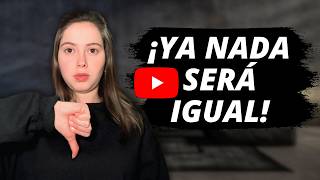
45sHigh controversy by challenging the common advice to use YouTube, appealing to creators frustrated with platform instability.
▶ Play Clip"Title promises a method to make money with AI videos independently, and the video delivers a concrete step-by-step strategy."
This video reveals a business model using AI to create product demo videos for e-commerce stores, inspired by Temu's success. The creator shows how to produce professional videos with Top View's B2 video agent and Cidence 2.0, then find clients by auditing stores with static images and offering to optimize their ad spend.
YouTube is no longer the only or best way to generate income with videos due to channel closures and new policies. Relying on a single platform is risky.
Temu achieved a $1 billion market cap in 4 years by flooding social media with thousands of short, dynamic product demo videos, not just low prices.
Many stores need videos but can't afford agency prices ($150-$400 per video). Offering a package of 5-10 clips for the same price creates a competitive edge.
Top View's B2 video agent and Cidence 2.0 are used to create cinematic product demos from still photos using text and reference images.
Upload product reference image, write a prompt in English, reference the image in the prompt to maintain product characteristics, select format 9:16 for vertical video, duration 15 seconds.
To keep the same model across clips, take a screenshot of the model from the first video and upload it as a reference image for subsequent clips.
Use advanced search commands to find Shopify stores with only static images. Validate they are running ads via Meta Ad Library. If they use static images, they are perfect clients.
Offer immediate value by pointing out their low ad conversion due to static images and offering a free video concept. Don't ask for money upfront.
Start with budget plans to test the tool. For multiple clients, the Ultra plan with unlimited Cidence 2.0 is recommended for freedom and scalability.
This AI-powered video creation business model solves a real problem for online stores: expensive static ads that don't convert. By offering affordable, dynamic product demos, you can tap into a scalable income stream independent of platform risks.
What is the main risk of relying solely on YouTube for income?
Channel closures due to new policies make relying on a single platform too risky.
00:14
What was Temu's secret to success besides low prices?
Flooding social media with thousands of short, dynamic product demo videos.
01:11
How much does a marketing agency typically charge for a single video?
Between $150 and $400.
01:38
What tools are used to create AI product videos?
Top View's B2 video agent and Cidence 2.0.
02:20
Why should you reference the product image in the prompt?
To prevent AI from changing the product's characteristics.
03:34
How can you ensure the same model appears in all video clips?
Take a screenshot of the model from the first video and upload it as a reference image for subsequent clips.
05:45
What is the first step in the conversion audit system to find clients?
Use advanced search commands to find Shopify stores with only static images.
09:32
How do you validate if a store is a good candidate for your service?
Search for the store name in the Meta Ad Library; if they have ads with static images, they are perfect clients.
10:17
What should you say when contacting a potential client?
Offer a free video concept to improve their ad conversion, not sell a video.
11:12
Which plan is recommended for multiple clients?
The Ultra plan with unlimited Cidence 2.0.
12:48
Temu's billion-dollar model
Reveals the core strategy behind Temu's rapid growth: flooding social media with short product videos.
00:41Price gap opportunity
Identifies a clear market gap: stores need videos but can't afford agency prices, creating demand for affordable AI-generated content.
01:52Referencing images to maintain product identity
A crucial technical tip to ensure AI doesn't alter product features, maintaining consistency.
03:34Conversion audit system
A systematic method to find paying clients by targeting stores already spending on ads but using ineffective static images.
09:32Value-first outreach
Instead of selling, offer immediate value by providing a free video concept, which increases response rates.
11:12[00:01] artificial intelligence only teach you how to create YouTube channels. But the reality is that YouTube is no longer the only or the best way to generate income with videos of this type. With what's been happening lately with
[00:14] channel closures due to new policies, relying on a single platform is too risky. So I'm going to show you one of the best routes to work with videos using artificial intelligence
[00:27] independently, without depending on platforms that change the rules every few months. To make a living from digital businesses, I dedicate myself to analyzing how large industries use technology to generate millions in revenue. Observing these
[00:41] trends, I discovered a sector where you can work with these videos without having to wait months to monetize. In this video I'm going to show you exactly what I learned and how it works to generate income.
[00:56] Let's begin. And I want to clarify that this video is not about you starting to sell products or setting up an online store. The aim is to replicate the model with which Temu achieved what neither AliExpress nor other Chinese platforms
[01:11] could: to be the first real competition for Amazon in decades. The secret to their success, which led to a market capitalization of $1 billion in 4 years, is not just the low price, it's their system for producing content at
[01:26] traditional television advertising. They flood the networks with thousands of short, dynamic, and demonstrative videos that appear across all social media platforms, making people feel the
[01:38] need to buy their products. This is simple to understand. A marketing agency typically charges between $150 and $400 for a single video. We will compete by offering a complete package of five or ten clips for that same
[01:52] price. There are a lot of stores that need to sell, but they can't afford to pay such high amounts for each video they upload. That's where we come in, with artificial intelligence as a work tool
[02:04] that provides us with speed and professional quality. I'm going to show you how to make money with this model and the step-by- step process so you can start finding those clients today. Let's get to work. We're going to use Top View's B2 video agent and
[02:20] We're going to use Top View's B2 video agent and Cidence 2.0, which give videos a cinematic look with smooth camera movements , allowing you to create both highly dynamic product demos from
[02:34] still photos and cinematic fiction scenes, using only text and reference images. That said, to create the video, I will be working with this table to demonstrate its usefulness. Take notes, because I'm going to give you
[02:50] important tips to avoid mistakes when creating videos. I left the link in the description so you can go directly to creating the videos. The first step is to upload the product reference image . Then you have to write the
[03:04] instruction or prompt here. I already have this prompt in English because the platform works better in this language. So, basically, this prompt says, "Create a demonstration video about the usefulness of the table and the comfort it
[03:18] organic." It begins by showing a woman uncomfortable using a laptop in bed, then she takes the table, places the laptop on it, adjusts it, and begins to work comfortably. So, something super important here to prevent
[03:34] artificial intelligence from changing the product's characteristics is that you have to reference the reference image. So this is done in the part about mentioning the table. There I stop and then select the
[03:50] reference image. This way it becomes integrated into the prompt and the artificial intelligence understands that I am talking about the table in this image. If we had several images at each point where we are
[04:04] mentioning it soon. Another point is that the video needs a model to use the table. So if we have a model, we So if we have a model, we can upload the image here or let
[04:17] In this case, I'm going to let the tool suggest it. Then you have to tool suggest it. Then you have to select the format, which will be 916 for vertical video, which is the type of video used for advertisements. And the
[04:30] duration can range from one second to 60. I'll leave it at 15 seconds and send it to record the video by clicking on this little white arrow pointing upwards. Here the tool begins to analyze the instruction to start creating the
[04:45] scenes. Once this process is complete, then we click on generate video. This takes a few minutes, so I'll be back when it's ready. Okay, that's it, the video has been created. This was the model who suggested the tool. That
[05:00] seems fine to me. The video shows a problem, namely, it's uncomfortable to work solution of [music] on the table, thus promoting the product, which is the type of video with which Temu promotes its products. Now it could
[05:14] remain at this duration of 15 seconds, which works very well for this time. Or if you need to show more about the product, for example, how it can be used on a sofa, you can add another clip or scene from this button I
[05:31] 'm pointing to here. Here appears to add a new continuation prompt. But then, before putting it on, do this so as not to waste time or exhaust resources. Since we let the tool create the model, if
[05:45] we want the video to have the same model in all scenes, we must take a screenshot of the model's image in the video to save it to the computer and then load it to have the
[06:01] model's reference image. Because if you don't believe me , I'm going to put this prompt here and I'm saying that the same model from the first clip should appear. Let's see if the same model is still in use or not. Okay, as you can see, the model did indeed change.
[06:16] This isn't wrong; there are product videos that feature several models. But if a customer wants the same model throughout the entire video, then you have to take the model's image from the video and
[06:29] upload it. So, I already did it. So, I have this instruction that seconds of clip one look good. Let's build the rest of the demo video and add it to the build queue." Clip two, 10 seconds
[06:44] following the same sequence with the same table as in image one and the same model as in image two. The images are already referenced here, as I showed you. Then he says, "Now show her comfortably using her laptop on the
[06:57] table on the living room sofa. I'll send it to be made and let's wait for the result. Okay, now we have the same model and this clip [music] also shows this clip [music] also shows another use of the product very well, and so I
[07:10] can export the video with the option to combine all the clips into one video, and this way we won't have any loose clips. So, well, let's see the final result. [music]
[07:46] realistic and organic professional video demo, since there are videos with [music] artificial intelligence that really look very fake and that's why people reject them. Now, another important point: if you're going to create a video and you already have the model or
[07:59] the client gave you the model's image , then load it from the beginning, especially if you're going to create several clips. This way we manage to produce videos with professional [music] quality , comparable to those
[08:12] made by a specialized audiovisual [music] team within an agency." guaranteeing a polished and engaging result for the audience. If you want to create product videos in landscape format, you can also
[08:25] do so simply by selecting size 169. [music]
[08:37] already have an agency-quality video ready to deliver. But be aware, knowing how to use the tool is only half the battle. The real key to making this a profitable business and not just a hobby is knowing
[08:51] who to send it to. The secret of giants like Temu is that they flood social media with video ads on Instagram and TikTok that look organic and interrupt you while you're watching content. They know that a photo is ignored, but a
[09:06] dynamic video can make you stop scrolling, watch the video, click on it, and eventually reach the store where you can buy.
[09:18] So, with that explained, we're not going to waste time knocking on random doors. I'm going to show you my conversion audit system to find stores that are already investing money but are losing sales because they aren't
[09:32] using dynamic content. It's important to reach stores that are already investing because they may be willing to acquire our service. Step First, technical localization with Google Docs. Instead of browsing
[09:46] aimlessly or wasting time, we'll use advanced search commands to filter stores that sell trending products but only have static images. We'll use these
[10:00] example commands, but you can create more for other stores or e-commerce sites . I have these Shopify commands. The logic behind these commands is that they show us active stores on leading platforms. So,
[10:17] if you go in and only see catalog photos with a white background, you've found a perfect candidate. Second step: auditing inefficiencies in the Meta ad library. Before contacting them, we validate whether they're
[10:30] investing capital. So, we search for the store name in the Meta ad library. If they don't have ads, we don't waste our time because they're not investing. If they have ads, but with static images, you've
[10:43] found an inefficiency. Why are they the perfect client? Because they already have an allocated budget, so you don't have to convince them to spend, but rather to spend better or to invest. In other words, the stores Those using photos are paying
[10:57] for expensive clicks that people ignore. So, the offer isn't to sell a video, it's to optimize their investment so they stop losing money on ads that don't stop the scroll. Having identified a potential client,
[11:12] it's time to contact them, which would be step three. The key to getting a response isn't asking for money, but offering immediate value. So don't say, "I'll sell you a video," tell them you have the solution to their low
[11:26] ad conversion rate. The message should be short and direct, addressing the point where they're failing. Here's an example message: "Hi, [name of person/company], pink socks. I saw your campaign on Meta for [name of product] strawberry socks
[11:41] . The product is a winner, but I noticed that using static images results in a significant loss of engagement on social media. In my experience, a dynamic video format like Temo helps the customer understand the product in the
[11:55] first 3 seconds, which increases sales. I've prepared a quick concept of how this product would look in a video for your ads. I'm sending it to you for your review." You can decide whether to skip this question
[12:08] and send the video directly, or keep this question. I'll explain why later. For now, I want to tell you that this strategy is ideal because you're not selling a service; you're offering to
[12:22] optimize an investment they're already making, but doing incorrectly. Now let's talk about the numbers so you can work with them and decide based on your situation. When we're starting out, we can use
[12:35] the budget plans to test the tool and send proposals. Now, when we already have several clients and want to continue sending proposals to acquire more , the credits usually run
[12:48] out because we have to work with Cidence 2.0, which is the most advanced model and therefore consumes the most credits. That's why, when you already have several clients or want to start from scratch with more freedom,
[13:01] the Ultra plan makes a lot of sense because it includes unlimited Cidence 2.0 , allowing you to create, test various versions, and work with complete
[13:13] freedom without having to count credits. If you decide to work with the platform, that's up to you. Decide which one to choose. I just showed you how it helps with this work. I left the link in the description so you can access the
[13:26] tool. I wanted to share this strategy with you because it's not just a way to use artificial intelligence; it's a business model that solves a real problem for online stores today. My goal is for you to see
[13:41] monetization options that go beyond what's explained everywhere and that can actually scale. If you want to explore more ways to generate income and work from home, here's a
[13:57] playlist. Go check it out. Bye, digital entrepreneurs!



⚡ Saved you 0h 14m reading this? Transcribe any YouTube video for free — no signup needed.