
Check Alignment Without Tools
35sShows a simple, actionable test that anyone can do on a test drive to detect steering issues.
▶ Play Clip"The title accurately reflects the video's content: a thorough, step-by-step guide to inspecting a used car, demonstrated on a high-mileage Lexus."
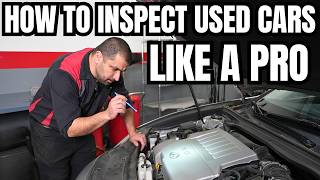
This video provides a comprehensive, step-by-step guide to inspecting a used car, demonstrated on a 2014 Lexus ES 350 with 275,000 miles. The host walks through the entire process, from the initial test drive and on-road checks to a detailed under-hood inspection, fluid tests, scan tool diagnostics, and a thorough undercarriage review. The goal is to teach viewers how to systematically evaluate a used car's condition and avoid buying a lemon.
Always start the car when it's completely cold to listen for startup issues. Check for smooth idle and any unusual noises.
Pulsation in the steering wheel indicates front brake rotor warpage; pulsation in the pedal or seat indicates rear brake rotor warpage.
Safely swerve the car left and right within your lane. If the noise gets louder and quieter, it's a wheel bearing. If it doesn't change, it may be tire noise.
Drive at a steady speed with light acceleration to let the torque converter engage. If the whole car shakes when the converter locks up, that's a torque converter shudder.
Operate them two or three times to check for a weak motor that may stop working after the first operation.
A rough edge on the paint, called a tape mark, indicates the panel has been repainted.
Squeeze a rubber part of an AC line. If it squeezes very easily, the system likely has no refrigerant (freon).
Check the glass for original manufacturer markings (e.g., 'Lexus'). A missing logo suggests the glass was replaced, possibly due to a significant impact.
Check the 'time since DTCs cleared' parameter. If it's only a few miles, the seller may have erased codes to hide a problem.
The 2013-2017 Lexus ES 350 is considered one of the best used cars because of its reliability, comfortable interior, and lack of common issues like power steering leaks.
What is the first step in a used car inspection?
Start the car when it's completely cold to listen for startup issues.
0:58
How can you tell if front or rear brake rotors are warped during a test drive?
Pulsation in the steering wheel indicates front brake rotor warpage; pulsation in the pedal or seat indicates rear brake rotor warpage.
3:33
How do you test for a bad wheel bearing during a test drive?
Safely swerve the car left and right within your lane. If the noise gets louder and quieter, it's a wheel bearing. If it doesn't change, it may be tire noise.
4:22
What is the test for torque converter shudder?
Drive at a steady speed with light acceleration to let the torque converter engage. If the whole car shakes when the converter locks up, that's a torque converter shudder.
6:00
Why should you operate door locks multiple times during an inspection?
Operate them two or three times to check for a weak motor that may stop working after the first operation.
8:28
How can a scan tool reveal if a seller erased trouble codes just before you arrived?
Check the 'time since DTCs cleared' parameter. If it's only a few miles, the seller may have erased codes to hide a problem.
34:43
What is a 'tape mark' and what does it indicate?
A rough edge on the paint, called a tape mark, indicates the panel has been repainted.
11:27
How can you tell if a car's glass has been replaced?
Check the glass for original manufacturer markings (e.g., 'Lexus'). A missing logo suggests the glass was replaced, possibly due to a significant impact.
28:56
What is a quick way to check if the AC system has refrigerant?
Squeeze a rubber part of an AC line. If it squeezes very easily, the system likely has no refrigerant (freon).
16:55
Why is the 2013-2017 Lexus ES 350 recommended as a used car?
The 2013-2017 Lexus ES 350 is considered one of the best used cars because of its reliability, comfortable interior, and lack of common issues like power steering leaks.
58:14
Diagnosing Brake Rotor Warpage
Provides a clear, actionable method to distinguish between front and rear brake issues based on where pulsation is felt.
3:33Wheel Bearing Test
A safe, on-road technique to identify a failing wheel bearing by swerving and listening for noise changes.
4:22Identifying Non-Original Glass
Explains how to spot a replaced window by checking for manufacturer markings, which can indicate past accident damage.
28:56Detecting Code Erasure with a Scan Tool
Reveals a critical scan tool parameter ('time since DTCs cleared') that can uncover a seller's attempt to hide problems.
34:43Research Before You Inspect
Emphasizes the importance of researching a model's common problems beforehand to avoid overlooking known issues.
49:08[00:00] Hello and welcome to the Caron channel.
[00:03] In today's video, I want to show you how
[00:05] to inspect a car properly. Whether it's
[00:07] a used car you're buying, your own car,
[00:10] you want to give it a proper check over
[00:11] to make sure it's all in good shape and
[00:13] everything. And at the same time, this
[00:14] video will serve as a second purpose.
[00:17] This particular ES 350 has 275,000
[00:21] miles. We've never seen this car. I've
[00:24] never inspected it. This is the first
[00:25] time we're doing it. So, we're going to
[00:27] show you how to do used car inspection
[00:29] and then we're going to actually see
[00:30] what does this 275,000 mi Lexus actually
[00:34] need service-wise. Let's get
[00:42] started. So, every single used car
[00:45] inspection or car inspection in general
[00:48] starts with a test drive. Let us test
[00:51] drive this car. Engine sounds healthy
[00:54] when it's started. That's something you
[00:56] want to listen to. This car is
[00:58] completely cold. That's how you always
[01:00] ideally would like to get the car. So,
[01:02] this car is uh barely broken in.
[01:08] 275,000 mi. Barely broken in. Just got
[01:13] to say something. This ES 350, this
[01:15] generation, one of the best Lexus ever
[01:18] made. I mean, this thing is coming up on
[01:19] 300,000 mi. Leather's fine. Everything
[01:22] else is looks fine. starts like any car
[01:25] with 15,000 miles sounds wise. So, let's
[01:28] take it for a drive. Transmission
[01:30] engages pretty quick. Reverse engages
[01:33] pretty quick. Camera works. That's the
[01:35] first things we're going to test. Now,
[01:37] let's go for a drive and just check the
[01:40] steering column. Make sure we don't have
[01:41] any strange noises. We got a bump here.
[01:44] So, that's the first thing you want to
[01:46] purposely go over some bumps to see.
[01:52] Actually, I'm going to go over this
[01:54] again. Few more bumps to
[01:59] see. This sounds almost
[02:06] perfect. The only noise you're hearing
[02:08] is something rolling around in
[02:10] here. Let's take it for a drive. We'll
[02:13] test a few
[02:14] things and we'll see where things are
[02:16] at. AC works. I already turned it on.
[02:19] That works pretty good.
[02:23] So far so
[02:25] good. Brakes work. That's
[02:42] good. So when you take off initially,
[02:45] we're feeling for transmission
[02:47] shifts. Two things you're going to
[02:49] check. how the car tracks. We're going
[02:52] to get it going at a steady speed and
[02:54] very safely. We're going to let go of
[02:56] the steering wheel to see if it tracks
[02:58] left and right. This one drives
[03:00] perfectly straight. It is perfect.
[03:05] That's That's how I'm going to say it.
[03:07] The next thing is steering wheel. It is
[03:10] perfect on
[03:13] center. Almost 300,000 miles on this
[03:16] car.
[03:17] The next thing we're going to test is
[03:19] going to be the brakes. I'm going to
[03:21] speed up a little bit. We're coming up
[03:22] on a traffic light here. I'm going to
[03:24] hit the brakes a little bit harder than
[03:30] usual. Very little pulsation I feel. So,
[03:33] here's with pulsation how you can
[03:35] determine. If you feel the pulsation in
[03:37] steering wheel, slightly front brakes.
[03:40] If you feel it in the pedal on the body
[03:41] of the car, the seats, but not in the
[03:43] steering wheel, slightly rear brakes.
[03:45] So, these brakes have a little bit of
[03:47] pulsation. I feel in the steering wheel.
[03:49] I feel it in the seat. So, we
[03:50] potentially have both rotors have a
[03:53] little bit of warpage, but again, these
[03:54] rotors are still cold. It's important
[03:56] that you try this a couple times. So,
[03:58] safely. I have nobody behind me. I'm
[04:00] going to break a little
[04:02] bit. Yeah, I definitely feel it all
[04:04] over. So, we may have a little bit of
[04:06] warpage front to back. Not terrible.
[04:09] We'll test it a little bit more. Here's
[04:11] the important stuff. I don't hear any
[04:13] roaring weird noises. And here is what
[04:16] you do if you do hear a weird roar or
[04:20] noise.
[04:22] Safely swerve the car left and right
[04:25] just like I am doing right now within
[04:26] your lane. You know, especially in the
[04:28] United States, we got pretty wide lanes
[04:30] there. You can swerve safely within your
[04:32] lane. If you start hearing the noise get
[04:34] louder and then get quieter, louder then
[04:37] quieter, you have a wheel
[04:39] bearing. If doesn't change at all, it
[04:42] may be something with tire noise. And
[04:44] I'll show you how we check both when we
[04:46] get it on a lift. But this particular
[04:49] car, it is checking every single box.
[04:53] The only thing I have so far is a very
[04:56] slight pulsation from the brakes. And
[04:58] let me tell you one thing. You buy a car
[05:00] for 275,000 mi and all you need is some
[05:06] brakes. Yeah, you uh you're doing pretty
[05:09] good. I'm idling right now. It's pretty
[05:11] smooth idle. 2G RF will always have a
[05:14] little bit of a rumble at idle. That is
[05:16] normal. But it's pretty smooth. I don't
[05:18] feel any vibrations, anything abnormal.
[05:20] The next thing we want to do now that
[05:22] we're at almost a stop, the street is
[05:24] empty. I'm going to push it. Never go
[05:26] over the speed limit.
[05:33] But that is a pretty healthy engine. The
[05:36] traction control actually came on. These
[05:38] are your initial impressions because you
[05:40] have a problem with this engine mass air
[05:42] flow is
[05:43] dirty, spark plugs are never been
[05:45] changed or whatnot. When you push it,
[05:47] it's going to start hesitating, bucking
[05:49] and whatnot. This one is perfect. It
[05:52] almost let the tires up and the
[05:55] transmission is very healthy. Speed
[05:58] limit here is 45. You want to drive
[06:00] right around 40 and just coast very
[06:03] light acceleration. Let that torque
[06:05] converter engage. We want to see
[06:07] shutters. If all of a sudden you you
[06:08] engage that torque converter and the
[06:10] whole car starts shaking, as soon as you
[06:11] accelerate goes away, that's a torque
[06:13] converter shutter. That's a big problem.
[06:15] You got to catch it. If you drive it a
[06:16] little bit faster, you're not going to
[06:18] notice that. So, you want to drive it
[06:20] hard to push the engine, see how it
[06:22] does, and then very soft to see how it
[06:24] reacts. That's the next thing. The last
[06:27] thing with this ES is, which I hear it,
[06:30] the sunroof seal. You can check it
[06:32] easily. Like right now, I have this
[06:34] open. I hear all kinds of wind noise.
[06:37] When I close
[06:39] it, it gets very quiet. I open it again,
[06:43] it almost feels like a window is open.
[06:45] That's how it feels like. The sunroof
[06:47] seal is worn out. This is very common in
[06:49] these particular cars, but it could be a
[06:51] thing with any
[06:56] car. GPS is tracking properly. I mean,
[06:59] this car, if this car at this point had
[07:02] 50,000
[07:04] miles, I'd go with it because it's
[07:06] checking every single box so far. Here
[07:10] are a few things we're going to check.
[07:11] Let's check the wipers. So, Jose, show
[07:13] them the view of the
[07:15] wipers. Yeah, that's
[07:18] uh Yeah, that wiper have seen better
[07:21] days. And I'm noticing one thing about
[07:22] these wipers. Do you see how they stick
[07:24] up? I think they need an alignment. So,
[07:27] we need to reposition them down cuz
[07:29] they're way too high up. Yeah, the
[07:31] brakes are definitely pulsating a little
[07:33] bit. And then while we're here, let's
[07:37] operate our sunroof. Check it. Sure it
[07:42] works. That
[07:45] works. Let's do the
[07:49] tilt. That
[07:51] tilts.
[07:53] Beautiful. Born.
[07:56] That works. We already tested our turn
[07:58] signals. Now, before we pull into the
[08:01] shop, we're going to do a quick function
[08:04] test of things. We're going to just come
[08:06] to a
[08:09] stop again. This suspension
[08:11] is Yeah, I wonder if it's been replaced
[08:14] before. So, right before we pull in the
[08:16] shop, let's do a quick function
[08:20] test. Door locks.
[08:26] They all work. This is something very
[08:28] important that you do. Don't operate the
[08:30] door locks once. Operate them two, three
[08:31] times cuz you could have a weak motor
[08:33] here and you operate it two, three
[08:35] times, it just stops. Always operate it
[08:37] multiple times. Let's check all our
[08:40] windows. These motors are running now,
[08:43] not just opening. So, we don't have any
[08:46] issues with the window motors. We
[08:48] already tested the sunroof. Let's test
[08:50] our mirrors real quick. Although rare
[08:53] for these cars to have mirror issues,
[08:56] but check the mirrors. I already saw
[09:00] that the navigation was tracking. It's
[09:02] tracking correct. We can test the shade
[09:05] in the back. Shade in the back works. We
[09:08] can kind of go over all the features.
[09:12] This is not a bad
[09:14] idea. The seat coolers work cuz I hear
[09:17] the fans running. We're not going to
[09:18] test the seat heaters because it is 77°
[09:21] outside. We don't want to do that. And
[09:24] steering wheel heater. You can also test
[09:25] it, but really when you're testing a
[09:28] Lexus or Toyota, you could test the
[09:29] radio, check the CD player if you're
[09:31] interested in that. But this car is
[09:34] checking all my boxes. And some of the
[09:37] safety features you do want to check
[09:39] things like the blind spot monitor. See,
[09:41] when I turn it on, it do does a self
[09:43] test and then it goes off. So far, the
[09:47] only thing I see with this car, the
[09:49] brakes slightly pulsate, the wipers are
[09:51] a little bit off. We can adjust it.
[09:53] That's very simple. And if you look at
[09:54] that mirror, see how the edge of it is
[09:57] broken? Not really something that's
[10:00] going to affect the operation of the
[10:01] car. But if I was buying this car, I'd
[10:03] say, "Hey, this mirror is broken. Should
[10:05] we can you give me a little bit of a
[10:07] discount on the price because I got to
[10:08] replace that?" And maybe just proceed to
[10:11] not replace it because there's
[10:12] absolutely nothing wrong with that.
[10:14] Let's pull it in the shop. Let's start
[10:17] our proper inspection. Now we we have
[10:19] familiarized ourselves with the car.
[10:22] Let's really get the full story of this
[10:26] car. So
[10:28] far, the vibes is giving me are very
[10:33] good vibes.
[10:43] So, now that we uh did our test drive,
[10:45] let us take a look. First
[10:50] thing, this hood has been painted.
[10:53] First, from its appearance, I see like
[10:56] stuff in the paint. It's going to be
[10:57] very hard to show you, but if you look
[10:59] at this exact spot, if I pass the light
[11:02] across
[11:03] it, you will see like a little right
[11:06] here. If you pass the light across that
[11:10] part, you will see like an imperfection
[11:13] in the paint right
[11:16] here. May be hard to see it on camera,
[11:19] but there is an imperfection. But the
[11:21] second way I know that is you pass your
[11:23] hand around the edges. It's very rough.
[11:27] That's the the tape mark. That's called
[11:30] a tape mark. Well, the engine doesn't
[11:33] look like it's never been cleaned in its
[11:36] life. It's actually pretty clean. Let's
[11:39] start the first part of our inspection.
[11:41] Simple stuff. Let's test the
[11:45] battery. There's a lot of battery
[11:47] testers out there. This is just the one
[11:50] we have laying around. They all do
[11:51] basically the exact same thing. Let's
[11:55] see. This battery is a 700 cold cranking
[12:00] app. It is a interstate battery. We're
[12:03] going to set it to
[12:05] 700. 12vt battery. Start testing.
[12:08] Testing in
[12:14] progress. Almost done. Hey, you look at
[12:17] that. Look what this
[12:19] says. Good
[12:22] recharge. Let's look at the rating. So,
[12:24] the capacity is 700, measured 644. It's
[12:27] actually pretty good. All this battery
[12:29] needs is a quick charge, which indicates
[12:32] it is actually a healthy battery. Now
[12:36] that we did that, let's pull the engine
[12:37] cover. Let's start looking
[12:41] around. It helps if the car you're
[12:43] looking at, you've researched some of
[12:45] their common problems. You know a little
[12:47] bit about them, what kind of engine they
[12:49] have, what their common quirks are.
[12:52] because in this particular engine, a 2G
[12:54] RF, one of the best engines ever, and
[12:56] this is a third generation. Let's start
[12:59] with very basic stuff. Let's take the
[13:01] oil
[13:03] cap. This is a third generation engine
[13:06] now. You know it in this particular
[13:07] case. You have two slits here. You don't
[13:09] have an opening, but I can still look
[13:11] inside. I mean, this thing looks pretty
[13:14] clean. I don't see a lot of varnish
[13:16] inside. Don't definitely don't see
[13:18] sludge. So, that's a good thing. Second
[13:20] thing we're going to
[13:22] do, check the oil level real
[13:29] quick. This car has been sitting
[13:32] probably while we switch the cameras and
[13:34] whatnot. Probably been sitting for 10 15
[13:36] minutes. Oil level just over. So, I'm
[13:40] going to call that decent oil
[13:43] level. And we're going to call this
[13:45] engine from an initial looks pretty
[13:49] clean. Now, we're going to start looking
[13:50] around. This is where it helps if you
[13:54] know the model you're looking at
[13:56] slightly or at least have researched it.
[13:58] Obviously, we're not expecting you to
[13:59] know every little thing about them. For
[14:01] this particular car, I'm going to start
[14:02] my initial look around. Do you see
[14:05] anything out of the ordinary? Looks like
[14:07] it doesn't belong. We're more interested
[14:09] in shiny stuff, stuff that was just
[14:11] replaced. We're looking at something and
[14:14] it looks like aftermarket modifications.
[14:17] I don't actually see anything in this
[14:19] car. See how everything
[14:21] looks perfectly
[14:24] original. Then we look at start with the
[14:27] basic. Start. Here's what I like to do
[14:29] inspections. Start from one side. Walk
[14:31] your way around. That way you don't miss
[14:33] anything. We're going to start right
[14:36] here. Look down. I don't see any wetness
[14:39] from here. So, we know what we're
[14:41] heading into. Going to look underneath
[14:43] the intake plenum.
[14:46] I see a tiny nest. Do you see it? Like
[14:49] if you look right here, Jose, if you
[14:50] bring the camera, show them. Right.
[14:53] Right in this area. Yeah. It maybe be
[14:56] hard to show
[14:58] you. Right in that area. I see actually
[15:00] a little potential nest. And the next
[15:03] thing we're going to look at this
[15:05] engine, although in the ES350, it's not
[15:08] super common, but it is somewhat common
[15:09] for external head gasket leaks. It's
[15:11] going to be hard to show on camera, but
[15:13] we're going to look underneath the
[15:15] intake manifold. Look inside the valley
[15:17] for signs of
[15:19] coolant, which I don't see anything from
[15:22] this side. Just take a quick peek from
[15:24] this side. I don't see
[15:27] anything. Nothing. I think we're good on
[15:30] that. Then we're going to check
[15:32] our This is called a torque rod. It just
[15:35] keeps the engine from going side to
[15:37] side. So, this one, you see how it has
[15:40] like dry rot a little bit, but it's
[15:42] actually not
[15:43] torn. So, this one is good. We're going
[15:46] to take a quick peek here at the belt.
[15:48] Do we have cracks? I'll show you a
[15:50] little picture of a cracked belt how it
[15:51] looks like. But this
[15:54] one looks actually perfectly fine. I
[15:57] don't see any crack down here. I don't
[15:59] see big signs of coolant from the water
[16:01] pump leaking, but we look at closer look
[16:03] at it underneath. Everything looks tidy
[16:05] and in order.
[16:07] ABS actuator. There isn't much you can
[16:09] test with this. Just looking at it, we
[16:12] don't have any leaks. Doesn't look like
[16:13] wires have been damaged and whatnot. So,
[16:15] that looks good. Coolant
[16:18] hose. This one appears to be original.
[16:21] Going to give it the squeeze test. Looks
[16:23] good. Has a proper clamp. I don't think
[16:26] this has ever been replaced. And then we
[16:28] look at the radiator. So, coolant level.
[16:31] Put it right here. You can see it.
[16:32] Coolant level is actually full. That is
[16:34] a very good sign.
[16:36] We're going to look at the radiator top
[16:38] if we can access it. I don't see any
[16:40] leaks. That looks good. Then we're going
[16:43] to start working our way around here.
[16:45] The easiest way, and this is it's going
[16:48] to be a little difficult in this
[16:50] particular car, but the easiest way,
[16:52] like let's say AC doesn't work, and you
[16:55] want to find out real quick what's going
[16:57] on with it. If you find a flex, like a
[16:59] rubber part of an AC line, squeeze it.
[17:02] If it squeezes very easy, you'll likely
[17:05] have no freon. That'll be the easiest
[17:07] sign to tell. Hey, let's chase after
[17:09] potentially a leak first before we dive
[17:11] into everything else. As we walk around
[17:14] here, I'm going to look for more signs
[17:15] of leaks around the engine kind of in
[17:18] the
[17:19] cavities.
[17:21] Alternator. To
[17:23] me, this alternator appears original. It
[17:26] matches. You kind of look at the
[17:28] oxidation and aluminum. You match it.
[17:30] That looks about original. It looks
[17:32] about the correct original alternator.
[17:34] So, this may be a very well be an
[17:36] original alternator. We're going to look
[17:38] at the other
[17:39] hose. This hose actually not soft. It's
[17:42] actually in pretty good shape. Looks
[17:44] like it is the original. Has the correct
[17:46] clamps. We're going to look down here.
[17:48] Do we see any leaks, any issues, any
[17:51] signs of rodents or damage or whatnot?
[17:55] This one doesn't show
[17:58] anything. Now, we get here. Let's look
[18:01] on again for signs of rodents damage.
[18:03] We'll test the brake fluid here in a
[18:05] moment. I don't see anything. Now,
[18:08] accidents are a little bit of a kind of
[18:11] quiet skill. You can look down here like
[18:14] at the
[18:15] rails. See the rails down there? You
[18:18] want to look for like weld marks or
[18:20] hammer marks or whatnot. That's when you
[18:22] know that that's the structure of the
[18:24] car. Same thing on this side. I don't
[18:27] see anything. This looks all straight.
[18:30] So the reason the hood was painted
[18:32] potentially was a small hit that was not
[18:34] structural. Now having said that do
[18:37] basic stuff. Let's look at the air
[18:42] filter. This air filter not bad. I don't
[18:46] think we're going to recommend
[18:47] replacement. I don't have a nest here.
[18:48] There's another spot. They don't have
[18:50] anything abnormal there.
[19:03] Now we're going to do two tests. One of
[19:06] them is the brake fluid and then the
[19:08] coolant. We have this tester that we
[19:10] have been using. It's really accurate.
[19:12] It's much better than the electronic
[19:13] one. Actually, I'm noticing one thing.
[19:15] The brake fluid is low. See how the max
[19:18] level is here and the brake fluid is all
[19:20] the way at the
[19:21] bottom. That's not cause for alarm. That
[19:24] could be just the pads are worn down.
[19:27] So, I'm going to see. We got to remove
[19:29] this filter so we can access the
[19:39] fluid. There we
[19:43] go. Going to take a test
[19:46] strip on the brake fluid
[19:50] side. Going to put it in the fluid.
[19:55] And we're going to let this test strip
[19:57] sit on the side. We'll come check on it
[20:00] a little bit later. The same tester test
[20:04] kit we can use to test coolant. Not as
[20:08] accurate on coolant. I'll I'll be honest
[20:10] with that part, but wouldn't hurt. We'll
[20:14] look at the service history of the car
[20:17] cuz it'll show you if if the coolant is
[20:20] horrible. Basically, it won't show you
[20:22] that it's just regular due for
[20:25] replacement.
[20:27] So, going to access it
[20:30] here and basically put this strip in the
[20:40] coolant. We're going to leave these two
[20:43] tests to simmer, if you would, and we'll
[20:47] come back to them shortly. Now, we're
[20:48] going to dive into more things. And this
[20:50] is where I'll make a recommendation. We
[20:53] are not doing this to this car, but if
[20:54] you want to, especially if you have a
[20:56] four-cylinder, it is simple. You can
[20:58] actually take the plugs and do a
[21:00] boroscope. Look for scratches, for heavy
[21:02] wear on the cylinder walls. In this
[21:04] particular car, we are not doing that
[21:05] because what's the point in doing the
[21:07] front? But what we can do is take a look
[21:11] at one of the plugs. Now, knowing the 2G
[21:14] RF, they love to break these connectors.
[21:16] So, I'm actually not going to take the
[21:18] connector off or we'll be very gentle
[21:22] with it.
[21:24] See, it breaks. It breaks. We'll replace
[21:26] it. There. There we go. We got it. So,
[21:30] I'm going to take one coil out. The
[21:32] reason for that is in
[21:35] Toyotas, they actually
[21:37] mark the spark plug with a kind of a
[21:42] dot. This one does not have a dot. I'm
[21:46] going to pull those worn spark plugs for
[21:48] us to take a look at
[21:53] it and take a look at this spark plug.
[21:56] It's not in the best condition, but it's
[21:59] not in the worst. This engine burns
[22:01] pretty clean. See the back of it in
[22:04] inside? There's no carbon buildup. This
[22:06] is a very healthy engine. Of course, if
[22:08] you want to do this accurately, take all
[22:10] six, look at all six of them, do a
[22:13] boroscope. But something about Toyota
[22:15] spark plugs, they'll have a stamp here,
[22:18] either a number, letter, or weird shape.
[22:20] If they are factory plugs, meaning the
[22:23] ones from the factory, but when you
[22:25] don't see it, this is an original plug,
[22:27] but it's a replacement. So, I know at
[22:30] this point, these are not the original
[22:33] plugs for this car. So, they've been
[22:35] replaced. We'll go digging through the
[22:36] service history of this car and we'll
[22:38] find
[22:39] out when that happened so we know cuz
[22:42] this car has over
[22:44] 240,000. So spark plugs on this
[22:47] particular engine 120,000 miles. So this
[22:50] should have had two replacements and
[22:52] we're going to take a look at that. The
[22:53] next thing I want to check is something
[22:56] not a big issue but because we'd like to
[22:59] make
[23:00] recommendations the throttle
[23:02] body. You can
[23:05] simply open the air intake if it's
[23:07] easily accessible. Look inside this
[23:10] particular throttle
[23:12] body. Not dirty at all. Actually, this
[23:15] is a shadow what you're seeing, but this
[23:17] throttle body is actually very clean.
[23:20] So, that is pretty good.
[23:24] Well, isn't that
[23:26] something? Everything looks in order so
[23:28] far. I see nothing. We're going to find
[23:32] out in the brake fluid and coolant spark
[23:33] plugs. We got to investigate, but so far
[23:36] nothing. Let's look at these wipers. So,
[23:38] something about this car, which I
[23:40] forgot. I'm getting old. This has a
[23:42] winter position. It's actually in the
[23:44] winter position here. So, if you pull
[23:46] this
[23:47] arm, that's a summer position. The idea
[23:50] is you push these wipers up, if you have
[23:53] snow accumulated here, it won't hit the
[23:55] wiper. That's the idea. So, we're in
[23:58] summer. I'm going to engage them.
[24:01] However, these uh wipers are horrendous.
[24:04] And I want to show you something ironic
[24:06] about them. If you come look at them,
[24:09] I'll put them in the high
[24:11] position once they want to cooperate.
[24:13] There we go. Now, look what uh what do
[24:16] they have on
[24:17] them? Oh, is that a Toyota logo? So, you
[24:21] may assume by seeing this these are
[24:24] original wipers. Let's just put inserts
[24:26] on them and call it. They're not. The
[24:29] original wipers of this car say nothing
[24:31] on them. The imitation horrible sight
[24:33] lines that Toyota sells say Toyota on
[24:36] them. These are horrible wipers, folks.
[24:38] I'm going to recommend wiper blades for
[24:39] this gentleman because these never work.
[24:42] And you saw how much noise they make.
[24:44] They didn't even wipe the windshield,
[24:45] right? They're just horrendous. And
[24:47] before we go deeper into this
[24:49] inspection, let's do our walk around.
[24:51] Actually, maybe you could do that at the
[24:53] beginning. Doesn't hurt, right? Just
[24:54] walk around. See if there's anything
[24:56] odd. See this bumper? It's popped out.
[24:59] There. Something happened here. And I
[25:00] actually see the paint cracked here.
[25:02] Imagine this hit something and it popped
[25:04] out, but the bumper is not sitting
[25:06] right. Not the end of the world, but you
[25:07] want to when you see signs like that,
[25:09] investigate it. I can tell you just by
[25:11] looking at it. This
[25:13] fender has definitely been painted
[25:15] before. That paint looks strange. Door
[25:18] is not. Door is fine. So, we're going to
[25:20] basically walk around it. Look for any
[25:22] obvious signs. Do we see anything out of
[25:25] the ordinary? So far, I see nothing. I
[25:29] do see a little bit of chip here that is
[25:31] starting to rust a little bit. If you're
[25:34] buying this car, you want to touch that
[25:36] up right away. In the back
[25:39] here, this has definitely been painted
[25:41] because I see all kinds of stuff inside
[25:44] the paint. And then somewhere here is
[25:47] there it is. It's very hard to see, but
[25:49] there's a blend line here. This watching
[25:53] paint looking for small signs takes a
[25:55] trained eye. So the more cars you see
[25:57] and the more things you catch, the more
[25:59] your eye will be trained to catch stuff.
[26:01] So as we wrap around here, this is a
[26:03] Lexus. This gap is not correct. So I
[26:07] know something happened here. This
[26:09] bumper has been painted. Now let's look
[26:12] at at the back
[26:14] here. We look at the edges.
[26:17] See, this one doesn't have a rough edge
[26:19] even though this has been painted cuz
[26:21] someone basically smoothed this edge out
[26:23] when they were done painting, which is
[26:25] what you should do. This one, same
[26:28] thing. We look at obvious signs of
[26:30] damage. You look at the trunk itself. Do
[26:33] we see clips missing? Things have fallen
[26:36] off. I don't see anything out of the
[26:38] ordinary. Everything looks good. In the
[26:40] trunk, you want to check for the
[26:43] presence of the spare tire.
[26:48] spare tires here. Check the tire
[26:51] pressure. It wouldn't hurt on that. We
[26:53] look at these edges. Do we see a
[26:56] standing
[26:57] water? I don't see anything. There's a
[27:00] remnants here of something happened at
[27:01] some point, but it's dry, so I'm not
[27:03] worried about
[27:05] it. So, everything looks in order
[27:08] here. Let's continue our tour around
[27:12] it. Lights. Make sure you watch for
[27:14] lights. These these tail lights can get
[27:16] pretty bad. Even the headlight. Sure.
[27:18] None of them are cracked. None of them
[27:19] has moisture. Let's walk around. Same
[27:22] thing with these. I don't see anything
[27:24] obvious in them. Let's walk on this
[27:26] side. Another thing you may want to
[27:28] check. Sure. Lug nuts are all there. You
[27:30] see enough cars with missing lug nuts.
[27:33] It's not nice. This side of the car,
[27:37] it's definitely been painted. This
[27:38] quarter cuz the door and the quarter are
[27:40] not even the same color. Hard to see it
[27:42] on camera, but if you look at it,
[27:44] they're not the same sheen. This is a
[27:47] factory paint. This is not very obvious.
[27:50] Like, as soon the best way to check
[27:51] cars, not with sunlight. You need like
[27:54] light light like this. Find the light
[27:57] reflection and then walk around and see
[28:00] how that reflection changes as you pass
[28:02] around. Like this area looks horrible.
[28:05] When you do that, you're not going to be
[28:06] able to see it on camera. It looks
[28:09] Continue walking around. Another thing
[28:11] you potentially want to
[28:14] check the glass because that usually
[28:17] tells you how bad was the impact in the
[28:19] back. See, this one says Lexus. This one
[28:21] says Lexus. Let's look at the rear
[28:25] window. This one has a sticker on top of
[28:27] it, so I won't be able to see it. Maybe
[28:30] I can see it from the
[28:34] inside. No, that's your first telltale
[28:38] sign.
[28:41] Let me just make sure this window does
[28:45] not have any markings. Usually they'll
[28:48] have a
[28:50] marking somewhere in the corner. Usually
[28:52] the lower corner. This has
[28:56] nothing. And this I already looked at it
[28:58] from the bottom. Look at it one more
[29:02] time. I don't see a marking on this
[29:05] glass. Which what does that tell you?
[29:08] This is not an original glass. So, this
[29:09] hit in the back might have been pretty
[29:12] significant going around it. We already
[29:15] talked about this mirror. See, the thing
[29:18] about these mirrors, the inner shell is
[29:21] broken, but this cover only has a scuff
[29:24] on it. So, you could possibly save this
[29:26] cover. You could save the glass. It's
[29:29] not broken, but the shell you'd have to
[29:31] replace. Not a big issue, but you still
[29:34] mention it. Now, the front glass is
[29:35] definitely not original, which I didn't
[29:37] expect of a car this high mileage. This
[29:40] is doesn't say Lexus. Says actually,
[29:43] what was the name of that company?
[29:45] Pilington. This one says Pilkington.
[29:48] Good company. They make decent glass,
[29:49] but it's not original. Likely from rock
[29:52] chips and whatnot. Then we continue our
[29:54] walk around. We have few scuffs here.
[29:56] Bumper is not sitting. Headlights,
[29:58] they're yellowed, but I don't
[30:01] see condensation. I don't see cracks in
[30:05] them and whatnot. So, that's looking
[30:07] pretty
[30:09] good. This car is a typical car that has
[30:12] this many miles. I mean, obviously, it's
[30:14] been on the road so much, accidents are
[30:16] bound, but the way it drives and the way
[30:18] it feels, I don't see bad repairs here.
[30:21] This bumper was not repaired. That's why
[30:23] it's sticking out and that. So, the next
[30:27] thing we want to do is let's give it a
[30:29] health check. Give it a scan with the
[30:31] scan tool. See what we find. So, we
[30:32] connected a scan tool. This is a Toyota
[30:34] scan tool GTS Plus. We ran a health
[30:36] check. Watch the This is We're going to
[30:39] get back to this particular ES 275,000
[30:42] mi. So, the scan tool will highlight
[30:45] this particular scan tool. We'll
[30:46] highlight the areas where we have codes.
[30:49] So, we have engine, ABS, VSC track, air
[30:52] conditioning navigation telematics.
[30:54] These are the systems that have codes.
[30:56] Let's look at the engine first. The code
[30:59] is startability malfunction. It is a
[31:01] history code. Every time you disconnect
[31:04] the battery and and connect it, this
[31:06] code will set after so many key cycles
[31:08] actually go away. That is normal. So
[31:10] this is not really an issue. ABS low or
[31:14] high power voltage supply voltage
[31:18] history. I have a feeling these both
[31:21] codes set when and the battery died in
[31:23] this car. They replaced it. Hence why
[31:26] you have a healthy battery in this car.
[31:27] And these codes said nobody erased them.
[31:29] Not a big issue. We're going to leave
[31:31] them. Then we look at air conditioner
[31:34] has air outlet damper control servo
[31:36] motor circuit also
[31:38] history. I have a feeling this happened
[31:40] also when the battery was dying. That
[31:42] servo is trying to move. So history code
[31:45] not worried. Navigation system we have a
[31:48] whole bunch of history codes.
[31:50] Communication not a big issue again.
[31:53] This could have been when the battery
[31:57] died. Telematics. This one has a current
[32:00] code which is replace backup battery.
[32:05] Folks, let me uh tell you what that
[32:07] means. This car has an old school
[32:10] communication system kind of like an
[32:11] OnStar deal and whatnot. The uh this
[32:16] system has a battery in case the battery
[32:18] of the car dies, you can still make an
[32:20] emergency call. This system doesn't even
[32:22] work. This operates on 3G network. Well,
[32:25] we don't have 3G network. So, the only
[32:27] code this car has for a system that
[32:29] doesn't even work even if you fix it.
[32:31] So, there you go.
[32:33] Otherwise, we have all these other
[32:36] computers that when you own a car like
[32:39] this, you'll never know what they do cuz
[32:41] they never complain. There is zero
[32:44] active codes in this car. All these
[32:47] computers, I want you to see them. Look
[32:48] how many computers this car have. The
[32:51] grayed out ones, this doesn't have. Look
[32:53] how many computers it have. I'm going to
[32:54] scroll through
[32:56] them. All these computers this car has.
[32:59] Every single one of these is a
[33:02] computer. None of them have anything.
[33:06] Even the ones that do nothing. This scan
[33:09] to also tells you if there's any
[33:10] campaign or recall. This has
[33:13] none. How about that? This car gets a
[33:17] clean bill of health electronically.
[33:20] However, we want to check two things.
[33:23] Right here at the top says the mileage
[33:25] of the car, and it matches the odometer.
[33:27] They're actually one mile off. That's
[33:29] the best part cuz this gets the mileage
[33:31] from a different source. So, on the
[33:33] odometer, it says 275 238. Here it says
[33:36] 275
[33:39] 237. Should we recall this old bad car
[33:42] or actually it has more. Obviously, one
[33:44] mile is not an issue. But the next thing
[33:46] we want to check, and this is where you
[33:49] kind of dig into it a little bit more,
[33:52] we're going to go to engine and we're
[33:54] going to look at some of the datal list
[33:59] parameters. Here's the most important
[34:01] one. This is where you check. Look at
[34:04] this
[34:06] one. Monitors are complete. Because if
[34:11] this car has a problem that doesn't pop
[34:12] up right away with a check engine light
[34:14] and the seller just erased the codes 2
[34:16] minutes before you showed up to inspect
[34:18] it, that's how you know. If this says
[34:20] not complete, they just erase the
[34:23] codes. That's that's the
[34:27] problem. Then we go to data list. There
[34:30] is another thing where you can kind of
[34:32] dive into it. It depends on the car, but
[34:35] it'll tell you how many miles or how
[34:39] many key cycles has it been since the
[34:41] Czech Angela has been erased. You go
[34:43] look at a car and it tells you 2 days
[34:46] since the Czech Angela has been erased.
[34:48] I'd be alarmed. I'm very curious what
[34:50] this one will say. It's going to take me
[34:53] and my old eyes a second to find
[34:57] that. I'll find it for you guys. because
[35:00] I'm
[35:04] curious. There we
[35:09] go. Time after DTC's cleared. It has
[35:15] been
[35:17] 13,074 minutes since the last time the
[35:19] check engine light was cleared and
[35:22] distance from DCC cleared
[35:26] 6,49 mi. So, this car have had no check
[35:30] engine light or no codes erased for
[35:34] 6,49 mi. You see that? I think we're
[35:38] going to call it good cuz in some cars
[35:40] it'll count when you disconnect the
[35:41] battery. So, maybe this battery is
[35:46] 6,349 mi old. That's another indication.
[35:51] But these are simple things you could
[35:52] check with a scan tool that will kind of
[35:55] give you indications. There is one last
[35:57] thing we got to check with this car and
[35:59] then we'll lift it up and get the real
[36:00] story of this car. The only thing we
[36:02] forgot to check was the cabin air
[36:06] filter. Let's see. Does this need a
[36:10] replacement? No, it does
[36:13] not. Not.
[36:17] Uh I'm going to do this because I have
[36:20] that. I
[36:22] think this car has such a So far, this
[36:25] is an original filter, too. Not the
[36:27] original filter to the car, but it's a
[36:30] not an aftermarket filter, for example.
[36:33] I think I'm going to add this one
[36:37] because this car is near perfect. So,
[36:41] I'm going to add that to our list to to
[36:44] make it perfect. Now that we looked at
[36:46] everything in the car, let's lift it up
[36:48] and get the real story.
[36:51] [Music]
[36:58] I usually like to lift the car halfway
[37:00] cuz we're going to do a few checks. I'm
[37:02] going to hold the wheel, move it side to
[37:05] side. I don't have any play. Up and
[37:07] down. I don't have any play. Let's look
[37:10] at our factory strut. 275,000
[37:15] mi. Little bit of tearing on this
[37:17] insulator. I want to replace this truck
[37:19] just because it but I have no leaks,
[37:21] nothing. Not heavy rust, corrosion, very
[37:24] minimal. That's good. While we are here,
[37:27] I take a quick peek at the brakes. Uh,
[37:30] this particular caliper is difficult to
[37:32] see the brakes from here. So, we'll look
[37:34] at them from the inside. But looking at
[37:36] the rotor, I don't see heavy heavy
[37:38] corrosion and all kinds of strange
[37:39] stuff. This tire, there's a lot of tread
[37:43] life left. We'll measure it. But the
[37:45] most important thing we look at beyond
[37:47] the tread depth, the age of this tire.
[37:49] Let's look at this age of the
[37:51] tire. 2424, the 24th week of 2024.
[37:56] Looking at these tires, I think they're
[37:57] brand new. Let's measure a very simple
[38:00] tire measuring tool. Nothing
[38:03] fancy. This tire is at 1032. We're going
[38:08] to measure it all the way across. 10 and
[38:13] 10. This is a perfect tire. Move on the
[38:16] next
[38:19] one. I don't have any play. Don't have
[38:22] any play. This strut, although the
[38:25] insulator is more torn, again, not a
[38:28] reason to replace a
[38:30] strut. No leaks whatsoever. No heavy
[38:33] corrosion, nothing. And I'm pretty sure
[38:35] these are the original struts to this
[38:37] car, and they're perfectly fine. Let's
[38:39] look at the rear brakes. This one, I
[38:43] want to put it right around 7 mm. We'll
[38:46] look at the inside pad as well. This
[38:48] tire is a match
[38:52] set. Bit noisy these brakes. So, we'll
[38:56] look at them in the
[38:58] inside. But this tire also, this one is
[39:03] 3124. This one is even newer. We're
[39:06] good. All lug nuts are here. Let's walk
[39:11] around this strut. Perfectly dry. This
[39:15] insulator is a little bit coming apart.
[39:17] Not a big issue. No rust. A little bit
[39:19] of rust at the bottom. Nothing over the
[39:21] top. This
[39:24] wheel has no movement. Brakes. The outer
[39:28] pad about the same thing. This
[39:32] tire
[39:35] 24 same thing. Let's look at the front
[39:42] one. No play here. No play here. Brakes,
[39:46] I can't see them. This insulator, same
[39:48] thing. Coming apart a little bit.
[39:50] Original struts, not heavy rust. No
[39:52] leaks. No play on the
[39:54] tire. This is very
[39:57] impressive. Truth have to be said. Let's
[39:59] lift it up all the way and we'll take a
[40:01] look.
[40:02] [Music]
[40:08] Let's start our inspection. Usually, if
[40:10] you ever you're buying a car, it's your
[40:12] car and you're starting an inspection,
[40:14] always start from the front. We're going
[40:17] to look here. Anything missing? Anything
[40:19] out of the ordinary? Everything looks
[40:22] right as rain here. Let's look at the
[40:24] engine. We're going to do a just an
[40:26] initial visual inspection. Do we see all
[40:29] kinds of wet spots and oil dripping and
[40:31] whatnot? I actually see nothing. Do
[40:36] you? I see nothing. But let's dive
[40:39] deeper because this is where things are
[40:42] at. Lower tank of the radiator is here.
[40:44] We're going to take a look at it. Make
[40:46] sure we don't have any leaks. The bottom
[40:48] tank. This looks very good. I don't see
[40:51] any any leaks
[40:53] whatsoever. Looks very
[40:55] good. The
[40:57] transmission. Let's look at the axle
[40:59] seals. If you look at this one, if we
[41:01] come around who's show them this way,
[41:03] this one is barely just starting to
[41:06] slightly complain. Just a little bit.
[41:09] See a little bit of wetness. I would not
[41:11] fix that yet. Wait for it to get bigger,
[41:13] which maybe years. This side completely
[41:16] dry. I don't see any leaks around the
[41:19] transmission. A little bit at the top.
[41:21] If you come see it, turn it that way.
[41:25] Yeah, right there. You see that wetness?
[41:27] This is a common phenomenon with this
[41:28] transmission. It's the plug at the top.
[41:31] Nice. 3DS has seepage. This might have
[41:33] built up over 275,000 mi, so I'm not
[41:37] concerned by that. This is very minor
[41:39] seepage. Not a big issue at all. This is
[41:41] a
[41:41] 2GR. We're going to look at the head
[41:43] gasket. You can get a good view of it
[41:45] here. Right in this area. You see any
[41:49] trails of coolant? I don't see anything.
[41:50] You see a little bit of wetness right in
[41:54] that area. I'm going to mark it in the
[41:56] in the editing. But if we look at the
[41:58] other side, like if we look through
[42:00] here, you see a little bit of wetness.
[42:05] That is a front timing cover leak. Super
[42:08] common on these. This is one of their
[42:10] Achilles heels. But, uh, this car has
[42:14] 275,000 mi. I mean, this is very minor.
[42:17] It hasn't even made its way down here.
[42:20] So, how I wouldn't fix that, honestly.
[42:22] It was This was my personal car. I'd
[42:24] clean that. Keep an eye on it because
[42:26] looking at the sealer here, see this
[42:29] sealer? This is the factory sealer. So,
[42:32] this engine's never been apart. It's
[42:34] gray in color. The the the repair sealer
[42:37] would be black. This engine's never been
[42:40] apart. Never. And that's all it leaked.
[42:43] Let's look at our CV boots. Start with
[42:45] our a little bit of our suspension
[42:47] inspection. This one, original,
[42:50] completely dry. No issues whatsoever.
[42:52] The inner
[42:56] one completely dry. I don't see any
[43:00] issues with it. Let's check the other
[43:03] side. This one also original axle. Let
[43:06] me see. Thought that was a leaf. It's
[43:11] not. This one is completely fine. How
[43:14] about the inner one? The inner one will
[43:16] have a slight wet appearance, but that's
[43:18] actually from the oil from the front
[43:20] cover. So, it's not actually leaking. I
[43:22] don't see anything on it. There's
[43:24] absolutely nothing wrong with this axle.
[43:26] When we drove it, didn't feel any
[43:27] vibrations or anything. Now, this
[43:29] particular model has electric power
[43:31] steering, so we're not worried about
[43:32] leaking rack or leaking lines. We don't
[43:36] have any of that. Let's check our rest
[43:39] of our suspension components. These sway
[43:41] bar links. Best way to check them, hold
[43:43] them here, go up and down. I feel
[43:45] nothing. This boot is leaking some of
[43:47] the grease, but that is not really a
[43:50] concern
[43:51] because there's no play. I'm not worried
[43:54] about it. Same thing with the ball
[43:55] joint. We already tested it. Has no
[43:58] play. This one is actually not even
[43:59] doesn't even have grease around it.
[44:01] Let's look at this side. This sway bar
[44:04] link. This one is perfectly fine. Little
[44:08] bit of grease around it, but nothing to
[44:10] be alarmed by. Same thing with this ball
[44:12] joint. Let's look at the control arm
[44:15] bushing. If you look at it right
[44:18] here, it's going to have a little bit of
[44:20] cracking, nothing over the top. If we
[44:22] look at the top side of it as well,
[44:25] you'll see similar story, but that is
[44:29] not cause for alarm. This
[44:32] side, same thing. Nothing wrong with
[44:35] that control arm. Just a little few
[44:38] micro cracks. That's normal. Let's look
[44:40] at the top side of that.
[44:43] You can
[44:44] see that
[44:47] looks pretty healthy. That's these few
[44:49] cracks, folks. That's normal. That's not
[44:51] a big issue at
[44:53] all.
[44:54] Exhaust. We worry about exhaust with
[44:57] rust. This flex pipe, the car was very
[45:00] quiet. This is all original. Everything
[45:02] is original here. This front pipe looks
[45:05] pretty good. This flange starting to get
[45:07] a little bit rusty. You see it? But it's
[45:10] not leaking. doesn't have any issues. I
[45:12] think we're good. Before we move on to
[45:14] the to the back, I'm going to look at
[45:15] these
[45:16] brakes. I'm going to put these brakes
[45:19] right around 6 mm just by looking at
[45:23] them. So, this car actually does not
[45:26] need brakes. That's the best part. 6 mm
[45:28] here as well. There's a little bit of a
[45:30] rust ridge. Not a big issue on the rotor
[45:32] here. That's not a big issue. But these
[45:36] are original. Not the original, of
[45:39] course, but this is an original Toyota
[45:42] pad. So, the previous brake job. Yeah, I
[45:44] see the Toyota logo there. This whoever
[45:46] did the the brake job before used the
[45:49] original parts. That's the best part.
[45:51] Let's walk around here in the middle
[45:53] section of a car. In the case of a
[45:55] front-wheel drive car, you don't really
[45:57] have much. Want to make sure all our
[45:59] covers are intact. For example, I saw
[46:01] something on this car. It's been hit
[46:03] here. Maybe some road debris from all
[46:05] the miles it has. This has popped out.
[46:08] can actually secure it
[46:11] better. See if I'm able. There we go. It
[46:14] is missing a clip. I'm going
[46:17] to do the right thing and spot them with
[46:21] a clip. It's just a
[46:23] clip or hurt nobody. Now, this panel is
[46:26] secure. Stuff like that. We're not
[46:28] worried about this side. This one is
[46:31] intact. I don't see anything. Exhaust.
[46:34] Everything looks great. fuel tank. Not
[46:37] anticipating much. This particular one
[46:38] has covered fuel tank straps, so we're
[46:41] not worried about rust. This one does
[46:42] have a crack. Something hit it probably
[46:45] from all the miles that it has. We're
[46:47] going to come take a look at the rear
[46:48] here. Same thing. Sway bar links. This
[46:51] one is solid. This one is solid. Sway
[46:54] bar bushing. See, it doesn't move at
[46:56] all. Same thing on this side. Nothing.
[47:00] All these control arms. We already shook
[47:02] the wheel. Nothing moves. Inner
[47:05] pad about the
[47:08] same exactly the same. There's not
[47:10] really rust on the rotor in this
[47:12] one. A little bit of noise. This one
[47:14] makes more though. Looking at these
[47:17] rotors and these pads, I think that
[47:19] noise is the parking brake. Not a big
[47:21] issue. We look at the rest of the
[47:23] flanges for the
[47:24] exhaust. I don't see anything. This
[47:27] particular car has a level sensor for
[47:30] the headlights. Level sensor is not
[47:32] broken. Nothing looks out of the
[47:35] ordinary. I don't see anything out of
[47:37] the ordinary here. You notice something?
[47:40] This
[47:41] scrape. Something happened here. Either
[47:43] they backed up and something was high
[47:45] and it scraped it. Not a big issue.
[47:48] Flanges look actually even better here
[47:50] than in the in the front. Do you notice
[47:53] something? Now, we're going to stop
[47:55] talking about the used car. We're going
[47:56] to talk about this particular car. Isn't
[47:58] it amazing how a car has 275,000 mi?
[48:01] And I'm going to call this customer and
[48:04] tell them car needs nothing. The little
[48:06] stuff that it needs is nothing. You find
[48:09] this car, you tell me this car has
[48:11] 100,000 miles, I'll believe you
[48:14] cuz needs nothing. Isn't that something?
[48:18] Folks, this generation Lexus ES 350 is
[48:21] hands down the
[48:23] best and the nicest used car you can
[48:26] buy. And it doesn't even take premium.
[48:29] That's the best part. So, now that
[48:31] you've done your inspection, and here's
[48:34] where mistakes
[48:37] happen. You're looking at, for example,
[48:40] I see this all the time.
[48:42] You're buying a Toyota Lexus for the
[48:46] first time. Your previous car was not a
[48:48] Toyota Lexus or something else that was
[48:49] not a reliable car, and you're freaking
[48:52] out about the tiniest things that your
[48:54] previous car had. That's the biggest
[48:56] mistake you can do while buying a used
[48:58] car. Not two cars the same. The ES350
[49:02] and the GS 350, they're not the same
[49:05] car, even though they're made by the
[49:06] same people, very different. That's why
[49:08] it is vital that before you go look at a
[49:11] car, research what are their common
[49:13] problems, what to look for in that
[49:15] model, what go in the forums, go in the
[49:17] groups, go on YouTube, go on anywhere,
[49:20] Facebook, in everywhere, search the car.
[49:23] What are people saying? Hey, you see a
[49:26] hundred posts about the same problem.
[49:28] Well, maybe that's a common problem you
[49:29] should be checking. Educate yourself
[49:32] about the model before you go see it.
[49:34] Because if you had a model with bad
[49:37] transmissions and leaks and all over the
[49:38] place, and you come here, you just look
[49:40] at this. Oh my god, this thing is
[49:42] perfect. You actually missed the other
[49:44] one, the other leak up top. Even though
[49:46] it's not a big leak, but
[49:49] still, this is the most important thing.
[49:52] You're thorough with your inspection.
[49:54] you don't miss things and you look at
[49:56] everything. Focusing on the common
[49:59] things. Something common with this car.
[50:02] I'm just going to go out and say is you
[50:05] getting scared of it because the thing
[50:07] will just keep going and going and going
[50:09] and nothing will go south. Nothing. I
[50:12] mean, nobody will be upset if these
[50:13] struts were all worn down and and need
[50:15] replacement at this mileage, but they
[50:17] are not. That's the best part. We let
[50:20] our test here simmer for a while. Let's
[50:23] look at the brake
[50:25] fluid. So, here's our tester for the
[50:28] brake fluid. Copper corrosion level is
[50:30] at 10. Replace at 200 and 300. 400 is
[50:34] very critical. So, we don't need brake
[50:37] fluid. How about the
[50:42] coolant? First one is boiling point.
[50:46] This is literally perfect.
[50:49] And then the corrosion acidity level,
[50:52] I'd put it right at an eight somewhere
[50:56] in that level.
[51:00] But I have a little bit of a concern
[51:03] with the coolant. Talk about let's look
[51:06] at the service history of this car. This
[51:08] is a Carfax service history. We have
[51:10] access to it. So let's look through it.
[51:12] Let's read through it. So, the owner of
[51:14] this car, a little bit of backstory,
[51:16] owns four ES
[51:19] 350s. We did an inspection on all of
[51:21] them. This one he just bought not long
[51:24] ago. Not just bought, but recently
[51:27] bought. We're going to see that right
[51:29] here. So, let's start. This car is
[51:32] delivered in October 17, 2013. This is a
[51:36] 2014 model year. So, they did the pre-
[51:40] delivery inspection. Great. At 85 mi,
[51:43] car was washed. 5,000 mi
[51:46] service. 10,000 mi service. 15,000 mi
[51:50] service. And they were late to the
[51:52] 15,000 mi service. Also late to the
[51:54] 20,000 mi
[51:56] service. A little bit more late to the
[51:59] 27 to the 25,000 mi service. And then at
[52:02] 33, they service the car. Brake fluid
[52:04] flushed. Cabin air filter. Four tires.
[52:08] Nice. The original tires only lasted
[52:10] 33,000 mi. That's typical. 40,000 mi
[52:14] service. 45, 50, 60. At 60, we uh four
[52:19] tires balanced. Four tires mounted. So,
[52:21] replace the tires again. And this one is
[52:24] even worse. 70,000 mi service. 75. Here
[52:28] we replace the
[52:29] wipers. 80,000 mi. 90,000
[52:35] mi. This is another 93,000 mi. Brakes
[52:39] checked for brakes replaced. 98,000 oil
[52:42] change. So, you notice the oil changes
[52:45] are
[52:47] done. I'm pretty sure there's an oil
[52:49] change between these two. So, 88 and 98.
[52:52] 10,000 mi oil changes on this one. But
[52:55] they are, let's look at the time. From
[52:58] August
[53:00] 2016 to January 2017, they drove 10,000
[53:05] miles. This car was driven a lot. That's
[53:08] why they can the 10,000 mi oil changes
[53:11] didn't cause any issues. Then we got to
[53:13] 103. Oil change. Oil change. Here we go.
[53:17] Four tires replaced again. This time
[53:19] they started lasting longer. 120,000 mi
[53:22] service. This is where I presume the
[53:24] spark plugs were done. Then we go 127.
[53:28] Oil change. Oil change. Did you notice
[53:30] that this has a full service history?
[53:33] 150,000 mi service. This is where it
[53:35] resets. Goes back to 10 to 5 10 whatnot.
[53:39] Vehicle
[53:41] serviced. Drive belt replaced.
[53:44] Everything belt replaced at
[53:47] 155. Oil change. Four tires replaced
[53:50] again. This car too goes through tires,
[53:52] I suppose. We keep going. Oil changes,
[53:56] ignition coil replaced. The first actual
[53:58] repair was 167,000 miles. It's just an
[54:01] ignition coil. Hardly a repair. This is
[54:03] where things got a little interesting.
[54:05] 20,000 mi service at 172. Like we said,
[54:08] 15
[54:09] resets. Tires balanced. Tires rotated.
[54:13] 30,000 mi service. Then we keep going.
[54:16] Oil changes front brakes.
[54:19] oil change, four tires replaced
[54:23] again, 30,000 mi service, and then
[54:26] here's the interesting part. We kind of
[54:27] dropped to the 25,000. This is when a
[54:29] dealership messes things up. We have a
[54:31] wheel bearing that was replaced.
[54:33] 217, oil change, oil change, oil
[54:37] change. One tire replaced, brake,
[54:40] brakes, actually replaced, not tire,
[54:42] sorry. Keep going. Oil change. Here we
[54:46] go. This is where the original owner
[54:49] actually traded this car in. This was
[54:51] the last service they did, which at 263
[54:56] they traded it in. So, they
[54:58] reconditioned the vehicle. They fixed
[55:00] some upholstery. And then here's what
[55:03] the selling leadership did. They did the
[55:06] air filter, the cab filter. That's why
[55:07] they're not in terrible shape. Four
[55:10] tires balanced. That's probably the
[55:11] tires we have on the car right now. And
[55:13] tires are rotated. I just don't
[55:15] understand why they replaced the tires.
[55:16] And then they rotated them. How about
[55:18] that? And the wipers, the horrible
[55:20] wipers were installed and they service
[55:22] something with the
[55:23] headlights. And the owner, current
[55:26] owner, bought a 263, did an oil change
[55:30] at
[55:32] 270 and did an alignment check. And
[55:35] that's the end of the service history.
[55:37] And the next service history entry will
[55:39] be here. So the last oil change were a
[55:42] 270. So, we're actually going to
[55:44] recommend an oil change for this
[55:46] gentleman. Unless I know him. He is a
[55:49] DIYer type. So, he may have done his own
[55:51] oil change already. We will inform him
[55:53] that according to the record, your car
[55:55] may be due for an oil change. When was
[55:57] the last oil change? To make sure. Here
[55:59] are my concerns with the coolant. I
[56:01] don't see coolant ever being replaced,
[56:05] per se, part of a service.
[56:08] Even though the acidity level is not
[56:10] very high, but that's the whole point.
[56:12] See, this is one of these fluids where
[56:14] you don't want the acidity level to be
[56:16] through the roof to replace it. It's
[56:18] kind of counter point. So, I'm going to
[56:21] recommend to him sometime soon, replace
[56:23] the coolant, do an oil change. The oil
[56:26] change according to this is due, but
[56:28] I'll I'll confirm. And transmission
[56:31] fluid's never been replaced on this car.
[56:34] At least according to this record. We
[56:35] have to dig into the official record and
[56:38] see. I'm going to ask him cuz he's the
[56:39] owner. You can go to owners.exus.com or
[56:42] owners.toyota.com. If you are the owner,
[56:44] you can actually review the service
[56:45] history. We're going to ask him to
[56:47] review it. But if this transmission flow
[56:49] has never been serviced, can leave it
[56:51] alone. Could cause a lot more harm than
[56:53] good. Even though this transmission
[56:54] shifts perfectly, no torque converter
[56:57] shutter, no issues whatsoever. That's
[57:00] that's the part here. But I would like
[57:02] to go back to the second part of this
[57:05] video. This 2014 Lexus ES 350, it is 11
[57:10] years old. It has
[57:14] 275,000
[57:17] miles. Here is everything that it needs.
[57:20] It needs a cabin air filter, needs a set
[57:23] of
[57:25] wipers, and that's about it.
[57:29] And whenever convenient, do an oil
[57:31] change and maybe change the coolant.
[57:33] It's preventative. And if you really
[57:36] want to take it to the next level, if
[57:38] the vibration of the brakes bother you,
[57:40] even though they're not a safety
[57:41] concern, they're not really heavy
[57:43] vibration, maybe change the brakes or
[57:45] ride on them for a while, then change
[57:47] them.
[57:49] If you really want to take it to the
[57:50] absolute next level, you want it
[57:52] perfect, change the sunroof seal, which
[57:55] other than the little noise that it
[57:56] makes, it's absolutely
[57:58] nothing. And that's the end of
[58:02] that. Unbelievable, isn't it? If I tell
[58:06] you this car has 100,000 miles and this
[58:08] is all it needs, you'd believe me and I
[58:10] would believe it, too. 275, folks. This
[58:14] generation ES350. Before we wrap up this
[58:16] video, 2013 all the way to
[58:20] 2017, easily one of the best Lexus ever
[58:24] made. Even going back to the tank
[58:27] ones, even going back to the ones that
[58:29] were built like a tank, this is one of
[58:31] the best ones. Flat out the best version
[58:35] of the 2G RF. The best transmission
[58:38] version ever. The interior holds up. No
[58:42] power steering leaks like the previous
[58:44] generation. This is easily the best
[58:47] Luxus you can buy in 2025 used. And as
[58:50] you can see, even ones that have this
[58:53] kind of mileage, they hardly need
[58:55] anything. And that's not not something
[58:58] that is strange to me. The owner of this
[59:01] car owns this is the fourth ES350 that
[59:04] he owns. He he owns multiple businesses.
[59:06] He's always traveling place to place and
[59:08] he puts a lot of miles and very heavy
[59:10] use on the cars.
[59:12] The first ES350 that we've been kind of
[59:15] switching cars for a while. The first
[59:17] ES350 he brought me, I believe it was
[59:19] an09 or or 10 had a lot of leaks, had a
[59:22] lot of issues and he was like, "You know
[59:24] what? I am at the verge of selling this
[59:26] actually." So he actually sold it and
[59:29] bought this one and another
[59:31] one. This one, as you can see, needs
[59:35] almost nothing. The one prior to it had
[59:38] around 170,000 mi. It needed literally
[59:41] nothing. Not even a wiper, a filter, a
[59:44] float, nothing. Full service history.
[59:46] The one
[59:47] before has around 180,000 miles. That
[59:50] one needed brakes all around. That's all
[59:53] it needed. Nothing
[59:54] else. These are good cars, folks. But
[59:57] let's go back to the other subject of
[59:58] this video. You inspect the
[1:00:02] car before you go see it. Research the
[1:00:05] car. Understand their common problems.
[1:00:08] When you go do the inspection, be
[1:00:10] thorough. Check everything. Don't leave
[1:00:13] a stone unturned. Check not only
[1:00:16] mechanical repairs, check maintenance as
[1:00:18] well. Because honestly, I'll be I'll be
[1:00:21] some I'll be honest with you, say
[1:00:23] something. The lack of transmission
[1:00:24] service would worry me a little bit with
[1:00:26] this car. But after I drive
[1:00:29] it, maybe negotiate the price. Hey, this
[1:00:32] guy's high mileage, never had a
[1:00:34] transmission service. Can we work on
[1:00:36] that price a little bit? cuz if
[1:00:37] something happens to this transmission,
[1:00:39] you may have to replace it. But you know
[1:00:41] what? Looking at the rest of the car, I
[1:00:43] would cuz it's definitely worth the
[1:00:45] thing drives like a new car. That's the
[1:00:47] best part, folks. Take your time with
[1:00:50] car inspections. The best thing to do
[1:00:52] with a car inspection is to put it up on
[1:00:54] the lift if you're buying it from a
[1:00:55] dealership. Sometimes you can't do a
[1:00:57] pre-purchase inspection, take it from a
[1:00:58] dealership. So, put it on a lift and
[1:01:01] start checking yourself. Take your time.
[1:01:04] It's it's better to be that nuisance
[1:01:07] customer at the dealership that wants to
[1:01:08] check everything and takes their time.
[1:01:10] They're okay. They'll they'll get over
[1:01:12] it. But if you buy a bad car because you
[1:01:14] didn't look well enough or didn't check
[1:01:15] it well enough, you're stuck with that
[1:01:18] car forever. That's the problem. So, I
[1:01:22] hope this video was helpful. I hope now
[1:01:24] you have some more information how to
[1:01:26] check a car, what to look for, how to
[1:01:28] kind of start your process, and what to
[1:01:30] look for. But the biggest thing is
[1:01:32] research. Folks, if you like this video,
[1:01:34] consider giving a thumbs up. If you're
[1:01:35] not a subscriber, consider subscribing
[1:01:37] to the channel. Check out some my other
[1:01:38] videos. Until the next video, folks, may
[1:01:40] the Lord bless you and keep you.
⚡ Saved you 1h 01m reading this? Transcribe any YouTube video for free — no signup needed.
