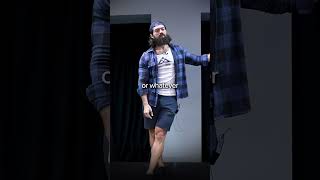

From Amazon to Community
30sGives a specific, low-cost tactic (QR code to community) that any low-ticket brand can implement immediately.
▶ Play Clip"Concise yet valuable advice that directly addresses the title's promise."
A business advisor explains how to scale a low-ticket consumer brand by building community through QR codes, pursuing brick-and-mortar distribution, and focusing on repurchase rates.
The brand does over $100k/month on Amazon but the founder wants to transition to their own website.
Insert a QR code in every purchase linking to a school group or community to capture real customer contacts.
Low-ticket brands scale through brick-and-mortar distribution like Whole Foods or selling in bulk.
Repurchase rate is the single most important metric; without it, even brick-and-mortar fails.
Once the product is right, marketing becomes solvable.
Scaling a low-ticket brand hinges on community engagement, distribution channels, and ensuring repeat purchases.
What simple tactic does the advisor suggest for capturing real customer contacts?
Inserting a QR code in every purchase linking to a community or school group.
00:14
Name two distribution channels recommended for scaling low-ticket brands.
Brick-and-mortar retail (like Whole Foods) and selling in bulk.
00:28
According to the advisor, which metric is the single most important for a low-ticket brand?
Repurchase rate.
00:40
What conclusion does the advisor draw about marketing once the product is right?
Marketing becomes super solvable.
01:06
QR Code Community Building
Offers a tangible, low-cost method to transition from faceless Amazon sales to direct customer relationships.
00:14Brick-and-Mortar for Low-Ticket
Highlights an often-overlooked scaling path that goes beyond online channels.
00:28Repurchase Rate as North Star
Emphasizes that without repeat customers, distribution efforts are wasted.
00:40Product Over Marketing
Reframes the priority: product-market fit must come before scaling marketing spend.
01:06[00:02] little over $100,000 a month, but it's primarily on Amazon. Seems a little more there's a lot of brand being built there. I want to transition more to website. >> That makes sense.
[00:14] every purchase, I'd put a big ass QR code that links to a school group or big incentive for people to join that community cuz then you're going to get also be able to get real contacts that are not, you know, faceless Amazon
[00:28] people, right? That's thing one. Number two is businesses that are low ticket like yours. Usually the way that those end up really scaling is through brick and mortar distribution. That's doing the deal with Whole Foods, that's doing
[00:40] whatever. Or you just have to sell huge amounts of bulk. Then then you can at least liquidate uh cash on the front end and then all of your effort at that repurchase rate is the single most important metric for the business and
[00:53] even if you do get brick and mortar distribution, you'll get people to buy packaging, they'll try the product and they won't buy it again. That is the one the product. Once you have the product right, the marketing kind of is super
[01:06] right, the marketing kind of is super solvable.

⚡ Saved you 0h 01m reading this? Transcribe any YouTube video for free — no signup needed.