Trading vs Investing: The Reality Check
40sCompares the explosive potential of compounding at 15% vs 30% returns, challenging common get-rich-quick trading myths.
▶ Play Clip Pushkar Raj Thakur: Stock Market Educator 📈
"Title accurately promises a beginner's guide to intraday trading and delivers step-by-step instructions."
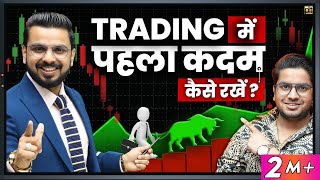
This video provides a comprehensive beginner's guide to trading in the stock market, covering essential concepts like intraday vs. delivery trading, leverage, order types, and the importance of realistic expectations. The speaker emphasizes a systematic approach over gambling, focusing on stable growth rather than get-rich-quick schemes.
The video targets absolute beginners who want to learn how to start trading in the stock market, distinguishing it from investing.
Using a lump sum calculator, the speaker shows that ₹2 lakhs invested at 15% becomes ₹1 crore in 10 years, but at 30% it becomes ₹47 crores, highlighting the power of compounding and the danger of unrealistic expectations.
The speaker advises aiming for 2-5% monthly returns from trading, which is realistic and sustainable, rather than chasing 10x returns.
Trading is buying and selling assets. In the stock market, you can sell first and then buy (short selling), unlike traditional markets.
Delivery involves holding shares for the long term; intraday requires closing positions the same day. Intraday offers leverage (e.g., 5x on stocks), meaning you need less capital but risk is higher.
GTT (Good Till Triggered) allows setting buy/sell orders at a specific price. Stop Loss (SL) orders automatically exit a position at a predefined loss level. Market orders execute immediately at current price; limit orders execute at a specified price.
MTF allows buying shares on margin (e.g., 50% funding) for delivery, with interest charged. It's useful for penny stocks but risky.
NSE has higher liquidity than BSE. Market depth shows bid and ask quantities. Always check liquidity before trading, especially on BSE.
You cannot buy an index directly, but you can trade Nifty via futures (leverage ~8x) or ETFs (leverage ~5x). Futures have expiry dates.
Limit orders prevent slippage. For liquid stocks, market orders are okay, but for options or illiquid stocks, limit orders are safer.
If an intraday trade goes into loss, you can convert it to delivery to avoid forced closure, but you must have sufficient funds.
Trailing stop loss automatically adjusts the stop loss level as profit increases, locking in gains.
The video equips beginners with foundational knowledge of trading mechanics, order types, and risk management. The key takeaway is to trade with realistic expectations and a systematic plan, avoiding the lure of quick riches.
What is the difference between delivery and intraday trading?
Delivery involves holding shares for the long term; intraday requires closing positions the same day.
09:18
What leverage is typically available for intraday trading in stocks?
Approximately 5 times leverage.
12:15
What does GTT stand for and what does it do?
GTT stands for Good Till Triggered; it allows setting a buy or sell order that triggers when a specific price is reached.
13:52
What is the main risk of using market orders for options?
Market orders can lead to slippage, especially in illiquid options, resulting in a worse fill price.
25:48
How can you convert an intraday position to delivery?
Go to positions, click 'Convert Position', select intraday to delivery, and confirm.
29:16
What is a trailing stop loss?
A trailing stop loss automatically adjusts the stop loss level as the profit increases, locking in gains.
30:30
What is the approximate leverage for Nifty futures?
Approximately 8 times leverage.
24:08
Why is liquidity important when trading?
Liquidity ensures you can buy or sell at the desired price without significant slippage.
26:19
Power of Compounding
Illustrates how a 15% vs 30% return dramatically changes wealth over time, emphasizing realistic expectations.
01:12Realistic Monthly Return Goal
Advises aiming for 2-5% monthly returns, which is sustainable and avoids gambling mentality.
03:41Delivery vs Intraday Explained
Clear distinction between long-term holding and same-day trading, including leverage benefits.
09:18GTT Orders
Introduces a useful order type for automating trades at target prices, applicable to both stocks and options.
13:52Limit Orders for Safety
Emphasizes using limit orders to avoid slippage, a key risk management practice.
26:33[00:02] meaning you're taking your first step into trading, and you don't know how trading begins, how to trade in the stock market. You've heard that many people earn money by trading, but how do they earn? So, your start will be with
[00:16] this video. You've come to the perfect video. So, as we've understood Vibhu, we've understood investing. Yes, we started from the very beginning. you can buy shares, you can buy ETFs, you
[00:31] can buy mutual funds, and this becomes your investment. Now, once your investment. Now, once your investment is made, then what? If you've invested? If you're a passive investor, you do
[00:43] SIP will keep deducting, or you'll keep buying ETFs in index investments. Your investment will keep accruing, and you'll keep earning returns. Now, if that's happening, can anything else be done after that to make extra money? Look, I'll explain a simple calculation. There are
[00:58] Look, I'll explain a simple calculation. There are people understand trading that Brother, we will trade and we will become millionaires from this, okay, we see people in the market that
[01:12] 10,000 became one lakh, someday 1 lakh became 10 lakh, someone made crores of rupees, we are not in that category, okay, we are not in that category, that means we are in the market, but not in that category, that means we are in the market, but
[01:33] lump sum calculator, okay, I will use lump sum calculator, let me explain to you, let's say someone invested 2 lakhs in the stock market, okay, so this is invested 2 lakhs in the stock market, okay, so this is your 2 lakhs, now 2 lakhs, if we assume it
[01:48] grows at 15%, then it will become 1 crore in 10 years, okay, how much will 2 lakhs become, it will become 1 crore, okay, but if we make the same return, not much,
[02:01] but if we make the same return, not much, at 15% and from trading for a year, then it we are only expecting %, even less than that, okay, even in terms of %, the return is 18%, so I am saying After deducting all the charges and brokerage,
[02:15] brother, give me 15% more. So what do you think will happen to this 1 crore? It will double to 2 crores. You are thinking wrong. This 35
[02:27] crore is the power of compounding. People think that if you get it at 30 instead of 15, what will happen? One crore will become two crores. Oh, it is not two crores. Brother, you understand this. Let me take the example of 15 again. What was happening as per 15?
[02:41] When you were getting it at 15, you were getting one crore in 10 years. But if I convert this 10 to 20 years. Okay, okay, in 20 years you will have 4 crores. Yes, these are normal investors, we are okay. But if we convert this 15 to 30, then what do
[02:57] you think, it will become 4 crores. Around 10, 10 and increase it to 12. Let's say 12 is on the upper side. Yes, Yes, sorry, this is 47 crores. Okay, that's the difference.
[03:12] sorry, this is 47 crores. Okay, that's the difference. That is the difference, I mean we are absolutely clear in the market, brother, I do n't want 10 for 1 from the market, I am not coming to do it, okay, I am not here to gamble, I know this figure, okay, I understand this
[03:28] figure, that I don't want anything from the market, friend, give me 2 for 5 for the month, I will give 2 for 5. Now you go to any trader in India, who knows trading, whether he is in profit or
[03:41] loss, okay, tell him that you can earn 2 for the month from trading, he will start laughing, you 2 for the month from trading, he will start laughing, you can earn 2 for 1 hour, if you say this, you can earn 2 for 1 hour, how much does it cost ₹ 000 in a lakh, we mean
[03:56] 00 for 00, yes, we are only looking for a month, we are not looking for more than this, we are not looking for more than this, if your expectations in the market are realistic, then you will make such, okay, if you come with unrealistic expectations, you will
[04:11] not make money, I wanted 2 for 5, the market gave it 5, that's great, we are more than market gave it 5, that's great, we are more than so we have to learn systematic trading so that we can achieve this. Okay, now understand, today
[04:26] your account is not in your account, you are logged in here. Okay, so are logged in here. Okay, so you have 2 lakhs in your account, you have to achieve this. Okay, if you achieve this, you will be very successful because this achievement
[04:40] possibility is very less for people. We know that whatever the market gives us, the market will give us 15% or 12% or 15%. We have invested in diversified ETFs, we will withdraw more. Okay, but we will try to double it by trading. So
[04:54] first of all we should understand why we have to trade. Are we trying to do this in trading that 25 lakhs should become 50 lakhs next month, that would be risky. Then no, not at all, it would be very risky. We do not want that. Okay, you have to be clear. You have to be clear
[05:08] in life too. I want you to be clear in life. Okay, if you are wanting this today, brother, I say, today you are getting good roti, dal, roti, paneer, vegetables, fruits. You are eating salad, now what do you want suddenly, what do you want,
[05:22] if overnight you do 10 times better than this, even 50 times better, then all that is right, so you have to keep moving step by step, we you have to keep moving step by step, we
[05:37] make a dream team, no, I also do n't make one because I also don't want that, you are understanding, we don't want the jackpots in life, but we want the stable growth, okay, so
[05:49] I am such a person, if you people relate to my mindset, then you should watch this video, otherwise you can go to those who are teaching 10 out of 1, I do very clear that brother, I have not come here to do 10 out of 1, okay,
[06:05] I know systematically, we have to work on our capital, what return do we want and God willing we get that, we don't want anything more than this, so from here you will start trading, your mindset of trading is clear, so you don't have any profit or loss. It should
[06:20] not be affected, okay, do n't take it to heart, okay, and the numbers, until I am not withdrawing money from my demat account, all these are numbers, okay, you all these are numbers, okay, you understand, but even if there is a loss, we should
[06:35] not incur losses beyond our means, okay, so our loss limit will be decided first, if there is that much loss, then either we will automatically deduct it or our system will deduct it, okay, we will enter the market with a very clear mindset, we should know what we have to give to the market, we will get it automatically,
[06:51] we should know what we have to give to the market, we will get it automatically, I do not know any trader who does not incur loss, we all incur loss, okay, but we have to define loss, how much loss, so if I
[07:05] know what I have to give, then opportunities come every day in the market, today I have a loss, no problem, I will make a profit tomorrow, okay, even if there is a loss tomorrow, the day after tomorrow I will make a profit, we should know many things, I will now
[07:20] try to teach you step by step, so what is the meaning of trading, trading, if we In normal trading language, buying and selling is trading. Anything can be bought and sold.
[07:38] land trading. Okay, you imported a container of T-shirts from China, so you you imported a container of T-shirts from China, so you trading. Okay, in the stock market, we get an opportunity. You must have
[07:53] heard in your life that we can sell only what we buy. Here, we can sell it first and then buy it. So, what happens in this trading? I don't have this land, but
[08:08] I'm selling it and then buying it. Now you'll say, how can this be? This is something different. This is something new. So, if I buy Nifty here, what does it mean? If it goes up, only then will there be a profit. Yes, but if it falls, then there will be a loss.
[08:21] But if I sell it here and then, let's say, come here and come here and buy it, then this is a possibility. This is the stock market. There is a possibility in it. Okay, so now we have to understand how this possibility happens. The
[08:35] Okay, so now we have to understand how this possibility happens. The step. Today you guys are starting trading, so in which things trading can be done. So whatever things we understood from the beginning, we understand that
[08:49] trading can be done in all those things. The first video we made, we understood about stocks. So, like here, I can buy it, but I can also sell it. If I click on sell, then sale can
[09:04] also happen. Okay, even if we do n't have shares, then also it will not be in delivery, it will be in intraday. Okay, now what is delivery and intraday? Delivery means normal stocks. I will give you an example. I go to delivery. Okay,
[09:18] now I go to the market and review it. Okay, I sell it. Okay, I will sell it. It failed. Now I told you that this sale will not happen. Why did it fail?
[09:30] he wrote that this stock is not Available in your holdings yes so I do n't have this stock at all okay I don't even buy stocks so when I don't have stock then how can I sell the money that's right but
[09:43] if I go to try placing again here and I make it intraday then it will get sold okay yes if I go to sell it here then I will review it if
[09:55] I submit it then it will get sold okay so what is this now what is intraday and delivery let's understand it in trading first delivery means it is taken and the matter is over if I had it in my holding then I sold it
[10:10] okay so in this you do n't have any obligation of profit and loss that if I bought something today this stock is trading at 2890 I bought it
[10:23] now it has fallen to 2500 I do n't have to answer to anyone I don't have to give money to anyone it was my money it will show negative in my portfolio okay okay it's absolutely clear okay okay it's absolutely clear if it goes to 3200 from here then
[10:37] profit is made till that profit book No, I do. I don't have to answer to anyone. There is no income tax, nothing. You are taxed only when you book a profit. Okay, there is no tax on a loss, but still you have to book a loss in your ITR
[10:51] because if you book it, you can carry forward it to years. What does it mean if you make a profit next year, then you wo n't have to pay tax on it. So, suppose someone has a loss of Rs. 10 lakhs and he has a profit of Rs. 10 lakhs, then there is
[11:05] no tax to pay. So, I can sell it intraday. What is the problem in intraday? The can sell it intraday. What is the problem in intraday? The settlement will take place today itself. The timings are different for different brokers. You should approximately keep in mind that you have to
[11:18] You should approximately keep in mind that you have to close the deal by 1:15 pm, otherwise the broker will close it by 3:18 or 3:20. Brokers have different timings. So, what does it mean to say that from 9:15 am till 31 pm, if you sell it
[11:33] and this stock falls from here, only then will you make a profit. Well, if it does not fall but increases, then the loss will also be settled today. You will have to do it, so the profit and loss will have to be settled today itself,
[11:45] what is the benefit in this, look very carefully, when I am going to buy in delivery, okay, suppose I am going to buy 10 shares, then everything will be shown to you here, you look below, okay, when I am going to buy it, how much is
[12:00] when I am going to buy it, how much is it costing me, 2890, okay, when I go to buy it, 2890 * 10 means I will have to pay 28000 900, yes, but you see, if I go into intraday,
[12:15] see, if I go into intraday, how much is it costing me, only 5779 for 10 shares, how much is it costing me, only 5779 for 10 shares, how is this for 10 shares, in fact, if I how is this for 10 shares, in fact, if I
[12:29] we will read above 280000 there, here it is working only for 57000, this happens because we get leverage on intraday, okay, you have less money, but you
[12:41] you have less money, but you can trade in more shares, okay for both buying and selling, so what were we doing just now, just now We were selling, if I remove it from here, I go here again and I go to buy, so you
[12:56] see, I will be able to choose the same intraday here, also cost me something like 57000, but if I buy it in delivery, then it will cost
[13:08] me the full amount of 2.89 lakhs, okay, do you understand, friend, here I have to pay okay, do you understand, friend, here I have to pay 290000, here I am paying only 57000, so people will say this is better, but its settlement will happen today only, okay, profit and
[13:24] loss, now your profit and loss in this is only according to 290000, okay, that much money has been spent, yes, but whatever your PNL moves, it will move according to 2900, okay, so this intraday trading that we are trading, this intraday trading is
[13:40] risky, okay, because it is not necessary that it will happen as we thought, we thought, let's buy it in intraday, if it does not increase now, then there will be a loss, okay now There are
[13:52] different types of trades within this. Look, there is a regular trade. Then there is GTT (TT), which means Good Till Triggered. What does this mean? I say here, "Yes, I will buy 100 shares, but I will buy when the
[14:08] buy 100 shares, but I will buy when the price reaches 2500." Okay, otherwise, I won't buy. I bought it, and I set a target here. I bought it when the price goes to 2900 after buying, then cut it off. Okay, my
[14:25] return on 16%, so right now I am expecting it to go down to 13%. For example, saying this is foolish because it's not necessary that it will always be there. We'll see when it comes down. So, for example, if it's almost 2889 right now, I say, "Friend, I'll buy it at 2800."
[14:41] And what will my profit be? I'm saying, "Yes, we'll take it out at 2900." Okay, so I 'll buy it at 3% and book a profit of 3.5%. So, explain this here. Now what will this do,
[14:56] what will this do, it will block my margin of 280000, okay yes, right now it is showing 37 lakhs from the 280000 account, but the 80000 in it will be reduced, okay, okay, it means for this there should be money in the bank account,
[15:10] how will it happen without that, then say I want 10000 shares, I don't have money, how will it happen, okay, okay, so this is what happens, good tail triggered, it does not go only in shares, if I say that friend, I want to not go only in shares, if I say that friend, I want to
[15:26] option of Nifty of 22000, okay, right now you do not understand what money is, I will tell you later, I want to buy this option, now this option of which expiry, Apple of 27th June, if I want to buy this also, then I can place GTT here also, brother,
[15:42] give me 250 quantity, but right now the price is above 1100, I want to buy it at the price is above 1100, I want to buy it at the price of Hajj, so when the price of Hajj price of Hajj, so when the price of Hajj
[15:57] price is here above. This is the call option of Nifty. Right now I am telling people that GDT is also applicable in options. Okay, okay, so many
[16:09] people do not know this. Now when we were here, people would say, 'What is this, what is this MTF?' MTF means margin trading facility. Well, in this also the thing is the same, now I want to buy regularly, I do not
[16:23] want intraday, okay, I want to keep it. But the thing is not about money, friend. Now if I want to buy 100 shares, it will cost 90000. It is not that much, yes, so people can buy on margin also. Now what is margin trading
[16:36] facility, that the fund will also work at 50, okay, so it is not 290, let it be only one and a half, take it for one and a half, that means it is not ₹ lakh, yes it is only 5 lakh, 100 shares will come in that, yes the entire amount will come in, but within this You have to read about the holding
[16:52] period. First of all, you can only keep it for one year. Now, why does a broker offer this? The broker says, "If it breaks a little at 50, then there's no loss for him." Okay, you understand, the broker does n't incur any loss because the market will fall to 50, the
[17:08] stock will fall to 50. This is rare, it's rare, isn't it?
[17:27] every 000, okay, daily. So, you can hold for as many days as you want. Now, this is beneficial for those who trading type). Yes, the money isn't complete, but okay, we take it
[17:42] on margin. If the stock goes up from here, we'll sell it. What happens on selling is that interest of 20% per day will be charged. Okay, if we're trading at 0,000, and now we're buying for 4 lakhs, then interest of 00% per day will be charged. Okay, so
[17:56] I'm also telling you what the margin trading facility is. But it's also useful on penny stocks because they It can break at 50, right? The thing is, this facility depends from broker to broker. Okay, okay, now it is written here, keep that in
[18:09] Okay, okay, now it is written here, keep that in mind that let's say 50 percent of the funds are given for a limited period and the gains and losses in this can be 2x, so if the facility is available on small stocks as well, first of all I don't think that you will get this facility on the
[18:22] big stock, see what is inside it, it is written here how many stocks you can buy, here it is only on 370 stocks, okay, there are 5000 stocks, okay, Vadi is okay, there are 5000 stocks, okay, Vadi is
[18:35] this facility is valid on all these stocks, okay, so the broker also does not take any risk, so he will give okay, so the broker also does not take any risk, so he will give okay, okay, we have understood till here, now the next step is to
[18:48] buy NSC, buy BSE, the rate is different, okay, example here Let's take this and again I go to Buy P. So if we look here, we will
[19:00] if we look here, we will see the rate of NSC here 28.89.4, we get see the rate of NSC here 28.89.4, we get 28.90. Okay, but this is just lava. Okay, why is it lava? There is no market depth on NSC. Now what is this market depth
[19:13] Now what is this market depth when we go here and see, sorry, I opened the option option by mistake. We will see its market depth here. Okay, this is market depth. Okay, so what is this market depth? It means the bid and
[19:27] market depth? It means the bid and ask rate. Okay, this is a very liquid stock. Okay, many people are buying it, many people are selling it. If you see the quantity here, 1 lakh. If you see 0 thousand quantity, then people already
[19:40] want to buy. Okay, here the ask is 36000, which means so many people want to sell this share. Okay, there is a slight difference in the rates on that side, who wants to buy at what rate and
[19:54] who wants to sell at what rate. Okay, now this is the DSK that I told you about, if we keep it at the same rate. Let's look at NSC. There is more liquidity on NSC. more liquidity on NSC. Okay,
[20:31] two exchanges. Suppose there are two jewelers. I want to buy gold. It will be available on this one and on that one. 10,000 customers are coming and buying on this one, 2,000 customers are coming and buying on this one. But there is a slight difference in the price. So, if you want to catch this difference,
[20:45] you can do it. You have it available with you. You can see where it is cheaper. But ultimately, what happens is that many times you will see that it is showing cheaper on BSE. Yes, but when you go to buy, you will see that there is
[20:58] no liquidity there. What does liquidity mean at that price? You want to buy. No one is selling at that price. This is the difference. Okay, so always, if I lift the Ella up here, always, if I lift the Ella up here, you see, the rate here is 90, the
[21:10] you see, the rate here is 90, the rate there is 89, there is a difference of 50 paise. Okay, it is cheaper on BSE. If you go to buy, it is not necessary that it will be cheaper there. Okay, now you have understood till here. So how do we buy, where do we buy from?
[21:24] When we talk about Nifty, Bank Nifty, what can we buy? Look here, there is no buy or sell option. You cannot buy these. You can never buy the index, but the most trading happens in the index. People
[21:39] trade only on Bank Nifty and Nifty. Now, here, for example, if I write Nifty above, then Nifty Indus comes here. Nifty index comes here.
[21:53] Futures comes here. Options trading happens; trading in futures and options is not done in cash. ETFs can be bought in cash. Just like you can buy Nifty B, you can buy it. But if you say I want to trade, you want to
[22:09] trade, or you can trade within it, within Nifty B. Okay, if you want to buy it, you can buy it intraday. You will get leverage. Here, it is working only for 5000, whereas here it is working for 25000. So,
[22:23] five times leverage is available in ETFs also, trading can be done. It may seem like GTT, everything can happen but now here when we wrote Nifty, what are these futures and options, these are derivatives, well you can buy futures
[22:39] of Nifty, leverage is available in this also but we will understand futures and options in a separate video, okay right now we are trying to understand trading in a basic way, this is the future of Nifty, I will add it, okay now I will go to the chart of future,
[22:53] now you will see some more interesting thing, I will show you that also, just a show you that also, just a second this is the Nifty of Nifty which is This is a dex, okay, and along with that I also bought a Nifty future. There is a
[23:09] bought a Nifty future. There is a price difference between these two, 715 and 755. Look, there is a date written below it, 30. Okay, today we are making this video on the 29th. Yes, this future
[23:23] contract will expire on the 30th. Okay, so when I want to buy Nifty, I cannot buy it, but I can buy it when I want to buy it. So look here, I am getting 25 quantity of Nifty at 6482. Okay, that means if
[23:41] at 6482. Okay, that means if I multiply 22700 by 25, then how much money will it cost me? First you understand this. understand this.
[23:56] Nifty is 22000 at 714. Okay, if we multiply it by 25, then your money will be spent. 567 above 500. your money will be spent. 567 above 500. Okay, here it is saying that the Okay, here it is saying that the work will be done at 6820. Okay, it is
[24:08] giving you leverage. Okay, how much leverage is there, almost eight times in futures. Okay, that eight times in futures. Okay, that means eight paise. The times seem to be low, I understand. If I think Nifty will go up from here, then I can buy its future.
[24:22] Okay, now after buying, it is important to understand the order type here as well. Okay, you can do this in delivery and intraday, whether I want to take delivery or
[24:34] intraday. Intraday means you will have to close the position by 1.25, otherwise the broker will close it before 320. Okay, now the order type is there, but right? This is an index. So, delivery means that it is
[24:47] delivery means that it is kept for the long term. The index itself, the future will remain till its expiry, that is, it will remain till tomorrow. Its expiry is currently on May 30. Future contracts are available for different months. Okay, this is what I am telling you.
[25:01] This month is the current month, then there is the next month, then there is the fifth month. Okay, so right now it is May 30. Look at this, June, look at this, if I go to July, its rate will be very high. Look, it is running here, 712 is running there.
[25:15] 23000 can you see this hum so if I click on this and I go to buy it then I am getting the same on leverage yes I am getting it on leverage but now here you have to understand that you have to buy it at the market price, there is market depth on this also that you
[25:31] want to buy it, the seller at 995 wants to sell it at 999, okay this also has market depth, okay futures are liquid, liquid means there is no problem of liquidity, the problem of liquidity will be understood by that person
[25:48] option, then a market order should not be placed, generally like I am going for buy, I have placed a market order, I have placed something which has seller is saying that I will sell ₹, then I will be cheated by a chapa of 20, okay if I place the market order then I have to
[26:04] by a chapa of 20, okay if I place the market order then I have to high frequency, people who trade, take very large quantities, people there also need liquidity The problem of one, one, two, two rupees
[26:19] is visible in one, one, two, two lakhs. That is why liquidity is a very important thing. People will not understand it today because people are trading with very little capital. Tomorrow, when they will get money, how important liquidity is. Therefore, you should place a limit order. You should see the price, but
[26:33] limit order. You should see the price, but what is going on? Okay, it is 22975, but here I say, I will buy it, put your limit at 970 and leave it. Okay, if you want to buy immediately, then put the price which is going higher, it is 80, 980.
[26:51] I have put a limit of 90, I am ready to buy at this price, but I will take it by putting a limit. Okay, within this, AC limit can also be applied, that is, if you want to put your stop loss, you want to buy,
[27:05] but I want to buy with a stop loss. So, what does AC market mean? You have bought, but you put a trigger price here. Trigger means you give an alert to the system that if it goes below this price, then cut it. What is that price? You have to pay the
[27:19] price. Okay, here I've taken an example of I've taken an example of 22800. I'm buying it, let's say at 980, but if I 22800. I'm buying it, let's say at 980, but if I lose 0, then
[27:31] cut it. Okay, so this trigger is triggered. The real market also works the same way. real market also works the same way. You're buying at whatever price you're buying, but if this price comes, it will be cut. You can review it. The order will be placed as soon as you submit it.
[27:44] can review it. The order will be placed as soon as you submit it. Okay, this is the buy. I'm telling you how we buy in trading today. This is very step one. Okay, okay. Now I'll ask you a few questions, you have to answer. How many times
[27:58] you have to answer. How many times leverage do I get? Eight times, very good. Okay, if I do Five times, five times, generally five times. Okay, so this is clear to you by now. Now, whatever we've been trading, what we've understood so far,
[28:15] we've understood stocks, ETFs, and futures. Options are a bit complex right now, so I'm not going into that. Okay, you can also trade commodities. So, what about commodities, like if I write gold futures, okay, so these
[28:33] gold futures have come, but look what is written next to it, MCX. Now what is MCX, this is Multi Commodity Exchange, okay, buying and selling happens in the same way as you have just understood, okay, so let me go to this future which is of 5th
[28:47] June, okay, now if we see the market depth, we can buy and sell in the same way, in intraday there is limit order, SL limit, everything is in the same way, okay, and in this also there are GTD orders, so what have we explained in
[29:02] orders, so what have we explained in this video, how do you buy, how do you buy and sell, how is margin, what is leverage, what is SL, how do you place stop loss, you understood this much, okay, after this there is one more step,
[29:16] question, yes ask a question, like in intraday we bought shares of a company and we incurred a loss in it, but we do not want to sell, then it gets converted into delivery. 100% very good, why can it be, okay, I will show you,
[29:30] okay, right now I will purchase an ETF in front of you, okay, Nifty, right now it has reached 315, or not, okay, I buy it, I will pick up 100 quantity here, okay, Nifty 20, Nifty 20, I did it intraday, I did it intraday,
[29:45] okay, the liquidity in it is okay, so I am hitting the market for you, okay, I have submitted it, I have received it, okay, okay, now when I have received it, it will go into my positions, Nifty is in the position, okay,
[30:02] now convert position, okay, we will click on convert position, intraday to delivery, how much quantity was it, 100, quantity was it, 100, 100, 100, we will review the quantity, we will confirm,
[30:18] now it has gone into delivery, we have bought it, okay, okay, that's done, convert it, okay, we could have also set up a trailing asset, that was a very good feature,
[30:30] what does trailing mean, as the profit keeps increasing, it will keep trailing, that means you You say, for example, if I make a profit of 00, then I should book a minimum profit of 00. Okay, then if I make a profit of 500 again, or a profit of 1000, then
[30:43] you book 00. Meaning, if the profit comes down again, then the trail is happening, this happens above. Now we will understand this further. So this is enough for today's video. You have understood how trading is done, what is it, how to buy and sell, what is an ID,
[30:58] SL limit, what is an SL market. You have understood everything. In the upcoming videos, we will move forward very quickly. Right now, futures options are a very big topic. It will take us a lot of time. Okay, so now we are going to understand all that
[31:11] any questions, you can ask in the comments. If you are new to the stock market, you do can invest or trade in the stock market, then you will find pre-comment. You will get it. In fact, you
[31:28] comment as to which broker is offering what. So do check out the comment. We will meet you in the next video. Till then, video, subscribe this channel, click on the bell icon so that you do not miss any of the upcoming videos.
[31:40] We will meet you soon. Till then, you self meet and Jai Hind Jai you self meet and Jai Hind Jai Hind


⚡ Saved you 0h 31m reading this? Transcribe any YouTube video for free — no signup needed.