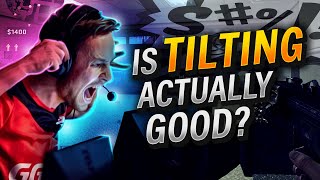

Tilt: The Silent Killer in Gaming
45sRelatable opening describing the destructive spiral of tilt that every gamer has experienced.
▶ Play Clip"Title accurately promises both stopping tilt and using it to win, and the video delivers on both."
Tilt is a destructive force in gaming that causes players to lose focus and make mistakes. However, not all tilt is bad; some top players use frustration to fuel their performance. This video explores how to control emotions and harness them for an advantage.
Tilt causes players to lose control and throw easy wins, leading to losing streaks and de-ranking.
Gaming creates strong emotional connections to performance, making players vulnerable to rage and tilt.
Dr. Susan David explains that emotions communicate our deepest values; e.g., competition as a core value makes ranked games emotional.
Dr. David says there are only pleasant and unpleasant emotions, all useful for self-understanding. Suppressing emotions causes burnout.
Instead of asking how to stop a feeling, ask how to respond to it. Prepare mentally before games.
Joy enables flow; disappointment reminds you of what matters; anger can fuel motivation if controlled.
Tim Grover's book notes that legends like Jordan used anger to fuel motivation. Anger reinforces certainty and energy.
Team Penta, down 2-0, used their tilt to refocus and win the championship, illustrating flow triggered by struggle.
Controlling emotions is crucial for a pro gaming career. Develop a healthy relationship with all emotions.
Mastering your emotions—both positive and negative—is essential for consistent high performance in esports. By understanding and responding to emotions rather than suppressing them, you can turn tilt into a tool for success.
What is tilt in gaming?
A state of emotional frustration that causes loss of focus and poor performance.
According to Dr. Susan David, what do emotions communicate?
Our deepest values.
03:03
What is the key difference between controlling emotions and responding to them?
Controlling emotions can cause burnout; responding to them is sustainable.
05:56
How can anger be useful in gaming?
It reinforces certainty and provides energy to win.
09:00
What did Team Penta do to reverse sweep Evil Geniuses?
They used their tilt to refocus and build momentum.
10:02
Tilt is destructive
Defines the core problem addressed in the video.
Emotions reflect values
Introduces a psychological framework for understanding tilt.
03:03Respond, don't stop
Key actionable advice for emotional management.
05:56Anger as a tool
Challenges the notion that anger is always bad.
09:00Penta's reverse sweep
Real-world example of using tilt to win.
10:02[00:00] tilt is one of the most destructive
[00:02] forces in gaming it can cause the best
[00:05] players in the world to fall apart under
[00:07] pressure and cause you to lose control
[00:10] and throw easy wins just think about the
[00:13] last time you got de-ranked after a
[00:15] vicious losing streak or when you kept
[00:18] making dumb mistakes and then suddenly
[00:19] had a toxic teammate screaming at you
[00:22] slowly that frustration probably surged
[00:25] inside of you and when it heightened
[00:27] past a point of return you ended up
[00:30] losing your focus and ability to perform
[00:33] and when your rage and tilt steal your
[00:36] focus and your ability to make good
[00:38] decisions you spiral farther and farther
[00:42] into that pit of defeat and anger but
[00:45] this is only one side of tilt it's easy
[00:48] to look at these experiences and label
[00:50] frustration and anger as your enemy but
[00:54] what about those players who are
[00:55] insanely good at the game yet seem to be
[00:58] frustrated almost all the time
[01:00] surely if tilt was so bad then every pro
[01:04] player should be super chill relaxed
[01:07] perhaps even in this constant monk-like
[01:09] meditative state but in reality there
[01:12] are many of the world's greatest players
[01:14] who seem to get easily triggered into
[01:16] frustration constantly balancing on that
[01:19] verge of tilt
[01:21] so let's dive a bit deeper into how you
[01:24] can gain control over your emotions so
[01:26] you don't spiral out of control
[01:29] but let's also look at the positive side
[01:32] of till and see how you might be able to
[01:34] harness its emotional energy and
[01:36] potentially use it to get an advantage
[01:39] [Music]
[01:44] let's begin by addressing why tilt is
[01:46] such a common problem in esports now i'm
[01:50] sure you can tell that from your own
[01:51] experiences you are far more vulnerable
[01:54] to rage and tilt while gaming than
[01:56] during most other activities just think
[01:59] about how many times you end up
[02:00] screaming at your screens versus how
[02:03] chill you are throughout your day-to-day
[02:05] life
[02:05] and of course you're not alone even the
[02:07] pros at the top of esports requires
[02:09] special training from performance
[02:11] psychologists to help them overcome
[02:13] their own emotions
[02:15] but why is it so easy to get tilted
[02:18] while gaming well it's really easy for
[02:20] us to form emotional connections to our
[02:23] performance there's nothing like the joy
[02:26] that you experience when you execute a
[02:29] perfect mechanical combination or when
[02:31] your team wins an insanely clutch round
[02:34] or when you finally reach that next rank
[02:37] but there's the darker side the pressure
[02:40] and competition in esports can be cruel
[02:43] and unforgiving consider that feeling of
[02:46] losing that hard-earned rank falling
[02:48] behind to a team that's easy for you to
[02:51] beat or just getting unlucky over and
[02:54] over again now the frustration from
[02:56] these experiences can very quickly cloud
[02:59] your mind and lead you into a state of
[03:01] complete tilt
[03:03] but where exactly are these feelings
[03:05] coming from well according to
[03:07] psychologist and emotional intelligence
[03:09] expert dr susan david emotions are our
[03:13] body's way of communicating our deepest
[03:16] values to ourselves she outlined 52 core
[03:19] values that most people gravitate
[03:22] towards now each of us holds a handful
[03:24] of these values in the highest of
[03:26] priority in our own lives and it's these
[03:29] high priority values that ultimately
[03:32] guide and affect your emotions this is
[03:34] why you typically feel strong emotions
[03:37] towards certain things that others don't
[03:39] feel nearly as strongly about for
[03:42] example you might feel completely chill
[03:44] while playing a casual game when it
[03:46] comes to ranked you might feel
[03:47] completely emotional and very easy to
[03:50] trigger into a positive or negative
[03:52] state this might be because competition
[03:54] is one of your core values
[03:57] but your teammates might feel certain
[03:59] emotions towards the gaming experience
[04:01] because he values wealth and he sees his
[04:04] gaming career as a way to fulfill that
[04:07] need to earn money and make a living but
[04:09] this is all great to understand but
[04:11] we're still left with that big question
[04:13] which is how do we gain control over our
[04:16] bad emotions so they don't lead to
[04:19] losing control or us losing focus during
[04:22] the game well according to dr david
[04:25] there is no such thing as bad emotion
[04:27] sounds weird right well as dr david
[04:30] explains there are pleasant and
[04:32] unpleasant emotions but all of them are
[04:35] useful at helping us understand
[04:37] ourselves
[04:38] it's unrealistic to strive to always
[04:40] feel excited or euphoric while
[04:42] practicing or competing because you will
[04:45] inevitably have experiences that make
[04:47] you feel angry overwhelmed stressed or
[04:50] disappointed and in the past sports
[04:52] psychology focused on this whole
[04:54] good versus bad emotions thing they
[04:56] focus on reframing negative experiences
[05:00] through this
[05:00] forceful self-talk and thought-stopping
[05:03] technique
[05:04] for example if you felt nervous or
[05:06] discouraged coaches would train you to
[05:09] shut out those feelings and focus on the
[05:11] positive
[05:12] and of course this can be helpful for
[05:14] the short term these techniques focus on
[05:17] emotional control which can be helpful
[05:20] for a limited amount of time
[05:22] unfortunately it's not a sustainable
[05:24] method
[05:25] new research shows that controlling or
[05:27] forcing emotions can actually cause
[05:30] stress and emotional burnout
[05:32] psychologist ed deckey's work backs this
[05:35] up he concludes that we can't create our
[05:37] emotions because they are responses to
[05:40] stimuli
[05:41] but we can however control how we
[05:44] respond to those feelings and how we
[05:46] prepare for them in other words you
[05:48] should never ask yourself how do you
[05:50] stop this feeling
[05:52] you should instead be asking how do i
[05:54] respond to this feeling
[05:56] now all this emotional analysis and
[05:59] taking the time to think about how we
[06:01] want to respond to emotional situations
[06:04] can help a lot but it's very impractical
[06:07] to emotionally analyze yourself and
[06:09] respond to it appropriately in the heat
[06:12] of competition it's not like you can
[06:14] just pause the game for a quick
[06:16] meditation session or journaling session
[06:18] if you feel angry but this is why it's
[06:21] so critical to prepare your minds before
[06:24] the game first it's important to
[06:25] understand that strong emotions whether
[06:28] pleasant or not can be useful or
[06:30] distracting anger anxiety and
[06:32] disappointment are obvious distractions
[06:35] as they can cause us to overthink
[06:37] second-guess ourselves and lead to
[06:38] playing impulsively but joy and euphoria
[06:41] can also distract us through making you
[06:44] feel complacent or overconfident and you
[06:47] along with many other competitive gamers
[06:49] have probably at some stage fallen into
[06:52] the trap of thinking this isn't so hard
[06:55] we'll win easily only to then lose that
[06:58] game because you let your guard down
[07:00] now i want us to dig a bit deeper into
[07:03] how three different emotions vastly
[07:05] different emotions can serve us and help
[07:08] us but to extract the most value from
[07:10] your own emotions you need to ask
[07:13] yourself what is the function or reason
[07:16] for this feeling now let's start with
[07:18] joy joy is a pretty obvious one you
[07:20] probably feel this while you're
[07:22] competing in esports because you're
[07:23] experiencing something which brings you
[07:26] close to your values you might value
[07:28] competition autonomy community or
[07:31] teamwork all of these needs can easily
[07:33] be met during your gaming experience so
[07:35] it makes sense that you enjoy gaming if
[07:38] these are your values
[07:40] joy is a fundamental ingredient in
[07:42] experiencing flow as well if you want to
[07:44] learn more about how the flow state can
[07:46] help you i also recommend checking out
[07:48] our other videos that i released on the
[07:51] topic
[07:52] but believe it or not the pain of
[07:53] disappointment can also be useful losing
[07:56] intense rounds especially when the
[07:58] stakes are high can really sting but
[08:01] this pain can also serve as a reminder
[08:03] that competing and proving yourself at a
[08:05] high level means a lot to you it puts
[08:08] things into a new perspective so that if
[08:10] you find yourself feeling like this you
[08:12] can take that time to process the loss
[08:15] and use the feelings of conviction to
[08:18] move you towards a strategy that
[08:20] sharpens your focus
[08:22] gives you the motivation to work hard
[08:24] and earn that next win but let's look at
[08:27] anger anger is also really useful but it
[08:30] needs to be handled with care legendary
[08:32] basketball trainer tim grover explains
[08:35] in his book that many of the greatest
[08:37] players he's worked with were so
[08:39] dominant and competitive at the highest
[08:41] level because they embraced their dark
[08:44] side he explains that his clients such
[08:46] as charles barkley dwayne wade coe
[08:49] bryant and michael jordan were all able
[08:52] to use anger as a tool to fuel their
[08:54] motivation and give them an unstoppable
[08:57] energy to outplay others
[09:00] so how does this work well i'm sure that
[09:03] you'd agree that when you're angry
[09:05] you're very certain about your beliefs
[09:07] for example have you ever tried to
[09:09] change the mind of an angry person
[09:11] chances are they're very stubborn and
[09:13] that anger just reinforces their own
[09:15] beliefs
[09:16] and this is how anger can be useful it
[09:19] serves as a reminder of how important a
[09:21] win is to you and gives you the energy
[09:24] to do whatever it takes to win for
[09:26] example in the rainbow six grand finals
[09:28] in 2018 team penta found themselves in a
[09:32] 2-0 deficit to evil geniuses in an
[09:35] interview pengu described how the team
[09:38] was completely tilted at a point where
[09:40] they're screaming at each other and
[09:42] getting out all their emotions and of
[09:44] course with one loss away from losing it
[09:46] all it was easy for them to spiral out
[09:49] of control but rather than letting the
[09:52] emotions take over in game three
[09:54] they regained their focus they built
[09:56] back their momentum and they pulled off
[09:59] a reverse sweep defeating evil geniuses
[10:02] and of course becoming the world
[10:04] champions but how did penza do the
[10:07] almost impossible by breaking this
[10:10] downward spiral into tilt well the
[10:13] answer likely comes from research into
[10:15] the flow state flow science expert jamie
[10:17] wheel explained in his 2013 tedx talk
[10:20] that it's not uncommon for periods of
[10:23] flow to be kick-started by feelings of
[10:25] struggle and suffering he explained that
[10:28] feelings of being backed into a corner
[10:30] like penta being down two to zero can
[10:34] put us into a fight or flight response
[10:36] and if players can respond to this fight
[10:38] or flight response with confidence
[10:41] determination and intense focus it can
[10:43] trigger us into that state of heightened
[10:45] performance
[10:47] but when it comes to harnessing your
[10:48] anger in a productive way control is of
[10:52] absolute importance letting anger get
[10:54] the better of you is not helpful so to
[10:58] use your anger as a tool you have to be
[11:00] in control of your behavior and you need
[11:02] to know how to calm yourself down that
[11:04] rage becomes a bit of an obstacle
[11:07] remember though that emotions are very
[11:09] personal to each individual and that
[11:11] certain emotional states can be more
[11:13] useful for one person than another for
[11:16] example some players might play better
[11:18] when they're angry and riled up but
[11:20] others might play better when they're
[11:21] calm and in a friendly mood
[11:24] it's important to note here that
[11:25] emotions while they can serve specific
[11:28] functions to help us that they shouldn't
[11:30] always be seen as a means to help us get
[11:33] better in gaming
[11:34] emotions are complicated and should
[11:36] always be handled in a way that is
[11:38] healthy for you and for those around you
[11:41] if you or anyone you know is struggling
[11:43] with emotional trauma intense bouts of
[11:45] anger sadness or anxiety i really
[11:48] recommend seeking the right help and
[11:50] therapy so in this video we talked about
[11:53] a lot but what do i want you to take
[11:55] away from it
[11:57] well now that we live in a time where
[11:58] becoming a pro gamer is a very
[12:01] legitimate career where you can play on
[12:03] stage and earn a salary while becoming a
[12:05] celebrity in the space the key to doing
[12:08] that all is to develop a consistent
[12:11] level of high performance
[12:13] and one of the biggest barriers to that
[12:15] is our own emotions if you can't control
[12:18] your emotions or you can't tap into the
[12:21] ones that help you play better then
[12:23] you're going to fall behind and you're
[12:25] never really going to reach that high
[12:27] level of play but this video has armed
[12:30] you with the resources and knowledge of
[12:33] how your emotions work and how to use
[12:35] even seemingly negative or bad emotions
[12:38] as good as tools to help you fuel your
[12:42] performance so going forward i want you
[12:44] to pay close attention to your own
[12:46] emotions close attention to which
[12:48] emotions help you the most and which
[12:50] emotions have been holding you back
[12:53] then i want you to develop a healthy
[12:55] relationship with all of those emotions
[12:57] to think about the bad emotions in a new
[13:00] light and to think about the good
[13:01] emotions as a way to help you accelerate
[13:04] your performance with enough time
[13:07] self-reflection and practice on
[13:10] emotional control you will slowly gain
[13:12] an ability to tap into this high
[13:15] performance state on demand and no
[13:17] longer lets emotions become a
[13:19] distraction
[13:21] as a result you will spiral higher and
[13:23] higher towards even better and better
[13:26] performance you'll gain an advantage
[13:28] over most other players and you'll start
[13:30] to make progress towards a potential
[13:32] career on that pro stage
[13:37] [Music]
[13:38] hey guys i hope you absolutely love this
[13:40] video and if you want more like this
[13:42] from the channel then you're gonna have
[13:44] to turn on the notifications and drop a
[13:46] like on the video i'm not saying that
[13:48] for my sake i'm saying that because the
[13:50] youtube algorithm will never show your
[13:51] videos again if you don't do those and
[13:54] if you're curious about improving your
[13:55] skills a lot faster or even becoming a
[13:58] professional gamer then i recommend
[14:01] checking out our course and boot camp
[14:02] the content in each of those are not the
[14:04] kind of things that you're gonna find on
[14:06] youtube so if you're very serious about
[14:09] making it in esports and you're very
[14:10] passionate about that idea of becoming a
[14:13] pro gamer then it's definitely worth
[14:15] your time
[14:16] together they'll teach you everything
[14:18] that you need to accelerate your skills
[14:19] faster and even build a pro career in
[14:23] esports and both will teach you a lot of
[14:25] information that most other players in
[14:27] the industry never really learn so when
[14:29] you start trying out for teams and
[14:31] teaching them your new approach to
[14:33] improving you probably think you're a
[14:35] genius but anyways i hope you guys love
[14:37] this video i hope it helps you a ton on
[14:39] your esports journey i'll see you all in
[14:42] the next video
[14:43] [Music]
⚡ Saved you 0h 14m reading this? Transcribe any YouTube video for free — no signup needed.