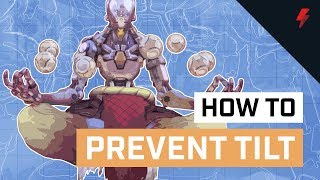

What is Tilt? The Psychology Explained
45sDefines a common gaming term with a psychological breakdown, relatable to any competitive player.
▶ Play Clip"Title accurately reflects content: psychology of tilt and prevention tips for Overwatch."
Tilt is a state of mind where poor decisions are made due to anger, shame, or other negative emotions. This video explains the three stages of recognizing and preventing tilt: prompting, vulnerability, and mindfulness.
Tilt originates from pinball and poker, adopted by eSports. It's a state of mind causing poor decisions due to negative emotions.
Tilt starts with a prompting event, like an abusive teammate or pressure to play a role. These events occur every game but affect players differently.
Non-game factors like time of day, hunger, fatigue, or personal events increase vulnerability to tilt. The combination of prompting and vulnerability causes tilt.
Mindfulness involves non-judgmental awareness of in-game and out-of-game factors. Recognizing vulnerabilities and physical reactions helps de-escalate tilt.
Physical signs of tilt include tightening shoulders, increased heart rate, and sweaty palms. Noticing these helps choose a healthier response.
Deep breathing and meditation calm the mind. Counting breaths or focusing on senses redirects thinking outward. Sometimes logging off is the best solution.
Tilt is a gradual build, not an instant snap. Practicing mindfulness can curb tilt before it starts, and it's okay to step away to reset.
What is tilt in gaming?
A state of mind where one makes poor decisions due to anger, shame, or other negative emotions.
What are the three stages of recognizing and preventing tilt?
Prompting, vulnerability, and mindfulness.
0:35
What is a prompting event?
A moment that can trigger negative emotions, such as an abusive teammate or role pressure.
0:35
List three non-game factors that increase vulnerability to tilt.
Time of day, hunger, fatigue (or recent events, losing streak, physical discomfort).
1:09
What is mindfulness in the context of tilt?
Having full non-judgmental awareness of what's going on in-game and out-of-game.
1:41
Name two physical signs of tilt.
Tightening shoulders and increased heart rate (or change in posture, sweaty palms).
2:26
What is an example of a judgmental response vs. an objective response to a teammate?
Judgmental: 'This Genji sucks.' Objective: 'This Genji keeps diving solo and isn't landing effective damage.'
2:41
What breathing technique is recommended to de-escalate tilt?
Counting long and deliberate inhales and exhales until calm.
3:11
How can focusing on senses help with tilt?
It redirects thinking outward and helps return to a non-judgmental mindset.
3:44
What is the ultimate solution if tilt persists?
Log out and walk away for a bit to reset.
4:05
Definition of Tilt
Provides a clear, concise definition of tilt, a key concept in gaming psychology.
Vulnerability Factors
Highlights that tilt depends on both external events and internal state, offering a nuanced understanding.
1:09Mindfulness as Prevention
Introduces mindfulness as a practical technique to prevent tilt, applicable beyond gaming.
1:41Judgmental vs. Objective Response
Illustrates how reframing thoughts can reduce negative emotions, a key cognitive skill.
2:41Log Off as Investment
Reframes stepping away as a strategic decision rather than giving up, promoting healthy gaming habits.
4:05[00:00] what is tilt the term has early roots in
[00:04] pinball and was popularized in poker
[00:06] these kids are cramming here taking me
[00:08] on tonics come down please
[00:09] before being adopted by eSports players
[00:12] worldwide in short tilt as a state of
[00:19] mind where one makes poor decisions
[00:21] because of anger shame or other negative
[00:23] emotions so if you're on tilt you're off
[00:26] your game
[00:27] which is why blitz teamed up with
[00:29] psychologist Sam Greenblatt to go
[00:31] through the three stages of recognizing
[00:33] and preventing tilt prompting
[00:35] vulnerability and mindfulness prompting
[00:39] usually tilt starts with a prompting
[00:41] event a moment that can trigger negative
[00:43] emotions it can be as obvious as an
[00:46] abusive teammate or more subtle like
[00:48] being alone in team chat prompting can
[00:51] also take the form of being pressured to
[00:53] play a role you don't like a teammate
[00:55] saying there's not enough healing
[00:58] someone locking in an attack Torbjorn
[01:00] maybe even a little spawn room chaos
[01:03] here's the thing we encounter prompting
[01:05] events every time we queue up but how
[01:07] they affect us depends on our
[01:09] vulnerability there are a number of non
[01:11] game factors that can make you more
[01:13] vulnerable to prompting events some of
[01:15] the most common causes can be the time
[01:17] of day hunger recent events in your own
[01:19] life a losing streak fatigue and even
[01:22] physical discomfort most of the time
[01:24] falling into a pit is fine and a hunger
[01:26] doesn't make you rage but it's the right
[01:28] combination of prompting and
[01:30] vulnerability that causes tilts which
[01:32] can last anywhere from one verbal lash
[01:34] out to a negative mindset for an entire
[01:36] night of gaming but we can make all this
[01:39] less likely using mindfulness
[01:41] mindfulness of our vulnerabilities
[01:43] reactions to prompting events and how to
[01:45] de-escalate tilt that we do fall into
[01:49] being mindful means having full
[01:51] non-judgmental awareness of what's going
[01:53] on both in game with your and your
[01:55] team's actions and out of game in your
[01:57] body and mind being mindful of
[02:00] vulnerabilities means first taking note
[02:02] of small factors that make you more
[02:03] likely to tilt some players experience a
[02:06] shorter temper late at night maybe you
[02:08] make bad decisions when you skip dinner
[02:10] if you can name these factors ahead of
[02:12] time you can be proactive about
[02:14] setting a cut-off time at night or
[02:15] planning snack breaks for those long
[02:17] grinds we can also be mindful about
[02:20] prompting you can't predict when these
[02:22] events will happen but you can prepare
[02:24] for how you process them next time you
[02:26] get frustrated be aware of yourself
[02:28] order the physical sensations that you
[02:30] experience may be tightening shoulders a
[02:33] change in posture increased heart rate
[02:35] palms sweaty MA spaghetti also notice
[02:39] how you think about the situation say
[02:41] you're in game and you have a Genji on
[02:43] your team who's not doing well this
[02:45] Genji sucks and is throwing the game is
[02:47] a judgmental response this Genji keeps
[02:50] diving solo and isn't landing effective
[02:52] damage is an objective response that can
[02:55] address the situation without digging
[02:56] into negative thoughts ultimately
[02:59] training ourselves to recognize negative
[03:01] physical and mental reactions can make
[03:03] it easier to notice the starting signs
[03:05] of tilt and give ourselves more space to
[03:08] choose a healthier response if you do
[03:11] find yourself escalating into tilt
[03:13] simple deep breathing and meditation
[03:14] exercises can help you calm down
[03:17] deep breathing forces you to regulate
[03:19] your breathing and heart rate and once
[03:21] those slow down so does your brain try
[03:24] counting long and deliberate inhales and
[03:26] exhales until you feel yourself calmed
[03:29] down there are even a couple of websites
[03:31] and apps that offer calm breathing
[03:33] timers when we get anxious we bury
[03:35] ourselves in our own heads focusing on
[03:38] your other senses forces you to redirect
[03:40] your thinking outwards and helps bring
[03:42] you back to the present one at a time
[03:44] take note of a few things you hear a few
[03:47] things you smell feel and taste this
[03:50] will help you return to a non-judgmental
[03:52] mindset be patient and letting yourself
[03:54] reset it took some time for you to fully
[03:57] tilt so you can always expect an instant
[03:59] reset don't just sit there count to 10
[04:01] and riku instantly thinking your
[04:03] untilled 'td it takes up at a time
[04:05] sometimes there is no magic trick and
[04:08] the only way to really until is to log
[04:10] out and walk away for a bit don't think
[04:12] of it as giving up consider it an
[04:14] investment into your future sessions
[04:15] it's better to log off now and play with
[04:18] the fresh mind later rather than lose a
[04:20] bunch of extra points right now on a
[04:21] tilt spree so that's tilt in a nutshell
[04:24] it's much more of a slow build than an
[04:27] instant
[04:27] snap and practicing mindfulness can help
[04:29] you curb tilt before it even begins and
[04:32] remember it's human to get upset so
[04:35] don't beat yourself up about it for
[04:38] moreover watch interviews and analysis
[04:41] subscribe to our Channel you can also
[04:43] find stats discussions and more on our
[04:45] website and mobile app at blitz eSports
[04:47] com
⚡ Saved you 0h 04m reading this? Transcribe any YouTube video for free — no signup needed.