
The Doji Candle Signal You Can't Ignore
42sTeaches a specific candlestick pattern (doji) and RSI oversold condition as a high-probability reversal signal, appealing to traders seeking actionable setups.
▶ Play Clip"The title promises entry timing tips and delivers a clear, honest case study—solid content, though the lesson is fairly basic."
This video analyzes a failed 1-minute trading setup to illustrate the critical importance of entry timing. The presenter demonstrates how a correct strategy and direction can still result in a loss if the entry is executed too late, emphasizing the need to wait for confirmation and enter near the ideal zone.
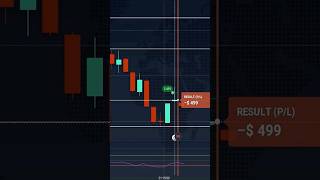
Price drops into a marked support level and forms a doji candle, indicating weakening sellers and potential buyer reaction. RSI is near oversold, creating a favorable condition for a reversal buy.
The strategy requires waiting for a strong bullish confirmation candle from the same support level, not entering on the first doji. A green candle pushing up confirms buyers taking control.
The presenter clicked buy late, after the bullish candle had already moved significantly, resulting in an entry far above the ideal zone near the bottom. This is a major error in 1-minute trading.
With the entry at a higher price, the trade has little room to breathe. Buyers are exhausted from the prior green push, and sellers begin to step back in, causing price to drift back down.
The chart shows that even a perfect strategy cannot save a bad entry price. The trade ends in loss as price falls below the late entry level at expiry.
The presenter shares this loss transparently to help viewers avoid repeating the same mistake, emphasizing that execution is as important as strategy and direction.
The video underscores that in fast-paced trading, entry timing is paramount. A correct setup and direction are insufficient if the entry is delayed, as the market may already be exhausted and ready to reverse.
What does a doji candle at a support level indicate?
It indicates sellers are getting weak and buyers are starting to react at that level.
00:15
What is the rule for entering a trade after a doji?
Wait for a strong bullish confirmation candle from the same support level before entering.
00:30
Why is a late entry a big mistake in 1-minute trading?
Because the trade opens far above the ideal entry zone, leaving little room for the move to continue.
00:57
What happens after a late entry when buyers are tired?
Sellers start stepping back in, and price drifts back down, testing the entry area.
01:26
What is the key lesson from the failed trade?
Even a perfect strategy cannot save a bad entry price.
01:40
Doji as a Reversal Signal
Explains a clear, actionable technical signal for identifying seller exhaustion.
00:15Confirmation Before Entry
Emphasizes the importance of waiting for confirmation, a core principle in trading.
00:30Execution Over Strategy
Highlights that even a correct strategy fails without proper execution timing.
01:40[00:02] on the chart which I had taken earlier using the same strategy. This is a trade I took earlier and I'm showing you the recorded chart for learning purpose. First notice how price comes down into arms down into our marked support level
[00:15] and forms a small dogee candle. That dogee tells us sellers are getting weak and buyers are starting to react at this level. RSI is already down near the oversold area. So the market condition is exactly what we want for a possible
[00:30] reversal buy setup. According to our rules, we don't jump in on the first dogee. We wait for a strong bullish confirmation candle from the same support. And that's exactly what happens next. A strong green candle starts
[00:44] pushing up from support, confirming that buyers are taking control. The problem is my timing. I clicked buy late after the bullish candle had already moved a lot. So [music] even though the setup was correct, the trade opened far above
[00:57] our ideal entry zone near the bottom, which is a big mistake in 1 minute trading. Once the buy is placed at this higher price, watch what the market does. The bullish candle continues a little more, but most of the move has
[01:11] already happened before our entry. That means our trade now has very little room to breathe. When the next candle opens, buyers are tired. The market has already used a lot of energy in that previous green push. And now sellers start
[01:26] quietly stepping back in. Instead of continuing upward, price begins to drift back down, testing the same area we used as entry. This is the danger of late entries. We are not trading the reversal from support anymore. We are trading
[01:40] near the end of the move where the market is ready to pull back. So the chart is giving us a very clear message here. Even a perfect strategy cannot save a bad entry price. As the candle closes and expiry time hits, price is
[01:55] now below our late entry level and this trade ends in loss. So the strategy was right, the direction was right, but the execution was wrong because the entry was too late and too high above the ideal zone. I'm showing you this loss
[02:10] honestly so you don't repeat the same mistake in your




⚡ Saved you 0h 02m reading this? Transcribe any YouTube video for free — no signup needed.