
The Counterintuitive Secret to Trading Fakeouts
45sChallenges common trading assumptions and reveals a counterintuitive setup that grabs attention.
▶ Play Clip"Delivers on the promise of avoiding fakeouts with a clear, actionable strategy, though it's a brief overview rather than an in-depth guide."
The video explains a common trading mistake: entering a trade immediately after a bullish breakout without considering the risk-reward ratio. It demonstrates a better approach using a retracement to a Fibonacci level for a more favorable entry.
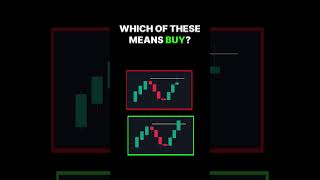
The video starts by stating that picking the immediate breakout is wrong if you want the chart to go up; it should go down first.
To go up, price should break a low first, with a candle wicking below the low but closing above it, then immediately move up to break the previous high and close above it.
Most traders enter a long trade at the breakout point, which looks bullish but is a mistake due to poor stop-loss placement and bad risk-reward.
Instead, wait for price to retrace, use a Fibonacci level for entry, which improves risk-reward and increases profitability odds.
The key takeaway is to avoid entering at the breakout and instead wait for a retracement to a Fibonacci level for a better risk-reward ratio and higher profitability odds.
What is the common mistake traders make after a bullish breakout?
Entering a long trade immediately at the breakout point, which leads to poor stop-loss placement and bad risk-reward.
00:28
What should happen before a chart goes up according to the video?
Price should break a low first, with a candle wicking below the low but closing above it.
00:15
What tool is recommended for entry after a retracement?
A Fibonacci level.
00:54
Why is entering at the breakout considered a mistake?
Because the stop loss would be placed below the low, resulting in an insanely bad risk-reward ratio.
00:41
Contrarian Opening
Immediately challenges common trading intuition, setting up a valuable lesson.
00:02Identifying the Trap
Clearly pinpoints the exact moment most traders err, making the advice actionable.
00:28Fibonacci Entry Strategy
Provides a concrete, practical alternative that improves risk-reward.
00:54[00:02] If you pick this one, you're wrong. You see, if you want the chart to go up, you actually want it to go down first. If you want the chart to go down, it must go up first. Here's what I mean. If you want the chart to go up, look for price
[00:15] to break a low first. While doing this break, the candle should wick beneath the low, but close above it, just like it did here. After doing so, it should immediately start heading in the other direction, breaking the previous high.
[00:28] But this time on the break, it should close above it. But this exact point is where I see the majority of traders make the mistake. Sure, this formation looks bullish, and you may even enter a long trade here, but this is one of the worst
[00:41] mistakes you can possibly make. Because where are you going to place your stop loss? Sure, you could place it here, down below this low, but then your risk-reward is insanely bad. And if you do get a losing trade, you are going to
[00:54] do get a losing trade, you are going to take a big hit. Instead, wait for price to retrace back down, use a Fibonacci level for your entry, enter the trade down here. Now, you have a way better risk-reward, [music] and your odds of
[01:06] being more profitable have just raised significantly.
⚡ Saved you 0h 01m reading this? Transcribe any YouTube video for free — no signup needed.


![BEST MACD Trading Strategy [86% Win Rate]](https://img.youtube.com/vi/rf_EQvubKlk/mqdefault.jpg)