
Trading is the Fastest Feedback Loop for Personal Development
49sThis philosophical take on trading as a mirror for personal growth resonates with a broad audience and sparks introspection.
▶ Play Clip"Delivers a clear, detailed explanation of EdgeScore's mechanics and purpose, matching the title's promise of improving trading discipline."
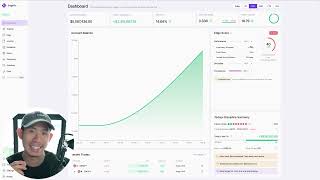
EdgeScore is a trading performance metric designed by the speaker to grade not just profitability but also discipline and consistency. It uses the latest 100 closed trades to provide a directional scoreboard that reflects a trader's current behavior, helping them identify and fix their biggest leaks to scale their trading.
The speaker believes trading is the fastest feedback loop for personal development because the market acts as a mirror. If you don't like your results, you should change yourself, not blame the market.
EdgeScore exists to act as a mirror, reflecting trading results back at the trader. It grades execution, consistency, and discipline, not just P&L.
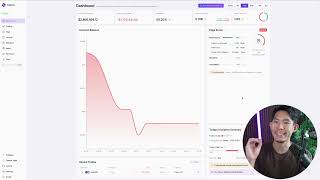
A trader can make $2.5 million but still be 'at risk' if they didn't follow guardrails or were undisciplined. EdgeScore highlights this discrepancy.
A higher EdgeScore means trading becomes more scalable and less emotional because the process is under control. Repeatable execution is scalable.
EdgeScore measures three things: Performance (is your edge mathematically profitable), Discipline (do you respect rules that prevent blowups), and Consistency (do you execute like a system or a coin toss).
EdgeScore is calculated using your latest 100 closed positions. This sample size is chosen to provide statistically meaningful feedback, and older trades drop off as new ones are added.
EdgeScore is not visible until 30 trades. From 30 to 99 trades, a provisional score is shown because the sample size is not yet large enough for accuracy. The real score unlocks at 100 trades.
Performance combines expectancy (average outcome per trade in R), profit factor (total profits divided by total losses), and sample size confidence (how much we can trust the performance reading).
Discipline tracks guardrail violations, such as exceeding max daily loss, max daily profit, or max trades per day. Violations result in point deductions.
Consistency measures average risk deviation (how far actual risk per trade drifts from the chosen baseline) and extreme risk events (big mistakes that could blow accounts). A good strategy with random risk produces random results.
EdgeScore tiers are progress markers, not labels. They include At Risk, Developing Trader, Consistent Trader, and Elite Trader, showing what to fix next.
Elite traders showcase professional-level execution with strong edge, discipline, and consistent risk, making scaling to six or seven figures smooth because behavior is predictable.
A perfect score of 100 is possible but not sustainable in real trading due to P&L fluctuations. Focus on moving up one tier at a time by fixing your biggest leak.
To improve, identify the biggest leak (performance, discipline, or consistency). For discipline, tighten guardrails; for performance, review the trading plan and focus on A+ setups; for consistency, stick to baseline risk per trade.
Using if-then rules (e.g., 'If I break max loss once, then I'm done for the day') helps execute the system mechanically and improve EdgeScore.
EdgeScore is a tool for self-improvement, not just a score. By fixing your biggest leak and moving up one tier at a time, you can become a more disciplined and consistent trader, which ultimately makes you a better person.
Trading as a Mirror
Establishes the core philosophy that trading reflects personal development, setting the tone for the entire video.
00:07Repeatability Leads to Scalability
Connects consistent execution to the ability to scale trading, a key insight for serious traders.
02:24Why 100 Trades
Explains the statistical rationale behind the 100-trade sample size, adding credibility to the metric.
03:02Don't Obsess Over 100
Provides practical advice to avoid perfectionism and focus on incremental improvement, which is more sustainable.
11:29If-Then Rules
Offers a concrete, actionable technique to enforce discipline and mechanical execution.
13:34[00:07] emotional state made visible by numbers. I believe that trading is the fastest feedback loop for personal development because the market is a myriad. If you don't like what you see, don't blame the market. Change the person in the myriad.
[00:24] And that's exactly how I designed edge score. And that is why edge score exists. It doesn't just track results. It acts as a mirror. It reflects your trading results back at you. It grades execution, consistency, and discipline.
[00:41] Okay? Like the reason why I name it as edge score is because it's literally a score for your edge, which is your trading strategy. So, it measures not just what you made, but how you traded, right? It doesn't just grade your P&L.
[00:56] It grades your discipline, your execution, whether you have been you've been following your trading process. Now, with that said, note that treat this as like a directional scoreboard, not a perfect verdict. As we
[01:12] collect more data and feedback, we may adjust the scoring criteria and waitings over time to make it more accurate and useful. Anyways, let's dive into edge score. What is edge score exactly and what the how does it work? So edge score
[01:26] doesn't just look at profits. You can see in this example right here with fake data I have made $2.5 million but it shows that I'm at risk, right? How is that the case? I've made so much money. Well, it's probably because I didn't
[01:39] follow the guardrails. It's because I wasn't disciplined. Okay, so like I said, what it does great is your performance, right? Which is one of the criteria. It has quite a heavy weighting. This is the results of your
[01:53] edge, right? The results of your trading strategy. It grades discipline whether you have actually followed your trading rules or not. It grades consistency, right? Did you re and execute like a system like a machine or did you just,
[02:09] you know, anyhow execute the trade whenever and you feel like it, right? So that's consistency. Once again, it's not about perfection. It's about making significant progress, maintaining stability, and having an
[02:24] execution that is repeatable. Because if it's repeatable, it is scalable. And a higher edge score simply means your trading becomes more scalable and less emotional because your process is
[02:37] actually under control. So like I said, it doesn't just measure a P&L. It measures three things. Performance, discipline, consistency. Performance basically means is your edge mathematically profitable. Discipline
[02:50] means do you respect the rules that prevent blowups? Consistency means do you execute like a system or do you execute like a coin toss? Right? And how
[03:02] it's calculated is that it's calculated using your latest 100 closed positions. using your latest 100 closed positions. Not open positions but your 100 closed positions. Now why 100? Because if you want to know whether a strategy actually
[03:16] size. And if you've watched any of my the rule of 100. The more trades you take, the more accurate the feedback becomes. And like I said, it's literally taking the latest 100 trades, right?
[03:30] It's always measuring the latest 100 trade, not your entire trade history. Once you pass your 100th trade, your oldest trades start dropping off. This also means that your score will always reflect who you are right now, not who
[03:44] you were months ago. Like I said, it's a mirror. All mistakes fade out. New improvements show up very fast on the ad score as it updates. And there's a provisional score right now because I only taken about 30 33
[04:00] trades on this account itself. So from 0 to 29 trades, this is where you'll realize that you will not be able to see your edge score, right? So if you have flow account, you will not be able to see your edge score. This thing will be
[04:13] have enough data to judge your performance, discipline and consistency performance, discipline and consistency by and then once you take 30 trade, 30 to 99 trades, this is where there's a provisional score, right? So it's not an
[04:26] accurate score because once again, we don't have a large enough sample size. Once you reach 100 trades, right? Once you have taken 100 trades on edge flow, this is where you will be able to unlock your edge score, right? Your real edge
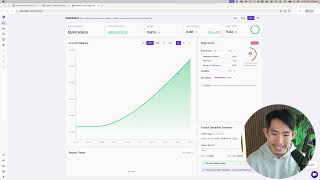
[04:40] but it's actually accurate because now you actually got a large sample size to like judge your data on and it's not going to be skewed whatsoever. For example, right now I've taken about 33 trades and like this was on a testing
[04:54] account and you can see like on this account itself, you know, we made a huge testing the account, you know, trying to trigger edge flow. So I took a bunch of like small trades just like this and you can see the entire matrix is skewed
[05:07] right it's not really accurate whatsoever because the sample size is not large enough right so that is why uh we have a provisional score for you just to inform you that you know it's not the most accurate version because we just
[05:20] haven't collected enough data so this is just how the ad score looks like once you unlock it right you will be able to see the overall score over here you will be able to see a tier batch and the three bars right on grading your
[05:33] three bars right on grading your performance and the rows breaking down how each metric is like being calculated. So let me just quickly run you through each one and then after I'm done running you each one of these
[05:45] factor here, we're going to go into the different tier system that we have on edge flow, right? Like at risk, developing trader, consistent trader, elite trader, right? The tier level and what you can do to actually level up. So
[05:57] yeah, let's break down metric by metric. So when it comes to performance, it's pretty much a combination of your expectancy, right? which is your average expectancy, right? which is your average outcome per trade in terms of R and it's
[06:09] calculated from your win rate your average R per trade and the reason why it matters is because you can have a low win rate and still be profitable if your winners are big or you can have a high win rate but still lose money if your
[06:21] winners are tiny and losers are large right so that is where we put it part as your performance and then you also have your prof profit factor which is pretty much just your total profits divided by your total losses and This is where it
[06:35] answers the question, does my winners outweigh my losers overall? Okay, so if profitable. If you get close to one, that means you're barely surviving, right? Obviously, the higher the better. And then you got sample size confidence,
[06:49] right? This is basically answering the question, how much can we trust this performance reading? Right? How much confidence can we give to this performance rating since we do we even have enough trades to measure our
[07:02] trading performance on right and yeah this is where the more trades you take the more confident we will become right like the score will become now if your performance is low this means that either you don't have a strategy or your
[07:16] execution and trade management is leaking the edge that you do have and that gives you the data point you need to actually create your trading strategy or improve your existing one. Next, we got the discipline breakdown. So, this
[07:30] is where we are going to be measuring did you follow the trading rules that protect you from blowing up. So, obviously this is where we track your gut rail violations, right? Whether you follow the max daily loss, whether you
[07:43] follow the max daily profit, whether you actually follow the max trades per day. rules itself, you just lose points. That's it. Right. The more the more often you violate your guard rails, the more points you will lose
[07:58] right inside this discipline column right here. Next, we got your consistency. Now, when it comes to consistency, what is measuring is did you execute like a system or do you change your risk based on your mood?
[08:12] for most traders because risk is the foundation of every strategy. So, we got the average risk deviation, right? which calculates how far your actual risk per trade drift from your chosen baseline. If you select the risk per trade as 1%
[08:28] and in your settings, then the more further away you deviate from it, right, then this is where we'll flag it over here. And then next we got consistency, which is answering the question, do you execute like a system or do you change
[08:44] the most important part for most traders because risk is the foundation of every because risk is the foundation of every single strategy. And we measure it by measuring your average risk deviation which measures how far your actual risk
[08:58] per trade drift from your chosen baseline. For example, if your baseline is 1% right, which is the one the usual risk per trade, but some of your trades are 0.2%, some of the trades are 2%, some are 5%, then you're not trading a
[09:12] right? So this is where it will reflect over here. And also your extreme risk events, right? So this checks for any big mistakes that blow accounts. For example, if you suddenly risk way more than your baseline on one trade or
[09:27] after, you know, a losing streak or when you feel like, wow, this is the one happens is that we'll track it here as well and then you will get penalized for it. Yeah. So a good strategy with random risk will still produce random results
[09:42] because remember in order for your strategy to be repeatable it needs to be consistent. When you have consistency that makes the strategy repeatable which makes the strategy scalable. So that's how the ad score actually works. Like I
[09:56] said it's still beta right now at the moment right? So we are actively trying to improve it. We are actively trying to collect more data to think about how we can make the scoring and the waiting much more accurate. Next, let's go
[10:09] through the tiers and what they actually mean. So, if you look at this right have, right? Edge score tiers are progress markers, right? They are not labels. They're not just labels here for for you for aesthetically reason. No,
[10:21] they are meant to show you what stage you are in and what to fix next. Okay? They're not here to judge you. They're here to act as a mirror that just show you your trading performance right now and where you can progress towards next.
[10:36] So you got your at risk obviously and then you got your developing trader which means you're improving but you're still inconsistent and then followed by means you're like one step closer towards profitability. You know you're
[10:48] doing the right things. You are uh quite consistent when it comes to the way you execute your trading strategy. And then you move on to elite trader. Right? So this is where you um showcase professional level execution. You got a
[11:02] strong edge. You got strong discipline. You got a consistent risk. And this is where scaling becomes smooth. Right? Because behavior is predictable. Your actions are consistent. They are repeatable. And as a result, it's easy
[11:15] for you to actually scale to larger accounts, right? Scale to six figures or seven figures itself. Yep. So that's how the tier letter actually works. Can you hit 100? Right, this is the question I get often for edge score itself. Is it
[11:29] even possible to hit 100 out of 100 on edge score? Well, we have set it up in a way where it's difficult to hit 100, but yes, it's possible, right? But once chase every single week. All right, a perfect score just means your last 100
[11:45] trades show a strong edge, clean discipline, and very consistent risk. But in reality, it's just not sustainable. Right? In real trading, your scores will often fluctuate because your P&L tends to fluctuate, right? You
[11:59] will tend to incur losses here and there as time passes. So, what matters more is consistently, right? The consistent trader, the elite trader, rather than trying to flex a 100. So, don't obsess over hitting 100,
[12:15] right? just focus on like moving up one tier at a time by fixing your biggest tier at a time by fixing your biggest leak. Okay, so that's edge score and I tip. If you are trying to improve your edge score, what you want to do is don't
[12:30] try to fix everything. Fix the biggest leak. Identify the biggest league. Whether that's performance, discipline or consistency, go and identify that and then the next step is to pick one level for the next
[12:42] low, what you might want to do is tighten your gut rails. What you might more often next week or reduce the trades per day, shorten your trading window. And then if your performance is low, you might want to review your
[12:56] trading plan. You might want to, you know, just focus on taking A+ setups and trade plan. You might want to improve the way you manage the trade, so on and so forth. And then if your consistency is low, you might want to make sure that
[13:09] you stick to your risk per trade, right? like you enforce your baseline risk. You don't size up after losses or after wins and you just stick to the risk per and you just stick to the risk per trade. Yeah. So that's what I advise you
[13:21] improve your edge score. For me personally, when I'm trading, I really want to get to 100 as much as possible. I like to like kind of treat it like a game, right? And try to level this up. So this is where if I notice any one of
[13:34] these factors is lacking, I'll think about how I can like optimize it next week, right? to get it up to like like like the full mark. Yeah. And if you set like a if gen rule, right? This is something that
[13:49] you probably will check it out in the next few lessons. If this happens, then I'm done, right? Then uh I'm going to do this solution. If I break max loss once, then I'm done for the day. If I size up above my baseline risk per trade, then
[14:05] it must be a A+ setup, right? So if then rule will probably help you to execute your system much more mechanically. At the end of the day, just know that at here to show you the truth because like
[14:18] I said, the market is simply a mirror and your P&L is just your emotional and your P&L is just your emotional state made visible by numbers. Okay? So do not obsess over hitting 100. Just fix your biggest leak. Move up one tier at a
[14:31] time and try to sustain at the higher tiers and let your discipline and tiers and let your discipline and consistency do the heavy lifting. When pressure, remember you're not just becoming a better trader, you're
[14:44] becoming a better trader, you're becoming a better person.
⚡ Saved you 0h 14m reading this? Transcribe any YouTube video for free — no signup needed.