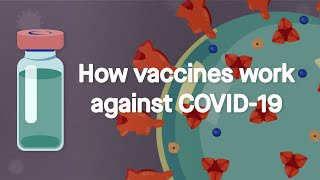

How Your Immune System Remembers COVID
39sExplains natural immunity in a simple, relatable way, making viewers curious about how vaccines mimic this process.
▶ Play Clip"Title accurately reflects the simplified science of COVID-19 vaccines."
The video explains how the immune system remembers infections through antibodies, how vaccines mimic this process, and specifically how mRNA vaccines for SARS-CoV-2 work. It also outlines the development and approval process for vaccines.
After infection, the immune system produces antibodies that circulate and recognize the invader, preventing illness. This is why we usually don't get sick twice from the same bug.
Vaccines encourage the immune system to make antibodies without causing illness. mRNA vaccines provide genetic instructions for cells to produce the spike protein, triggering antibody production.
Traditional methods use weakened or inactivated virus or large amounts of spike protein. mRNA vaccines are faster to develop.
Vaccine candidates undergo lab and animal tests to ensure safety and efficacy. Imperfect vaccines could rarely increase infection risk.
After pre-clinical success, trials begin in small groups, expanding to larger populations. Regulatory agencies like the FDA review and approve before distribution.
Vaccines train the immune system to fight infections without causing disease. The development process involves rigorous testing to ensure safety and efficacy before widespread use.
What are antibodies?
Proteins that circulate in the blood and recognize and disable invaders.
How do mRNA vaccines work?
They provide genetic instructions for cells to produce the spike protein, triggering antibody production.
00:30
What is a potential risk of an imperfect vaccine?
It could increase the danger of becoming infected under extremely rare circumstances.
01:30
What are the two main stages of vaccine testing?
Pre-clinical tests (lab and animal) and clinical trials (human).
01:30
Which regulatory agency is mentioned for vaccine approval?
FDA (Food and Drug Administration).
02:00
Immune Memory Explained
Clear explanation of why we don't get sick twice from the same bug.
mRNA Vaccine Mechanism
Simplified description of how mRNA vaccines instruct cells to produce spike protein.
00:30Rare Risk of Imperfect Vaccines
Honest mention of a potential rare adverse effect.
01:30[00:00] after we have been exposed to an infection our immune system remembers the threat in particular by producing antibodies these are proteins that circulate in the blood and throughout the body they quickly recognize and disable the invader upon contact thereby preventing or minimizing illness this is why we usually do not get sick with the same bug twice we are immune vaccines mimic this process encouraging the immune system to make antibodies without us having to go through the
[00:34] illness some of the leading sars cov2 vaccine candidates are mrna vaccines based on incorporating the genetic blueprint for the key spike protein on the virus surface into a formula that when injected into humans instructs our own cells to make the spike protein in turn the body then makes antibodies against the spike protein and they protect us against viral infection this strategy is faster than more traditional approaches which often involve generating weakened or inactivated forms of a
[01:08] live virus or making large amounts of the spike protein to determine whether they can prompt an antibody response once a potential vaccine is discovered a number of checkpoints exist before it can be administered to people first are pre-clinical tests which involve experiments in a laboratory and with animals scientists must ensure the vaccine candidate is not only effective but also safe for example an antibody response to an imperfect vaccine could under extremely rare circumstances end up increasing
[01:41] the danger of becoming infected when the potential vaccine achieves the necessary pre-clinical results clinical trials can begin in a small group of people as the vaccine candidate advances it is tested on increasing numbers of people with scientists and doctors closely monitoring safety efficacy and dosing upon successful completion of clinical trials the vaccine candidate must be reviewed and approved by regulatory agencies such as the fda before large-scale manufacturing and distribution gets underway and the licensed vaccine is
[02:15] administered widely
⚡ Saved you 0h 02m reading this? Transcribe any YouTube video for free — no signup needed.