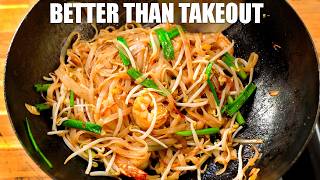

The Pad Thai Recipe That Took 20 Years to Perfect
38sThe chef's bold claim of cracking the code on pad thai and the promise of a complex but superior recipe immediately hooks viewers looking for authentic results.
▶ Play Clip"Delivers on the promise with a thorough, restaurant-quality recipe that justifies the 'cracked the code' claim."
A chef with 20 years of experience shares his method for making pad thai that rivals takeout, involving a complex homemade sauce, slow-soaked noodles, and high-heat wok technique.
This recipe is more complex than usual, based on research from Thai chefs in Thailand, from Michelin-starred to street vendors.
Thinly sliced shallots fried in peanut oil at 350°F until golden brown and crunchy, 8-10 minutes.
Garlic fried for about 5 minutes until golden, then seasoned with flaky salt.
Uses tamarind puree (Thai variety is lighter), palm sugar, white sugar, white vinegar, and fish sauce. Simmered to balance sweet, sour, salty.
Adjust fish sauce to taste; the sauce should have a balance of sweet, sour, and salty.
Use medium flat rice noodles, soak in cold water for a few hours (or lukewarm for 1 hour) for best texture. Noodles should bend without snapping.
Prep all ingredients before cooking: tofu, preserved radish, chili flakes, bean sprouts, green onions, peanuts, lime.
Use high heat on a wok. Fry seasoned shrimp first, set aside. Then sauté shallots, garlic, radish, add soaked noodles and sauce, toss, add vegetables, shrimp, tofu, then scramble eggs separately in wok before mixing.
Plate noodles with fresh bean sprouts, crushed peanuts, lime wedge, and fried shallots/garlic garnish.
The chef believes this version competes with his favorite local Thai restaurants, attributing success to the sauce.
The key to exceptional pad thai lies in a well-balanced sauce and proper noodle preparation, making this recipe a worthy challenge for serious home cooks.
What is the recommended oil for frying shallots?
Peanut oil.
00:26
What are the three main flavor components of pad thai?
Sweet, sour, and salty.
02:23
How should rice noodles be soaked for best texture?
In cold water for several hours (slow soaking).
02:51
What is the alternative to palm sugar?
White sugar (though palm sugar is preferred).
01:44
Why is fish sauce used in pad thai?
It provides saltiness and umami.
02:23
What should happen when you bend a properly soaked noodle?
It should bend over your finger without snapping.
03:04
How long does it take to fry garlic until golden?
About 5 minutes.
01:04
What ingredients are added to the wok after the shrimp is removed?
Shallot, garlic, preserved radish, soaked noodles, sauce, green onion, shrimp, tofu, and eggs.
05:18
Recipe Complexity
Chef admits this is a more complex recipe, promising authentic results.
00:26Sauce Balance
Emphasizes the critical balance of sweet, sour, and salty for authentic pad thai.
02:23Slow Soaking Noodles
Details the importance of slow soaking for ideal noodle texture, a key technique.
02:51High Heat Wok Cooking
Demonstrates proper wok technique with high heat and separate egg scrambling.
04:49Praise for Sauce
Attributes the dish's success to the homemade sauce, calling it superior to restaurant versions.
07:33[00:01] make pad thai that's just as good as my favorite takeout spot, and I think I finally cracked it. So, without further ado, let's make us some pad thie. Now, let's go. Now, quick disclaimer before we begin. A lot of the recipes I post
[00:14] here on YouTube, I try to keep things relatively simple so it's easy for you to recreate. This is not one of them. As a chef of 20 years, these kind of recipes are really exciting for me. So, I'm just giving myself this one. And
[00:26] I'll tell you what, I did an immense amount of research watching Thai chefs make pad thai in Thailand. Everything from Michelin star chefs to street further ado, let's try to make some absolutely banging pad thai here in
[00:39] America. And we're going to start by making this incredible pad thai sauce. walk with peanut oil and brought the temperature up to 350 Fahrenheit. And I'll start by dropping in all my thinly sliced shallots. And we're going to cook
[00:52] brown and crunchy. And after 8 to 10 [music] minutes, depending on the heat of your oil and how much onions you use, they will be nice and golden brown and crispy. Get them out on a paper towel and you're good to go. Next, I'm going
[01:04] This just took about 5 minutes until it off on some paper towel. Then just hit it with a little bit of flaky salt and set it to the side. Now, to build this pad thai sauce, you want tamarind puree
[01:17] Indian one. The Thai version is definitely a little bit lighter in color version. The Indian ones are super thick still probably make good pad thai with it, but you [music] would definitely
[01:30] link for the one I used in the description if you really want to make mediumigh heat. And I'm just going to add a little splash of water to get the a boil like that, we're going to add some white vinegar. Just plain white
[01:44] little bit. And I'm just going to start adding in palm sugar. I ordered that online. I'll put a link for that as well. It's absolutely delicious and used We're also going to cut it with a little bit of white sugar. Just give that a
[01:58] nice little mix until this sugar melts in and it's all smooth again. Once that sugar is dissolved, I'm going to turn the heat off and I'm going to add in my fish sauce. Just give that one more little mix. And last, but certainly not
[02:10] least, we're adding in most of our onions. I'm saving a little bit of these for garnish, but onions go in. And I'll tell you what, the flavor that these add ridiculous. And all we're going to do now is give it one more little final
[02:23] taste for seasoning. So pad thai should be sweet, sour, and salty with a nice healthy balance of each. You know, some people like it a little more sweet, some salty. For me, this just needs a little more salt. Fish sauce is our salt here.
[02:37] So, I'm just going to keep adding like a couple teaspoons at a time and then just salt level I like. But it tastes really great already. just needs a little more down, stick it in a jar, put it in your fridge. It will last for a very long
[02:51] for these rice noodles, you want these mediumsized flat rice noodles. And the best way to do this is to do a slow soaking. [music] And by that, I mean just cover them in cold water and let them sit there for a few hours. If
[03:04] use some like lukewarm water and probably accelerate that to an hour. But for the best texture, you really want to do that slow soaking. And when they're done, they should just easily bend over your finger like this without snapping
[03:17] now, but they're just softened. Now, before moving on, if you've been looking for the most convenient way to get the best coffee, well, then this is it, because our sponsor, Trade, is a coffee subscription that matches you with
[03:30] coffee based on your actual taste. The beauty of Trade is that every bag is roasted to order by local roasters across the country and delivered right to your doorstep. I've been using Trade for 2 years now and I've genuinely loved
[03:42] every single bag they've sent me. They just don't miss. And it's not just random picks because their team of experts have 500 options to choose from, new. You just take a quick quiz and then Trade handles the rest. And if your
[03:55] first bag isn't a perfect match, they will replace it for free until they nail it. I personally love espresso and dark roast, and Trade always surprises me with a new winner. Just yesterday, they sent me this Peru lasamas. And let me
[04:07] tell you something. Oh my god, it is seriously one of my new is amazing. And right now, Trade is offering 40% off your first order. Just go to drinktrade.com/ that duke can cook or click the link
[04:21] down [music] in the description to check it out. Now, back to the recipe. Now, sure you have all your misen plas your prep done and in place, ready to go. You you're making this. And for that, you're going to need some thinly sliced
[04:35] traditional but optional ingredients for you. If you want to leave these out, you can. This cured salted radish, which is a traditional ingredient in pad thai. it spicy. Then we also have bean sprouts and green onions that will go in later.
[04:49] bean sprouts, and roasted chopped peanuts. We're going to start by getting walk burner here, so you want to be a loss of heat when we put all these ingredients in. Now, the first thing
[05:02] amount of oil to our walk. We need this oil to combine with the sauce that we made. And all I've done with my shrimp here is season them up nicely. Just a little salt. We're just going to fry these off first.
[05:18] side. Now, I'm going to get these shrimp out onto a little plate. I don't want to definitely overcook. Now, here we go, my friends. Starting with shallot. We'll throw in that garlic right after our radish. Another 15 seconds [music]
[05:31] and we're going to add in our soaked noodles. And then we'll immediately go in with our sauce. These noodles cook really quick once soaked, so you do not want to hesitate here. Just a minute with the sauce. Now
[05:43] green onion. Shrimp back in. Little toss. Another 30 seconds. And you see we'll add in our tofu. That's completely cooked. So we just need to quickly toss it spicy. I meant to add that earlier, but it's all right. Now push to the
[05:59] more oil over here. Tilt the pan back. Eggs go in. And we don't want to mix too early. So, we're going to keep that pan tilted and just cook our eggs over here. And once they're scrambled like so, we can go ahead and toss everything
[06:12] together one final time. Boom. Whole process only takes a few minutes. And we'll go ahead and plate it up before any more cooking takes place. Noodles are looking perfect. Now, little pile of sprouts here. Big pile of peanuts right
[06:25] over there. Lime on the side. And there is your pad tie done, my friends.
[06:38] to go I'm going to eat a shrimp just like you're going straight shrimp. I'm going fat shrimpy bite. It has tail on this shrimp, just so you know. Here we this shrimp, just so you know. Here we go. Look at that noodles together.
[07:05] tastes good. I, on the other hand, am a pad thai connoisseur. I've always loved pad thai. Here in Austin, there's a few places I go to get it. One of my messed it up last time. It was too saucy. That for me is like I'm not
[07:20] trying to toot my own horn here to like the Thai restaurants, but that's like a restaurants here in Austin. And I'm not pad thai. And I think it really boils down to that pad thai sauce. You know,
[07:33] if you want to make this as well, you can use chicken. Chicken would be good. >> You tried the lady in the trant. >> It's sticky. It's sour. It's sweet. It's salty. It's got everything I love from a good pad thai. [music] So, this is an
[07:46] will actually make it. >> Make it

⚡ Saved you 0h 08m reading this? Transcribe any YouTube video for free — no signup needed.