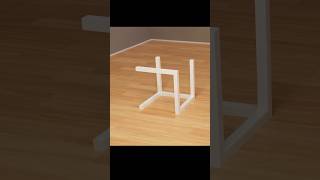

How Many Incomplete Open Cubes?
45sThe puzzle is instantly engaging, prompting viewers to try solving it mentally before the answer is revealed.
▶ Play Clip"Title is accurate but vague; the video is a teaser for a guest video, not a full puzzle explanation."
This video presents a mathematical puzzle about counting distinct configurations of incomplete open cubes, where edges are removed from a cube frame. The creator explains that this puzzle is connected to a guest video by Paul Dancstep, which explores the problem-solving process and introduces group theory concepts in an accessible way.
The core question is: if you remove some edges from a cube, how many distinct configurations can you get, considering incomplete cubes?
The puzzle is a pure math problem, but it serves as the premise for a guest video that tells the story behind an artwork and a problem-solving process.
The creator used Patreon funds to commission a set of guest videos. The most recent one parallels the story of the artwork with a problem-solving process that could lead to solving the puzzle.
The problem-solving process effectively involves rediscovering a bit of group theory, making the content both accessible to middle schoolers and thought-provoking for PhD students.
The creator encourages viewers to start thinking about the puzzle themselves, suggesting it as a longer piece to sit down with.
What is the puzzle presented in the video?
Counting distinct configurations of incomplete open cubes by removing edges.
What mathematical concept is the problem-solving process related to?
Group theory.
00:43
Who created the guest video?
Paul Dancstep.
00:43
Puzzle Definition
Sets the core challenge that drives the entire video.
Group Theory Link
Reveals the deeper mathematical structure behind the puzzle.
00:43[00:00] What I mean by that is, if you take away some of its edges, how many distinct configurations can you get? And the tricky part here is that we're going to consider incomplete
[00:14] Now, even though this is a very pure math puzzle, This was essentially the premise behind a work I've been away from making videos this summer,
[00:30] and in that time I've been using Patreon funds to commission a set of guest videos, and the most recent one tells the story behind this artwork in parallel with the story of a problem solving process that could lead you to answer this
[00:43] And effectively, that process is to rediscover a bit of group theory The creator for this video is a friend of mine, Paul Dancstep, and I thought he did a really beautiful job creating something that could
[00:57] be at once accessible to a middle schooler and thought provoking to a PhD student. next time you find yourself in the mood to sit down for a longer piece. In the meantime, I thought you'd enjoy starting to think about the puzzle itself.


⚡ Saved you 0h 01m reading this? Transcribe any YouTube video for free — no signup needed.