
Ground Segment: The Missed Revolution
41sExplains why ground infrastructure hasn't kept pace with launch costs, a critical insight for space enthusiasts.
▶ Play Clip"Solid interview that delivers on space infrastructure insights, but the '$100M bet' isn't specifically explained—a minor oversell."
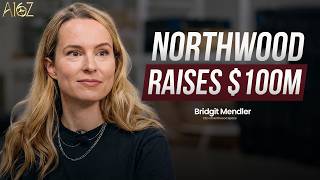
This video features an interview with the CEO of Northwood, a company building modern ground infrastructure for satellites. She discusses the critical bottleneck in ground connectivity, the need for vertical integration to solve it, and shares insights from her unconventional career path. The conversation also covers the company's $50M Space Force contract, its hiring philosophy, and the future of the space economy.
The CEO attributes her path to following curiosity and striving for excellence, influenced by her mother's determination.
Northwood was started with her husband during the pandemic, initially as a summer project building antennas.
Northwood provides ground infrastructure for satellites, essential for controlling spacecraft and returning data to Earth.
Despite advances in launch and satellite manufacturing, ground infrastructure has not modernized due to misaligned incentives in the value chain.
To fix the ground segment, Northwood does everything from antenna R&D to site development to software, ensuring mission success aligns with their incentives.
Northwood can deploy a ground station in 3 months vs. traditional 3 years, thanks to vertical integration and designing for standard shipping containers.
Unlike SpaceX's launch cost reduction, ground hasn't seen similar improvements because it's fragmented; Northwood's platform model allows many missions to share infrastructure.
The CEO views Starlink's direct optical inter-satellite links as a 0% threat, as it grows the overall data volume through space.
Resilience is achieved through proliferation of ground sites, making them cheaper and faster to deploy so a single site failure doesn't cripple service.
The CEO draws parallels to early internet infrastructure, building a platform that will enable unknown future applications.
Venture capital absorbs risk, allowing commercial and government partners to pursue big ideas faster, similar to early internet.
Power and data throughput are major constraints; improving ground infrastructure directly increases ROI of spacecraft.
Northwood won a $50M Space Force contract to modernize the Satellite Control Network, demonstrating government trust in commercial solutions.
With 13,000 active satellites collecting data, insufficient ground capacity limits how much data can be downloaded, wasting asset value.
The CEO looks for people who accomplish unreasonable things on unreasonable timelines, take end-to-end ownership, and seek categorical outcomes through teamwork.
The interview highlights the critical role of ground infrastructure in unlocking the space economy, with Northwood's vertically integrated platform approach aiming to be a foundational enabler. The CEO's journey and team philosophy underscore the importance of bold vision and relentless execution.
What is the primary bottleneck in space missions according to Northwood's CEO?
Ground infrastructure—the point of contact on Earth to control spacecraft and return data.
06:16
How long does Northwood take to deploy a ground station vs. traditional?
3 months vs. 3 years.
13:26
Why does Northwood choose vertical integration?
To align incentives with mission success and control the entire system for optimal performance.
15:33
What is Northwood's view on Starlink's direct optical inter-satellite links?
It's a 0% threat because it grows the total data volume through space, which benefits all infrastructure providers.
18:19
What analogy does the CEO use for the space industry's current state?
The early internet—building platform infrastructure that enables unknown future applications.
20:34
How does Northwood ensure resilience in its ground network?
Through proliferation: making sites cheaper and faster to deploy so that a single site failure doesn't take service offline.
19:26
What are the two biggest bottlenecks limiting space innovation?
Power (for generating data in space) and ground data throughput.
25:19
What is the value of a spacecraft directly proportional to?
The amount of ground connectivity it has, as data is the economic value generated by the satellite.
32:00
What contract did Northwood win from the Space Force?
A $50 million contract to modernize the Satellite Control Network.
29:52
How many active satellites are currently in orbit?
13,000.
31:30
What three qualities does the CEO look for in hires?
Accomplishing unreasonable things on unreasonable timelines, end-to-end ownership, and categorical outcomes with teamwork.
36:10
Ground Infrastructure Bottleneck
Identifies a critical but overlooked constraint in the space industry that slows down innovation.
07:13Vertical Integration as Solution
Explains why only a vertically integrated approach can fix the ground segment's fragmented incentives.
08:18Platform vs. Product Model
Contrasts with SpaceX's approach, showing how a shared infrastructure platform can lower costs.
16:29Data Bottleneck Cost
Quantifies the problem: 13,000 satellites collect data but lack ground capacity to download it.
31:30Mother's Support Story
Personal anecdote illustrating the depth of care needed in team culture to achieve ambitious goals.
37:36[00:02] point back to Earth. If you don't have it, you don't have a space mission. It literally is just like a rock in space. >> You just won a $50 million contract with >> At NorthWood, we want to take space missions further, faster. We're looking
[00:16] for a categorical outcome, not just an incremental outcome. Starlink is working on direct optical inter-satellite links. How much of that is a threat? >> I view it as like a 0% threat. >> SpaceX was able to bring launch costs
[00:28] down by an order of magnitude what it was before. Why hasn't the same thing happened in ground? >> Oh, man. Um
[00:44] NorthWood. We're here to talk about space. But first, want to talk about how you got here. Uh we uh you know, unconventional career paths, some may career, what are the threads that tie together?
[00:57] How How do you make sense of your path? You know, following curiosity. I think curiosity becomes the most organic motivator for for people. And that's definitely the case for me. I think, you know, my my home environment growing up
[01:10] was really uh cultivating that curiosity. And my parents also really encouraged excellence, which I think is great. So, you know, if you're curious about something, you know,
[01:22] It's something you try to take to like the nth degree. And and really like try to understand what excellence looks like in that domain. And so, that kind of is, you know, led me to a lot of different places. I've I've said this some other
[01:37] places before. My mom is also an incredibly determined person. And so, that's something that I think I was influenced by. And so, like, you know, follow what you're curious about. Do it to the greatest capacity you can. And
[01:49] you kind of wind up like doing a bunch of different things um experiences. So, I feel very grateful for that. >> cuz sometimes people frame it as either or either like you got to get, you know,
[02:02] just especially for kids like just straight A's pluses or it's, you know, just do whatever you're curious about but the combination but also just absolutely crush it in it. So, interesting combination. Yeah, it
[02:15] is. Sort of in your early career, did you think it would be forever or like at this I want to go into academia? Like how did Yeah. How did you make your You know, it's interesting cuz like I I would analogize to how a lot of people
[02:29] that we bring into our company think about their career paths. Like a lot of the incredible people that we bring in, people who are like totally rockstars in their career, they're not thinking on like a 20-year time scale about their
[02:41] career. They're thinking like more incrementally than that about like what am I interested in? Well, like what's that next thing that I'm going to tackle Yeah. next in my life and kind of you know, maybe there's not a definite
[02:53] timeline attached to it. It's like as far out as you can see on the horizon cuz otherwise you constrain yourself too much. Yeah. Um and so that has really much. Yeah. Um and so that has really been how I've approached my career. I I
[03:08] >> Yeah. So, it's like But like also why not cuz actress, you know, back then was maybe like 5 years in the future. Right. So, you were like actress until it no longer became fun anymore and or until academia
[03:22] then in academia you were like or at at some point you were like and then you then you were like oh, maybe I just when did the company idea come into play? Yeah, I think being in entertainment, I got to be a spokesperson for a lot of
[03:38] different things and I and I tried to align what I felt to be impactful with what I was speaking up for. So, you know, as an actor you wind up being able lot of different causes and that was something that I prioritized, but I
[03:53] think I wanted my impact to go deeper than that. And so, I I always kind of knew in the back of my mind I wanted to create my own thing, although, you know, I didn't have like a concrete idea of what that was.
[04:07] And as a child of, you know, millennial era, I got to see the internet coming to life, and I got to see cellular networks coming to life, and like what a profound shift that was on world before versus the world after. And so, I think
[04:24] when the problems that around space networking came up, and when that was something that I started digging into, it connected on that deeper level, where it's like, "Wow, this is something like an opportunity to make an
[04:38] impact on an industry that could be as fundamental at that kind of level of of internet and cellular." That felt like such a unique opportunity to get in at an industry when it was at that early stages.
[04:52] thing. And you started it with your husband? Yeah. Was he always on board emerge? And I should say, my parents also started a company together and ran by the model. >> That's super cool. Yeah, I mean, it's so
[05:06] funny how people are now like, "Oh, you start a company with your with your doing family businesses like since the dawn of time. Yeah, and and I think for both of us, we're just both ambitious,
[05:21] and kind of curious about how the world works, and we we were both passionate about you know, building businesses. And so, it's like, "All right, let's align our efforts towards something." Like, there's a certain utilitarian aspect to
[05:34] amount of energy and time, and we want the most of this like net outcome from So, that was definitely like a part of my thought process, too, but know, it's been a really great experience.
[05:47] Talk about Let's get into NorthWood, um what you're trying to achieve, um and and what's the why now for it? Yeah. So, what we do, we're ground infrastructure So, all the way from the time when they're first coming up with, you know,
[06:01] satellite mission, what the space operators want to do, all the way to delivering that data to the end customers. Yeah. You know, the problem that we're solving is for every satellite, it requires a
[06:16] connection point back to Earth so that they can uh control the spacecraft. You control car, where it needs some mechanism to make sure that it's going where it's supposed to go, and a way to actually bring that data back to the
[06:29] the users are. Um so, that point of contact on Earth is called the ground infrastructure. And, you know, super basically, space mission. It literally is just like a a rock in space. You're doing nothing
[06:46] with. So, ground infrastructure is it's completely fundamental. Um and for us, uh you know, we we were observing the space industry how launch cadence was increasing. You could you could put a satellite up into space way faster, and
[07:01] you could build satellites way faster cuz there was this whole um boom around space spacecraft manufacturing. And interestingly, what started becoming the longest pole in the tent was just getting the point of contact on the
[07:13] you could build a satellite and launch it faster than you could actually connect with it from the ground, which just seemed absurd. And so, we're like, why is that? This kind of, you know, critical third component was not
[07:25] modernizing because you'd seen all this modernization happening elsewhere. And when we started pulling it back, it was kind of like a classic value chain problem, where there was just not like the incentives aligned with each
[07:39] stakeholder in the value chain to to modernize and innovate. So, you had, you know, antenna manufacturers that were, you know, responding to a call from a customer and delivering them a point solution. They weren't thinking
[07:51] like holistically about how you you build better ground infrastructure. You were having like a a software integrator layer where they were basically just dependent on whatever infrastructure was being laid by somebody else. And so, we
[08:04] realized like this is really holding back innovation and like a complete thought on on what this should look like on the ground side. And so, really the only way to address fixing the ground segment was to do
[08:18] the whole thing. Um and when we say the whole thing, like it includes a lot of disciplines and activities. So, uh it includes things like R&D of antenna hardware. So, that the antenna or an earth that is physically
[08:32] receiving RF signals from space, interpreting them into ones and zeros, sending them back to the users, and and popping it back up to the spacecraft. That includes actually, you know, procuring land and
[08:45] doing development at a site to be able to put that antenna hardware somewhere in the world because satellites orbit the earth, you need to connect with them Uh that includes the networking layer. That includes the actual, you know,
[08:59] software API that you have to connect with to give commands at that ground site. And so, It's like you know, realizing you have to do this
[09:13] big risk in order to experience the big reward on the other side, which is, you know, unlocking this critical third pillar of infrastructure for the space economy and really enabling it to go to new heights. And so,
[09:28] that was kind of like our our venture scale problem or like this is going to require a lot of money, a killer team across many different and it's going to require a ton of orchestration of all of those different
[09:42] pieces converging together to deliver something that is really better that you can you can turn around quickly. Yeah. And so that's kind of the undertaking that we've been on. And when did you
[09:57] space infrastructure was broken? Like what what was the idea maze that you guys went Was this your first idea that you guys decided to pursue or yeah, how been doing antennas ever since that that Home Depot run during the pandemic.
[10:11] >> Yeah. Uh we that made us ground nerds. Um yeah, so we were uh we started working on the antenna we started working on the antenna uh designs during the pandemic. Uh
[10:26] you know, that was our our summer project. And yeah, we just describe cool. At first it was just really cool to be able to receive signals from that's the RF waves. They're like fainter than um you know,
[10:43] the power of a flashlight that you're getting from space. And you get to interpret that into, you know, for us it was an image, but for other other folks that use satellite data, that's you know, that's our missile warning system.
[10:55] That's how we find out like about any missile going off around the world. That is our GPS infrastructure. That is our uh you know, for a lot of people that's their one source of internet. And it all comes through a ground infrastructure
[11:08] signals and make it work. So it's just kind of like, you know, one of those magic moments where you just become really fascinated with the technology. And then we started peeling it back further and we uh
[11:22] we did this market study where we looked at all the commercial operators. Um we looked at, you know, US government use cases as well for how that they were resolving their ground. And it was at that point really from the point of
[11:34] first just being curious about the space that we realized that a big bottleneck was coming. Yeah. And is this an idea that couldn't have existed 5 years ago because there was just not enough of an economy around or I mean like yeah, talk
[11:47] um it really does influence the timing because previously if you're not as concerned about a 3-year timeline between, you know, concept of a spacecraft and and
[12:01] launching it, then um it's not a big deal if the ground segment can't keep pace. I also think like the ideas for how to use space have changed a lot both so, you know, pace as well as the the ideas around it. So, the
[12:16] about now um are a greater level of proliferation. spacecraft being in communication at the same time than they used to. They're also talking about mission sets where satellites are moving in new ways.
[12:30] They're moving really dynamically uh in and out of different orbits. Um you know, previously you could think about uh space missions, it was a pretty static world like think about old-school space where it's it's kind of like
[12:44] science missions one satellite parked over a certain location not moving anywhere sending very small amounts of data to now it's very small amounts of data to now it's this whole circus of uh a bunch of
[12:57] different missions needing to coexist transmitting way more data and uh having like constantly changing parameters. So, I think that has really, you know, you know, government customers that we talk about like
[13:11] able to be resolved without a new ground architecture. And same on the commercial Your system is able to deploy in 3 months whereas a traditional ground What enables you guys to have that level of speed up?
[13:26] integration. And what we mean by that is kind of like what I what I mentioned of being able to stitch together all of the different pieces in the end-to-end system so that they inform each other.
[13:41] So, for example, when we say 3 years before, what did that timeline look like? It looked like an antenna vendor who, you know, gets a phone call. After they get the phone call, they press the order on the supply chain.
[13:54] actually get the parts to arrive. Then they assemble them all. It's a bespoke manufacturing line because it's, you know, it's a bespoke system. They're just, you know, they're doing it uh one-off. And then they ship it and
[14:08] they're shipping a giant piece of equipment, so probably has to go over, you know, ocean uh shipping methods. And then it together a giant construction project because the size of many of these
[14:23] antennas, they're like multi- story buildings. So, you have to do foundation, you have to have whole construction teams in order to put them timeline. Whereas for us, because we're
[14:35] same time as we're doing that development, we get to say, "We need our antennas to fit in a standard shipping container that can go on a commercial United Airlines flight." And so it gets there the same day. We need our system
[14:51] there the same day. We need our system to be able to fork off of that shipping container and land on a patch of dirt with no concrete and and just plug into a a standard 240 power bolt. Um we need
[15:05] to be able to have that telemetry run across our entire system so that we know how to fire it up in a matter of minutes. So, being able to coordinate all of those things is really what's translated to that um that outcome of
[15:19] And when did you realize that vertical integration was just where you're at to something you you you learn over time? And what have you learned about hard tech in in the process of of doing that? Yeah, I think
[15:33] I think it it was a bit of of a peeling back the problem space where initially back the problem space where initially you think okay, great. We we want to um we want to put more capacity. We want to make more capacity available. How can we
[15:47] optimize the ground system to do that? Um but then there's so many dependencies in um you know, what the site actually looks like, uh in what the software integration looks like. And uh we just
[16:01] realized that the way to deliver the best solution that actually in sign aligns our incentives with the customer was to do the whole thing. So, was to do the whole thing. So, our incentives are aligned when our
[16:15] our measure of success is their mission success. And you don't have that if equation. Yeah. Yeah. SpaceX was able to bring launch costs down by order of magnitude from what came before. What why hasn't the
[16:29] same thing happened in ground? Yeah, I think it it does come down like I hate integration, but um the reason why that matters is that uh what SpaceX has done is they've really streamlined their product, right?
[16:42] Like they're not trying to build a ton of different bespoke products. They build one thing and they make it super efficient and effective. They get the economies of scale and everything. And so for us, if we were you know, just
[16:55] being an antenna vendor, then we would probably need to build a bunch of different types of products, but because we get to um see across so many different solutions, we can think and we invest our R&D in building a solution
[17:10] that works commonly across the industry. So, that means that uh Uh, you know, we're accounting for commercial missions, government missions, allied missions, all within the same system. Uh, and that makes our costs lower and
[17:26] more efficient. Um, and when we're able to do it as a shared service, uh, that's really the difference for us. Like we we view ourselves more so as a platform. Right? So, it's it's not like a one-to-one sale where you're trying,
[17:40] you know, get all of your, uh, value off of that single sale. Our platform is such that many missions can benefit from the same infrastructure. So, we make our investment and then many customers get to benefit off of that
[17:54] single investment that we make. And then what's great for customers on on their end with that is that they're able to take advantage of all of the learnings and all the investment that we've made across a bunch of different, um,
[18:06] a bunch of different concepts. And so, uh, you know, winds up being more beneficial for them. They don't have to do like a big one-off get to, you know, smooth out their costs and everybody's happy.
[18:19] Starlink is working on direct optical intersatellite links. How much of that business model? I view it as like a 0% threat. And the reason why is if you are banking on,
[18:33] um, you know, any of the space infrastructure, it is about the us, anything that supports growing the trend of data volume through space is is great. Like we're all on board with the
[18:48] same objective there. And so, for intersatellite links, what's what's great about that solution is that, um, it's reducing the latency. It reduces the friction of how you can actually transmit data through space.
[19:02] And so, think about like all the use cases that that opens up when I I mean, I think Starlink is a great example of this. You know, talking about matching or in and at certain times beating internet latency speeds. Like that would
[19:14] be unheard of in space before and look at the value of that business. And so I think technologies that align with that trend are really positive. Yeah, that makes sense.
[19:26] In a potential Taiwan scenario, there's a version where, you know, ground think about resilience? I think that's a it's a great question and it actually is both a commercial question and a government question. Like
[19:40] both commercial and and government care about resilience and I think like you can look at a lot of different companies that have tried to address this. We take the similar path of proliferation. So making things like cheaper,
[19:54] faster to deploy, more volume manufacturing is kind of the solution to that so that when a single site location goes down, that's, you It's actually interesting for some of our teammates that did come from
[20:08] Starlink. That was their similar model. So they they consider a resiliency in the same way where they have multiple ground sites in a region so that if one goes down, it doesn't totally take their service off of offline.
[20:20] here. Yeah. A lot of people analogize the space you know, a lot of infrastructure being built, you know, lots of companies will fail and lots of applications, even very successful applications, will be built
[20:34] on top. Do you does this analogy hold for you? Yeah, for sure. I get really inspired by the analogy. Especially thinking about, you know, for like they there's no way they would have
[20:47] foreseen Yeah. what the internet is today. But they were betting on a direction and they were setting up a model that would basically like unlock a lot of innovation and they they're like
[21:03] they were developing principles and building aligned with certain principles that would support that innovation and and look what we have today. I think like things as simple as like TCP/IP protocols for example like trying
[21:17] to make different layers as as easy and supporting for innovation as possible. So I think we're in a similar moment with the space industry where we don't know what is going to be but like a year ago today would we think that
[21:29] everybody would be talking about orbital data centers? No way. But it's captivated the public imagination and who knows what's going to come next. And so for us we are directionally aligned with
[21:42] that movement and we are building to principles that will support innovation. Like the whole thing that we're about is taking companies further faster, taking space missions further faster. And we do that you know by our model which I've
[21:56] described. So if I were to like look forward into the space industry, I think you know if you analogize to the internet you have a couple of kind of platform
[22:08] infrastructure plays that really wind up becoming enmeshed across the internet and you know it's not like you have a thousand different companies that stand to benefit from them but there are a few that wind up becoming really
[22:22] influential and fundamental. You know cloud is one that we analogize to a lot and we want to be one of those companies. Yeah. What is the right way relationship between the public sector and the private sector in terms of
[22:37] growing the space economy and industry and sort of technological capabilities? Is it kind of like the internet where a lot of the early work was either done by government and then the private sector sort of you know took the ball so to
[22:49] speak or is it more in parallel? How should we think about that? Yeah, I think it's it's very analogous. I think it's interesting how the venture it's interesting how the venture ecosystem fits in now in a deeper way
[23:02] than it it did back then. Yeah, I think a lot of Yeah, I think a lot of technology innovation does tend to take place at those fringes that the government use cases are solving for.
[23:15] And I think that's happening now. And I think that the benefit that we have, which hopefully will lead to like a shorter cycle in reaching the kind of infrastructure scale with the space industry is with venture absorbing some
[23:28] of that risk. When we talk to government, you know, they're looking government, you know, they're looking for partners to absorb that risk. And of the commercial companies as well, they're really excited about venture's
[23:41] they're really excited about venture's role in absorbing some amount of risk so that they can pursue bigger ideas faster. Yeah. It So so help us outline a little bit of the the
[23:53] space economy right now. Is it How should we think about the if we were to do the market map like the different, you know, types of players? Is it And is it like very fragmented? Are there, you know, a couple big winners that kind
[24:06] of thinking about it? Yeah, I think I think the infrastructure plays are really important for space. Like there's a couple of or there's a Like there's a couple of or there's a number of fundamental things that can be
[24:19] those underlying components that make a big difference. So launch like you need to have a way to actually get mass into orbit. Power is another big thing to solve for space. You need to have propulsion.
[24:35] That's another critical thing for space being able to actually maneuver once connectivity back to Earth is really critical in being able to kind of orchestrate and network all of that connectivity is really important. And so
[24:49] I think we are in an interesting moment where that infrastructure is being built capabilities. Like if you look a few years back, you had the small satellite boom where there were a whole generation of companies that were built off of
[25:06] doing a smaller level of infrastructure to unlock different capabilities. It feels like we've evolved into a higher threshold of infrastructure that's going to unlock a whole other layer of
[25:19] capability. So same word here's what you think are the biggest bottlenecks to you know, sort of unleashing a wave of innovation. Like if in a few years know, accelerate significantly or there's a whole wave of
[25:34] startups that emerge or accelerate in their growth. could that be? I mean like our biased answer is that really critical for that. Obviously it's not the only thing. Like
[25:48] I think you know, to unlock the innovation like you know, power is a huge constraint for space and and so you know, being able to do more in space is influenced by that but also
[26:02] the amount of data throughput you can get from space. So like power improves you know, how much data you could generate in space ground impacts how much data throughput you can have through space which
[26:16] is critical for being able to actually deliver those missions to users. I was just listening to the Elon John Collison Durcast podcast data in inner space which is you know I haven't listened to it yet. So apologies
[26:31] if I don't know. Yeah. You I just I just say it's the first time I've heard of um thinking on it the feasibility of it will will compete move toward it. Yeah, what do you think about? So
[26:43] our mentality at Northwood is we want to take space missions further faster. Like we want to enable the most ambitious missions and translate them from dream to reality as fast as possible. And so, like
[26:58] that is the exact kind of juicy problem that gets the nerds at Northwood excited. Is you know, here's this super ambitious concept for space. I think what's captivated a lot of
[27:11] people is thinking about you know, how it pushes society. How thinking about pushes society. Like it gets a lot of people excited and inspired. And so, we want to be supporters of willing that into existence through
[27:28] a lot of people raise a lot of really valid concerns about it. Things that require or things that mean there's going to be long timelines is. What are we talking training? Are we talking inference? Etc. Like you know,
[27:43] talking inference? Etc. Like you know, there's a lot of different um There's a lot of different details. But I think But I think our our interest in it is
[27:55] how can we understand the space so that we can enable it to go faster towards What are some examples of companies or use cases that don't exist today that you could envision
[28:07] dream for us. What what could some examples look like? are the vertices that you're tracking? So, like one vertice might be altitude. missions, um thinking of like lower earth orbit
[28:22] through to geostationary orbit. You know, it's a certain distance away What if you could stretch that? What if you could have missions that go even deeper into space and have new exploratory capabilities
[28:38] or you know, different planets and the like. I think being able to stretch the tether further and further away from earth I think is really interesting for what that could unlock. Another another verse to see is is data throughput. So,
[28:51] um right now like the concept of matching the volume of data uh from the internet to what's being done in space feels preposterous. But, what if it wasn't? Like what if what if you could actually
[29:06] uh surpass the throughput of data on the internet in space? What kind of unlock with that? I think, you know, the the whole interest with compute in space concept. Um so, yeah. I I think there's a lot
[29:22] that you can do. Um I think we have a like a massive treasure trove of data about our planet that has not really been capitalized. So, I think that is huge amount of latent potential in my mind. So, I'm I'm excited to see where,
[29:37] you know, some of the other advancements going on with technology such as AI um will lead to really uh unlocking the the benefits of that. You just won a $50 to help modernize. Um what does it mean to to say that the
[29:52] commercially than build themselves? Yeah, I think it's a pretty fundamental switch that represents the the timeline urgency uh and, you know,
[30:05] the the the change in uh a ground paradigm that we're same models of procurement if you're talking about uh proliferated systems where you need to just have such a huge increase in ground
[30:21] time. You need to look at different models. Um and so, yeah, we were we were fortunate to be aligned with some of the great thinkers over on the Space Force side that are are really developing what
[30:34] that model would look like and really fortunate to be entrusted with such a significant program so early in our company's um lifetime. And to the whole, you know, taking missions further, faster point,
[30:46] being involved in in missions of national significance is is something that, um, you know, that's what we're all about. So, I think it's very aligned uh, that is a common resource for US
[31:00] government where, um, you know, every launch runs through Satellite Control Network. Uh, it it tracks missions across a really wide set of, US government use cases ranging from, you know, GPS to NASA missions,
[31:15] um, you know, our missile track systems and the like. So, it is a great demonstrate the the cross-cutting capabilities that we are working on. Yeah. There are 13,000 active satellites right
[31:30] about right. And, um, and you said that they're collecting millions of data um, that it can't be captured because there's not enough ground capacity. How how bad is the bottleneck? Yeah, I So, you know, you can think of a
[31:46] satellite as basically like as soon as it launches into space, it's just a depreciating asset. It's just a really expensive depreciating asset and you're trying to maximize the value that you can get off of that asset. Um, and the
[32:00] way that you do that is by sending data cuz that is that is like the economic value of the spacecraft is the data that can produce. And the data that can produce is uh, directly proportional to the amount of
[32:15] ground connectivity that you have. So, ground is quite literally how you increase the ROI of your spacecraft. Really matters for both commercial and government missions to launch a spacecraft and like literally there've
[32:29] launched with no ground plan. And so, that's like, A, you might just lose your consequential um, loss of an investment, or you just miss out on being able to make good use of those taxpayer dollars.
[32:44] Um and and same for commercial missions. You know, we've heard from a number of different commercial companies like we are throughput limited. We're limited in we don't have a big enough ground footprint. Yeah.
[32:57] We just talked about the contract. What's the next big milestone development? Yeah, I think building upon the use cases that we have, I think we've been fortunate to find a lot of aligned
[33:12] customers with the the product that we are currently putting out. There's other products that we also have in the works. I think people know us as a phase array with announcements we'll we'll have coming out before too long. We we are
[33:26] more than that. We are kind of thinkers across the whole ground solution space. So I think it's both that, you know, product maturation as well as product development that we'll continue to be doing.
[33:40] ton of stuff. We're also building a global ground network. We have five international entities now across the world. We're like we'll be the United Nations of Northwood. Um and so yeah, we're we're doing we're
[33:55] currently on two continents. We'll be on a number of others before the end of the year. And so got to got to do it all at once. Yeah. there are a lot of space nerds listening to this. Um say more about the the the
[34:09] the size you know, the transition from a one more about you you know, the the the the the the the company itself. Yeah, I mean so like I mentioned before there's a lot of
[34:21] disciplines that need to come together to make Northwood successful. And so we've really tried to pull from the best of the best in each of those before, um you know, a lot of folks that have
[34:35] experience with building out sites globally. Um you Starlink team, but that's also uh how can we be creative about other other Think about like, you know, AT&T cell towers. Are they doing that with such
[34:49] like global uh presence? What about uh Tesla Tesla supercharger stations? Um so, just kind of looking at at diverse talent bases for things like that. Um you know, we we have like a really
[35:02] robust supply chain team cuz you have to be able to source in all of the components and and make it timely and make it a resilient, especially our our customers relying upon that. Um the engineering team, uh we have a huge
[35:15] amount of software actually. Um so, you know, we're known again for like the hardware of our system, but the software is actually like very extensive across like, you know, networking, we have embedded, we have um you know, the
[35:28] actual front end of what we're building. So, it's it's an extremely multi-disciplinary company. Um And so, what's important for us is that disciplines. I think that's something that probably I um philosophically
[35:45] contribute to the company. Um as well as just, you know, making sure that we're coordinated and and operating effectively as a team. So, uh done it a lot of scaling. We've doubled
[35:57] we'll hopefully double again in size this year uh if not more. So, yeah. >> Cool. Talk a little bit about how you think what types of people you're you're
[36:10] team building. Yes. I'll give a little window into my uh expectations that I share with people when um they interview for Northwood. The first one is that we accomplish unreasonable things on unreasonable
[36:24] timelines. They surface level like, "Sure. Okay." Everybody, you know, that. But, uh you know, it's not just a matter of uh you know, it's not just a matter of like applying more force to the problem.
[36:37] like applying more force to the problem. Um it's about taking smart risks. So, it cleverness. It's like understanding the problem deep enough to know what the trades are that you can afford to make. Um and so, people that are able to do
[36:51] that kind of mental calculation, kind of like take take big leaps is really how you can actually move quickly. actually move quickly. Um the the second one is the end-to-end
[37:03] ownership of your work. And for me, really what that translates to is, you know, people who are going to be bought in in a deeper way to the outcome beyond just checking some boxes off the list. I've like kind of been reflecting on
[37:19] like where does that come from for me? Like why is that something that matters for me? And I think, you know, it traces back to when I was uh you know, pursuing my first passion growing up as a kid. Uh my mom was uh a huge supporter of me
[37:36] in a way that kind of went went beyond just demonstrating that she supported what I cared about, but actually enabling me to do it in a way that like went beyond reasonableness. So, um
[37:50] uh you know, I wanted to be an actress. She's a full-time working mom. like literally could not step away from her job. Like a lot of parents would put me in an acting camp and just been like, "Good luck. Cool."
[38:05] Um and then and then maybe just uh thrown up their hands. But, she like, you know, was on the phone coordinating travel and like caretakers and you know, booking me plane tickets and
[38:19] um you know, figuring out how to get me the resources to accomplish my dream in a way that was, you know, pretty ridiculous at times. something that has really stuck with me is the amount of care that she had
[38:35] investment in in my my dream and where I wanted to go is something that, you perspective. Like the amount of care that people on our team have invested in the outcome that goes so far beyond um
[38:50] you know, the description on on their job description. And you know, that means that like on our North Dakota trip where we were, you know, back deploying our first antenna, people like stayed up, you know, more than 24 hours
[39:03] on multiple occasions in, you know, a span of a week where uh we just needed to to get the system running. And then the third one is um uh we're looking for a categorical
[39:16] outcome, not not just an incremental outcome. And I think like what that comes back to is like, if you want to do something that moves the world forward, you need to have a team. Um that's something that I learned back
[39:30] like I I was uh working on a TV show and I'm just like one cog in this really big operation. Like there's no way you could get a TV show on air without a whole coordinated team of people to make that
[39:43] possible. Um and then if you want to function effectively as a team, you need a lot of trust. And so what's really critical to me in having teams that critical to me in having teams that trust each other is uh you know,
[39:55] Like when people come in the door, they need to they need to be able to um admit their faults in a way that like is just purely pursuing understanding what the problem is, understanding what the
[40:08] Um and and also be bold enough to raise set. So um yeah, I think that teamwork, the amount of care, and the ability to be clever and take smart risks is kind of
[40:23] like the foundational pieces of of our culture. That's a great note to to to to wrap on. This story about your mother is particularly inspiring. Thanks for coming on the podcast. >> Yeah, thanks for having me.
⚡ Saved you 0h 40m reading this? Transcribe any YouTube video for free — no signup needed.