
AI Summary
The video discusses the potential inclusion of mainland Chinese A-shares in MSCI's emerging market index, highlighting the significant shift in China's role from a mere emerging market to a global standalone market. It compares China's weight in the index to other emerging markets and explores the implications for investors, including the need for better understanding and disclosure from Chinese companies.
Chapters
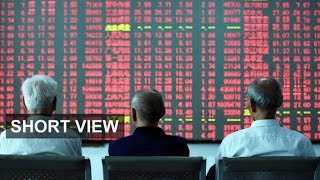
MSCI is considering including mainland Chinese stocks in its index universe. Last year, 90 stocks in the CSI 300 had more than doubled in value, but this year only 20 blue chips have made headway, indicating a tepid market.
The debate over MSCI's decision is beside the point; it's time to consider China as a global standalone market. A fund manager compares China in emerging markets to an elephant dancing with deer and rabbits.
China already makes up more than a quarter of MSCI's flagship EM index via stocks listed in Hong Kong and New York. Brazil and Mexico are relative bunnies at 6.5% and 4.5% respectively.
Over time, A-shares are expected to be given a bigger weighting, reaching as much as 39% of the MSCI EM index. This index is followed by an estimated trillion of funds.
A heavy China weighting would risk putting the index in a similar position to the MSCI All Country World Index, where the US accounts for 53%. Few follow the ACWI because it is so heavily weighted to a single market.
Treating China as not just another EM would lead to extra resources devoted to understanding it better. Colleagues in the US and Europe are shocked by poor disclosures from mainland companies and little English language information.
Few fund managers could name the 20 gainers in the CSI 300 this year compared to the S&P 500 leaderboard. China's gradual opening up is one of the few identifiable long-term market trends, and getting ahead means understanding those companies now.
The video concludes that China's inclusion in global indices is inevitable and investors should start treating it as a standalone market to better understand its unique dynamics and opportunities.
Mentioned in this Video
💡 Key Takeaways
China as an Elephant
The metaphor vividly illustrates China's disproportionate size in the EM index, making the point memorable.
00:26Projected 39% Weighting
A concrete number that quantifies the potential shift, highlighting the scale of change for investors.
01:09Disclosure Challenges
Points to a practical barrier for foreign investors, emphasizing the need for better information.
01:39Full Transcript
[00:00] This time last year, when MSCI considered including mainland Chinese stocks in its index
[00:12] universe, 90 stocks in the blue-chip CSI 300 had more than doubled in value in that year to date. This week markets face the same decision. The debate is no less heated, but at least the market is far more tepid.
[00:26] 20 blue chips in China have made any headway at all this year. Whether or not MSCI gives China the nod is really beside the point, which is that it is already time to start considering China to be a global standalone market. As one fund manager describes it, putting China in with the other
[00:44] emerging markets is like looking at an elephant dancing with a bunch of deer and rabbits. Now the elephant already makes up more than a quarter of MSCI's flagship EM index. This
[00:56] This is via stocks listed in Hong Kong and New York. Relative bunnies then include Brazil and Mexico at just 6.5% and 4.5%. Over time, the assumption is that A-shares will be given a bigger weighting,
[01:09] reaching as much as 39 of MSCI EM index Now that index is followed by an estimated trillion of funds Such a heavy China weighting would risk putting the index in a similar position to MSCI All Country World
[01:25] Index. There the US accounts for 53%. Now in theory both indices are good benchmarks but in reality few follow the ACWI because it is so heavily weighted to a single market. The benefit of
[01:39] already cheating China as not just another EM is the extra resources investors would devote to understanding it better. One Asia head of investment reports colleagues in the US and Europe are still routinely shocked when they see just how poor disclosures are from mainland companies and how
[01:56] little English language information there is. Now the only way that would improve or change is if more people demand it. I'd bet few fund managers could name those 20 gainers in the CSI 300 from
[02:08] this year compared with, say, the S&P 500 leaderboard, at least without reverting to a Bloomberg terminal. China's gradual opening up is one of the few identifiable long-term market trends out there, and getting ahead of that means getting to grips with those
[02:23] companies now.