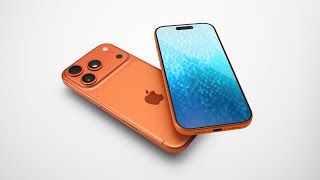

iPhone 17 Pro Max: Full Metal Unibody!
45sThe radical design shift to a metal unibody sparks curiosity and debate among Apple fans.
▶ Play Clip"Title accurately reflects the positive review, though the 'even better than you think' is slightly exaggerated for hype."
This video reviews the entire iPhone 17 lineup, including the regular 17, Air, Pro, and Pro Max. It covers design changes, display upgrades, battery life, performance improvements from the A19 Pro chip and vapor chamber cooling, camera enhancements, and pricing. The reviewer concludes that the Pro models are particularly solid this year.
The video covers four devices: iPhone 17, iPhone Air, iPhone 17 Pro, and iPhone 17 Pro Max. The Pro models have a new unibody metal design with a rounded shape.
The regular iPhone 17 has a similar aesthetic to last year and is considered a sleeper device.
The iPhone Air is super thin and will have its own dedicated video.
The Pro devices have a large, bulbous shape that grows on you. The unibody metal chassis feels different in hand.
Orange color is very loud; blue looks better in studio lighting. All devices have Ceramic Shield 2 front glass, which is less reflective and more scratch-resistant.
iPhone 17 finally gets 120Hz ProMotion panel. All displays are 120Hz OLED, reaching 3,000 nits peak brightness outdoors.
Pro Max offers two-day battery for many users. Charging reaches 40W when depleted. iPhone Air has surprisingly good battery life.
The new MagSafe pack only works properly with the iPhone Air due to coil alignment.
A19 Pro chip shows a large performance jump. Vapor chamber cooling allows sustained high performance by spreading heat to the aluminum shell.
Pro models and iPhone Air get 12GB RAM; regular iPhone 17 gets 8GB. Extra RAM may benefit future Apple Intelligence features.
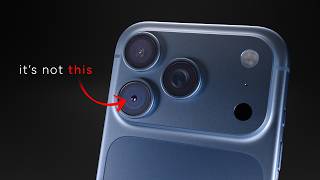
All three rear cameras on Pro models are 48MP. Telephoto offers 4x optical zoom (cropped to 8x). The camera system is the most complete from Apple.
Pro models can record 4K 120fps video; iPhone Air cannot due to binned GPU. Front camera upgraded to 18MP with better color and lighting.
Regular iPhone 17 starts at $799 with 256GB storage, ProMotion display, and improved front camera. Pro models offer excellent battery, camera, and thermal performance.
The iPhone 17 lineup, especially the Pro models, represents a significant upgrade with better displays, performance, cameras, and battery life. The regular iPhone 17 offers great value at $799.
What is the peak brightness of the iPhone 17 displays?
3,000 nits outdoors.
02:30
How much RAM do the Pro models and iPhone Air have?
12GB.
05:18
What cooling technology does the iPhone 17 Pro use?
Vapor chamber cooling.
04:10
What is the resolution of all three rear cameras on the Pro models?
48 megapixels.
06:27
What is the starting price of the regular iPhone 17?
$799.
08:37
Why does the iPhone Air have better battery life than expected?
The battery pack is optimized for the thin design, and performance is impressive.
03:25
What is the optical zoom range on the Pro models?
4x optical, with a cropped 8x option.
06:53
Which iPhone 17 model cannot record 4K 120fps video?
iPhone Air.
07:58
What is the front camera resolution on all iPhone 17 devices?
18 megapixels.
08:11
How does the vapor chamber improve performance?
It spreads heat evenly across the aluminum shell, allowing sustained high performance.
04:39
120Hz ProMotion on base model
After years of 60Hz, the base iPhone 17 finally gets a high refresh rate display, matching Android competitors.
02:03Vapor chamber cooling
This new cooling technology allows the A19 Pro chip to sustain high performance without throttling.
04:10All 48MP camera system
All three rear cameras on the Pro models now have 48MP sensors, offering the most complete camera package from Apple.
06:27Base model value
At $799 with 256GB storage and ProMotion, the regular iPhone 17 offers exceptional value for an Apple device.
08:37[00:01] overhaul this year. We're seeing big jumps in performance, in battery life, in camera capabilities. This is a very stacked year for Apple's iPhones. So, these are the review units I got in 17 and Air and both Pros. This year, the
[00:16] Pros have boxes that showcase the backs of the devices. And because it's a full metal unibody back, the boxes are printed with this shiny metallic ink. And inside, because there are mostly eSIM devices around the world, there's
[00:29] no more SIM tool. You just get the charging cable as well as a single piece of paper that says that you no longer need SIM tools. Welcome to the world of ESIMS, even up here in Canada. Okay, so these are the four devices I have. The
[00:42] regular iPhone 17 is pretty much the same aesthetic as last year. It's probably the sleeper phone from Apple's lineup this year. This is a very awesome device. It just doesn't look all that special. Uh, the iPhone Air is super
[00:54] thin. This will get its own video in the near future because this deserves a entire different kind of conversation, but the Pro devices are a very different and unexpected shape this year. These, right, when I first saw them, I was
[01:08] like, these are so big and bulbous. And a week later, I still think they're large, but they've definitely grown on me. These do not look or feel anything like previous generations of iPhones. The biggest shift is just that uni-body
[01:20] rounded. And because it's just one piece of metal that is the entire chassis, it just sits in your hand very differently. The orange color is super orange. When I is way too loud." Getting it in studio. It's even louder. The blue has grown on
[01:35] me. This is like Yeah, this is a really nice blue. It just looks better with the nice studio lighting than it did at the event. All of the iPhone 17 devices have ceramic shield 2 on the front glass. This is less reflective and more scratch
[01:49] you want to fully protect your phone, you still need a case and screen from Dbrand, but they have a new one this year called Tank with customizable buttons. So, about the displays, the iPhone 17 finally gets the 120 Hz
[02:03] promotion panel. I'd love to believe that Apple did this in response to like don't think that's the case. I think Apple's just like, "Ah, it's finally the right time. We're done milking our customers with their 60 Hz panels. Uh
[02:16] the other displays are also very nice. These are all finally like 120 Hz, prootion, OLED. They've basically caught up to the rest of the Android world. It's a very exciting time for uh iPhone users because we finally have good
[02:30] screens across the entire lineup. Uh they also get brighter at the top end this year. It can go to 3,000 nits at the top outdoors and it's a lot brighter the previous gen. But keep in mind that even though these are a thousand more
[02:43] top end, how we perceive light is logarithmic. So it's not as big of a jump as you might think. Now, in terms of battery life, these two devices, the impressive battery life, but it does drain quite fast in heavy games. If you
[02:59] don't slam the GPU, though, I think that Pro Max is a two-day battery for many advantage of the optimized battery charging, like the thing that caps it up to 80% to preserve the kind of longevity of your battery life, because this is so
[03:12] and a half battery at an 80% charge. Uh charging is faster on some of the iPhone 17s. They can hit 40 watt charging if the battery is depleted enough and it'll sustain it for a little bit of time, but then it'll drop down quite quickly. The
[03:25] pack on the iPhone Air, like the battery here is way better performing than I thin it is. It's actually quite impressive. The only thing that bums me out is that the pack is just it's so unique to this thing. Like nothing else
[03:38] can hold this pack properly. Even the big iPhone 17 Pro Max. I demoed this at home I can just finangle it enough to get it to fit. It doesn't. It's just because like the coils are somewhat aligned, but for proper like
[03:54] magnettomagnet contact, it only works on the iPhone air. So unfortunate. Okay. performance. Every year we get a new chip and it's faster like you'd expect. Last year was an unusually large jump in performance for both CPU and GPU. This
[04:10] year is actually an even larger step up in performance. The A19 Pro chips are and the architecture and all the engineering around it is fantastic, but performing so well is because of that new vapor chamber. So, they showed this
[04:24] interesting piece of technology. We actually got to demo it at Apple. We got water just to see how they work. The thing that Okay, just to be clear what a simple. It just takes heat and then spreads it out evenly across the surface
[04:39] very quickly. Now on these phones, they're just doing it to pull off heat from the chips and all that super hot dense area and pull it away onto the outer aluminum shell or the bodies to radiate heat. There's no vent. There's
[04:51] no like active air flow here. It's just passive dissipation of heat. But because that vapor chamber is so effective, it allows Apple to crank these devices a dump off that heat a little bit more effectively. And these Pro phones are
[05:05] able to sustain a high level of performance for a surprisingly long that vapor chamber and just stuck it into this chassis, like the existing iPhone 16 Pro chassis, it wouldn't be nearly as effective. Like the glass and
[05:18] conductive, and that vapor chamber would have been wasted in this device. Now, you get 12 gigs of RAM on the Pro models. Same with the iPhone Air. The regular iPhone 17 just gets 8 gigs of RAM. It's not immediately clear as to
[05:31] what that extra RAM is really for. And if you think about last year, like Apple flagship devices with just 8 gigs of RAM. And they were touting the whole forward. It's going to be Apple intelligence ready and all that stuff.
[05:44] Maybe they ran into some kind of like technical obstacle where they realized they promised they would deliver last year is just like stock these things do think it's going to be something that's forward-looking. It maybe will be
[05:59] revealed at WWDC as to why that extra RAM is necessary or beneficial. A couple things that do come to mind though. I do think that right now when you use Apple intelligence and you're trying to use the ondevice language models it's
[06:14] think there's some swapping of memory like as it's loading the model in and out of memory. I do think that if you have more RAM you can keep the model in that Siri is a little bit more responsive maybe. I don't think it's
[06:27] camera related though because the Air with its single camera still gets 12 gigs. Okay, speaking of cameras, on the Pro models, we have a camera system where all three cameras are finally running 48 megapixel sensors. This is
[06:40] enthusiasts were hoping would eventually happen. The biggest change comes for that telephoto with its 4x optical zoom, the 5x that we saw on last year's device, but the sensor is way bigger
[06:53] this year, which allows Apple to do that cropped sensor thing that they like to do, which technically gives them an optical like 8x zoom. So now on the Pro iPhones, you get a camera system with high resolution and more importantly,
[07:07] large sensors to go with it. And you just get way better image quality when you combine the two like that. The 4x optical is sharper than last year's 5x. And then when you do use that 8x crop in, you lose some of that sharpness
[07:19] of that sensor, but it still looks good. I think this is the most complete camera package that Apple's ever put on any of the phones where all of the lenses just feel sharp and very usable. The main camera and the ultrawide deliver really
[07:32] good pictures. But even on the iPhone 17 Pro Max, I still think Pixel and Samsung better in the stills department, especially in low light conditions. Now, for video, iPhones are typically better in this space. It's definitely better
[07:46] than the Pixels video output. I do think that Samsung's S25 Ultra, like their flagship, can be quite competitive. The Samsung handles colors a little bit better, but iPhone handles imperfect lighting a little bit more reliably. If
[07:58] second video, the Pro models can do it. The iPhone Air cannot do it despite having the same kind of chip. Well, it's got a bend down GPU, so it's got one core less, but this cannot do that uh
[08:11] high frame rate video that these two can. The front-facing camera is also so megapixel sensor. The new one's 18 megapixels and it's a much larger
[08:23] without actually rotating the device. And everything about this new it handles color, the way it handles lighting is just an awesome improvement. And this is on all of the new iPhone 7 devices, including the regular base
[08:37] model. So, if you take a look at pricing, the regular iPhone 17 is a pretty decent value this year. You get 256 gigs of storage. You get the new prootion display. You get a really improved front-facing camera. Like, this
[08:49] is a very solid package. I think that Apple typically doesn't offer something Apple typically doesn't offer something so good for $799, at least not in the separate conversation. This will have a separate video. I'm trying to make this
[09:01] work, but it's it's a whole conversation. Uh the Pro devices. So, the Pro devices is always a little bit tricky. But this year, I feel like all the feature updates and kind of upgrades they've provided on this thing. Awesome
[09:16] battery life, really good triple camera system that's just like very complete, plus all the thermal improvements that give it just awesome overall and you look at this and you can't appreciate like the what's happening on
[09:28] this device, I don't know what to say. This is a really solid offering from Apple. I think that when it comes to like Apple's Pro devices, as as much as things up, I really think that this is amazing year for the Pro devices. I
[09:43] really do. Okay. Uh that's my take on these. Hope you guys enjoyed this video.


⚡ Saved you 0h 09m reading this? Transcribe any YouTube video for free — no signup needed.