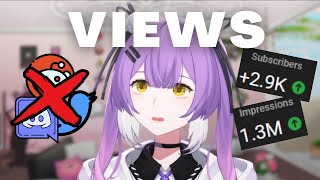

Stop Blaming the Algorithm
45sDirectly challenges a common frustration among creators, making it highly relatable and shareable.
▶ Play Clip"Title promises a growth guide and delivers actionable advice, though '2026' is a gimmick."
This video provides a comprehensive guide for VTubers looking to grow their channels on YouTube. It debunks common myths about the algorithm, explains the importance of watch time and audience satisfaction, and offers practical advice on content formats, niche vs variety, and creating evergreen content. The creator emphasizes shifting focus from pleasing the algorithm to engaging with the audience.
Creators often blame the algorithm for slow growth, but this gives away agency. The real issue is a gap in knowledge about what content people want to watch.
YouTube now prioritizes watch time and viewer satisfaction over likes and views. Videos are tested with different audiences, and if they perform well, they get recommended more.
Indie VTubers should focus on two of the three formats: livestreams, shorts, and videos, to avoid burnout and maintain quality.
YouTube values quality videos. You don't need to upload frequently; one good video every few weeks can be effective. Example: Lines in Motion posts every three months.
Quality content fulfills a need or brings value. Common categories: entertainment, education, and transformative (e.g., video essays).
Think of it as a sliding scale. Niche brings more views, variety offers freedom. Find a balance that allows growth and flexibility.
Evergreen content (tutorials, educational, song covers) stays relevant and grows on autopilot. Trends have shorter lifespans and require more frequent posting.
1) List up to five inspirations (at least one non-VTuber). 2) Identify your unfair advantages (skills/knowledge). 3) Create a one-year plan with achievable goals.
Content creation takes time. Focus on learning and improving your video-making skills. Use the three-step plan to guide your VTubing journey and remember that success comes from providing value to your audience.
What are the two major factors YouTube's algorithm uses to recommend videos?
Watch time and satisfaction.
1:17
Why should indie VTubers focus on only two of the three content formats?
To avoid burnout and maintain quality.
2:49
What is an example of a channel that posts high-quality videos infrequently?
Lines in Motion, which posts about every three months.
3:24
What are the three common categories of content that provide value to viewers?
Entertainment, education, and transformative.
4:30
What is the difference between evergreen content and trends?
Evergreen content stays relevant long-term (e.g., tutorials), while trends have a short lifespan (e.g., memes).
7:32
What three steps should you follow to plan your VTuber channel?
1) List inspirations (at least one non-VTuber). 2) Identify unfair advantages. 3) Create a one-year plan with achievable goals.
8:53
Stop Blaming Luck
Shifts mindset from external factors to personal agency and knowledge gaps.
0:27Algorithm Prioritizes Watch Time and Satisfaction
Key insight into how YouTube's recommendation system works today.
1:17Quality Over Quantity
Emphasizes that one good video every few weeks can be more effective than frequent uploads.
2:59Evergreen Content Grows on Autopilot
Highlights a sustainable growth strategy for long-term success.
7:26Three-Step Channel Plan
Provides actionable steps for new VTubers to create a focused content strategy.
8:53[00:00] Stop browsing
[00:01] VTubing servers,
[00:02] subreddits,
[00:03] and online communities for the answer.
[00:05] These places are
[00:06] stunting
[00:07] your
[00:07] growth.
[00:08] You see, I've been gaining more traction after learning these tips
[00:11] from creators outside of VTubing.
[00:13] So today,
[00:13] I'm going to clear up misconception about growth,
[00:16] teach you the basics of content creation,
[00:18] and create a tangible direction for your VTubing career.
[00:20] We will mostly cover VTubing on YouTube
[00:23] and information in this video can be applied to other social medias.
[00:26] Let's get started.
[00:27] First thing first,
[00:28] stop blaming luck
[00:30] for your slow growth.
[00:31] I see this so often where people ask for advice
[00:33] and it's followed by
[00:35] "The algorithm hates me."
[00:36] "The algorithm sucks."
[00:38] "The algorithm won't push my video"
[00:39] Yada yada yada
[00:40] Zip it.
[00:41] Zip it zip it zip it. I don't want to hear it.
[00:42] The problem is that
[00:44] these creators give up agency of their own success to outside factors.
[00:48] The only thing that holds anyone back
[00:50] is a gap in knowledge about content that people actually want to watch.
[00:53] According to YouTube Liason,
[00:56] the official link between the platform and creators,
[00:59] YouTube has gotten really good at recommending videos to the right audience.
[01:02] In the past, videos were pushed out based on likes, view counts, and comments
[01:06] which led to random clickbait video going viral.
[01:09] Nowadays,
[01:10] these aren't the most important factor in recommending a video.
[01:13] Our home feed shows big and small videos because two major factors matter now:
[01:17] Watch time and satisfaction.
[01:20] When a viewer watches a video all the way through,
[01:22] it tells the algorithm that the video is real interesting.
[01:24] What if you watch a video out of curiosity
[01:26] and end up disliking it?
[01:28] Well that video goes through more checks.
[01:30] Are they returning viewers?
[01:31] Are your videos keeping people on the platform longer?
[01:34] Occasionally, you'll see surveys like this on screen as well. . .
[01:37] though I've been informed that this feature is not universal.
[01:40] This is all set up in a way so that the audience can feel good about what they watch
[01:43] and in turn associate good things with the platform.
[01:46] When I uploaded my first video on this channel, I thought it was a flop.
[01:50] For about 45 days, nothing really happened.
[01:52] But during that time, YouTube was quietly testing it with different audiences.
[01:56] All of a sudden, it started pouring in the views.
[01:58] Don't lose hope if your content doesn't take off right away.
[02:01] Sometimes, it just needs a bit more testing to get the right viewers.
[02:04] In the end, the algorithm isn't some mysterious beast.
[02:07] It's really all about your audience.
[02:09] If you shift your focus from trying to please the algorithm
[02:12] to actually engaging with your audience,
[02:14] you'll have a much better chance at success.
[02:16] Remember,
[02:17] the algorithm is a just a reflection of how well your content resonate with the people watching it.
[02:23] Let's talk about different types of video format on YouTube.
[02:26] The truth is
[02:28] YouTube livestreams are the awkward middle child between videos and shorts.
[02:31] Livestreaming was originally created to compete with Twitch,
[02:34] but as time went on
[02:36] TikTok became a bigger threat to the platform.
[02:39] Like many of you, I started streaming because that's what all the big VTubers are doing.
[02:44] When it comes to choosing among livestreams, shorts, and videos
[02:47] it's better to focus on 2 of the 3 media
[02:49] *especially* if you're an indie VTuber.
[02:51] Try out each one to see what you like or dislike.
[02:53] This way you can avoid burnout and really focus on making quality content.
[02:59] This is the most important part of the video.
[03:01] I spent countless hours researching what content goes viral
[03:04] and honestly, it's not that complicated.
[03:07] It's all about packaging your interest in a way that's appeal to others.
[03:11] YouTube is moving towards valuing quality videos more.
[03:14] You don't need to crank out five videos a week,
[03:16] you could just make one good video every few weeks.
[03:18] Doesn't that sound better?
[03:20] One of the coolest channel I've come across is called Lines in Motion.
[03:24] They've only made about 30 videos in four years
[03:26] and they usually post a new video every three months.
[03:29] Even though they don't upload often,
[03:31] each video is packed with great info and amazing editing
[03:35] that leaves you feeling...
[03:36] satisfied.
[03:37] In the bigger picture, you probably won't be the next Lines in Motion right away.
[03:41] Their video shows mastery of skills that many of us are still learning (myself included).
[03:45] Instead of trying to make five videos a week or one video every six months,
[03:49] find a rhythm where you can create a few videos every 30 days.
[03:53] That way, you'll get better with each upload while staying consistent with the feedback.
[03:57] As an indie VTuber, you're just one person.
[04:00] Channels that put out a lot of long form videos alongside streams or shorts
[04:04] usually have a team behind them.
[04:06] I often see new VTubers mistakenly try to copy the release schedule of bigger VTubers.
[04:12] It's just not possible.
[04:13] So what makes content "quality"?
[04:16] The key to quality content is less about your editing skills,
[04:19] and moreso understanding that your audience wants something that
[04:22] fulfills a need or brings value to their lilfe.
[04:25] Here are some common categories that help channel grow
[04:28] while providing value to these viewers.
[04:30] Entertainment.
[04:31] This is the most common category for VTubers.
[04:34] It requires a good level of charisma and humor to attract viewers.
[04:37] If you're good at storytelling, you can also excel in this route too.
[04:40] Education.
[04:42] If you have a subject or topic you're interested in teaching others,
[04:45] like art, science, or even something niche,
[04:47] this type of video is recommended.
[04:49] Transformative.
[04:50] This type of video changes someone's outlook or idea about something.
[04:54] Common examples are video essays often focusing on topics like
[04:58] motivation, relationships, health, or relatability.
[05:02] This is often why fanart and song covers tend to do better than original content.
[05:07] The idea that it takes on a new form of what you're already familiar with.
[05:12] These are rather broad category, and I will cover some more later on in the video,
[05:15] but these are going to be what you'll find a lot of videos to fall under.
[05:19] When you're deciding between niche and variety,
[05:22] think of it like a sliding scale.
[05:24] Focusing on niche can bring in more views,
[05:27] while variety gives you more freedom.
[05:29] Most creators burnout by sticking to one type of content,
[05:33] and other creators get frustrated when they try too many things and don't see growth.
[05:37] Instead of going to either extremes,
[05:39] you need to find a balance that lets you grow,
[05:41] but gives you enough flexibility to change your content when you want to.
[05:45] Many years ago, I was looking for a tutorial for a note taking program called "Obsidian."
[05:50] This one video I came across had more than 100,000 views.
[05:54] It had information I needed when suddenly. . .
[05:57] there was a VTuber on screen!
[05:59] John Mavrick is an example of a VTuber
[06:01] that niched himself quite well around a single note taking app.
[06:05] Each of his video has pretty significant views
[06:07] with his top video having 400,000 views all together.
[06:10] Many VTubers are NOT going to be John Maverick,
[06:13] but it is a potential path for some.
[06:15] More likely than not, you're going to be someone like S.S. Isa.
[06:19] She has song covers, ASMR, memes, variety. . .you name it.
[06:23] The best scenario is when you become the main reason people watch your content.
[06:28] When YOU become the niche they're interested in.
[06:30] Variety is a valid means of growth,
[06:32] but you have to grow INTO the brand and personality for it.
[06:34] That's just the truth.
[06:36] That doesn't mean you have to be extroverted or loud--
[06:38] It's just entertaining.
[06:40] Navigating the balance between sticking to a niche
[06:42] and branching out can be tricky.
[06:44] Think of your content growth as moving both up and out
[06:47] Let's say you start by making videos about Genshin Impact guides.
[06:51] You can grow a lot by focusing on just that,
[06:53] but if you start feeling bored you might want to branch out a bit.
[06:57] Instead of guides, you could just make videos about Genshin lore,
[07:00] maybe make videos on analysis,
[07:02] damage showcases, or updates.
[07:03] However, if you're thinking about completely switching gears,
[07:07] like moving from Genshin to Valorant,
[07:10] that could be risky.
[07:11] Your current audience might not be interested in Valorant,
[07:14] and it'll take time to build a new audience.
[07:16] As you shift your focus,
[07:17] you'll likely still keep some of the original audience while attracting new viewers.
[07:21] This is the sort of difficulty you'll start to encounter as you grow larger in size.
[07:26] Have you ever wondered how some YouTube videos keep bringing in views
[07:29] months or even years after they're posted?
[07:32] Creating evergreen content is the key to building a YouTube channel that grows on autopilot.
[07:37] They're a type of video that stays useful and interesting no matter when people watch it.
[07:42] So rather than focusing on explosive, viral videos
[07:45] Creating content that steadily grows is more consistent and achievable for many of us.
[07:50] To create videos that stay relevant,
[07:52] focus on topics that have long term relevancy.
[07:55] This are going to be tutorials,
[07:57] educational materials,
[07:58] song covers,
[08:00] video essays,
[08:01] ASMR sleep aids,
[08:02] exercise videos. . .
[08:04] just to name a few.
[08:05] By sticking to video topics that don't change very much,
[08:08] your videos will continue to be useful to viewers long into the future.
[08:11] The opposite of evergreen content is trends.
[08:14] These are going to be memes, flavor of the month games, news, or updates.
[08:18] There are VTubers who can grow and take advantage of these trends,
[08:21] but the timeframe for their relevancy is going to be a lot smaller.
[08:24] So, they're sort of forced to push content more often.
[08:27] Although I encourage creating evergreen content,
[08:29] you can also mix evergreen content with current trends for even better results.
[08:33] This approach can attract more viewers,
[08:35] while still providing timeless value on some of your other videos
[08:38] creating a feedback loop for all your channel.
[08:42] With all things considered,
[08:44] content creation can be overwhelming for first time creators.
[08:47] To give a bit more direction for your channel,
[08:49] I suggest grabbing a pen and paper for the last part of the video.
[08:53] At the top of the page,
[08:54] Write down no more than five inspirations for your channel.
[08:57] I wholeheartedly believe that if you want to succeed as a VTuber,
[09:01] at least one of them has to be a non-VTuber.
[09:05] The best VTubers come from those who innovate outside of VTubing
[09:08] rather than following the formula to a T.
[09:10] Next to your inspiration,
[09:12] write down your "unfair advantages"--
[09:15] The kind of skills or knowledge that you uniquely possess over most people.
[09:19] To those of you who don't think they have anything,
[09:21] You most definitely do.
[09:22] Image you're at your grocery store.
[09:24] You 100% do have the skills and knowledge
[09:27] on something over 90% of people there don't have.
[09:30] You can add things you're obsessed with like specific games, tv shows, or genre of music (among other things).
[09:35] These are going to be the foundation for your channel.
[09:38] If you like a particular game,
[09:40] think about expanding beyond pure gameplay footage.
[09:43] Try to really thing about creative ways to repackage your video.
[09:46] If, for example, you wrote down League of Legends,
[09:48] maybe you can make tutorials,
[09:50] challenge videos,
[09:51] breakdown guides,
[09:52] commentate over the history of League of Legends,
[09:55] maybe interviews too.
[09:57] Lastly,
[09:58] create a one year plan for yourself.
[10:01] You can toss a random number for your sub count, but...
[10:04] that doesn't really matter as much as the next part of it.
[10:07] Write goals that are achievable and based on factors you can control.
[10:12] If you don't feel like you can make merch within the next year
[10:14] because you lack the art skills, funds, or knowledge, then disregard it.
[10:17] HOWEVER.
[10:19] If you're willing to be the kind of person that is
[10:21] willing to learn or build the skills or get funding for it--
[10:24] then write it down.
[10:26] One of the most consistent thing about my one year plan so far
[10:29] has been putting forth unique and interesting streams.
[10:32] I'm just a regular VTuber much like you.
[10:34] Heck, I put together a Hot Ones Interview with myself
[10:37] using google image and photoshop.
[10:39] Nothing too crazy.
[10:41] These three questions will help guide your vision in your VTubing journey.
[10:44] When you get lost or don't know what to do,
[10:47] look to these ideas as a source of inspiration.
[10:50] At the core of content creation,
[10:52] Things. Take. Time.
[10:54] If you're truly starting out for the first time,
[10:56] try many things and learn lots of things.
[10:59] To succeed on YouTube,
[11:00] you have to take these concepts and prepare to learn and improve your video making skills as well.
[11:05] This is only the start.
[11:07] If you need help making your VTuber model, check out these videos here for more information.
[11:11] Feel free to support me by subscribing to my channel
[11:13] or checking out my livestreams here on YouTube.
[11:16] Your support means a lot.
⚡ Saved you 0h 11m reading this? Transcribe any YouTube video for free — no signup needed.