
AI Summary
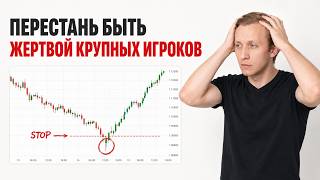
This video explains the concept of market liquidity from a trading perspective, focusing on how large institutional players use liquidity pools to manipulate price and trigger retail stop losses. The presenter, Kirill, a trader based in Dubai, outlines what liquidity is, how to identify it on charts, and provides three key rules for trading alongside big players rather than against them.
Chapters
The video begins by stating that losing money in trading is often due to liquidity, not bad luck. Big players know where retail stops are and target them.
Liquidity is defined as how quickly and easily an asset can be bought or sold without significantly affecting its price. The phrase 'liquidity is how much money is executed quickly and at the right price' is highlighted.
When you lose, you add liquidity to the market. Your stop loss order becomes an entry point for other traders, particularly large players.
A liquid market has sufficient volume to execute large orders without slippage, while an illiquid market may force a worse fill price. Example given: a $1 million order fills easily in a liquid market, but in an illiquid market, a $800,000 order might only fill at a worse price.
Large institutional players (private equity funds) execute trades worth hundreds of millions. They manipulate the market to trigger stop losses, which adds liquidity, allowing them to enter at better prices.
Liquidity is found at swing highs and swing lows, especially equal highs/lows. These act as magnets for price, where manipulation and stop hunts occur. Terms like 'buy-side liquidity' (stops above highs) and 'sell-side liquidity' (stops below lows) are introduced.
Liquidity runs indicate how easily price can reach a liquidity level. A 'clean run' means price moves without resistance, while a 'high resistance run' means more difficulty and time.
Kirill shows charts (likely USD/CAD) illustrating liquidity levels, stop hunts, and manipulative movements. He demonstrates how price returns to logical levels to take stops before continuing in the original direction.
Rule 1: Don't think like the crowd; big players target obvious stop levels. Rule 2: Wait for liquidity sweep (manipulation) before entering, as entering early often leads to being stopped out. Rule 3: Use liquidity levels as take-profit targets.
Novice traders often draw liquidity everywhere, but only the most obvious levels matter. Entering before a liquidity sweep is risky. Liquidity should be used as confirmation, not the sole basis for trades.
A recommended sequence: understand market structure first, then key levels, then liquidity, and finally execute entries and exits.
Kirill shares quotes: 'Liquidity is the money of other traders' and 'If you don't know who the liquidity is, then most likely you are the liquidity.'
Understanding liquidity is crucial for retail traders to avoid being manipulated by big players. By identifying liquidity zones, waiting for sweeps, and using liquidity as confirmation, traders can align with institutional order flow and improve their trading outcomes.
Mentioned in this Video
Study Flashcards (7)
What is liquidity in trading?
easy
Click to reveal answer
What is liquidity in trading?
Liquidity is how quickly and easily an asset can be bought or sold without significantly affecting its price.
01:22
What does 'your stop is someone else's entry' mean?
medium
Click to reveal answer
What does 'your stop is someone else's entry' mean?
When you lose and your stop is triggered, you add liquidity to the market, which becomes an entry point for other traders.
01:36
What are buy-side and sell-side liquidity?
medium
Click to reveal answer
What are buy-side and sell-side liquidity?
Buy-side liquidity is the stops of sellers located above swing highs; sell-side liquidity is the stops of buyers located below swing lows.
04:35
What is a liquidity sweep?
medium
Click to reveal answer
What is a liquidity sweep?
A liquidity sweep is the process of stop hunting, where price temporarily moves beyond a level to trigger stops before reversing.
04:51
What are the three key rules for trading with big players?
hard
Click to reveal answer
What are the three key rules for trading with big players?
1. Don't think like the crowd. 2. Wait for liquidity sweep before entering. 3. Use liquidity levels as take-profit targets.
09:10
What common mistake do novice traders make with liquidity?
medium
Click to reveal answer
What common mistake do novice traders make with liquidity?
They draw liquidity everywhere, but only the most obvious levels matter. Also, entering before a liquidity sweep often leads to being stopped out.
10:07
What is the recommended trading framework?
medium
Click to reveal answer
What is the recommended trading framework?
Understand market structure first, then key levels, then liquidity, and finally execute entries and exits.
11:01
💡 Key Takeaways
Your stop is someone else's entry
This core concept explains why retail traders lose and how big players profit from their stops.
01:36Big players manipulate the market
Reveals the manipulative tactics of institutional players, which is essential knowledge for retail traders.
03:07Liquidity at swing highs and lows
Provides a practical method for identifying liquidity zones on charts.
04:03Three key rules
Actionable rules that can help traders avoid common pitfalls and align with institutional flow.
09:10Liquidity is the money of other traders
A memorable quote that encapsulates the essence of the video's message.
11:17Full Transcript
[00:01] turns around and goes where you expected. You were right, but you still lost your money. It's not bad luck, it's liquidity. The big players know where your stops are and they follow them. Today I will explain how this works and
[00:14] circumstances. By the way, I have a Telegram channel and a free trading community. There I share my setups, conduct live trading, and personally help the description. Well, now let's go figure it out .
[00:30] . [music] where it is located and how to see it on a chart. After that, how big
[00:42] players use it, and at the end I will tell you how to trade with them, After watching this video to the end, you will understand where the price will go and why this is happening. You will also stop losing [music] money on stops and,
[00:55] big players enter. If you are watching my videos for the first time, here is a little about me. My name is Kirill. 4 years in trading. I've been living in Dubai for the same amount of time. I trade [music] on ICT and smartman. I work with Forex, gold and crypto. I have attached
[01:09] my trades here so you can see that you can actually get good results in trading if you know what to do. And, accordingly, knowledge of liquidity will help us with this. Let's move on to step one. What is
[01:22] quickly an asset can be bought or sold in the market without greatly affecting [music] liquidity is how much money is executed quickly and at the right price. And please pay attention to this phrase,
[01:36] it will also be useful to us later. And [music] when you lose, you add liquidity to the market. Your stop is someone else's entry. Now I will show, and I will tell you what a liquid market looks like, what an illiquid market looks like.
[01:49] Accordingly, when we come to the market and want to make a deal, on the other side there will always be [music] either a buyer or a seller. And, to complete our transaction at the price we need . Accordingly, there must
[02:03] be enough volume in the market to fulfill this. [music] And here is a clear example, that is, we have a glass of orders, [music] that is, these are purchases, there will be sales. And, accordingly, if we want to carry out
[02:15] either a purchase or a sale at this price, we will have, a, a sufficient volume if we want to make 1 million there, then it will be realized without any problems. In case we are in an illiquid market, then if we want to execute, a, an order
[02:31] at a given price of 1.07, and we understand that here we have no liquidity, and we can only close [music] our order, and in case of averaging only to the level of 1.11. That is, our price will close at 1.10.
[02:52] buy, say, for the amount of 800,000 dollars. [music] Now imagine, ah, in the big markets, yes, be it currency pairs, be it gold, be it crypto, but there are big guys, private equity funds,
[03:07] transactions, [music] that is, not for some small amounts, but for hundreds of millions, yes, of dollars. These guys want to get the deal done in the most profitable way possible. [music] Accordingly, they do it in such a way that they
[03:21] manipulate the market, bringing it to the level when you are knocked out by stops, as we remember, you add liquidity to the market, your stop is someone else’s entry. [music] That is, they bring it to the required level, where there is a
[03:35] greater volume of liquidity. Accordingly, they take it and move iteration or in several iterations. [music] Ah, so now we speak in a fairly clear, yes,
[03:48] clear, yes, language, without any complications. Great, we've figured out what [music] liquidity is. Let's move on. But basically, what does it look like and how can you see it on the chart? That is, the
[04:03] where liquidity is is swing [music] high. Swing low is either outside the high or outside the low. If we have equal, equal slow - this magnet to attract there, ah, guys, so that there is
[04:21] manipulation, so that the price is knocked out, so that the price is knocked out by, [music] ah, stops. Accordingly, I also want to draw attention to and remember these terms, that is, BYU salik, you see, selltlik, you see, accordingly, this is what
[04:35] is behind the hayam, that is, these are the stops. A, that is, these are the stops of sellers who are behind the highs. Sell liquidity, accordingly, similarly, that is, what is behind [music] our
[04:51] bottom, our low, but only the stops of buyers. [music] Liquidity SwiP is stop hunting, the process of getting stopped out. This can also happen in a trend line. Accordingly, most
[05:04] retail traders trade in this direction as well. Accordingly, guys, big players understand this and, for example , [music] they control the price, they do, for example, like this, they knock you out at stops and then they still
[05:16] [music] Accordingly, by understanding how liquidity works, you can simplify your life, save money, or earn even more. [music] I would also like to draw attention to the fact that there are also such definitions and
[05:30] Run and High Resistance Liquidity [music] Run. This is how difficult or easy it is for the price to reach liquidity. Accordingly, here we understand that it is quite obvious, and we need to trade when the price
[05:45] just needs to reach the liquidity level. That is, this is how we understand that if we do this, we understand that the price will go [music] quite cleanly, without any difficulties. If this is a hyrisis, if you see a run, then we
[05:58] [music] will have resistance, more complexity, and we will spend more time, more nerves and it is not a fact that we will reach the end. Well, now let's move on to the graph. I'll show you what this already looks like on the graph.
[06:12] [music] chart, and USD C. And, accordingly, liquidity [music] levels look like. Accordingly, as
[06:26] levels look like. Accordingly, as we can see, there is a fairly obvious low here. Accordingly, here we have a fence and stops. Here, accordingly, it is the same. M
[06:45] and the resistance here breaks through, goes down , then up again. That is, the market is , then up again. That is, the market is playing manipulatively with retail traders. Let me show you something else.
[07:05] and for clarity [music] we have
[07:17] That is, we are making a strong push here. Even if we take the [music] shadow, we will be broken here, because if we move to another time frame, this shadow will already be in the candle. Accordingly, [music] if we
[07:32] Accordingly, [music] if we go here, look, here we have a logical level of support being formed, and here,
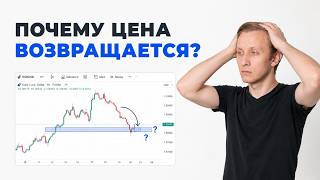
[07:46] accordingly, [music] equals is formed, that is, the price of the fundamentals returns to this level, and, that is, this becomes a strong enough, a, factor for the algorithm [music] to return here and take stops and,
[08:00] accordingly, we look here. There is such a strong manipulative movement going on here. That is, the algorithm comes, knocks out stops, and with just one movement. And look what happens next. Then the price just goes
[08:15] next. Then the price just goes up. That is, a, we took the liquidity, a, and made an entry and moved on. That is, this happens in iterations of liquidity collection in order to replace it with the one we need. After this we
[08:28] move on. [music] Accordingly, the same thing is happening here. That is, we can also consider these levels as logical levels where our liquidity is located. Here. That is, this can be envisaged
[08:42] Here. That is, this can be envisaged at any level, on any timeframe. That is, it is important to determine and find, depending [music] on each trading strategy, what levels we need. Okay, great, we figured it out. I
[08:55] showed you what it looks like on the graph. Now let me also tell you how to trade with the big guys, and not against them. Three key rules that [music] beginners don't take into account . First. Rule number one.
[09:10] [music] Accordingly, the market is always about the psychology of the masses. The big guys understand that most people put stops beyond this limit. Obviously, they will [music] knock it out right there. That is, don’t try to think like a crowd.
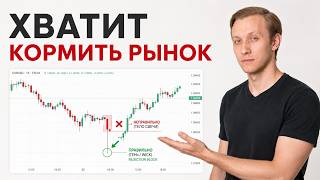
[09:27] Next comes rule two. Wait for liquidity with VIP re-entry. That is, wait until the manipulation occurs. After that, enter into a trade, because the direction will most likely be correct, based on which you make your analysis. Here. But if
[09:41] you go before, be confident, be prepared that perhaps 90% of the time you will be knocked out. And third, also use liquidity as a goal.
[09:53] most likely reach there, you can simply place your [music] simply place your [music] take profit there, understanding that this will be a logical logical zone where the price will most likely reach.
[10:07] And the common mistakes that I see that novice traders make are [music] and drawing liquidity everywhere. That is, not all levels will be liquidity that you need to focus on. [music] Focus on the most
[10:20] obvious ones. Those that are immediately noticeable to the eye. Login doquidity [music] SWIP. As I said earlier, if you enter into a Swift pre-quidity, then most likely there will be manipulation and you will be stopped out. Do you want to lose money? No, you don't want to
[10:35] lose money. Accordingly, come in [music] after forgetting about the market structure, that is, use, uh, liquidity, understanding liquidity only as additional confirmation, as a basis. [music] So it's important not to
[10:47] trade based solely on liquidity, use it as confirmation. like to recommend to everyone, which they should adhere to. That is, first of all, you
[11:01] always need to understand the structure of the market, then [music] key levels, after that liquidity and then carry out entry-exit and transactions.
[11:17] liquidity is the money of other traders. I also like the phrase: liquidity is, then most likely you are liquidity. Therefore, if you didn’t understand something in this video, I strongly recommend that you watch it
[11:32] again until you understand it. I would also like to remind you that I have a Telegram channel where I publish information on trading. I also have a free trading community where I share my trading setups,
[11:44] conduct live sessions with the publication of specific and clear entry points and [music] take-profits are also published. This community also
[11:56] has an introductory course for beginners. That is, everything is quite clear. Here. And I will be in touch with all members of my community on all questions. Here [music], so if you're interested, and all the information, all the detailed information
[12:12] will be in the Telegram channel. Let's finish. Don't forget to subscribe to the channel, like it, leave a comment, tell us how much you liked the video , what concepts we'd like to explore in the future, and tell us in general
[12:24] how much you [music] currently use, and you plan to use understanding liquidity in your, and future trading strategy. Anyway, thanks for watching, and see you in the next
[12:38] for watching, and see you in the next video. M.