
AI Summary
The video discusses the heavy penalties for eating or drinking in the Delhi Metro, highlighting a $500 fine (approximately 35-40 thousand rupees) as a deterrent. The creator argues that India should adopt similarly heavy penalties for traffic violations to improve compliance, and extends this principle to personal life by suggesting self-imposed heavy penalties to change habits.
Chapters
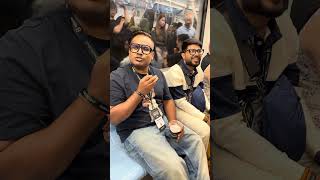
The creator demonstrates carrying a coffee cup in the Delhi Metro, noting that while he can hold it, he cannot drink it due to the rules.
Eating or drinking in the metro incurs a penalty of $500, approximately 35-40 thousand rupees, as shown in the official notice.
In India, traffic rule violations often result in fines of 500 to 2000 rupees, which are too low to deter people, unlike the metro's heavy penalty.
The creator notes that the fear of a heavy penalty prevents him from drinking in the metro, even though he entered with the cup, showing the effectiveness of high fines.
Suggests that traffic violations should carry fines of 5-10 lakh rupees, and not wearing a helmet should result in a 20 lakh rupee fine, to ensure compliance.
Extends the principle to personal life, advising viewers to impose heavy penalties on themselves to change habits and improve discipline.
The video advocates for heavy penalties as an effective deterrent for rule-breaking, both in public systems like traffic and in personal habit formation, suggesting that fear of significant loss drives better behavior.
💡 Key Takeaways
Heavy Metro Penalty
Highlights the stark contrast between metro fines and typical traffic fines in India, showing the power of deterrence.
00:13Proposed Traffic Fines
Offers a concrete, if extreme, proposal for improving rule compliance through financial deterrence.
01:00Self-Imposed Penalties
Applies the principle of heavy penalties to personal habit change, a practical self-improvement technique.
01:14Full Transcript
[00:00] हुआ है कि अ लीजिए बहुत अच्छी चीज सीखने लैकर शमाला एक भारत को भी सीखना चाहिए मैं प्रोसॉप्ल और मेरे हाथ में अधिल कॉल्डू साहित मैं उश्लील कफी यह रख सकता हूं पी नहीं सकता कहाने-पीने की चीज
[00:13] लेकिन आप नहीं सकते मेट्रो में और अगर किया ऐसा तो पेनलटी दिखाता हूं क्या है अब जरूराक दिखाओ जोन करके दिखाना हूं जो लिखा हुआ है फॉर जो है अब आज वापस मतलब अगर मेट्रो में खाने या पीने अगर कर रहे
[00:31] खाना पीना तो यहां पर 500 डॉलर यानि कि लगभग 35-40 हजार रुपए की पेनल्टी है अब सीखने लाइक यह है कि भारत में जो हम लोग ट्राफिक रूल्स तोड़ते हैं जिसमें 500 आजार 2000 का फाइन होता है या कच्चरावी
[00:43] कर दिते जिसमें कोई नहीं होता है अगर ध्यान हो ना तो आदमी डरता है करने से जैसे मैं लेकर घुसा जरूर हूं लेकिन पी नहीं रहा हूं ठीक है तो हवी पेनलिटी होना अच्छी बात है जैसे कोई ट्रैफिक रूल तोड़े तो
[01:00] पाँच लाख-दश रुपए रुपए का फाइन हो कोई हेल्मेट करी ना कर रहा हो 20 लाख रुपए का फाइन हो मजा लेकर बिना हेल्मेट के घर निकल जाए तो हेवी पेनिलिटी सरकार लगाए तो भी अच्छा है और ऐसे ही अपनी जिंदगी में भी
[01:14] खुद को हेवी पेलल्टी लगाना शुरू कीजिए देखिये हम खुद भी अपनी हाथत बदल लें