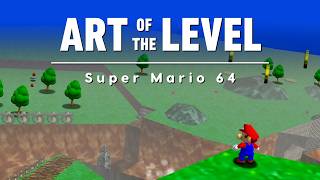

Why Bob-omb Battlefield is a Masterpiece
45sOpens with a bold claim that hooks viewers interested in game design and nostalgia.
▶ Play Clip"The title is accurate and descriptive; the video thoroughly analyzes why Bob-omb Battlefield is a pivotal 3D platforming level."
The video provides a deep dive into the design and significance of Bob-omb Battlefield, the first level of Super Mario 64. It analyzes how the level establishes a new grammar for 3D movement and storytelling, and how its design teaches players through exploration and experimentation. The video also explores the level's hidden depths, speedrunning secrets, and its enduring legacy in gaming culture.
Bob-omb Battlefield is a masterpiece that established new grammar for 3D movement and storytelling in wordless worlds.
The level introduces hostility and fail states after the safety of Peach's castle, giving the player the lay of the land.
Enemies are grabbable, and war continues even after the enemy is gone (cannons keep firing).
The English version calls him Big Bob-omb, while the Japanese calls him Bomu Kingu (King Bomb). He was finally crowned King Bob-omb in Mario Party 5.
King Bob-omb is constructed from 2D images animated with a 3D effect; only his crown, eyes, and mustache are polygons.
The star from the king opens new areas in the castle and allows for new world states in Bob-omb Battlefield.
The level changes after the first star: the summit is empty, a new rolling ball appears, and Koopa the Quick challenges the player to a race.
The music is not unique to the level; it is the main theme of the game, used across multiple courses and composed by Koji Kondo.
What was the design purpose of Bob-omb Battlefield?
To establish a new grammar for 3D movement and invoke a sense of storytelling within traditionally wordless worlds.
0:05
What was the original introductory stage in early demos of Mario 64?
Whomp's Fortress.
2:11
What are the Japanese and English names for the king of the Bob-ombs in Mario 64?
Big Bob-omb (English) / Bomu Kingu (Japanese).
6:45
How is King Bob-omb visually constructed in the game?
He is constructed from 2D images animated with a 3D effect; only his crown, eyes, and mustache are polygons.
7:21
What two valuable lessons does the enemy soldier at the artillery teach the player?
To teach players how to grab enemies and that enemies are grabbable.
5:57
What was Miyamoto's original intention for the race challenge in Bob-omb Battlefield?
A straightforward sprint against Mips the rabbit.
10:17
How many stars does Mario need to unlock the sunlit ceiling fresco that hides the red switch?
64.
13:18
Establishing 3D Grammar
This point defines the core achievement of the level: teaching a new way of moving and thinking in 3D space.
0:05Introducing Hostility and Fail States
It marks the transition from the safe castle grounds to a challenging environment, a key design choice for player progression.
2:322D Billboarding for 3D Illusion
Explains how the game efficiently created 3D-looking characters using 2D sprites, a clever technical solution for the N64 era.
7:21Dynamic World States
Highlights how the level changes after the first star, a unique design that encourages replayability and exploration.
10:05Music as a Throughline
Reveals how Koji Kondo reused the main theme across multiple levels, creating a unified musical identity for the game.
14:27[00:00] Art of the level rarely gets this
[00:02] literal.
[00:05] Bob-omb Battlefield is a masterpiece
[00:07] within a masterpiece that established a
[00:09] new grammar for 3D movement and invoked
[00:11] a sense of storytelling within
[00:12] traditionally wordless worlds.
[00:16] The first challenge course of Super
[00:17] Mario 64 is a dense possibility space
[00:20] with precisely tailored progress that
[00:22] leads you across enemy lines and up a
[00:23] mountain in pursuit of its seven perfect
[00:26] stars. Bob-omb Battlefield is worth
[00:28] hanging on the wall.
[00:30] So, what makes this war zone so
[00:32] welcoming? How many times can you climb
[00:33] the same hill? Do you think love can
[00:36] bloom [music] even on a battlefield?
[00:38] Light the fuses,
[00:40] man the artillery,
[00:41] and hold on to your flying hats.
[00:44] Because this is the art of the level
[00:46] Bob-omb Battlefield.
[00:48] >> Press start to play.
[00:51] >> [music]
[00:52] >> Presented by Marvel Animation's X Pen 97
[00:55] season 2.
[01:00] >> [music]
[01:07] >> Mario 64's tutorial space is the stuff
[01:10] of legend. The castle grounds are a
[01:12] verdant playground we can triple jump
[01:13] through for hours, but we must
[01:15] eventually put our new skill to the
[01:17] test. Step into the castle, placate the
[01:19] terrified toad, and enter the first door
[01:21] on the left. Inside this simple room
[01:23] flanked by two austere columns is a
[01:25] painting, a texture really, 4,000 humble
[01:28] pixels etched in the greater gaming
[01:29] canon. The composition is simple, a row
[01:32] of round bombs marching towards conquest
[01:34] viewed from below, towering as gods,
[01:37] blotting out the blue sky, an ominous,
[01:39] deeply inviting image. There's a reason
[01:41] the painting is hung [music] front and
[01:43] center at Super Nintendo World. It says,
[01:45] "Come on in." in every possible
[01:47] language. The game doesn't tell you how
[01:49] to start the level. Instead, you're left
[01:51] to experiment in a subtle continuation
[01:53] of the lesson that began outside,
[01:55] literally bashing your head against the
[01:56] wall [music] until the canvas starts to
[01:57] ripple and Mario takes the plunge.
[02:10] Before Bob-omb Battlefield was shown to
[02:11] the public, early demos of Mario 64
[02:13] offered up Whomp's Fortress as its
[02:15] introductory stage. A harsh, abstract
[02:18] piece of geometry floating in a cloudy
[02:20] void as opposed to a grounded pastoral
[02:22] meadow scene. Miyamoto's original
[02:24] concept called for a river to cut
[02:26] through the war zone and when that
[02:27] proved unfeasible, the team carved out
[02:29] the level's signature valley and made it
[02:30] the first real challenge in the game. A
[02:32] trench that splits the field of combat
[02:34] like the scars of the Somme. Bob-omb
[02:36] Battlefield is where Mario 64 introduces
[02:39] hostility and fail states after the
[02:41] safety of Peach's castle. So, it's
[02:43] important to give the player the lay of
[02:44] the land. The vista that greets you
[02:46] inside the painting is just as arresting
[02:48] as the artwork itself. Mario finds
[02:50] himself in a green meadow standing
[02:52] before a rocky platform with a giant
[02:54] cannon you can't use yet. An elevated
[02:56] chunk of land is blocked by a barbed
[02:58] wire fence and an island hangs in the
[03:01] distant sky. Beyond it lies a fortified
[03:03] hill where a mad king rains watery hell
[03:05] on his enemies. The battlefield has lots
[03:07] of nooks and crannies to explore with
[03:09] glimpses of colored coins and caged
[03:11] stars to keep in mind for later. Mildly
[03:13] dangerous baddies and bubble barrages
[03:15] keep Mario on his toes and you can brave
[03:17] the canyon and find a locked gate for
[03:19] your troubles or putter around the
[03:21] meadow discovering hidden teleporters
[03:23] and curious clear cubes. The level seems
[03:26] vast through the lens of a Lakitu but
[03:27] clipping outside of Mario's perspective
[03:29] reveals the compact simplicity of the
[03:31] space. From the starting point we see
[03:33] two pink Bob-omb buddies wiggling in
[03:36] place uninterested in attacking and for
[03:38] the first time in a Mario game we have
[03:40] friendly NPCs inside of the action.
[03:42] Mario levels before Battlefield told
[03:44] stories but they were more emergent and
[03:46] play-based like that crazy sun kept
[03:48] coming after me or I went through the
[03:50] the combination of doors. Nintendo's 2D
[03:52] SNES swan song Yoshi's Island
[03:54] experimented with non-hostile characters
[03:56] and narrative techniques, but levels
[03:58] never really had a plot before Mario 64.
[04:00] The level rubs your face in it before
[04:02] you even gain control. Wow, you're stuck
[04:04] in the middle of a battlefield. The
[04:06] peaceful buddies occupy a tiny swatch of
[04:08] territory, but they concede some
[04:10] firepower if Mario can clear the way.
[04:11] It's time to aid the insurgency old
[04:14] snake style. King Bob-omb must die. In
[04:16] addition to Super Mario 64, the late 90s
[04:19] brought us all sorts of iconic classics
[04:21] like Hit Clips, Bop It, and of course,
[04:23] X-Men: The Animated Series. And while
[04:26] we're in waxing nostalgic, why not take
[04:27] a trip back to the 90s with X-Men '97
[04:30] season 2 only on Disney+. With the X-Men
[04:33] suffering some serious losses and spread
[04:35] across the past, present, and future, a
[04:37] massive new threat seeks to strike them
[04:39] when they're most vulnerable, [music]
[04:41] the 1990s. Separated, they're forced to
[04:43] deal with the advent of Apocalypse in
[04:45] the ancient past while simultaneously
[04:47] struggling for survival in a world ruled
[04:49] by Apocalypse in the far future. Can the
[04:52] X-Men break the boundaries of time and
[04:54] space to reunite in the 90s to stop
[04:56] Apocalypse? To me, my X-Men. Reunite
[04:59] with series faves like Cyclops, Rogue,
[05:02] and Wolverine, or make some new mutant
[05:04] faves like Polaris or Archangel. A
[05:06] reunion only possible on Disney+, X-Men
[05:09] '97 season 2 arrives on Disney+ July 1st
[05:12] with the first three episodes.
[05:14] Now, where were we? Oh, yes, it's time
[05:16] to take down the spherical sovereign.
[05:20] Your journey will take you past a
[05:21] snarling Chain Chomp and through a metal
[05:22] gate into a treacherous path up the
[05:24] summit. We'll deal with the beast later.
[05:27] Uh, see that mountain? You can climb it.
[05:30] You have to, in fact. Big Bob-omb on the
[05:32] summit is the only star you're able to
[05:34] select when you begin the stage, and you
[05:36] don't have many options. There are a lot
[05:38] of slopes throughout the level offering
[05:39] the temptation of a quick shortcut, but
[05:41] they're too steep to surmount without
[05:43] expert tech. Soon we'll be able to blast
[05:45] and fly our way to the top, but the
[05:46] first run has you hoofing it through a
[05:48] vintage Mario gauntlet. It begins with
[05:50] wrought iron gates, a valley of steel
[05:52] boulders, and a winding path through the
[05:54] brutality of No Bob-omb Land. We find
[05:57] one soldier manning the artillery
[05:59] showering blue death on the buddies
[06:00] below. Now, you may be tempted to throw
[06:02] a punch at the little creep only to find
[06:03] yourself holding the war criminal in
[06:05] your hands. This teaches us two valuable
[06:07] lessons from Mario 64. Enemies are
[06:09] grabbable, and war marches on. The
[06:11] cannons continue after his demise.
[06:18] The mysterious island seems just within
[06:20] reach, but you can't get there from here
[06:22] just yet.
[06:22] >> Mamma mia.
[06:23] >> The mountain's main challenge is an
[06:25] infinite barrage of giant balls ejected
[06:27] from an endless generator and sent
[06:29] barreling towards Mario on the narrow
[06:31] trail.
[06:34] You can avoid some of the climb by
[06:35] hiding in an alcove and teleporting to
[06:37] the top, but you'll have to backtrack to
[06:38] charge up on health for your imminent
[06:40] confrontation with the self-proclaimed
[06:42] lord of all blasting matter.
[06:45] The English localization of Mario 64
[06:47] called the character Big Bob-omb,
[06:48] [music] while the original Japanese
[06:50] version always referred to him as Bomu
[06:52] Kingu. Western audiences wouldn't
[06:54] recognize his claim to the TNT throne
[06:56] until his appearance in Mario Party 5,
[06:58] when he was finally crowned King Bob-omb
[07:00] for good. Mario offends his royal
[07:02] presence either way, so they face off in
[07:04] a duel. The rules are simple, but his
[07:06] majesty isn't interested in playing
[07:07] fair. The king can yeet Mario from the
[07:09] summit, sending him flying to the ground
[07:11] below for a brutal walk of shame back
[07:13] up.
[07:15] Mario can't return the favor. Throw King
[07:17] Bob-omb out of the arena and he'll whine
[07:19] about cheating and start the fight over.
[07:21] Bad form. Like many enemies in Mario 64,
[07:24] King Bob-omb is constructed from 2D
[07:26] images animated with a 3D effect. The
[07:28] only polygons are in his crown, eyes,
[07:30] and impressive mustache. Rotating around
[07:32] a boss is a big ask for gamers who are
[07:34] new to analog sticks and the Z axis in
[07:36] 1996, but the simple readable roundness
[07:38] helps our brains acclimate. What's more
[07:40] natural than orbiting a sphere? The
[07:43] whole encounter is designed to test your
[07:45] knowledge and prepare you for the
[07:46] future. The entire level is really. So
[07:48] far, you've learned that punching some
[07:49] bad guys defeats them outright, while
[07:51] pressing the same button will result in
[07:53] grabbing more ergonomic foes. Later,
[07:54] we'll encounter enemies that simply
[07:56] bounce back from your strikes, but the
[07:57] game leaves us the simple binary for
[07:59] now. Death or uppies. After three
[08:02] throws, aided by some somersaults if
[08:04] you're feeling fancy, King Bob-omb
[08:06] admits defeat and obliquely hints that
[08:07] the same tactics that led to his end
[08:10] will also help you defeat Bowser.
[08:11] Though, he neglects to inform you that
[08:13] you'll also have to spin the tyrannical
[08:15] turtle and hurl him like an Olympic
[08:17] hammer towards the explosives
[08:19] surrounding the ring. It's a natural
[08:20] extrapolation of the same mechanics that
[08:22] led you towards [music] your mountain
[08:23] top triumph, delivered through dialogue
[08:25] and discovery rather than a tooltip that
[08:28] grinds gameplay to a halt.
[08:30] >> So long, King Bowser.
[08:31] >> The mortally wounded monarch leaves you
[08:33] to learn on your own, more concerned
[08:35] with dying than tutorializing. He
[08:37] ponders the battlefield, his kingdom
[08:38] fallen to the cursed pink robots, his
[08:40] armies turned to ash and yellow coins,
[08:42] and utters his last breath as the royal
[08:45] corpus detonates into a shower of
[08:46] splinters and a star. The king is dead,
[08:49] long live the king. It's a cruel fate to
[08:50] be born knowing how you're going to die,
[08:52] but what other destiny can balls of
[08:54] sentient dynamite expect to meet?
[08:56] Especially ones with delusions of
[08:57] conquest. King Bob-omb has continued to
[08:59] appear throughout Mario's extended
[09:01] library, forever cursed to the same
[09:03] explosive end.
[09:05] >> [screaming]
[09:07] >> The star you picked up from the king's
[09:09] corpse is the key to exploring the
[09:10] castle. You can storm Whomp's fortress,
[09:12] find the secret slide, or remain in the
[09:14] battlefield. There's still a war on,
[09:15] after all, and five more stars to
[09:17] collect, but the world you're jumping
[09:18] into isn't the same as the one you just
[09:21] left.
[09:27] The next time you enter the Bob-omb
[09:29] Battlefield, you'll be presented with a
[09:30] choice. The first star is filled in, but
[09:32] now a second empty slot has manifested.
[09:35] Foot race with Koopa the Quick. Choose
[09:36] it and you'll return to a familiar,
[09:38] slightly different course. The Bob-omb
[09:39] Buddies will unlock cannons for you
[09:41] across the level, opening new routes
[09:42] towards goals that were always visible.
[09:45] These stay open even if you select Star
[09:47] 1 for a rematch with the Big Bob-omb. In
[09:49] this version of reality with King
[09:50] Bob-omb deposed, the summit is
[09:52] uninhabited, but the mountain has a new
[09:54] postumus hazard. A third iron ball has
[09:56] [music] entered in the valley below,
[09:58] implied to be the royal remains rolling
[10:00] forever as a warning from the buddies to
[10:02] any wannabe future tyrants. Stay off our
[10:04] mountain.
[10:05] A giant Koopa Troopa is now waiting in
[10:07] the meadows. Another enemy which any
[10:09] Mario veteran's muscle memory would read
[10:11] as a threat, but Koopa the Quick just
[10:13] wants to go fast. He challenges us to a
[10:15] race to the flagpole that's now atop the
[10:17] mountain. Originally, Miyamoto intended
[10:18] this to be a straightforward sprint
[10:20] against Mips the rabbit instead of the
[10:22] reformed baddie, but the addition of the
[10:23] rolling balls and alternate routes turn
[10:25] the contest into a skill check that
[10:27] gives you another chance to scope
[10:28] [music] out coins to snag in the
[10:30] upcoming collect-a-thons. KTQ's time
[10:33] isn't consistent. The iron boulders
[10:34] introduce some RNG into his route, but
[10:36] you've got about a minute and a half to
[10:38] perfect [music] the path that you just
[10:40] barely survived. You can't use the newly
[10:41] opened cannons, which the Quick would
[10:43] rightfully decry as cheating, although
[10:44] the teleporters are fair game.
[10:49] Collecting your prize unlocks the third
[10:50] and final world state with three balls
[10:53] locked and loaded cannons and a green
[10:54] shell that Koopa the Quick left behind
[10:56] as he trudged, defeated, and presumably
[10:58] nude to your next showdown on Tiny Huge
[11:01] Island. Fanatical holdouts in the hills
[11:02] continue to shell your position, and
[11:04] >> [music]
[11:04] >> war never changes. The next star is the
[11:07] one we've been waiting for. Shoot to the
[11:09] island in the sky. The floating rock
[11:11] that's been taunting us is finally in
[11:12] reach thanks to the cannons, but aiming
[11:14] is awkward and our margins are thin.
[11:16] We've got to snag the branches on a lone
[11:17] tree at the island's edge to catch Mario
[11:20] before he overshoots into the canyon.
[11:22] There's no fall damage from the cannon
[11:23] shots, so the experimentation is low
[11:25] stakes and extremely satisfying, turning
[11:27] Bob-omb Battlefield into Mario's own
[11:29] personal Hall of Meat.
[11:31] >> Wow!
[11:32] Wow!
[11:37] The best launch angle for the island
[11:38] happens to be near the top of the
[11:40] mountain, sending you to brave the balls
[11:41] a third time. It's technically possible
[11:43] to reach the island with a single long
[11:45] jump via some speedrunner setups, but
[11:47] for most people this star is unavailable
[11:49] until the cannons open. Mario's [music]
[11:51] next task involves the eight red coins
[11:53] scattered across the entire stage. Now,
[11:55] you've probably been collecting them
[11:56] this whole time, but now you can finally
[11:58] grab them all. One is on the floating
[12:00] island, so the cannon is required here,
[12:02] too. Others, however, are tucked behind
[12:04] clever moments like opening the gate in
[12:06] the canyon or sliding down the green
[12:08] slope from above. The most obvious coin
[12:10] of all hovers above a wooden post
[12:12] holding a very bad dog's leash.
[12:15] Every spherical object in the
[12:16] battlefield, like bowling balls, the
[12:18] bubbles, the Bob-ombs, and their king,
[12:19] is a perspective trick on a 2D
[12:21] billboarded sprite. Chain Chomp is the
[12:23] only orb in the stage [music] that's
[12:25] fully polygonal, and he's an exception
[12:27] in more ways than one. The sixth and
[12:29] last star on the menu, behind Chain
[12:31] Chomp's gate, is the only one available
[12:32] completely out of order. If that red
[12:35] coin above the log sparks an epiphany
[12:37] that leads you to slamming Mario's butt
[12:38] into the ground, you can smash that gate
[12:40] open first before even glimpsing King
[12:42] [music] Bob-omb.
[13:01] But now, you've probably been here for a
[13:02] while. We know it's a great level, and
[13:04] that's why we made a video about it, but
[13:05] at this point the game really wants you
[13:07] to give Whomp's Fortress a call. You can
[13:08] select star five, Mario winks at the
[13:10] sky, without ever unlocking the mystery
[13:12] behind the translucent item blocks, but
[13:14] you're not meant to succeed until you've
[13:16] explored the castle [music] further.
[13:18] Mario needs 10 stars to unlock the
[13:19] sunlit ceiling fresco that hides the red
[13:22] switch, and there are only seven in
[13:23] Bob-omb Battlefield. Until you leave and
[13:25] return, you have no way of flying
[13:26] through the three rings made of coins in
[13:27] the sky. It's technically possible to
[13:29] pull off with the cannons if you're
[13:31] stubborn enough, but Mario is supposed
[13:32] to take [music] flight here. The wing
[13:34] cap also makes the somewhat tedious task
[13:36] of the 100 coin run [music] viable.
[13:38] Without it, you're scraping somewhere in
[13:40] the low to mid-90s and coming up short.
[13:42] Some loops through floating currency
[13:43] will fill your pockets fast, awarding
[13:45] you the final unlisted star.
[13:47] The fight has been long. You arrived as
[13:49] a tourist just looking for some cake,
[13:50] but seven stars, three world states, and
[13:52] 100 hard-fought coins later, you exit
[13:55] the painting one last time. A hardened
[13:58] veteran carrying memories that won't
[13:59] just go away. We can leave the war
[14:01] behind [music] us, but the battlefield
[14:03] never leaves us.
[14:06] You never forget your first level. They
[14:07] stick with you like long-lost loves or
[14:09] the layout of a childhood bedroom. Even
[14:11] lapsed gamers can recite a litany of
[14:13] excellent opening stages and remember
[14:15] the path beat by beat. World 1-1, E1M1,
[14:19] Kokiri Forest, Green Hill Zone, they all
[14:21] have few things in common. Simple
[14:23] layouts, smart onboarding, enticing
[14:25] [music] graphics, and music that stays
[14:27] with you for life. The song you hear in
[14:28] Bob-omb Battlefield isn't unique to the
[14:30] level. It plays across three more
[14:32] courses, and its melody runs through all
[14:34] of Mario 64. From the frantic ragtime
[14:36] sliding music to the game over screens.
[14:38] This is a favorite technique of composer
[14:40] Koji Kondo, who likes to build a melodic
[14:42] throughline for a game and bend it to
[14:44] fit different scenes. Scroll through the
[14:45] official soundtrack and you won't find
[14:47] Bob-omb Battlefield theme or Big
[14:49] Bob-omb's Lament anywhere. The music is
[14:51] simply called main theme, inseparable
[14:53] from the revolutionary package that is
[14:55] Mario 64. Like the battlefield itself,
[14:58] it represents more than just the opening
[15:00] stage of a pretty good game. Maybe you
[15:02] first encountered the level at a toy
[15:04] store kiosk in 1996 or fired it up on
[15:06] your Switch 2 to see what all the fuss
[15:07] is about. Perhaps you dove headfirst
[15:09] into the 2004 DS remake, which added a
[15:11] seventh star for King Bob-omb's rematch
[15:13] and reworked the fight to suit Yoshi's
[15:15] puny arms. No matter when your first
[15:17] tour of duty was, the battlefield still
[15:19] has plenty to offer. Like a favorite
[15:21] painting in a quiet museum gallery,
[15:22] there's always something new to find.
[15:24] [music] Inspired by the simple story
[15:26] depicted in the levels, fans have spun
[15:28] their own lore to explain the
[15:29] hostilities between the belligerent
[15:31] bombs. Urban legends about a peaceful
[15:32] Bob-omb village torn apart by war that
[15:35] supposedly existed in beta builds of
[15:37] Mario 64 have become a part of internet
[15:39] folklore and creepy pasta cannon despite
[15:42] being demonstrably false. Meanwhile, the
[15:44] equally obsessive speed running
[15:45] community has spent the last three
[15:46] decades tearing the level apart,
[15:48] unlocking glitches and secrets buried in
[15:50] the game's famously creaky code. Koopa
[15:52] the Quick can be smoked in 1.7 seconds.
[15:54] Chain Chomp's fence can be clipped
[15:56] through without ever freeing the
[15:57] creature, and the entire stage can be
[15:59] cleared without a single jump. It's
[16:01] possible to collect all seven stars
[16:03] without so much as breathing on the A
[16:04] button as long as you're skilled enough
[16:05] to engineer a floating staircase out of
[16:07] cloned Goombas. But, you don't need to
[16:10] master parallel universes or backwards
[16:12] long jumps to feel the pull of the
[16:13] battlefield. References to the level
[16:15] continue to pop up in Mario media from
[16:17] the hint toad's map in Odyssey to Peach
[16:19] and the gang strolling through the
[16:20] meadow in the movie. Nintendo keeps
[16:22] coming back to it, and so do we. Some
[16:24] art should be appreciated from afar,
[16:25] while other pieces invite up close
[16:27] scrutiny and examination from all
[16:29] angles. Bob-omb Battlefield is the best
[16:31] kind of art, one that encourages you to
[16:33] jump right in.
[16:40] Hey, if you liked that video and you'd
[16:41] like to see more like it, why not check
[16:43] out our art of the level for the
[16:44] original Resident Evil. And for
[16:46] everything else Mario, be sure to stick
[16:48] with IGN.
[16:52] >> Thank you so much for to playing my
[16:53] game.



⚡ Saved you 0h 16m reading this? Transcribe any YouTube video for free — no signup needed.