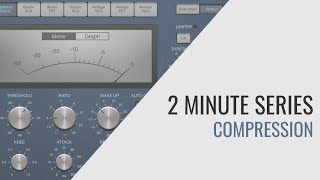

Why EVERY Sound Needs Compression
45sVisual analogy of ebb and flow makes complex audio concept instantly intuitive.
▶ Play Clip"The video title accurately describes the main topic—compression in music production—within the stated time frame, delivering on its promise."
This video explains why compression is used in audio production—it reduces the dynamic range (ebb and flow) of sound to make it more manageable and consistent. It then visually breaks down the key parameters of a compressor: threshold, attack, release, and ratio, using simple examples.
Compression is used to make the 'ebb and flow' of audio volume more controlled and consistent.
The difference between quiet and loud parts is called dynamic range.
Threshold: the level at which compression engages; only signals above it get compressed.
Attack: time for signal to become fully compressed. Release: time for signal to return to uncompressed state.
Ration specified the amount of reduction above the threshold, expressed in dB (e.g., 2:1 or 8:1).
Many digital sounds don't need compression because they already have little dynamic range. Organic, human-performed sounds usually do.
Different compressors, ratios, attack/release settings affect the vibe and feel of music.
What is the threshold in a compressor?
The level at which compression is engaged; only signals above this level are compressed.
What does attack refer to in compression?
The time it takes for the signal to become fully compressed after crossing the threshold.
What does release refer to in compression?
The time it takes for the compressed signal to return to its uncompressed original state.
What is ratio in compression and how is it expressed?
The amount of reduction applied to the signal above the threshold, expressed in decibels (e.g., 2:1).
Why is compression used in audio production?
To make the ebb and flow of volume (dynamic range) more manageable and controlled, resulting in a tighter, more consistent sound.
Dynamic Range
Establishes the core concept that compression reduces dynamic range to create a more even sound.
Compressor Parameters
Provides clear definitions for threshold, attack, release, and ratio, which are essential for using a compressor.
Compression Not Always Needed
Highlights that many digital sounds don't require compression because they already have little dynamic range.
Compressor Types Affect Music
Notes that different compressor types and settings greatly influence the feel and vibe of music.
[00:00] Before you see a cool visual way to understand compression, I want to start with why we want to compress to begin with. Let's think about the idea of ebb and flow. That is that any sound coming out of your speakers moves back and forth. There are quiet parts and louder parts.
[00:14] I could even demonstrate that with my voice right now. The closer I am to the microphone, the louder my voice is. The further I am away, the quieter my voice is. You can think of these volume differences as the dynamic range of audio. And the reason we compress is that we want this ebb and flow,
[00:31] this back and forth to be more manageable and more controlled. If a sound has less dynamic range, it's easier to focus on and pay attention to because it feels tighter, more consistent, and well, more even. Just look and listen to this take before compression.
[00:45] And then look and listen at this take after compression.
[00:57] The compressed take with less dynamic range should feel more consistent and more under control. But just because you understand what it means to compress, that doesn't mean you understand how to use a compressor. So let's do a visual example. Here's a waveform representing any audio.
[01:12] And here's a compressor. The threshold of a compressor is the level at which the effect of compression is engaged, or put more simply only signals that cross this threshold get compressed. Attack is the time it takes for the signal to become fully compressed. And release is actually
[01:27] the opposite. It's the time it takes for the compressed signal to return back to its uncompressed original state. Ratio specifies the amount of reduction applied to the signal above the threshold.
[01:39] And these ratios are expressed in decibels, so a 2-to-1 ratio indicates that a signal exceeding the threshold by 2 dB gets attenuated down to 1 dB, or an 8-to-1 ratio would mean a signal exceeding
[01:51] the threshold by 8 dB gets attenuated down to 1 dB. Now, let's not get too excited by compression. Many digital sounds don't need compression to sound consistent because they have little to no dynamic range to begin with, but at the very least when it comes to organic sounds performed
[02:07] imperfectly by humans, you'll almost always want to reach for a compressor. And once you do, the different types of compressors, ratios, and attack and release settings you've set along will drastically affect the vibe and feel of your music. Make sure to check out all our free workshops,
[02:22] resources, learning guides, and sample packs. And of course, scope out all our free videos as well.
⚡ Saved you 0h 02m reading this? Transcribe any YouTube video for free — no signup needed.