
AI Summary
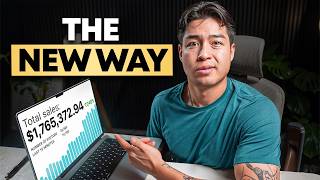
The video makes a case for building 'boring' middleman businesses that connect supply and demand without owning inventory. It outlines a step-by-step playbook for finding a niche community, validating products through ad research, setting up a Shopify store with cost-effective fulfillment, and running UGC-based ads. The speaker uses his own story and friends' multi-million-dollar results to show why consistency beats chasing trends.
Chapters
The speaker's success is built on unglamorous, unsexy business models. There are no revolutionary ideas or viral moments, just consistent boring execution that quietly generates income.
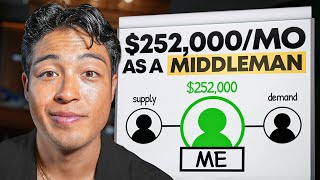
Jeff Bezos started by connecting book publishers with readers. Uber connects drivers with riders, Airbnb connects property owners with travelers. They don't own inventory or cars or hotels.
Being the connector is the most powerful position because you own the customer relationship. You don't need to invent anything, hold inventory, or have millions in capital.
Real wealth comes from building customer data, supplier relationships, brand trust, and systems that get stronger each month. Chasing viral products means starting over every 30 days and burning out.
Look for a community that has money and is willing to spend, a problem they are actively trying to solve, and products that actually deliver on solving it. Gimmicky products kill trust and the relationship.
Engage with product ads by liking, saving, clicking through, adding to cart, initiating checkout, and entering your email. The algorithm will then show you more product-based ads from active advertisers.
Filter ad comments for real conversations and people tagging friends or sharing stories. Then use the Meta Ad Library to see if the same ad has been running for weeks, which proves the company is making money.
Don't overthink design or branding on day one. Use Shopify's free AI store builder to create a professional-looking store quickly. You are proving concept, not building the final version.
AliExpress has weak pricing and 3+ week shipping. Team Drop integrates 1688 and Taobao products, giving wholesale pricing, 5–8 day shipping options, and a dedicated agent via WhatsApp with no hidden fees or subscription.
The speaker built a one-on-one mentorship program with Justin and Steven to help people skip expensive trial-and-error. Mentors review products, ads, and run campaigns alongside students.
Find where your target audience hangs out — Facebook groups, TikTok comment sections, parenting content, Amazon reviews. Capture their exact language, like 'my back is killing me', and use it as your ad angle.
Search X for 'niche + UGC creator' and vet creators who already make content in your niche. Show them control videos, but don't micromanage. People trust content when it sounds like the creator, not a script.
Testing money is learning money. Each dollar spent teaches you about the audience, what resonates, and what makes people buy. That knowledge stacks and makes the business easier over time.
The video argues that intentionally 'boring' middleman businesses are powerful because they control customer relationships and compound over time. By following a simple process — pick a community, validate demand, set up lean operations, and test ads with authentic creators — anyone can start small and scale steadily.
Mentioned in this Video
Tutorial Checklist
Study Flashcards (12)
What is the 'boring business' model described in the video?
easy
Click to reveal answer
What is the 'boring business' model described in the video?
Acting as a middleman connecting supply with demand without owning inventory, while controlling the customer relationship.
01:34
Which three major companies are cited as middlemen?
easy
Click to reveal answer
Which three major companies are cited as middlemen?
Amazon (book publisher-to-reader), Uber (driver-to-rider), and Airbnb (property owner-to-traveler).
00:55
What are the three things to look for when choosing a market?
medium
Click to reveal answer
What are the three things to look for when choosing a market?
A community that has money and is willing to spend, a problem they are actively trying to solve, and products that actually deliver on solving it.
05:17
How do you use Instagram ads as a market research tool?
medium
Click to reveal answer
How do you use Instagram ads as a market research tool?
Engage with product ads by liking, saving, clicking through, adding to cart, initiating checkout, and entering your email so the algorithm shows you more product ads.
05:30
What does Meta Ad Library check prove if the same ad has been running for weeks?
medium
Click to reveal answer
What does Meta Ad Library check prove if the same ad has been running for weeks?
That the product or brand is profitable, because companies don't consistently burn cash on unprofitable ads.
06:50
What platform is recommended for setting up the store?
easy
Click to reveal answer
What platform is recommended for setting up the store?
Shopify, using its free AI store builder to get a professional-looking store quickly.
08:09
What are the downsides of AliExpress mentioned in the video?
easy
Click to reveal answer
What are the downsides of AliExpress mentioned in the video?
Pricing isn't great and shipping times are bad, usually 3+ weeks.
09:18
What is Team Drop?
medium
Click to reveal answer
What is Team Drop?
A free fulfillment platform that integrates 1688 and Taobao wholesale products, offering better pricing, faster shipping, and a dedicated agent via WhatsApp.
09:31
What shipping time and cost does the speaker cite for a faster Team Drop shipping line?
hard
Click to reveal answer
What shipping time and cost does the speaker cite for a faster Team Drop shipping line?
Delivery within 5 to 8 days for about $5 (using the example product).
10:29
Where should you go to find the actual language of your target community?
medium
Click to reveal answer
Where should you go to find the actual language of your target community?
Facebook groups, TikTok comment sections, parenting content, and Amazon reviews.
14:47
What are 'control videos' in the ad library?
medium
Click to reveal answer
What are 'control videos' in the ad library?
Ads from brands in your niche that have run for weeks or months, proving they are profitable. You study and copy their structure.
15:25
Why shouldn't you micromanage UGC creators?
medium
Click to reveal answer
Why shouldn't you micromanage UGC creators?
People trust content when the creator sounds like themselves; scripted or forced ads generally don't perform well.
17:16
💡 Key Takeaways
Mega-companies started as middlemen
Shows that massive wealth can be built without inventing a product — the key is controlling the connection.
00:55The middleman controls the customer
Reframes a traditionally 'low' role as the most powerful position in a transaction chain.
01:34Don't connect people with gimmicky garbage
Emphasizes trust and the relationship as the real asset, making product quality a business-critical decision.
04:51Instagram ads as free market research
Provides a concrete, zero-cost technique to identify winning products and active advertisers.
05:30Let real UGC creators own the pitch
Authenticity in ad creatives outperforms forced scripts, and it can be sourced quickly through X.
16:34Full Transcript
[00:01] want, buy properties, help my family, actual freedom. And honestly, I'm kind I built the life most people are trying to fake on Instagram. Not because it's explain it to people, they look at me like, "That's it." There's no
[00:15] revolutionary idea, no viral moments, nothing that sounds impressive. It's boring. Really boring. And that's exactly why it works. See, everyone's innovative, the next big thing that'll change the game. Meanwhile, there's this
[00:27] whole other category of businesses that nobody talks about, the boring ones. They don't sound impressive at parties. They just print cash. Now, boring doesn't mean easy. It doesn't mean anyone can do it. But it does mean less
[00:40] So, in this video, I'm breaking down why boring wins, which boring businesses I Once this clicks, you'll stop chasing what looks cool, and start focusing on me show you what I actually mean here. Let's look at Amazon, for example.
[00:55] massive innovative tech company like they revolutionized everything, right? But here's how Jeff Bezos actually started. He didn't write books. He didn't manufacture anything. He literally just found book publishers and
[01:08] connected them with people who wanted to read. That's it. He was a middleman. Now look at Uber. Same thing. They don't own a single car. They just connect drivers who have cars with people who need rides. They are in the middle taking a
[01:20] cut. Airbnb, they don't own any hotels. They just connect people who have extra space with people who need a place to stay. All middlemen. And here's what's crazy. These are some of the biggest, most valuable companies on the planet.
[01:34] most people, they hear middleman and you're just this guy in the middle making scraps while everyone else is cashing out. But that's not actually how it works. See, being a middleman is the
[01:46] most powerful position you can be in because you control the customer. You to work with. Now, here's the thing. to invent anything. You don't need millions in capital. You can literally
[01:58] start without owning any inventory. You just connect supply with demand and connecting products with the people who actually need them. I find manufacturers who make good stuff. I find customers who have real problems, and then I just
[02:12] this different from just flipping random products and hoping that something sticks. You're building stuff that compounds. customer data, supplier relationships, brand trust, systems. So, yeah, eventually you'll want to work
[02:25] direct with manufacturers. You'll hold inventory. You'll build out the whole operation, but that comes later once you're making money and you've proven that it works. You're not starting with all this massive risk and overhead.
[02:37] You're starting lean and stacking as you go. And the main thing is every month Your margins get better, your suppliers give you better deals, your customers everyone else is out there chasing the next trending product, starting over
[02:50] every 30 days, burning out, you're building something that gets stronger. to do. That's exactly what my friends have been able to do. And that's exactly So, let me show you what this looked like when I was just starting to get the
[03:03] hang of things. So, back in 2019, I hit my first 1K day doing this. And Steven, who I'm about to talk about in a second, he literally recorded me that moment that I was about to hit my first 1K day. And then a few months later, he
[03:16] started taking off. And you could just see the difference. It wasn't just about actually compounding. Now, here's the main thing. I was applying the exact same boring fundamentals back then that I'm using now, just on a way smaller
[03:30] stacking and eventually, well, you get it. It worked. Now, this wasn't some overnight thing. It was just consistent execution month after month building the honestly, it just kept getting easier the longer that I did it. The thing is,
[03:43] my buddies that I travel with, he started from absolute scratch with this ecom, and he built a multi-million dollar ecom business doing this. Steven, the guy who recorded those videos of me, he built multiple sevenfigure brands
[03:57] here's the crazy part. None of us are doing anything sexy. We're not geniuses. We're not coming up with revolutionary ideas or disrupting industries. We're different markets and that's it. but we're doing it the boring way. Building
[04:11] stuff that actually compounds instead of chasing whatever looks good this week. actually works, let me break down exactly how you can do this. All right, There's a few things that you need to get right, and each one makes the next
[04:24] one easier. So, the first thing that you need to get right is what you're they think that being a middleman means that you just find whatever is selling and connect it to customers. And honestly, that's not going to work long
[04:36] term. Because here's the thing, your job as a middleman is to create value by making the connection between supply and demand. You're not inventing products, Now, if you're connecting people with gimmicky garbage, absolute crap that
[04:51] breaks in a week, you are done. They are not coming back. They're not trusting you with the next purchase, and you lose the only advantage that you have, which is that relationship. So, the main thing is that you need to find products that
[05:03] actually solve real problems for specific groups of people, not just whatever is viral right now on Tik Tok. Now, here's how I think about this. I'm Now, here's how I think about this. I'm always looking for three things. One, a
[05:17] community that has money and is willing to spend. Two, a problem they're actively trying to solve. And three, products that actually deliver on actually find these communities and products. And this is way simpler than
[05:30] you to open up Instagram and just start scrolling your feed like you normally differently. Every time that you see an ad of a product, you engage with it. So like it, save it, click through to the website. You can maybe even add to cart,
[05:45] initiate checkout, put in your information, add your email. Now you are not buying anything. You're just telling the algorithm, "Hey, I am someone who want to buy the product." And what happens over the next 15 to 20 minutes
[05:58] is that the platform Instagram is going to start showing you more and more product based ads just like that because it thinks you're a buyer. So now your feed is basically a free market research tool showing you what companies are
[06:12] actively spending money on right now. But here's where most people stop. They cool." And then they move on. We're going to go even deeper than that. Look at the comments. But here's what we're actually going to be filtering for. You
[06:24] want to see conversations happening, not just people commenting at the brand, but one another, tagging their friends, sharing their own stories about why they that means that there's already a community around this problem. They're
[06:38] not just interested in the product, they are connecting over a shared experience. And that's what you're really hunting for, not just a product people want, a problem people bond over. Because if they're bonding over it, you're damn
[06:50] on it. So, when you see that pattern, ads getting engagement, people having actual conversations in the comments, companies clearly spending money to keep light. And here's the final check. I want you to go to the metal ad library.
[07:03] for you guys to easily access it if you don't know how to get to it. And I want you to look up that brand or product and I want you to see if they are running ads consistently. If that same ad has been running for weeks, that is proof
[07:17] that they are making money because companies don't burn cash, spend money matters. You're not just looking for products. You're looking for communities with real problems and you're finding products that actually solve those
[07:31] customers, they come back. And that is the whole game. So, you're building a buying from you, not where you're constantly hunting for the next viral month. All right. So, you found your community. you know what problem that
[07:44] you're solving. Now you need a store. And this is where most people completely overthink it. They spend weeks trying to make everything perfect, custom design, perfect branding, all that stuff. And look, I get it. But that's the wrong
[07:56] because you're not building the final version of your store on day one. actually buy what you're selling. And that's pretty much it. So here's what you do. You sign up for Shopify. That's the platform. There's other options out
[08:09] what most people use because it's just the best in the game. Now, I will leave a link to get access to Shopify for a dollar for the next 3 months down in the description. Now, once you have your account, you can use this free AI store
[08:23] builder. It'll literally build you a professional looking store in a matter questions about what you're selling. Now, I think it's a really good base to design, the product pages, the privacy policies, all that stuff that you want
[08:36] really want to have to take care of. And I will make sure to leave that in the is that your store doesn't need to be perfect on day one. You are proving concept first. You'll find it later once you know what's actually working. Now,
[08:49] most people mess up. It's the economics. Because you can have the best store, the if your fulfillment sucks, none of it matters. And that's what most people get the branding, the surface level stuff. Meanwhile, their customers are waiting 3
[09:04] plus week for orders and getting garbage quality products. So, here's what you supplier setup. Because if customers are waiting 3 plus week for orders or not going to be coming back and it's just going to kill your business. And
[09:18] that right. Now, most people when they're starting out, they will use AliExpress. And look, AliExpress is fine, but the pricing isn't that great and the shipping times are pretty bad. Now, I've talked about 1688 and Tabo 4.
[09:31] These are essentially the Chinese wholesale platforms where you get way better pricing and faster shipping. But the problem is they are a pain to use if Chinese, so it's pretty hard for me to use. And most fulfillment tools don't
[09:44] even integrate with them. So there's this platform right here called Team Drop. I just started using them. They're pretty brand new and it's also free. hidden fees or any subscription, anything like that. And it's the first
[10:00] platform that I've seen that actually integrates 1688 and Tao products just like this as you can see. So what that means is that you're getting access to those wholesale prices without having to deal with Google Translate and any
[10:15] currency conversion because the two websites again are in Chinese. So you can see that we have all these products listed right here from 16A or Taba. So the margins are going to be way better from day one. And for the shipping, for
[10:29] example, if we go into any one of these products that I might want to sell, product. There are multiple shipping lines to choose from. So you can see all the different shipping lines, the prices, and the delivery times. So if I
[10:43] want to go with a faster line, for example, Uni Express, I can get my product shipped and packaged to my customer within 5 to 8 days for only 655. So, pretty insane that we're at the point where we can reduce our shipping
[10:57] times from what the standard used to be, 3 plus weeks, now down to about a week. And look, again, $5 if I pick this unit right here. So, I pick black. I choose right here. So, I pick black. I choose the unfast total price comes to 9.84 to
[11:10] the customer in less than 10 days. Now, here's the other thing. They give you a dedicated agent that you can contact through WhatsApp just right here. So, if to get access to your own dedicated agent that is assigned to you on
[11:24] communication with over WhatsApp. So, if something goes wrong, say for example, a may be, you've got an actual person managing your orders who can fix stuck trying to figure it out yourself or dealing with some random customer
[11:39] And for those of you guys that don't know, you'd usually have to go find your yourself, build that relationship, and then hope that they're good. But with this fulfillment platform, you already have that built in. So, it just makes
[11:51] the whole process way easier, way less friction, and that's exactly what you I'll make sure to leave a link for you guys to easily sign up for Team Drop for your store, super easy as well. You just go down to store management, authorize
[12:04] store, add store, authorize, go back to Shopify, install the app right here. All right, cool. Now that the app has been installed onto my Shopify store, if I all I'd have to do is go to any of these product pages. From here, list onto my
[12:19] images, the description, what I want to import. Mind you, you can always change this later. List now. So, we'll see now that we imported that product, it is now listed on our store products. We could also go to our products right here and
[12:34] We can make any adjustments that we'd like just right here. So the main thing is that any time that we get an order, it's going to then populate on to our orders dashboard on Team Drop and we can simply fulfill it through any shipping
[12:47] your fulfillment from day one. Way better pricing than AliExpress, faster shipping, and you've got a dedicated agent handling issues. Now, keep in mind volume, you can eventually go direct to the manufacturers for even better
[13:00] pricing, custom products, all that jazz. But the main thing is that these build. Whether it's through a fulfillment platform like this or you're can move volume. You are building trust. You're becoming a priority customer. And
[13:14] that overnight. They have to start from scratch and build those same relationships that take months or even years. So, everyone else is stuck on AliExpress with terrible margins and 3 week shipping. You're starting with way
[13:26] just gets stronger over time. Now look, I just walked you through finding your your fulfillment locked down with better economics. That is the foundation. But here's the thing. Going from setup to actually making sales, that is where
[13:38] experience matters. Like I can look at an ad and know in 30 seconds what is wrong. You don't have that pattern recognition just yet. I remember testing money because I didn't know what signals to look for. Like I'd see clicks but no
[13:51] sales and have no idea if I should keep pushing or kill it. And honestly, that is why I have even built my one-on-one mentorship program. It's literally what you want to skip that entire learning curve, me, Justin, and Steven are
[14:04] your product. We'll tell you if it's worth testing. You show us your ad. spend money on it. You are running your campaigns. We are in there with you think of it as we run it like it's our own store because we only make money if
[14:19] to actually get you results. Now, we've got a few spots open if you're actually want in. The link is below. So now you've got everything in place. You Fulfillment sorted. Now comes the part everyone struggles with actually getting
[14:33] people to buy. And here's where I see most people completely mess this up. understanding what their community actually cares about. So before you become a student of your community. And here's how to do it. So let's just say
[14:47] want you to go find where they're already hanging out, where they're communities, Facebook groups, Tik Tok comment sections, under parenting content, even Amazon reviews under common baby products that they may be
[15:00] buying, and you're not selling anything yet. You're just reading what are they complaining about? What keeps coming up over and over? And here's what you're looking for. The actual language that they use, not marketing language, their
[15:12] actual words. So instead of ergonomic baby carrier, they're saying my back is killing me or I can't get anything done with the baby. That's your angle. That's Now, before you create anything, you need to understand what actually works.
[15:25] So, you're heading back to the ad library, but different use case this brands in your niche, similar products or even the same one that you're running for weeks or even months. Those are your control videos, aka videos that
[15:38] you want to copy or recreate. That means that they are profitable. Study how they they lead with, how they present the product. And here's the thing, your goal product. And here's the thing, your goal is not to create the perfect ad. It's to
[15:51] create something that works well enough. Prove people actually want this. Now, you've got two options. Option one, and this is just for the initial testing to prove concept. You can use existing content that is already out there. So,
[16:06] creators content, you cut it up and recreate your own version following that control video structure. Now, I do want to note that this is a disclaimer. This is to test if people actually want your product. So once you're making
[16:20] your own original content to avoid any legal issues. So I'm not saying to do this. I'm saying it's an option. Uh I just don't recommend it. But for that first round of testing, it gets you live pretty fast. Option two, which I
[16:34] recommend more than anything, you work with real UGC creators from the jump. Now, this is going to require more upfront capital, probably a few hundred bucks per creator, but if you've got the budget, this is your cleanest route. Go
[16:47] to X, type in your niche plus UGC creator. So, for example, parent UGC creator. So, for example, parent UGC creator or pet UGC creator. Reach out to Instagram, Tik Tok, and sometimes they'll just link it in to their bio as
[17:02] well. But the main thing that you're vetting for, do they already make they're already posting about baby products, they know how to talk to other explain the audience to them. Now, another thing when you find someone
[17:16] solid, do not micromanage them. Show them those control videos, you can working. Just take it and run it." Let them adapt to their own style. The someone sounds like themselves, people trust it. When they sound like they're
[17:30] being told what to say, generally it doesn't do that great. So, whichever creators, you're testing a few variations, different angles, different hooks, see what is actually getting people to buy. You run the ads, check
[17:43] what's actually converting to sales. And honestly, you are probably going to bucks before you find what works. That is just the cost of learning what resonates. So once you find an angle that's converting, you can't just run it
[17:57] pretty quickly. So you need fresh iterations constantly. So new hooks with the same message, different visuals, same problem presented in different guessing anymore. You know what core message works. you are just in essence
[18:12] remixing it, right? And that is when you actually start scaling more budget into what's proven. So fresh creatives around the same angle, all of it built on real around. All right, so most people watching this are going to do nothing
[18:25] going to do this. You're going to pick a community, set up a store, start testing, and that first month, it's likely going to suck. You're going to spend money and not see results immediately. But here's the thing. Every
[18:37] dollar that you spend is teaching you something about your audience, about what works, about what makes people buy. And that knowledge stacks. It compounds. It gets easier over time. So the question isn't whether this works. It
[18:50] willing to stick with it long enough to figure out your market because once you Now, obviously, there's way more to actually executing this. I've got videos channel. So, if you're interested, make sure to check those out. I'm also going
[19:06] that, as always, I appreciate you guys watching. See you in the next one.