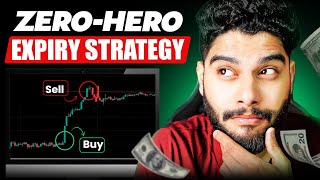

Zero to Hero Strategy Exposed!
45sThe promise of turning ₹1 into ₹10,000 hooks viewers with the allure of massive gains, while the creator's personal strategy claim builds credibility.
▶ Play Clip"Title promises a secret strategy, and the video delivers a detailed bear call spread, but it's not unknown to experienced traders."
The video explains a high-risk, high-reward options trading strategy called the 'Zero to Hero' strategy, designed to capture large premium moves on expiry days. The presenter, Abhishek, details how gamma blasts cause out-of-the-money options to explode in value and introduces a hedged approach using a bear call spread to manage risk.
Zero to hero moves occur only in option buying, not selling, due to limited profit in selling. They happen because of a gamma blast, where gamma, delta, and premium interact to amplify moves on expiry day.
Gamma blast is the explosion of premium when the index moves sharply. The four brothers: Index, Gamma, Delta, and Premium. Index moves first, then gamma, then delta, then premium. On expiry, gamma runs freely, causing delta and premium to move in parity with the index.
Out-of-the-money options move slowly because gamma and delta are low. For a ₹1 index move, an OTM option may move only 20-35 paise. But on expiry, gamma blast can make the premium move ₹1 for every ₹1 index move.
On Nifty expiry, a premium went from ₹0 to ₹2212 due to gamma blast. A 200-point index move caused a 200-point premium move because gamma exploded, delta exploded, and premium followed.
Many traders do naked option buying, but zero to hero moves often go against them. The presenter advises hedging, like wearing a helmet, to protect against unexpected moves.
The strategy is a bear call spread: short an OTM call (e.g., 25050 CE) and buy a further OTM call (e.g., 25200 CE) as a hedge. This allows profit if market goes down, sideways, or even sharply up (due to hedge).
On September 12 expiry, shorted 25050 CE at ₹30, bought 25200 CE at ₹5. Net credit ₹25. If market stays below 25050, profit is ₹25. If market goes up, the long call hedges losses.
If any 15-minute candle closes above 25050, exit the short leg only. The long leg is held with a trailing stop based on swing lows. Risk is managed by reducing risk to zero at 1:1 reward and booking full profit at 1:2.
At 1:1 reward, reduce risk to zero (move stop loss to breakeven). At 1:2, book entire quantity. Hold option buying position only until 3:15 PM to avoid auto square-off charges.
The strategy is called Bear Call Spread. It works best on expiry days (Thursday for Nifty, Friday for Sensex, etc.). Use when market is sideways before 12 PM, as gamma blast often occurs after that.
The Zero to Hero strategy, implemented as a bear call spread, can capture large premium moves on expiry days with proper hedging and risk management. However, it requires discipline, understanding of price structure, and strict adherence to exit rules to avoid significant losses.
What is a gamma blast?
A gamma blast is the explosion of option premium on expiry day when the index moves sharply, causing gamma, delta, and premium to move in parity.
03:49
What are the four brothers in the gamma blast analogy?
Index, Gamma, Delta, and Premium.
04:04
Why do out-of-the-money options move slowly normally?
Because gamma and delta are low, so the full energy from the index does not reach the premium.
05:56
What is the name of the strategy presented in the video?
Bear Call Spread.
29:49
What is the stop loss rule for the short leg in the bear call spread?
Exit the short leg if any 15-minute candle closes above the short strike price.
20:09
At what time should the option buying position be closed to avoid auto square-off charges?
By 3:15 PM.
28:41
What is the recommended reward ratio to book full profit?
1:2 reward ratio.
24:25
On which day does the strategy work best for Nifty?
Thursday (expiry day).
33:30
What market condition before 12 PM increases the chance of a gamma blast?
Sideways movement with low momentum.
34:13
Gamma Blast Explanation
Core concept behind zero to hero moves, explained with an analogy.
03:49Expiry Day Example
Real example of premium moving from ₹0 to ₹2212 due to gamma blast.
06:26Bear Call Spread Strategy
Detailed explanation of the hedged strategy that profits in multiple scenarios.
11:42Stop Loss Rule
Specific rule for exiting the short leg based on 15-minute candle close.
20:09Risk Management Rules
Clear rules for reducing risk at 1:1 and booking profit at 1:2.
24:25[00:02] you'll see a lot of such moves these days, in which people say, "If I had invested ₹1, I would have made ₹10,000; if I had invested ₹10,000, I would have made ₹ 1 lakh; and if I had invested ₹1 lakh, it would have become ₹1 crore." But the only doubt in your mind is
[00:16] why these moves aren't working in my favor, and how do I catch them? Because most of the time, these moves are in the opposite direction of your trade. My name is Abhishek, and today in this video, I'm going to give you a solution to this problem.
[00:29] Today, I'm going to give you my personal Row to Hero strategy, which will help you easily capture these moves at 90% of the time. Secondly, I'm not just going to tell you, but I'm also going to show you on the latest chart where to
[00:42] buy and where to sell. Third, after this, I'm also going to show you the premium chart, because it's important to see exactly what's in profit and loss. So, we're going to cover all of that. This is my personal
[00:54] If you watch this video with full attention, by the end of it, you'll understand the logic behind capturing zero-to-hero moves and how such big moves are captured in our market. So,
[01:08] without wasting any time, let's start from the beginning. this video as quickly as I could. I made it as easily as possible. I want to give you one message
[01:20] before we even start: do n't skip it at all because Watch the entire video just to get views. This is n't the reason. Understand that these trades are very high- risk and high-reward trades. So,
[01:35] friend, what happens where there's high risk? If you look at it, Abhimanyu knew how to get inside the Chakravyuh, but when he couldn't find his way out, he lost his but when he couldn't find his way out, he lost his life. Which is very sad.
[01:49] life. Which is very sad. If you're a warrior, a warrior, and If you're going n't have complete knowledge, you're bound to get trapped. No matter how skilled a warrior you are. Take it in your own terms. If I'm telling you this, and you know how to get in,
[02:05] but you can't get out, then you'll lose all the money you dream of earning. Okay, I never talk so much before starting this video, but high risk and high reward. So I had to warn you. The rest is up to you. Now, first of all, to
[02:20] warn you. The rest is up to you. Now, first of all, to how and why zero-to-hero moves occur. Look, what kind of move is a zero-to-hero move?
[02:33] Initially, the premium is 5%, and then suddenly it goes to 300 5%, and then suddenly it goes to 300 you can catch zero-to-hero moves only in option buying, not in option selling.
[02:48] Because there's limited profit in option selling, there's better than option selling. Everyone should be buying options.
[03:00] Look at what happens. You don't cut your nails with a sword. You know that a nail cutter is used to cut your nails, which means that sometimes you use certain things when you feel that such things are likely to happen.
[03:13] You should use this trick occasionally. You can't use it daily because if you do it daily, you will get caught. First of all, it works on expiry, and before reaching expiry, you will have to
[03:25] make a bias as to whether such moves can occur today. Okay, keep these two things in mind. That's why I said, look, you won't miss anything. So now you're going to use it daily. they may have skipped it, might think they can use it daily, but that's the
[03:37] use of expiry. Now, look at what these zero-to-hero moves are. It's very important to first understand the fundamentals of why they occur. Look, the Zero to Hero moves happen
[03:49] because of a single reason called Gamma Blast. Gamma blast means to explode. Now look, many people know what a Gamma Blast is, but they don't know what a Gamma Blast is. So let me explain.
[04:04] Suppose there are four brothers, all four of them are Tabai. What are the names of these four brothers? One is named Index. Now you will say that Gangs of Wasseypur is being made, or is there a perpendicular index? It's not like that, but one is named Index. One is named
[04:19] but one is named Index. One is named Gamma. One is named Delta. And one brother is named Premium. Now these four brothers live in the same house. Okay, one moves one after the other. Index is the eldest brother and Premium is the youngest
[04:31] brother. The eldest brother runs the fastest, and the youngest brother runs the slowest. Now you understand that much. What are their names? Index, Gamma, Delta, and
[04:44] Premium. Now look at how Premium moves. Premium cannot move alone. It needs the support of its brothers. First, Index moves. After Index, Gamma moves. Because of Gamma. Delta moves and our premium rises because of delta. You have
[04:58] understood it simply. Now the zero to zero moves can be caught. What are OTM in OTM? Out of the money options which are cheap, two-three par options. Now the two-three par
[05:11] options, you understand that these are cheap, right? It is easy to make money in this, there is the highest options? Because look, here is the seller's area, for the option seller and the option buyer makes money in these moves. So how will that be made?
[05:27] Look, understand the logic. The option premium moves slowly out of the money. Like I tell you, if the index is moving here at ₹, then index is moving here at ₹, then when the index gives power to gamma, then
[05:41] some power will be lost, right? Come on brother, you move, then some power will be lost. Then gamma will give power to delta, then some power will be lost and then when it gives power to premium, then the power reduces a lot. Understand by the time it reaches out of the money. Let me explain this thing again,
[05:56] explain this thing again, index gamma delta and premium. Okay, if an index If a rupee is moving, then the out-of-the-money option may move 20 paise. If the index is moving, then
[06:11] it may move 3035 paise because in this, both gamma and delta are low. So when both are low, the full energy will not be able to reach the premium, due to which it will energy will not be able to reach the premium, due to which it will move slowly. Now the magic and the game is of this.
[06:26] Now see what happens on the day of expiry. On the day when the contracts are paper, for example, if I show you the chart of Nifty last Thursday, you will see that on this day the premium of Nifty had
[06:38] this day the premium of Nifty had gone from ₹ to 2212, which you almost know how much was required, which would have been around ₹, initially it would have become zero but it would have gone up to a maximum of 0.4050,
[06:57] After that you will understand. When the index is moving at ₹, then gamma must be moving at 0.1, understand that due to which delta moves at 0.3. It must be happening, I am taking hypothetical numbers and because of this the premium must
[07:14] also be moving something like 0.3, which means there is less momentum, but what happens is when the index starts running on the day of expiry, then Gamma does not want to be left behind, when a big move is coming, then Gamma feels that today is the expiry, today I can
[07:29] last day of its life, so it runs freely, understand, I am explaining it to you in a very story format so that everyone can understand, so it runs freely, due to which who will run freely, I told you that all four brothers are destructive and
[07:42] dependent on each other, due to Gamma, Delta starts running, now see what Delta will do, when Delta runs, the premium also starts running, now see, in the momentum of one rupee index, earlier the premium was moving by 0.3, which means it was running at 30 paise or 40 paise, you
[07:58] understand this, and it was running even less than that, but it says that friends, the brothers taught us to run, so this Gradually, it starts running at par with the index, that is, now a move of ₹1 in the index becomes ₹1 in premium, it comes to parity. Do
[08:14] ₹1 in premium, it comes to parity. Do running around 30 paise, but when Gamma felt that it was my last day, I ran very fast, due to which Delta ran, premium ran and Delta cannot go above ₹1 because
[08:26] see, if there is a move of ₹1 in the index, then the option can also run only one rupee, it cannot go a maximum of two, it can run at par or it can run less. Understand this, when there was a move of 200 points in Nifty, the premium was also able to run 200 points, why was that
[08:43] able to run 200 points, why was that because Gamma exploded, Delta exploded because of Gamma and the premium also exploded because of Delta, due to which the premium of one or two rupees, which was earlier called zero, became hero,
[08:56] which was earlier called zero, became hero, which went to 2212. You understood the simple concept that why zero to hero comes because of Gamma blast. The gamma index was moving because of the index. The gamma moved delta, and delta pushed up the premium. You
[09:11] understand that the premium which used to be 30 paise started moving at ₹ due to delta and gamma blast, due to which if the index ran 200 points, then this too on the
[09:31] know what many people do. If you want to catch such zero to hero moves, then you can catch them only through option buying, but many people are doing naked option buying. I explain it to you on the chart, when you look at this chart, then
[09:47] see on this, I have already created a risk reward. This is my trade for this day, but you know what many people do. Let me tell you, when many people execute this trade, my trade was executed at the closing of this candle, but now who knows what many people will do,
[10:02] many people will take a put here in option buying. That's that sir I take a put, if the move goes down then the hero will become zero, I take a cheap put, but this does not happen, see whenever a person rides a bike, he does not
[10:18] think that he will have an accident, who would think so, but still that person wears a helmet, do you understand, now you will say how did this example come in between, see zero to hero moves will always come against 90 at the time,
[10:33] understand till date if you have not caught these moves, why did you not catch them, because they have come against you, I am telling you the truth, if they have come against you, then how should it be that we are already prepared against, then you will say sir, did I have to call by,
[10:48] if the view is down then should I call by, should I call by, but see now we will call by, but see now we will
[11:00] not change, okay, these zero to hero moves always come against, understand this thing in very big ways Traders are such big traders, why isn't anyone posting that today they caught the Zero Hero Move, 1 lakh became 1 crore, if it was so easy to catch it,
[11:13] or even for me, it is difficult, someone like this, I cannot even imagine that there is
[11:26] someone smarter than me, there may be someone with whom I share this thing and follow it accurately and he catches the Hero Zero Move, his life is changed, it is a simple thing, so what is the fear in telling, let me tell you, now see what happens, when the view was down,
[11:42] but what you have to do is to sell calls, now you will say option selling, see, but money will be made only in option buying, see how it will be made,
[11:55] first let me tell you the benefit of the strategy, in this strategy if you have already done call selling and If the market moves in your direction, there will be profit. If it goes sideways, there will be profit. And if it moves sharply against you, there will be profit. So,
[12:08] you will say that there is no 100% strategy or 100% strategy in the stock market. Whoever is saying that this strategy is 100%, the strategy is at 99, you can catch the move at 99. I can say that you can catch the move on this strategy, but it is
[12:23] not necessary that you will make a profit at 90. Many factors apply. Okay, here as soon as you have made a trade, now look at the strike price here, first see what is going on properly. That is why I
[12:38] said do not miss anything. Here the strike price is 246. So what will you do? You will short the CE of 25050. I
[12:52] understand this much. Why would you short because right now the view is downwards that the market should go down or there should be sideways. So, you shorted the CE here, but want that his Even if there is an accident, one still wears a helmet. Similarly,
[13:08] what will we do now? We will wear a helmet in this strategy. What is a helmet? wear a helmet in this strategy. What is a helmet? In the stock market, a helmet is called a In the stock market, a helmet is called a hedge, which protects you from such incidents which are
[13:21] hedge, which protects you from such incidents which are not in your control. Now see what will happen. I have shorted a call, that is, I have a downward view. To understand it properly, a call short means a downward view, but if the market goes up, then I can have unlimited
[13:34] market goes up, then I can have unlimited loss. If I am an option seller, then I will get a premium in the call shot. For example, suppose this call shot was trading at ₹ 40, then I can earn 0 by making 0 40 zero, but if it goes against, then there can be a
[13:49] but if it goes against, then there can be a loss of 500, 700, 000, even a loss of 000 on one lot. So, the more lots you have, the more loss you can have. There can be unlimited loss. In option selling, we will wear a helmet, which I call a hedge.
[14:01] What do I say? It is called a hedge, but a helmet is a judge in the language of the stock market. Now, how will we hedge if it goes down? The market will give profit on the call that has been shorted, but if it goes up, what profit will the call buy give?
[14:21] shorted a small in-the-money call that is almost in the money, which means it has gone out of the money, that is means it has gone out of the money, that is I said, we will also check the premium chart. We have shorted an OTM call which is the
[14:34] upper one. If the market remains below this area, then I am going to make money. Now whether the market goes sideways, or the market goes down, or the market goes up and then comes down, I am going to make money because I have a call short of 5050, which
[14:50] means that as long as the market does not close above 2050. Today, I am talking about the expiry date of September 12th, so I am going to make money. This entire premium of mine is going to be zero. Understand this, I will explain it a little clearly so that it becomes easy.
[15:04] What did we do? My trade was executed here. This area above this, here we looked at the strike price which was prevailing. which was prevailing. I shorted this CE around 2550
[15:17] so that if the market remained below this level, I would make a profit. I understood it simply. Now I have to wear the helmet of the judge, that is, if the market goes up, then who will make the profit in the up move? The profit will be in the call. So again, I have an out of the money call. So here
[15:30] again, I have an out of the money call. So here will say which strike price to select, which should be 45. Like, first I will show you the strike price because you will get clarity. Look,
[15:43] This is not a sponsored video. The name of the website is Stocks Rin. Okay, I have given a subscription of 00 to 99 on this so that I can see the chart. So so that I can see the chart. So this CE of 25050 is running on 12th September.
[15:58] this CE of 25050 is running on 12th September. Okay, there is a call on this and this is my trade at 11 o'clock. I executed the trade at around 1115 minutes and I executed the trade at around 1115 minutes and at 1115 What is the premium going for? This is fine,
[16:12] so the premium here is running, if I remove this, our premium is running at 2.30 on 11 b 155 minutes,
[16:26] so now the out of the money call I have to buy, I should not buy so much that I do not have any profit in it because the OTM call I will buy, I will buy it with the vision that even if it becomes zero, the profit should be enough so that I get
[16:41] something in my pocket. Now look, I am going to tell you that also, which I have shown you the premium price, how much is it around 28 to 30, okay sir, now let's
[16:55] see an OTM in which we will buy a call, this is short, we shorted for ₹, this is short, we shorted for ₹, now let's also see a call of 25000, let's now let's also see a call of 25000, let's see how much is it going first, it is
[17:08] see how much is it going first, it is because ₹1 I am not ready to give this, this is our loss, we are judging in a way, you can keep the amount as small as the hedge and there should be something like this in it, now see, the
[17:23] that you should buy the one with zero or one rupee because then there will not be that much gamma blast in it, gamma is the premium of 4 rupees premium of 4 rupees in the option chain, for example, let's see for 25200,
[17:37] in the option chain, for example, let's see for 25200, how much is 25200 trading at, this is the perfect premium of 11 15 rupees, okay, so now what did you do, you executed both these trades together, what did you do, you executed both these trades together,
[17:51] you should understand things slowly and understand properly, I understand properly, I took a CE shot of 250 which is at what price, ₹ took a CE shot of 250 which is at what price, ₹ and bought a CE of 25200
[18:07] and bought a CE of 25200 which is at ₹, so that means if your trade is in the direction in which you were earlier, like I am in the down direction or in the selling direction, so if this trade is in my selling direction If the price moves sideways, I am going to
[18:20] earn a premium of ₹. You understand that I am going to make a profit of ₹ because ₹ will become zero, this is also out of the money and this is also out of the money, so I will make a profit in selling, I will incur a loss in buying, so see,
[18:35] I will incur a loss in buying, so see, I will make an overall profit of ₹ 30 - 5 25, you understood this much, this was when the trade works in our direction, direction means if the trade gradually goes down, then there will be profit, if it gives closing below 2050
[18:48] till 300, then also there will be profit, that means look, you are making profit at two places, if you had done put buy, my brother, then you would have made money only on the day of expiry when the market goes fast in your direction, but see, catching the market is not that easy, if it was that
[19:02] easy then everyone would have been earning money in option buying, that is why option buyers are in huge loss, the SEBI report which is more than 90 is of the option buyer and of the option buyer and not of the seller. One does make a little
[19:15] Understand this, so what we have to do is wedging. These are given to you to use, but you never take out these swords.
[19:27] When you get caught, you are searching for where you kept the sword. Brother, this is the sword. You have to use it. I am telling you this, it is not a strategy, but a Brahmastra for you. Use it, it makes money. Hit a CE shot of 25050,
[19:42] bought a CE of 25200. Now see, this was our vision, but the market did not move as per our vision, so if the market went against us, will we suffer a loss now? There will be went against us, will we suffer a loss now? There will be no loss, but you see what will happen.
[19:55] Now see what we have to do, what will be the stop loss in this? Stop loss does not have any amount you do not place a stop loss according to the amount, you
[20:09] main selling position? So this is it. No, if any 15-minute candle closes above 2050, this is my own rule, it is not written in any book, you can also change it, if any 15-minute candle closes above 25050, no matter how big the
[20:24] I am not afraid because I have bought CB, hence my stop loss will no longer be on the numbers, it will be at the closing point, if the 15-minute candle closes above 2050, then I will exit the trade from this position and leave it to run,
[20:41] from this position and leave it to run, we are going to see this directly on the premium chart as well, now see what happened, the market did not come down from here, it went sideways, then
[20:59] see it started showing profit, you started seeing profit here by 1:30, that is, half the premium also got deducted, but here The market was sideways so it means the market was about to give you money
[21:12] but before that the game was over here, now what happened, what is 25050, I will show you this, after happened, what is 25050, I will show you this, after marking 20550, it was almost marking 20550, it was almost 2550, okay it has become 52
[21:26] but it is 50, okay, which 15 minute candle closed above this, after our entry, this was the biggest candle closed, so we will exit on this candle and now see, I will show you live. I am going to show the profit and loss in this, see how much is the loss,
[21:39] how much loss was there on the call, I am showing you everything on the premium chart, now see, this candle closed at 2 o'clock, so from the call shorting position, the call which we had shorted, which other call was short, if you remember, we will
[21:53] which other call was short, if you remember, we will exit at 2050, at what time, 2 o'clock, okay, let's see and also see how much the loss was, okay, now see, we had sold a premium of ₹, which is the
[22:08] 2 o'clock candle, oh my god, this one candle, okay, now you must be thinking how big a loss we have incurred, in fact, we have incurred a loss of 160 minus 30, 130, right now we had
[22:20] two legs in one leg, what does leg mean, you had done both call buy and call sell, so in 2000 250, you are running a net loss of 130,
[22:34] you have deducted this, this is a loss of 130, remember, but what is happening in call buy at 2 o'clock Look at its premium also, at 2 o'clock its premium has reached 36, from ₹ 36,
[22:46] but what is our rule, when we incur loss, when our closing comes above 2550, we have to exit only the sell leg, not the buy leg, I tell the buy leg when to exit, we exit the sell leg, so
[23:02] its loss is fixed, on this side we cut the loss of only 130, it will be 130 into 25, okay, if there is a loss on the lot then there will be a 130 loss, we have lost 0 on the premium,
[23:14] but now our line will continue, okay, now how will that line work, I will tell you what you have to do, as soon as the closing comes above this, you just take out this tool, put the
[23:27] long position here and see what I normally do, I place it below the swing of the 15-minute candle, okay, I had to place it below such a swing, but this candle is extremely big, okay, it is very big,
[23:42] this candle has formed at 79, that is I cannot place a position so low as 200 points, so cannot place a position so low as 200 points, so I will go up to a maximum of 0.50, 12128. Now telling you this for holding, where to cut profits because in option buying
[23:57] people have a problem in cutting profits. There is a problem in cutting profits profits are visible, so you will say that sometimes you have to exit somewhere, sometimes you have to exit somewhere. Now see, I am telling you the exact method for this, this happens only through back testing, all these things,
[24:11] you have to keep a maximum of 0.50 because this candle was very big, so we made our maximum 0.50, that if the market reverses and comes here, then I would have cut it. If it had cut, then I would have told you the loss also. This is the loss in this strategy, but
[24:25] I have placed 0.50 here, against this I will put a target of 1:2. I am telling you my rules right now, I will share my rules with you right now. Okay, my rules are that whenever When I make an entry or a risk reward, I reduce
[24:40] or a risk reward, I reduce my risk to zero at 1:1. Okay, at 1:1 I reduce my risk to zero, and at 1:2 I book the entire quantity. So, until this trade reaches 1:2, I will not book my quantities, and at 1:1 I will reduce my risk to
[24:53] will not book my quantities, and at 1:1 I will reduce my risk to zero, that is, if the market reverses from 1:1, then I will close my trade here. Okay, so let's see what happened on this day. As this candle closed, my one lakh at 2550 was cut, as I am telling you,
[25:07] my selling leg at 20550 was cut, and on the call buy, I applied this tool to see where I will exit. I do n't want to create a position, but the call buy also has to exit in profit, so I am telling you where it will be done. Now 0.50 has become the maximum
[25:21] because its swing is very big, so I cannot take a loss more than half of 0.50. Now see what happened in this when this market went up. It started going when this market went up. It started going 1:1, it went to 1:1, after this I reduced my
[25:35] risk to zero, that is, now look at the psychology of the live market, understand that only this candle has formed till 245, I do charts of 15-minute candles, so this candle formed at 215, I held it, a candle of 230 was formed, I
[25:51] held it, a candle of 245 was formed, so I reduced the risk here to zero, now look at this, the thing to see on the chart is this, the 2 o'clock candle, so if the market had come here again, that is, 37 - 5, that is, I was buying at 5, it
[26:07] reached 37, then I would have seen a profit of around ₹ in it, so where my loss of ₹130 would have reduced to ₹, so my total loss would have been only 00, it might have been confusing for some people, let me tell you again how much loss was there in the 50 CE. It was
[26:23] how much loss was there in the 50 CE. It was 130, now 1:1, as soon as the market went around 245, which I just told you recently, the profit of ₹ got locked in it, how was it locked, if the market had gone down, I would have deducted ₹ from the profit on premium, that is, I would have subtracted ₹10 from it, so
[26:37] ₹1, so I was going to take the loss, that is, now my loss has reduced a little, it has become less than 130, this is called hedging, I did not create any new position, I just managed the old positions and this is how things work,
[26:50] big players in the stock market create very few new positions, once created, after that the positions are managed, cut, replaced, adjustments are made, now see what to do, I am holding this profit now, it is a simple thing, what I
[27:03] simple thing, what I said, it will either be cut at 1:2 and either it will come at breakeven of 1:1, now it did not come at one, it went up and you see at what time the candle is and These are the strategies that I have created and discussed with my members. It's
[27:17] not that I'm telling you this, I've been And look, the strategy that I'm telling you today, we've already had a Zoom class on this. There's already been a Zoom class on risk-reward.
[27:32] buying. So, if you
[28:01] is. You have to follow rules in option buying. Friend, if you do profit. Secondly, when it's visible, the profit is lost. Why does it happen? Because either the market reverses or there's no time to exit. So, you'll have to make your own
[28:14] rules by backtesting, which you'll follow like a stone inscription. So, rule number one is that firstly, you either cut at the stop loss or risk at 1:1. We had to make it zero, we followed the rule, now we had to hold till 1:
[28:28] now we had to hold till 1: 2, 1:2 was at 1, so the market did not go down, but there is another rule brother, you will hold the trade only till 315, after 315 the broker also closes the position due to which we have to pay charges, if
[28:41] you do not know, when auto square off happens then charges have to be paid, so the option buying position has to be closed till 315, no, hold it, if the trade is not positional, if this trade had been at 315 then we would have taken a profit of approximately 210 points on the option buying leg,
[28:55] which would have become our total, approximately 211, 210, put 210 on 5, that is 205, now see the magic of risk reward,
[29:11] 205, now see the magic of risk reward, what did we do in the 250 call short, we what did we do in the 250 call short, we cut it at a loss of 130, but the 25200 one cut it at a loss of 130, but the 25200 one ran so much that we got a profit of 205,
[29:24] ran so much that we got a profit of 205, okay? A profit of 05 and a loss of 130 amount to okay? A profit of 05 and a loss of 130 amount to
[29:36] 57 rupees. Still you are in profit of ₹. And if you had even one lot then you can make 75 * 25 and if you had even one lot then you can make 75 * 25 and I have not made this strategy from my heart. The strategy that I have told you,
[29:49] listen to the main point, this strategy has not been made from my heart. This is not a wishful strategy. The This is not a wishful strategy. The name of this strategy is Bear Call name of this strategy is Bear Call Spread. Bear Call. Why because we had
[30:03] shorted the call. What was our vision earlier? It was a bearish vision. So we would have made money in that too. That bearish vision. So we would have made money in that too. That is tick. If the market had moved sideways, would is tick. If the market had moved sideways, would we have made money? Yes, we would have made money.
[30:17] If the market had moved very fast against, would we have made money? Yes, why did this happen? Because we had
[30:32] Why are you not able to catch big moves? Because firstly, you did not know how to hedge before this, but now Now that you know how to hedge, and how much premium to hedge, let's do a little revision so
[30:46] you don't forget what you learned. First, I explained why zero-to-hero trades occur because of gamma blasts. All four of them are destroyed by the index. Because of gamma, because of delta, because of delta, a simple gamma blast occurs. So, the
[31:02] premium of the rupee starts moving against the index. You saw that in a 200-point move, there was a move of only 200 points. This is called gamma blast. The second thing I explained was that whenever you want to deploy such a strategy, you need to create a hedge.
[31:15] deploy such a strategy, you need to create a hedge. accident but still wears a helmet. We also don't know that an accident could happen. That's why we hedged a position, whichever way we move, we'll make a little profit
[31:30] or our losses will be managed. I don't want to market this strategy in a way that is 100% A profit-making strategy, because there's nothing in the stock market that will give you 100% profit every time. You have to
[31:44] deploy it strategically. Why? And when should I deploy this strategy? Now, what we did was call short and call
[32:02] n't have lost much money because of call buying, but it went too far against us, so we made money. Okay, why did we do this? Because we had a hedging position. Now, keep in mind the 15-minute rule.
[32:16] If you don't understand it, look it up again. But keep in mind that one thing is very important: you deploy this strategy daily. It doesn't happen you deploy this strategy daily. It doesn't happen
[32:30] like I'm telling you in the live market. Because, look, I can pause it here and say, "Come on, boys." You can do this strategy daily, but I don't tell you such things that are wrong. I have to
[32:45] If the blast in the premium does n't come after this, this blast you are seeing, this move doesn't come, that is, the one above this candle, then guys, we would have lost. You would have had to take a loss on the premium of 00, which would have been
[33:30] understand how the price structure of the market works. The first rule is that this strategy is an expiry strategy. You can mostly use it on Thursday in Nifty, Friday in Sensex, Monday in Midcap, Wednesday
[33:44] in Bank Nifty and Tuesday in Fin Nifty. Okay, this strategy will work best on the expiry day itself. Its win rate is of the blast on expiry? Gamma blast happens only on expiry. And the
[34:00] day doesn't have that much gamma blast. Okay, the second thing is, don't use the strategy without understanding the price structure. second thing is, don't use the strategy without understanding the price structure. market goes up slowly, then it falls very fast, keep this in mind.
[34:13] If the market goes down slowly, then it goes up very fast, keep this in mind too. Now how to use this strategy? How will you know that a gamma blast is going to happen on that day? You should see if the market is sideways on the day of expiry.
[34:28] If there is very little momentum before 12 o'clock. If such momentum has happened, then understand that there are very less chances that a gamma blast will happen. When does a gamma blast happen? When people don't have expectations of a blast. The market is all about destroying your
[34:43] expectations. So, whenever the market is sideways, your strategy will be deployed. Like, if you have a downward vision, now the market is sideways, then you have taken a short, so you will make a profit in it, but when the
[34:58] chances of it moving in the market on this day because now see what will happen in this, there is one you are making money, there is no problem if there is a sideways move then you are making money,
[35:11] but in sideways there are chances that it will reverse very fast because many people's expectations will be downwards, when the market reverses then buyers will also enter and these people who have made positions here will also exit, do you
[35:24] understand, due to which the momentum will increase faster, so pay attention, if there is sideways momentum in expiry on any day then there are chances that gamma blast can happen after 12:00 in which you should deploy this strategy, proper risk reward, you have to
[35:40] cut it there, if you cut the option selling trade, if you option selling trade, if you cut it at the wrong place or did not cut it, if you felt that it will reverse, it will reverse, then brother,
[35:57] reduce, right, hey Why should I say it was a 100% strategy? Friend, it's 100% true. Otherwise, why would I misinform you? A strategy has timing, a price structure, entry and exit points, a time frame, and
[36:11] exit rules, all of which I've explained to you free of charge. However, it's also important to note that if you trade at the wrong place, you could incur equally significant losses. So, guys, I've given you this strategy today. To use it, you must have a strong mindset. You should
[36:24] To use it, you must have a strong mindset. You should hold. The strategy is called a bear call spread, which I've explained to you. Watch videos, read books, and blogs,
[36:37] and refine your strategy further. now you have to apply it to the stock market. You have to use your own intellect. You got intelligence so that you can use it, so use it in the stock market.
[36:53] Otherwise, if you want to learn more such strategies, get live market overviews and also want to participate in our Zoom classes, then you are missing out. There is a link to our products in the description below t graminity.com
[37:29] b [Music]
⚡ Saved you 0h 37m reading this? Transcribe any YouTube video for free — no signup needed.