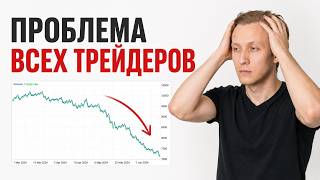

Why 90% of Traders Lose Money
54sHigh curiosity gap about common trading failure, relatable for aspiring traders, and promises a solution.
▶ Play Clip"Delivers solid psychological advice but oversells '6 rules' with some repetition and a promo at the end."
Kirill, a gold trader since 2021, shares six psychological rules that he believes are the real reasons most traders lose money. He emphasizes that trading is a game of decisions, not knowledge, and that emotional control, risk management, and consistency are more important than strategy. The video is a personal approach to trading psychology, not a strategy guide.
Kirill argues that knowing a lot about trading doesn't make you profitable; it's about making the right decisions under pressure. He shares his own experience of losing deposits until he understood this.
Most traders think they need to learn everything, but this is slow. Instead, focus on one instrument and learn its patterns, reactions to news, and behavior in different sessions. This builds intuition.
Every morning, mark yesterday's high and low, and the Asian session's high and low. Watch how price reacts at these levels—bounces, breaks, or consolidates. This is how you learn by focusing.
People often stay on demo too long, but when they switch to real money, emotions kick in. Risk should be adjusted to your stage: start with minimal risk (0.5% or 0.25%) and only increase after consistent positive results.
At the start, focus on consistency—same inputs, same outputs, same behavior. Profit is a side effect of a good system, not the cause.
Trading more doesn't mean learning faster; it reinforces bad habits. Ask yourself before each trade: 'Is this a planned entry or spontaneous?' If spontaneous, don't enter. Limit to 1-3 trades per day.
Every trader makes mistakes, but the difference is how you accept them. Set your stop loss before entering, determine maximum loss in money, and size your position accordingly. Use a calculator for lot size.
Important news like FOMC, NFP, CPI can move the market unpredictably. If you enter a news day without understanding the risk, you're gambling. These moments often form weekly highs and lows.
Most people lose years jumping between strategies. The problem is not lack of information but lack of repetition. Master one methodology (e.g., levels, liquidity, structure, context) and recognize patterns thousands of times.
You can read everything about order blocks and not see them on the chart, or know one simple thing deeply and make money. Confidence comes from knowing one thing deeply, not knowing a lot.
Without a system, you'll be inconsistent. A simple routine: before the session, check DXY, economic calendar, key levels; during the session, wait for those levels; after, analyze all trades and write down mistakes. On Sunday, review weekly performance.
This approach is not what you want to hear, but it's the most realistic and fastest. The question is whether in a year you'll see real progress or just play in a casino.
Kirill concludes that becoming a profitable trader requires simplifying, focusing on one instrument, mastering risk management, and building a consistent routine. He invites viewers to join his free community for daily analyses and emphasizes that there is no magic—just disciplined work.
What is the main reason most traders lose money according to Kirill?
Trading is a game of decisions, not knowledge. Emotions and pressure make decisions difficult.
00:01
What is the biggest mistake traders make?
Trying to learn everything instead of focusing on one instrument and building intuition.
01:08
What simple exercise does Kirill suggest to build intuition?
Every morning, mark yesterday's high and low, and the Asian session's high and low, then watch how price reacts at these levels.
01:35
What risk percentage does Kirill recommend for beginners?
Half a percent or even a quarter of a percent per trade.
02:13
What is the goal at the start of trading, according to Kirill?
Consistency, not profit. Profit is a side effect of a good system.
02:38
What is the rule of thumb for number of trades per day?
One to three trades per day, no more.
03:32
When should you set your stop loss?
Before entering the trade, not after.
03:58
Why should you be careful during news events like FOMC, NFP, CPI?
The market moves according to a completely different logic, and these moments often form weekly highs and lows.
04:10
What is the problem with jumping between strategies?
You lack repetition and depth. You need more repetition, not more information.
04:51
What is trading a recognition skill?
It's about recognizing patterns in real time, which comes from experience and deep knowledge of one thing.
05:18
What does a simple routine include?
Before session: check DXY, economic calendar, key levels. During: wait for levels. After: analyze trades and write down mistakes. On Sunday: review weekly performance.
05:31
Trading is a game of decisions
This reframes trading from knowledge-based to decision-based, which is a key psychological insight.
00:01Mark daily highs and lows
A practical exercise to build intuition by observing price reactions at key levels.
01:35Risk is a parameter to adjust
Emphasizes that risk should be scaled to your stage, not a fixed constant.
02:13One to three trades per day
A concrete rule to prevent overtrading and build discipline.
03:32News events are different
Highlights that news days follow different logic and require extra caution.
04:10Trading is a recognition skill
Shifts focus from accumulating knowledge to deep mastery of one approach.
05:18[00:01] won't tell you. Becoming a profitable trader isn't always about strategy, indicators and signals, or some secret system. If you believe this, you are wasting your time. Personally, I did the same until I lost my
[00:13] first deposits. My name is Kirill. I have been trading gold since 2021. I started by losing deposit after deposit, like most people. Now I trade systematically, I live in Duba. And all this is thanks to six things that I’ll tell you about today.
[00:25] Over the years I have communicated with a lot of guys, traders. These were mid-level newbies, people who had been stuck at the same level for years. And there was only one pattern. They know a lot, but they can’t implement it. An acquaintance once
[00:38] can’t start making money.” Then one simple truth dawned on me: trading is not a game of knowledge, it is a game of decisions. You can understand everything perfectly and to money, emotions change, pressure appears and the decision becomes
[00:54] more difficult. This is where most things break down. This video will not be about strategy. I will tell you my approach. Let's go.
[01:08] biggest mistake. Most people think, "I need to learn everything logical, but this is the slowest path, because trading is about learning to see patterns and react in real time, and this only comes
[01:21] with experience. Also, keep it simple, don't try to learn everything. Choose one instrument and at past highs? How does he react to the news? How is it moving in the Asian session? This is how intuition is built, not by looking at twenty strategies. A
[01:35] simple exercise: every morning, mark yesterday's high and yesterday's low on the chart. Maximum, minimum of the Asian session. Watch what happens when the price approaches them. It bounces, breaks through, or
[01:47] consolidates. This is how you learn, not by adding, but by focusing. Second. Here, most people slow down, sit on a demo for months, become comfortable, but when they switch to a real account, everything falls apart,
[02:00] because now it’s real. Emotions are triggered and doubts arise. This is what people don't understand. Emotions are a part of trading. But going into love doesn't mean taking big risks right away. Risk is not a constant, it is a parameter that
[02:13] you adjust to your stage. At the beginning of your journey, when you are not yet profitable, the risk should be minimal. Half a percent or even a quarter of the process. Remember, big risks are privileges that must be earned through results and
[02:25] followed the plan and got positive results. Only after this can the risk be increased. And also a simple rule: if the thought of losing a deal influences your next decisions, the risk is too great. Reduce it until you no
[02:38] this point does real learning begin. At the start, the goal is not profit, the goal is consistency. Same inputs and same outputs. The same behavior profit is a side effect of the system, not its cause. Third,
[02:54] overtrading keeps you in one place. The big problem is that people think that if I trade more, I will learn faster. They sit in the market all day, enter into random trades, think they are gaining experience, but in reality they are not. They
[03:06] reinforce bad habits. What does it look like? You wake up thinking, "I wrong mindset. You continue to rush your entries, chase random movements, enter late, exit early and repeat this every day. And it
[03:19] becomes your system. But this is not a strategy, this is behavior. And this is bad behavior. Before every trade, ask yourself: "Is this a blocked entry or am I acting spontaneously?" If it's spontaneous, then you don't enter. Rule of thumb:
[03:32] one to three trades per day, no more. This trains discipline. There are days without deals. And this is part of the process. Sitting without open positions is also a skill. Fourth. The cop is yours. The foundation of everything.
[03:45] matter, because every trader makes mistakes, even better. But the difference is in how you accept your mistake. And most don't define risk. They come in with the hope that they are right, and when they are wrong, they hold on further.
[03:58] If they doubt, they let the duck grow. After this, of course, the account is drained. But how to fix this? Set your stop before entering . Determine the maximum loss in money and select the position size accordingly . Not after, but before. You can also
[04:10] use a special calculator to calculate the lot size. For this purpose, it is also especially important on gold. Moment of important news F, NFP, CPI. The market moves according to a completely different logic. This is not noise, but rather drivers of price movement. It is at these
[04:23] moments that weekly highs and lows are often formed. And that means one thing. If you go into a news day without understanding the risk and what the news is going to trading. And as soon as you enter,
[04:36] , you just execute. And this is what creates systemicity. Fifth. One system, not 10. This is where most people lose years. New strategy, new indicator, new system, they think: "This will work." But it won't work. The problem is not
[04:51] depth. You don't need more information, you need more repetition. For methodology: levels, liquidity, structure, context. I recognize this instantly in gold, on different time frames, in different market conditions,
[05:06] because I have seen similar patterns thousands of times . And also, what I realized is that trading is not a game of knowledge. This is a recognition skill. You can read everything about order blocks and not see it on the chart at the moment, or you can know one simple thing
[05:18] make money from it. And that's where confidence comes from. Not because you know a lot, but because you know one thing deeply. Sixth. Routine creates consistency. This is what most people miss. Without a system you will always be
[05:31] inconsistent. What does a simple routine look like? Before the session, I look at the DXY, the economic calendar, key levels in gold and the instruments I plan to trade. Next I make a plan. And during the session itself, be it
[05:43] London or New York, I wait for these levels. I don't go for movements, I enter context. After the session, I analyze all trades, both profitable and unprofitable. I write down my mistakes, look for patterns in the market and in my behavior. On Sunday
[05:56] , we check how many transactions are positive and how many are negative. And this is how you can really become profitable. Not chasing strategies, not trading all day, but simplifying.
[06:11] that you want, but it is the most realistic and fastest of those that actually the question is whether in a year we will see real progress, and not just playing in a casino. Every day I watch DXM, mark gold levels, analyze my trades, and
[06:25] broadcast it all on my free community and Telegram channel. There I share pre-market analyses, publish Nadya's setups, and show the results of my evening trades. No magic, just how I work every day. The link is in the description,
[06:37] go ahead and see what it looks like in reality. And in the next video we'll talk about trading. In 2026 I will give a complete navigation for beginners. give a complete navigation for beginners. Subscribe to stay up to date.
⚡ Saved you 0h 06m reading this? Transcribe any YouTube video for free — no signup needed.