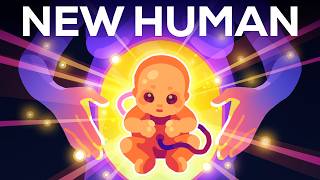

Pregnancy: The Sci-Fi War Inside You
45sThe dramatic, sci-fi framing of pregnancy as a brutal struggle for survival is shocking and intriguing, hooking viewers immediately.
▶ Play Clip"Title accurately reflects the video's dramatic and factual portrayal of pregnancy's biological intensity."
This video explores the biological processes of pregnancy, framing it as a 'hardcore sci-fi epic' of conflict and cooperation between mother and embryo. It details the journey from conception through implantation and fetal development, emphasizing the brutal selection and chemical negotiations involved.
Pregnancy is described as a brutal struggle for survival, with the baby acting like a 'cute tumor' that saps resources and challenges the mother's immune system.
Tens of millions of sperm face death from acidic environment, protein nets, and immune cells; only a few dozen reach the egg.
The egg accepts one sperm and becomes a zygote, no longer part of the mother but a potential new life.
Cells divide into those that become the baby and trophoblasts that form the placenta, a temporary organ that makes pregnancy possible.
The embryo releases chemicals to persuade the uterus to allow attachment; the uterus evaluates viability and may reject the embryo.
Trophoblasts drill into uterine tissue, destroying cells to secure blood supply, but this is regulated and painless for the mother.
The mother's immune cells create a safe zone around the embryo, and fetal cells spread throughout the mother's body to prevent attack.
The placenta protects the fetus from microbes and supplies nutrients, but can cause gestational diabetes if the fetus demands too much.
Maternal and paternal genes have different interests, leading to a fragile balance between mother and fetus.
The journey from conception to birth involves brutal selection and cooperation, resulting in the miracle of new life.
Pregnancy is a complex interplay of conflict and cooperation, where the embryo must survive a deadly obstacle course while the mother's body supports and regulates the process. The result is the creation of new life, a wonder of biology.
What is the first deadly obstacle sperm face in the female reproductive tract?
A highly acidic environment.
01:09
How many mitochondria does the egg contain compared to an average cell?
Nearly 100,000 mitochondria, about 50 times more than an average cell.
02:20
What is the role of trophoblasts?
They turn into the placenta, a temporary organ that makes pregnancy possible.
03:18
What happens if the embryo is metabolically too noisy?
It provokes the mother's immune cells, making it more likely they will destroy it.
06:09
How do fetal cells prevent the mother's immune system from attacking the embryo?
They spread across the mother's body, entering organs and the brain, to tell her immune system not to attack.
07:04
Pregnancy as Brutal Sci-Fi
Sets the tone for the video's dramatic and biological perspective on pregnancy.
Egg Acceptance
Key moment where the egg becomes a zygote, marking the start of new life.
02:35Brutal Implantation
Describes the invasive yet regulated process of trophoblasts drilling into the uterus.
05:12Genetic Conflict
Explains the differing interests of maternal and paternal genes during pregnancy.
09:08[00:00] Pregnancy is a hardcore sci-fi epic of war, peace and compromise. Babies are basically very cute tumors that grow a completely new organ inside a different human.
[00:12] Their mom’s body graciously allows this, while the new life saps her resources and challenges her immune system to its limits for months. Biology is brutal and beautiful and metal.
[00:25] Let us zoom in and observe this brutal struggle for survival – that in the best case ends in one of the most magical things: Our story begins with an army of tens of millions of sperm cells that immediately face death.
[00:41] They are on a tight timer before they run out of energy and die. Like all bodily openings, the female reproductive tract is a fortress defending against invaders.
[00:54] The future mom’s body has set up deadly barriers and puts the sperm through a brutal process that kills almost all of them and ideally selects the strongest and fittest one. The first deadly obstacle is a highly acidic environment
[01:09] The acidity kills millions, especially of the weaker sperm within the first half hour, Seminal fluid is alkaline and so it makes this first obstacle a little less deadly.
[01:23] The survivors reach the next obstacle, a treacherous maze full of protein nets where millions more find a brutal end getting stuck and lost. Now if a woman is in the part of her menstrual cycle where she is ovulating , her body helps
[01:37] the sperm out a bit, by releasing chemicals that guide the way and by being a bit less hostile. Luckily for our brave sperm this is the case today. Only a couple hundred – less than 0.0001% of the original sperm – pass through into the
[01:54] Here mucus helps transport the stronger sperm to move on, while weeding out the weaker ones. The mom’s immune cells pick off and devour every cell that trails behind or takes the wrong turn.
[02:08] And then finally, maybe just a few dozen sperm reach their goal, the mighty, giant egg. 10,000 times bigger than them, it is an industrial scale monster loaded with nutrients and nearly
[02:20] 100,000 mitochondria, the powerhouse of the cell – 50 times more than an average cell. But the egg is not easily conquered – the survivors get closer and try to get in until the egg decides to accept a single one of them.
[02:35] The egg stops being part of its mother – it is something else now. Not a human yet, but the potential to become one.
[02:47] But its mom’s body hasn’t decided yet if she wants to say it out loud. For a few days it rapidly divides and grows to a couple of hundred cells, while traveling down to
[03:01] the uterus, the part of the female reproductive system where it will try to make its new home. teams of cells - one will eventually become the baby. The other cells are trophoblasts and their job is to turn into a temporary organ inside the mother:
[03:18] the placenta, that will make pregnancy possible and eventually die. This means that when you were an embryo there was this whole other part of you, not like a twin, even closer, maybe like a guardian angel clone.
[03:31] their only purpose in life was to make you exist. In any case, the following days are the most dangerous for the potential new life. the young embryo moves along the uterus and tries to take a hold.
[03:49] An intense chemical dialog between two living things begins, the embryo releases dozens of chemicals that announce its presence and asks the guard cells of the uterine wall to allow it to please, please, please attach itself so it can survive.
[04:03] The uterus responds with dozens of hormones and immune signals itself. If it is satisfied with the quality of the chemical conversation its cells allow it. If it doesn’t the embryo will be lost and die.
[04:16] living beings no longer completely align anymore. body will eject the embryo if it doesn’t see it as viable.
[04:28] death situation and tries to stay alive at any price. So it’s not asking politely but deploying thousands of infiltration units:
[04:40] Bubbles filled with genetic material, kind of like a human virus! so they help it attach itself, rather than rejecting it. During this time one of the weirdest features of pregnancy occurs:
[04:55] the uterus provides uterine milk, not real milk but a clear fluid filled with nutrients and hormones that the young embryo sucks up hungrily to gain additional energy until it gets inside. If the embryo is allowed in, the implantation was successful, the first critical hurdle.
[05:12] the only way to survive if it doesn't want to starve. The trophoblasts begin to clone themselves on a massive scale and turn into different specialists. One of them turns into a violent invader that starts drilling into the uterine
[05:27] tissue like a tiny parasitic octopus with many arms, spreading and growing. This is a brutal process, ordering loads of it’s mom’s uterus cells to destroy themselves, killing others directly or even devouring some cells whole.
[05:42] While this sounds brutal, and it is, this process is highly regulated and doesn’t hurt the mom. The mom’s body monitors carefully how the embryo is doing – is it growing quickly or if it is more chill.
[05:55] If an embryo has genetic damage or chromosomal abnormalities it will spend way more energy on repairing itself and maybe grow more erratically. This makes it metabolically noisy, releasing loads of chemicals the mom’s immune cells pick up.
[06:09] Which provokes them and makes it more likely that they will destroy it. On the other hand, if the embryo is weak it is metabolically too quiet and the mom will stop talking to it – which also ends the pregnancy.
[06:22] This embryo is just right, so the mom’s cells release a flood of different chemicals to help it out, support it growing and most importantly, activate her immune system. Usually this would be very bad – the immune system kills everything
[06:36] that is not part of the mom’s body, and this embryo is clearly not part of her. But the immune cells of the uterus surround the embryo and start helping it, They create a physical and chemical safe zone that
[06:49] tells dangerous immune cells like T Cells to stay away. The embryo has its own motives and doesn't want to rely on its mothers goodwill alone – kill her immune cells if they get too close and could start attacking it.
[07:04] Hundreds of cells go even further and leave the embryo behind. They spread all across the mom’s body, entering organs, even the brain. probably telling her immune system that the embryo is not to be attacked.
[07:19] These cells may stay inside the mother for years or even decades. It is likely that parts of you are still in your mother. Around 8 weeks after the egg was fertilized, the transition from the embryo to fetus begins –
[07:36] and it turns from a blob into something vaguely human-like. Not really. person – be it morally or legally – marks this moment differently.
[07:55] Meanwhile construction trophoblasts are busy building a spongy fingerlike structure that expands further into the uterus, a completely new organ: The placenta – an organ that you once grew inside your mother, that was ejected after your birth
[08:09] and died a silent death while everybody was busy welcoming you into the world. In our story the placenta is now the new home of the fetus. An enormous fortress, protecting it from microbes that could infect and kill it in its still pretty fragile state.
[08:24] placental immune cells that gobble up anything that poses a threat. stretching them and connecting the fetus through the umbilical cord on the other side.
[08:38] With the blood flow secured, it’s time to load it with as much food as possible. The placenta releases hormones that funnel glucose directly to the fetus, If the fetus goes too far and asks too much, this can sometimes lead
[08:52] to gestational diabetes for the mom during the pregnancy, starving her body of energy. The mothers body is trying to support the new life, but not at the cost of her own survival. In a sense the mothers genes inside the fetus still have a stronger allegiance
[09:08] to her than to the new being – but it’s fathers genes don’t. So while there is a sort of fragile peace between both parties, it is just that – their interests are not perfectly aligned and both sides have to deal with that.
[09:24] In the next few months the fetus will increase its weight over a billion times, They still need to work together to get out of this alive. But if the fetus gets to this point in the pregnancy, chances are pretty high
[09:39] that it will become a baby like you once were, a proper human, like you are today. If you are alive today then you went through an amazingly brutal selection process.
[09:52] From a little pack of genes traveling through an incredibly deadly obstacle course, fighting for your survival, with desperate words spoken through chemicals and sneaky actions trying to outsmart the system, fighting to be alive in this world.
[10:07] But this is only one side of the story – you were also chosen – by hormones that led you to the right place, by the egg allowing you to merge into one. by her cells that protected and cared for you.
[10:23] Nourished by an incredible amount of energy that your mother gifted you. Our biology is a brutal, unforgiving, but necessary part of the greatest wonder there is: The creation of new life, of you, of all of us.
[10:41] Kids fill us with a sense of wonder – it’s our job to foster this sense of wonder in them as well. Our sponsor KiwiCo is a great start to spark curiosity in your kids from the earliest moments on – basically from birth.
[10:56] This is one of their crates for newborns, so let’s explore it together: There is a tummy time pillow … some black and white cards.. a sensory mat – and a mirror?
[11:08] It’s the Let’s Bond! Panda crate, a kit that helps your newborn explore its brand-new sensations of vision, hearing and motor control. your life and learn about how it currently experiences the world.
[11:24] research-backed toys and activities to support your baby’s development. You can promote vision, hearing and gross motor skills in the Whatever stage of life, KiwiCo has the curriculum to promote a kid’s development at every step.
[11:44] All their toys are created and backed by experts and made from high-quality materials. A KiwiCo subscription could be the gift that keeps on giving for your own kid, a baby shower, or any niece, nephew, godchild or other little one in your life,
[11:58] We like KiwiCo because they are fostering a mindset of making learning an ongoing exploration, just like we try to do with our videos. or use the code KURZGESAGT to get 50% off your first monthly KiwiCo crate.
[12:19] If you’re craving more between videos, our newsletter delivers the latest updates straight from the Birbs Nest to your inbox. You’ll be the first to access limited releases and deals, learn about new product drops before
[12:35] the rest, and get fascinating, snackable science facts about our favorite topics. Of course we’ll also let you know of new video releases and updates from our game department – plus you’ll get exclusive freebies – like this cosmic diorama.
[12:51] and don’t miss the very special product drop coming soon.
⚡ Saved you 0h 13m reading this? Transcribe any YouTube video for free — no signup needed.