
Why Actors Need Marks
38sExplains the critical role of marks in filmmaking, making viewers feel they're learning industry secrets.
▶ Play Clip"Title promises a simple guide and delivers exactly that—concise, practical tips without fluff."
This video provides a concise, practical guide for second assistant camera operators (2nd ACs) on how to set marks for actors on a film set. It covers the primary method using paper tape, including the T-shape and variations, along with essential rules of thumb and alternative tools for different environments.
Marks are crucial for actors to hit the same position every take, ensuring consistent framing and focus. The second AC is responsible for providing these marks.
Paper tape is commonly used because it's easy to remove, leaves no residue, and is quick to change, saving time on set.
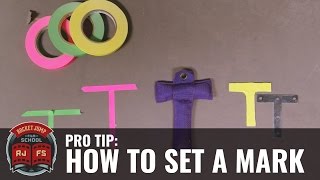
The most common mark is a T-shape, which indicates foot direction and helps actors find their angle easily.
Alternatives include two strips of tape in front of the toes or a tiny dot if marks might be visible on camera.
Use different colors for each actor, a separate consistent color for focus/camera marks, and always check the frame to ensure marks aren't visible in the shot.
The twist and tear method allows quick tape tearing and leaves a tab for easy removal, saving time once mastered.
For outdoor locations like sand or grass, sandbag T-marks are useful. They cost around $14 and can be thrown down quickly.
Hardware store T-brackets coated with colored tape serve as a low-cost alternative to sandbag T-marks.
Setting marks is a fundamental skill for 2nd ACs, and mastering techniques like the T-shape and twist-and-tear can significantly improve efficiency on set. Choosing the right tool for the environment ensures actors hit their marks reliably.
Marks are essential for consistency
Establishes the core purpose of marks in film production, linking to framing and focus.
Paper tape is the standard
Highlights the practical benefits of paper tape, a key tool in the 2nd AC's kit.
00:12T-shape aids actor positioning
Explains a specific technique that improves actor performance and efficiency.
00:27Color coding prevents confusion
A simple yet critical rule that avoids errors on set with multiple actors.
00:51Twist-and-tear saves time
A practical skill that increases efficiency, a valuable tip for any AC.
01:04[00:00] Hey guys, it's Lauren, and today we're going to do something simple but important. We're going to talk about how to set marks for actors.
[00:12] So after you find your frame, it's really important for the actors to hit that same position every time so you don't lose frame or focus. And to help the actors do that, it's up to the camera department, specifically the second AC, to give the actors marks. There are a couple different ways to do this, but one of the most common ways is using tape.
[00:27] One of the reasons that we use paper tape is that it's easy to pull up from the ground, it doesn't leave marks, it's easy to change, so you're not spending an hour in front of the actor trying to get tape off.
[00:39] So the most common way to make a mark with paper tape is to make a T-shaped mark. The T-shaped mark allows you to show the actors which way their feet are pointing, and so they can find their angle a little bit more easily.
[00:51] Another variation of this is using two strips of tape in front of the toes. If you and the DP are worried about the marks showing up on camera, a tiny little dot could work as well. So there's a few simple rules of thumb that's good to remember when you're setting marks.
[01:04] One, you need to use a different color tape for each actor. If you have a bunch of different marks on the floor that are all the same color, no one's going to be able to keep track. Second rule of thumb, if you're making marks for focus or for camera department, use a separate color for that and keep it consistent as well.
[01:18] Third rule of thumb check the frame and make sure your mark not going to be visible in the shot Another quick trick that really helpful when you setting marks with tape is the twist and tear This helps you tear tape quickly and easily and it leaves a little tab at the end that easy to find So pull out the amount you need twist under tear here
[01:36] and you have a nice little tab. It seems awkward at first, but the more and more you do it, the better and better you're gonna get and it actually really saves you a lot of time on set. It's like tying your shoes. Not a good party trick.
[01:48] Don't bring tape to parties. That's awkward. So another option available to you is the sandbag T-Mark. And these come in handy when you're outside, you're on sand or grass or a place where the tape just won't stick.
[02:00] And sometimes when you're running really fast and you don't have time to set down tape, you can throw one of these down and be ready to go. You can get different colors of sandbag T-Marks at expendable stores or film equipment stores, and they're usually around 14 bucks.
[02:12] However, if you're on a budget, you can go to your local hardware store and get T-brackets. And you can coat them in different colored tape. Joey, you're the camera. Joey. Joey. Joey, stop. Joey. Joey. Damn. Give me that. Give it. Stop it. Stop.
[02:35] That's it.
[02:49] Thank you.




⚡ Saved you 0h 02m reading this? Transcribe any YouTube video for free — no signup needed.