
AI Summary
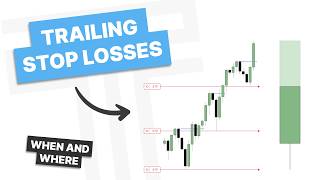
This video explains how to trail stop losses within a fractal trading model, focusing on the concept of protected swings and fair value gaps. The presenter demonstrates when trailing is appropriate, how to do it using protected swings, and when it is better to take profit instead. Practical examples on Nasdaq charts illustrate the process.
Chapters
A protected swing occurs when price reaches into a swing high or low, then closes over the series of candles that went into that point of interest, indicating the level is likely to hold.
Price reaching into a fair value gap and closing over the down-close candles that made the low creates a protected swing, which can be expected to hold.
Stop losses should only be trailed to new protected swings, not to arbitrary down-close candles, ensuring the stop is placed at a level with a higher probability of holding.
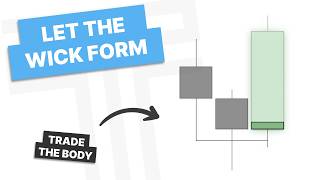
In the fractal model, one should let the wick form and then trade the body. When trailing, the stop loss should be trailed to the higher time frame wick, respecting 50% of the candle to avoid being swept out.
The decision to trail or take profit depends on entry location, proximity to draw on liquidity, and remaining daily range. If there is ample room for expansion, trailing is beneficial; if near the daily range or 2R target, taking profit is better.
One can move the stop loss to break even if a new protected swing forms at that level, but should not be too aggressive when expecting only a 2R move; be more aggressive when targeting higher RRs after a large move.
After a reversal and inside bar, the presenter looks for a sweep of the low and a four-hour closure to confirm the low of the day, then trades higher into previous highs.
In a live example, the stop loss is trailed to new protected swings as they form, allowing the trade to run to 6-7R while locking in profits at 4-5R.
Using the 1-minute and 15-minute model, the presenter identifies a protected swing after a change in state of delivery and SMT, then trails the stop loss to new continuations.
When a continuation gets invalidated, it signals consolidation or reversal; trailing to that level is still valid but may result in getting stopped out around 1R.
The presenter does not predict which fair value gap will form a continuation, but waits to see which one does, then enters on the open of a new candle with a protected swing stop.
When a new continuation forms, the stop can be moved to break even or to the new protected swing, allowing the trade to run to 2R and beyond.
In a scenario with a large daily range already (500-600 points), trailing is not advisable because there are no protected swings before the target; taking profit at the objective is better.
Trailing stop losses to protected swings is a key technique for maximizing gains in trending moves, but it is not always optimal. Traders should assess the remaining range and proximity to targets to decide between trailing and taking profit.
Mentioned in this Video
Tutorial Checklist
💡 Key Takeaways
Protected Swing Definition
Core concept that underpins the entire trailing strategy.
00:34Trailing Rule
Clear rule that stop losses can only be trailed to protected swings.
01:19Trail vs. Take Profit
Provides a decision framework based on range and targets.
03:12Break Even Strategy
Practical tip on when to move to break even.
04:25When Not to Trail
Highlights the importance of context in trailing decisions.
15:34Full Transcript
[00:00] How's it going everyone and welcome back to another video. In this video we are going to talk about trailing our stop losses.
[00:18] We're going to talk about when it makes sense to trail a stop loss and how to go about that within my fractal model. Let's get into the PDF. The first thing you have to understand is what is a protected swing. I have an entire video and blog on this on my website if you want to check that out.
[00:34] But simply put, a protected swing is when price reaches into a swing high or a low. You can see here, we take out a swing low, and then price closes over the series of candles that went into that point of interest.
[00:47] So with this closure over, I can anticipate this protected swing to hold and to trade higher. Another point of interest that I use is a fair value gap. So you can see price makes a move up, we have a fair value gap, price reaches into that fair value gap, which is a point of interest.
[01:03] When price closes over, the series of downclosed candles that made that low, right here, this is now a protected swing, and I can expect it to hold. So now that you understand a protected swing, and if you don't, I really recommend watching that video, we are going to talk about where to trail our stop losses.
[01:19] Our stop losses can only be trailed to new protected swings. So when we have a move up here, am I going to trail my stop loss to this down close candle here? No, because under my model, I don't consider that a protected swing.
[01:32] But here you can see price reaches into a fair value gap, closes over, the down close candle is into that point of interest. So now we have a new protected swing. We can move our stop loss, which was down here, to this new protected swing if we are
[01:47] expecting this trend to continue higher to our draw on liquidity above. So we get a new move higher. Here we have an opposing run into a point of interest. Then we close over. We can expect
[01:59] this low to hold as it trades higher into that draw on liquidity. Now, how do I really combine this with my fractal model? Now, ideally, as I've gone over in previous videos, and I'll probably make another one on it, is we want to let the wick form and then trade the body. So when we're
[02:14] thinking about trailing our stop losses, how does that make sense? If we are, let's say, on side of this reversal in candle 2 here, and then we open up candle 3, ideally we're letting that wick form and then going to trade the body, that inter-candle change in the state of delivery.
[02:30] So looking here, when we open up that new candle, we make an opposing run and then continue higher, ideally our stop loss is going to be trailed to the higher time frame wick. Now yes, we can trail within these higher time frame candles. But what are we looking for in candle four here?
[02:45] If it's going to continue, we want to see it respect 50% of this higher time frame candle. But ideally, I don't want to trail myself if I'm expecting it to go higher, too high up in this candle, or I will get swept out in the next higher time frame candle.
[02:59] Now, the last thing we're going to talk about is should I trail or should I take profit? And a lot of this depends on where you are entering, how close are you to your draw on liquidity and how much range do we have left? How much of the daily range has been created if we're
[03:12] trading intraday? Here, for example, this is marking where we have taken our entry. We have traded this reversal right here. We have our stop on this low, our entry right here. You can see if we are expecting the daily range to expand and we have a draw liquidity up here, we have quite a bit
[03:27] of room for this trade to move, right? It can really go and expand. This makes sense where I can go ahead and trail my position right because I have a lot of movement or a lot of range that price could go and expand. So how am I going to do that? I'm going to trail to new protected swings.
[03:44] So going into these next candles wait for new protected swings then I could trail up to them as well. Now when does it make sense to not really trail? Here you can see on that same daily candle where are we entering We entering almost halfway through the daily range and our 2R is at that daily range right that average daily range or ADR it doesn really make sense to try to keep trailing here because a lot of times what you going to get is it going to
[04:10] hit some sort of drawn liquidity or daily range and then come back and reverse you out. You're going to be left with 1R or sometimes even less. So in this case, it doesn't really make sense to trail up to these highs, right? I just want to take my profit at these objectives. Now,
[04:25] the one thing we could do in a lot of questions I get are, when do you move to break even? Can you move to break even? Well, right here you can see, if we form a new protected swing that is at our break even point, I could then move my stop loss to that break even point, right? But I don't want
[04:40] to get too aggressive with my trailing when I'm just expecting it to hit this strong liquidity right around 2R. I want to get more aggressive with my trailing when I'm reaching those really high RRs and I'm reaching those targets after I already have such a large move. So now that you
[04:54] understand when and where I look to trail, let's get into TradingView and go over a few examples of this. So here we are on the daily chart on Nasdaq. What do we have? We've taken out this swing low or this range low, and we've had a nice reaction. And you can see that reaction because if
[05:09] we go down here to the hourly chart, you can see we've had a nice change in the stated delivery here. So going back to the daily chart, what is our whole idea here? Well, if we have a reversal, we want to see form and then an inside bar what is an inside bar it's a consolidation
[05:26] you can see we have what these equal highs up here and a range low here going to the next day if we are having an inside bar i'd want to see a sweep of a low right to then trade back up into
[05:38] this gap right here now going down to the four hour chart what would i want to see here in terms with intraday profile is I'd want to see you know a sweep of this low here a four hour swing point
[05:50] put in and we can look to trade up into those highs. So let's see what happens here. So here you can see we do sweep out that low but do we form a four hour candle to closure. So if you
[06:02] watch my intraday profile video in Asia if we have a four hour closure we can use this to confirm the low of the day. With this, we could go to the 4 hour and 15 minute model and look to trade this
[06:14] higher up into the previous day's high and the daily high before that. So down here on the 15 minute time frame, you can see we have that SMT, we have that change in the stated delivery, let's let another 15 minute candle print, and we can take a look at this. So what do we have?
[06:29] Let's clean it up a little. We have that candle to closure, we have a change in the stated delivery, and I've also paired with this SMT as you can see on the higher time frame candles as well. We also have a PSP there on this candle too.
[06:43] So taking a look, what do we want to look for? Protected swings. You can see my indicator marks that out. We have went into a fair value gap here, closed over, so we have a protected swing there. We have went into a fair value gap here, and then also closed over, so we have a protected swing here.
[06:59] So going into this next candle, we already have our entry, or a protected swing here, So we could either look to enter this positionally or wait for a new protected swing. If I'm going to enter this positionally, I can put my stop on that protected swing.
[07:13] You can see that gives me two R there. Or if I'm looking to trade into our draw on liquidity, I can look for price to trade up to there. So let's see what happens here. And when could we trail our stop loss?
[07:26] So you can see we get a nice push away. Now this is what? We have that daily range that we can expect to trade higher. We have a nice displacement away. I can look to trail my stop loss here because it makes sense. I can expect more range.
[07:39] So let's see if we can get something to form here. And there we go. We get a new protected swing. So now I can move my stop loss, which was right here, all the way up to this new protected swing.
[07:52] Let's see what happens here. You can see this is not a protected swing. Never hit any sort of point of interest. And here we have a new protected swing. So then I could trail my stop loss to there And so you can see I trailing to essentially where I already getting you know 4 to 5 R and I looking for this 6 to 7 R here on this trade And this is a
[08:15] high risk reward trade, but it's a good example of trailing a stop loss. You can see, you know, it takes a long time to go find our final TP, but you can see how we can trail our stop loss here.
[08:28] So just to review, if I get entry around the opening price of Campbell 3, you know, early into this range where I'm expecting to go higher, I have the daily aligned, I haven't used all that ADR, I can lift to trail my stop loss to new protected swings.
[08:45] You can see my indicator makes it easy as I have these protected swings that just mark out for me, right? So this one forms out of a fair value gap, forms out of a fair value gap, fair value gap, fair value gap. In this case here, it was just forming from reacting out of fair value gaps, but it's also valid if it suits the low.
[09:02] So let's get into another example. So here we are in our next example. We are on NASDAQ's only 1 minute and 15 minute model at 9.30 this morning. What do we have? We have 9.30 making this opposing run higher, having a nice V shape back lower, having a change in the state of delivery with this SMT.
[09:20] Also has a PSP on candle 2. But what do we see? With this closure, we also form a new protected swing here. Why is that a protected swing? After the change in the state of delivery, we reach into a fair value gap and then close below this up-close candle here, giving a protected swing.
[09:37] So going into this next candle, what are we expecting in candle 3? We want to see candle 3 form some sort of wick, right? It could be small, but a wick respecting this EQ here, right?
[09:49] And then trading lower. Open high, low close. So what could we do? There's lots of different entries we could take. We could enter the open of channel 3, put our stop on a protected swing, like we did in the previous example, and look for 2R there.
[10:06] Or we could say we have failure swings right here, we want to see those taken out, and look to take an entry right at that. And that gets us 2R a lot quicker. Or we could wait for a new continuation to form.
[10:20] So let's see what happens here. So if we let this continue, you can see we form that new continuation. We get a new protected swing, also paired with an S&T from ES and YM.
[10:33] And we're getting this continuation lower. And we go ahead and hit that TP from the first trade. So let's see what happens if we form a new continuation. What are we seeing here? We reach up, sweep out a high, and then we get a closure through the series of up-close candles here.
[10:50] So we have a new continuation that forms. What do we notice about this continuation? It instantly gets invalidated. So it's valid to trail my stop loss to this, right? But once it gets invalidated, it shows us that
[11:03] this trend from this candle 2 is either consolidating or reversing, or it can get a bit choppy. So it's not that if I'm already in a trade it's completely invalid, it just means that I may experience some consolidation. Let's see what happens. So you can see we do form
[11:19] protected swing here but this is kind of giving us a clue that it's a bit choppy so I may not enjoy that one you can see it also gets invalidated turns gray and what do we have now we have a new
[11:31] higher time frame candle we aren't really looking for shorts anymore because this doesn't support expansion lower anymore but the main point of this example is this is a valid spot to trail your stop loss to so let's say you took this trade here you had yourself on that protected swing
[11:46] and you were looking for 2R. Whether or not you got it right here, it's quite close. It is valid to trail your stop loss to there, and you would get taken out around 1R there. But this is just an example of showing what protected swings look like,
[12:00] how to trail your stop loss. Let's get into another example. So here we are in our next example. We have a higher time frame to our value gap right here. And we have this early change in the state of delivery for me Let go ahead and get it into the next candle and let this candle close Here you can see we do have a candle to closure that changed in the state of delivery
[12:19] And here we have that T-slot. So we are looking for a continuation in this area. Now once again, we have multiple fair value graphs here. We have one right here. We also have one right here.
[12:31] I don't try to predict where this continuation is going to form. I'm just going to see if we form a continuation in this one right here. If we do, great. If we don't, then I can look towards this upper fair value gap and see what happens. There we do form that
[12:46] continuation. So I'm not looking for this upper fair value gap anymore. And I can look to take a short on this open of a new higher time frame candle as we have now formed a protected swing. And go ahead and look for 2R. And let's see what this looks like. And let's see what happens,
[13:03] So here we come back into our entry into this fair value gap right here and what happens? We form a new continuation. So with this new continuation, this is where I was talking about where you could go break-even or pretty close to break-even.
[13:19] I could move my stop loss to this new protected swing. We'll go ahead and mark that out. This is where my stop loss would be. So let's see what happens. We have a new candle open, candle 4.
[13:31] what do we have we have a fair value gap right here so are we looking for an open high to farm the lick and what are we getting we're getting a new continuation here as well so we could take an entry there or we can trail our stop loss to this high you can see now we are trailing our stop loss
[13:49] we are in profit here let's see if this goes to 2r it does and we get that continuation now the nice thing is when we're tracking protected swings here let's go ahead and remove all these drawings i can
[14:01] take further entries once I get a new continuation. So if I miss this whole candle 3, I could wait for candle 4, and I could still take this continuation right here, and if you notice, I can still get 2R
[14:13] from where I entered on the first trade. So this is a great example of, one, taking new continuations, but two, how to trail your stop loss. And this is a great swing where you have a reversal candle,
[14:25] and you get those continuations. They all have a small rake, they are all expansions. Let's get into one final example. So here we are in our last example. We have a candle to closure here. We have a change in the state of delivery.
[14:38] We have a PSP and SMT. Those confluence to a reversal. Now what are we looking for in this next candle? Well as we talked about in my intraday reversal video, we want to let this wick form.
[14:50] So ideally we want to see a protected swing form. So what do we have? We have that protected swing form. But ideally, this high of A will hold as we can trade lower. So what could I do?
[15:02] I could look for an entry there on the reversal, or I could wait for a new protected swing. And here you can see, we hit our fair value gap here. We are closing through the series of up-close candles. In this case, it is just one.
[15:15] So what would that be? A new protected swing. So we could look to take an entry here, put our stop loss on a protected swing, and then look for 2R, which lines up also with these lows here. And I can show you, this will print on the open of a new candle, and you could do it there, but we can also just go one hour at a time and let this continue.
[15:34] So what do we have? We have that nice continuation lower from a protected swing. Now, would I be able to trail my stop loss in this scenario? It doesn't make sense to trail my stop loss because I have no protected swings before my target.
[15:47] We've already had quite a daily range as you can see 500-600 points So this is one of those scenarios where it doesn't make sense to throw my stop loss before my objective I'd rather just take my profit at the objective. With that, I hope you enjoyed the video
[16:01] If you did give it a like, give it a subscribe, and I'll see you guys in the next video. Have a good one