
5 Essential Elements of Every Ramen Bowl
40sFoundational knowledge that every ramen lover wants to know.
▶ Play Clip"The title promises a lesson on basic ramen broth and the video delivers exactly that with detailed steps and philosophy."
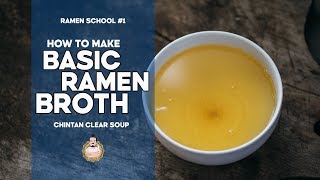
This video introduces a new series called 'Ramen School' which aims to teach the process of making ramen by breaking it down into its fundamental components. The focus of this first lesson is on making a basic chintan (clear soup) broth using a double stock method. The host explains the philosophy of ramen as a combination of technical skill and artistic expression.
The host introduces 'Ramen School', a new educational series focusing on the process of making ramen, starting with the broth.
Ramen is not a single recipe but a combination of five elements: broth, noodles, tare (seasoning), aromatic oil, and toppings.
Focus on chintan (clear) broth. Ingredients include pork bones, chicken, chicken feet, trotters for gelatin, and dried seafood (kombu, katsuobushi) for umami.
A ramen instructor described ramen as a combination of philosophy, humor, and art. The five elements are not added but multiplied—if one is missing, the result is zero.
The double stock method involves making two separate stocks (meat and seafood) and combining them. This gives better control over each component.
Keeping a detailed ramen log (spreadsheet) with ingredient weights and cooking parameters is crucial for consistency and improvement.
Equipment includes a pot, metal ruler (to measure liquid levels and evaporation), scales, fine mesh skimmer, and timer.
Prepare aromatics (onion with skin, garlic, ginger, carrot) and meat (trotters, chicken feet, cut chicken). Cut bones to extract marrow.
Start with cold water, add kombu, and heat slowly (to 60-85°C) to extract flavor. Remove kombu, bring to boil, add katsuobushi, then strain.
Skim scum. Keep the meat stock at a very low simmer (one bubble every few seconds) to avoid fat emulsification and maintain clarity.
After about four hours, combine the two strained stocks. Use the metal ruler to track evaporation and adjust future batches.
Strain the meat stock, pressing solids to extract flavor. Optionally strain through cheesecloth for clearer broth. Yields about 10 liters of clear chintan.
The broth is unseasoned; the tare will provide seasoning in future videos. The series will progress to noodles, toppings (chashu, ajitsuke tamago), and assembling the final bowl.
The chintan clear soup broth is the foundation for many ramen bowls and is best made using a double stock method for control and clarity. Future videos in this series will cover other essential ramen elements like tare, noodles, and toppings.
What are the five essential elements of a bowl of ramen?
Broth, noodles, tare (seasoning), aromatic oil, and toppings.
1:57
What is 'tare' in ramen terminology?
Tare is the seasoning that goes into the broth, defining the type of ramen.
2:14
What is the key difference between a clear (chintan) and a cloudy (paitan) broth?
High temperature and vigorous boiling emulsify fat molecules in the soup, creating a cloudy broth; low temperature (just below boiling) with minimal agitation yields a clear broth.
13:25
Name the two stocks that are combined in the 'double stock method' demonstrated.
A meat stock (chicken and pork bones) and a seafood stock (dashi).
7:30
Why is it important to have a butcher cut bones (trotters, leg bones) in half for ramen broth?
To extract the marrow from the bones, which adds flavor and gelatin.
3:48
At what temperature does kombu extract its full flavor?
Around 60-85 degrees Celsius.
12:34
What is the purpose of using a metal ruler when making ramen broth?
To measure the liquid level and track evaporation, ensuring consistency between batches.
9:00
What should you do with the leftover solids after straining the broth?
They can be used for a secondary stock (e.g., for stir-frying) but not the main broth because they will cloud it.
17:11
Why does the instructor recommend keeping a ramen log or spreadsheet?
To document ingredient weights, processes, and results, allowing for consistent recreation and improvement.
8:14
Five Essential Elements of Ramen
Breaks down ramen into fundamental components: broth, noodles, tare, oil, toppings.
1:57Ramen as Philosophy + Humor + Art
Introduces the idea that ramen is a multiplicative product of technical and creative elements.
6:12Double Stock Method for Broth
Explains a technique that gives more control over flavor by separating meat and seafood stocks.
7:30Documentation for Consistency
Highlights the importance of logging every batch to achieve reproducible results.
8:14Low Heat for Clear Broth
Reveals the key temperature control technique to prevent emulsification and keep broth clear.
13:25[00:00] okay so on this YouTube channel so far
[00:03] we've done quite a few of these kind of
[00:05] short series we did the versatility of
[00:07] teriyaki sauce first we did fried rice
[00:09] Fridays we've done dumpling school and I
[00:13] like them you know I think they're
[00:14] really useful because they allow us to
[00:16] do a bit more of a deep dive into things
[00:20] that I think are more around process
[00:22] than they are about a recipe you know
[00:24] recipe is just adding ingredients
[00:26] together in a method to get to a certain
[00:28] point but I think once you understand
[00:29] the process you learn a lot more about
[00:31] how to actually cook and if you've read
[00:33] the title of this video which you have
[00:35] because I know and you're watching it
[00:36] already you know what we're here for
[00:38] welcome to ramen school okay before you
[00:52] complain let me just reassure you don't
[00:55] worry those previous short series have
[00:57] not gone away we're just sort of mixing
[00:59] up between the two so we will be back
[01:01] with more dumpling school we will be
[01:02] back with more fried rice Friday's and
[01:04] more teriyaki recipes so if you have any
[01:07] suggestions of what you might want to
[01:08] see in those leave it in the comments
[01:09] below and get around to it but they are
[01:11] coming back but for now this is ramen
[01:14] ramen has got to be one of the most
[01:16] interesting foods not originally from
[01:18] China but it's become sort of an Addison
[01:21] movement in Japan there is no recipe for
[01:24] ramen so I'm gonna give you some recipes
[01:25] here but they're not definitive you know
[01:27] if you go to a hundred different ramen
[01:29] shops you'll find 100 different ways of
[01:30] make it round you go to a thousand
[01:31] different round the shops you'll find a
[01:33] thousand different ways so ramen of all
[01:34] things I think will benefit from us
[01:36] giving it a bit more of a deep dive into
[01:38] it explaining why we're doing things
[01:39] there are a lot of different ways to try
[01:41] to classify ramen and they're kind of
[01:44] more instructive than anything else you
[01:47] know there's no definitive way to say
[01:49] that type of ramen is exactly
[01:51] because all the different permutations
[01:52] that go into it can create so many
[01:53] different types of broth there's
[01:55] essentially five elements to every bowl
[01:57] of RAM and those are broth noodles
[02:01] cutter oil and toppings the broth is
[02:05] pretty straightforward it's the soup
[02:06] that goes into the ramen the noodles
[02:08] obviously straightforward as well the
[02:09] alkaline noodles that go into the ramen
[02:11] paddock is a word you might not have
[02:12] heard before but today is essentially
[02:14] what defines the type of rum and it's
[02:16] the seasoning that goes into the broth
[02:18] that takes it from assure you through a
[02:20] shield for example after that today we
[02:23] have our oil and that's an aromatic oil
[02:25] to give ramen its fragrance we'll talk
[02:28] about that in a future video as well and
[02:29] then we've got our toppings things like
[02:31] chashu or I just have a seasoned eggs
[02:34] they go on top I know this all sounds
[02:36] like a lot of information but don't let
[02:38] it overwhelm me come back to this video
[02:39] in a month or two and see how many more
[02:40] of these terms I started to make
[02:42] sensitive because it's a process we
[02:44] gotta get through it we're gonna focus
[02:45] today on rough now broth is obviously
[02:48] what people consider to be the heart and
[02:51] soul of the run a lot of effort goes
[02:53] into our loss a lot of effort goes into
[02:54] every aspect of ramen but broth is
[02:56] obviously a great place to start you can
[02:58] kind of separate your brought into two
[03:00] varieties that you've done which is a
[03:01] clear soup or a paper Python is a a
[03:04] white super cloudy and they're made in
[03:07] very very different ways we're gonna do
[03:08] a very very simple teeth on broth today
[03:11] but what I've got here is the kind of
[03:13] ingredients that would go into any ramen
[03:15] starting at this side we've got our
[03:17] bones you know we've got chicken and
[03:19] we've got pork a lot of ramen is made
[03:21] from chicken or pork or a combination of
[03:23] the two and obviously from different
[03:25] parts of the animals as well this is
[03:27] pork neck and backbone here very neatly
[03:29] flavor that it gives to broths this is
[03:32] hot leg burn another
[03:33] slightly difference like a lighter porky
[03:36] taste that goes into that we've got
[03:37] trotters and I've asked my butcher to
[03:39] cut these in half just to extract more
[03:40] of the flavor and trotters are gonna
[03:42] give a good mouthfeel to offer they're
[03:44] very high and gelatinous that will help
[03:45] us to get a good texture in that broth
[03:48] really important for all kinds of bones
[03:50] is to make sure that they're cut you
[03:51] know a bone has Maryland things on the
[03:53] inside that you really want to release
[03:55] so make sure your butcher is cutting leg
[03:57] bones or kind of trotters in half or
[03:58] cutting these neck and back bones so you
[04:00] can extract the marrow from means
[04:02] chicken we've got whole chickens here
[04:05] you can use chicken frames and carcasses
[04:06] you can use wings use just chicken
[04:08] breasts or or meat if you want but I've
[04:11] got whole sugars your I prefer to use
[04:12] whole chickens because I think they give
[04:13] a much better flavor to a broth these
[04:16] are actually old chicken those chickens
[04:18] that are sort of older than 45 or 50
[04:21] days and they're tough you know youyou
[04:23] probably wouldn't want to eat these as a
[04:24] roast chicken on a Sunday night but they
[04:26] are really really flavorful when you're
[04:28] making soups I've got chicken feet here
[04:30] as well which just like the pork
[04:32] trotters adds a lot of gelatin to this
[04:33] now here are our basic aromatics we've
[04:36] got garlic onion and ginger don't need
[04:38] to go into that too much more we've got
[04:41] some vegetables here as well carrots
[04:43] spring onions in Japan they use what's
[04:45] called niggy or welsh onion which is a
[04:47] much sort of larger version of this but
[04:49] spring onion or leek is totally fine now
[04:51] let's move along to these dried seafood
[04:54] is such an important part of ramen and
[04:56] it can be whatever you like you know
[04:57] whatever you can get your hands on these
[04:59] are some dried sardines dried prawns
[05:01] dried scallops
[05:03] this is fish more the swim bladder of a
[05:05] fish something that I like to add to
[05:06] Rama quite often don't worry if you
[05:08] can't get all of these ingredients we're
[05:10] not going to use all of them just use
[05:11] what is available to you make the rum
[05:13] and your own essentially this is
[05:15] Katsuobushi dried bonito flakes you've
[05:17] probably seen them on okonomiyaki or
[05:19] takoyaki but they're also a really great
[05:21] way of making stock I've got dried
[05:23] shiitake mushrooms as well and it's
[05:25] important to use the dried ones because
[05:26] all of these ingredients essentially
[05:28] were using for their umami they're
[05:30] really strong savory nature and dried
[05:33] shiitake mushrooms have a much stronger
[05:34] savory expression than fresh mushrooms
[05:37] so always dried mushrooms
[05:39] and lastly we've got combo combo is
[05:42] essentially kelp from Hokkaido in Japan
[05:44] usually but you can get different kinds
[05:46] of company from different places and
[05:47] this adds a really rich savoriness a bit
[05:50] of mouthfeel to it slightly slimy
[05:52] texture to it once it's reconstituted
[05:54] but we use it for that really strong
[05:57] savory room a meanness
[05:58] there are lots and lots and lots of
[06:01] different varieties of kombu some
[06:02] browsers of kombu more favored in Tokyo
[06:05] style cuisine or a shitty kombu for the
[06:07] Cure to don't worry about it just get
[06:08] some conversely kelp that you have
[06:10] available you can use whatever you like
[06:12] there are a lot of ingredients that can
[06:15] going to rum and ramen is essentially
[06:17] this kind of permutation of how all of
[06:21] these ingredients are put together one
[06:23] ramen instructor once told me that ramen
[06:25] was not just about the technicality of
[06:28] making the soup but it was also a
[06:30] combination of philosophy and humor and
[06:34] art and all of these things together the
[06:36] process of those five elements of the
[06:38] soup the broth the noodles the cutter
[06:41] the oil and of course the toppings as
[06:44] well then together with these more
[06:46] philosophical aspects to the ramen were
[06:48] not additions they were multiplication
[06:50] so if any one of those elements was
[06:52] lacking if it didn't have the right
[06:54] broth if it didn't have the right
[06:55] philosophy or the right sense of humor
[06:57] the end result of the ramen would be
[06:59] zero we'll get to the philosophy about
[07:01] it later but let's talk about the nuts
[07:03] and bolts of making stop so this is all
[07:05] the stuff that can go into stock in
[07:07] different combinations but let's go for
[07:09] our basic chinked on our clear broth
[07:12] that is gonna be a lot more simple than
[07:13] what you see here so let's get rid of
[07:15] everything we don't need and start again
[07:16] from the top okay here we go it's a lot
[07:20] less intimidating than this fewer
[07:22] ingredients sitting on the bench but
[07:24] these are our ingredients for our very
[07:25] basic cinta and I'm going to show you
[07:27] what's called a double stock method a
[07:30] double stock method is something that is
[07:32] so popular in Japan now it just means
[07:34] you make two different stocks and
[07:36] combine it together and I think it's the
[07:37] best way to make ramen so that's how
[07:40] much a single stock is just throw
[07:41] everything into a pot boil
[07:43] together but when you do a double stop
[07:45] it allows you a lot more variation it
[07:47] allows you to control things a lot more
[07:49] you know things like seafood and meat
[07:50] cook at very different rates extract at
[07:53] very different rates so very very much
[07:55] prefer to do a double stock a single
[07:57] stock is also fun for just throttle into
[07:59] a pot bringing up to very very low
[08:00] simmer just let that go but I'll show
[08:02] you the double stock method of this very
[08:04] basic chinta a little bit of theory
[08:06] first before we get into it when you're
[08:08] making ramen you want to be in total
[08:11] control and I would recommend writing
[08:14] your own recipes why are you going
[08:16] through this and I always keep a
[08:18] spreadsheet or a log of all the
[08:20] different rums that I've made you can
[08:22] see here on my own spreadsheet I list
[08:25] the ingredients by weight I list the
[08:27] process that goes into it you can see
[08:29] here that we've got today's date the
[08:30] fact that this is their 37 growth that
[08:32] I've made of this particular variety and
[08:34] that allows me to know from the end
[08:37] result what I've done to get there
[08:39] because there are so many steps in ramen
[08:41] it's not something that you can just do
[08:43] by gut feel and expect to get it right
[08:45] every single time so keep a running log
[08:48] if you want more information on this let
[08:49] me know and I'll talk a little bit more
[08:51] in a future video about how I prepare
[08:54] the ramen log and the journal but in
[08:57] terms of the equipment we need a pot
[08:58] obviously metal ruler which i think is
[09:01] really important so you can know the
[09:03] dimensions of your pot you know this is
[09:05] the pot that I always used for um and so
[09:06] I know that it's 15 liters 28
[09:08] centimeters across the bottom 25
[09:10] centimeters up the side and that allows
[09:12] me to control how things are cooking
[09:13] with a metal ruler when you're in school
[09:15] you probably learn how to measure the
[09:17] cylinder and you thought you'd never use
[09:18] it again but here we are knowing that
[09:20] this is 25 centimeters up to a top by
[09:22] measuring inside here to where the top
[09:25] of the water might go or the stock might
[09:27] go I know the volume you see here that
[09:28] allows me to control the rate of
[09:30] evaporation etcetera etcetera
[09:32] we'll get there aside from the pot we've
[09:33] got some scales so you know the weights
[09:35] of our ingredients there God fine mesh
[09:37] the skins come off the top of a soup a
[09:38] timer for obvious reasons let's get into
[09:41] it so ramen is sometimes called the
[09:44] universe in a bowl and they call it that
[09:46] because it's got elements of every
[09:48] aspect of the world going to with God
[09:51] meat we've got seafood the land and the
[09:53] sea we've got vegetables we've got birds
[09:56] we've got land dwelling animals and this
[09:58] is kind of what makes Rome and so
[10:00] interesting the ways you can combine all
[10:02] of this we're combining it in broth now
[10:04] but don't forget any of these
[10:05] ingredients can also go into your career
[10:07] or into your aromatic oil the other
[10:09] elements of making a bowl of ramen
[10:11] together with the toppings and your
[10:13] noodles of course so let me prepare
[10:15] these vegetables and aromatics first
[10:17] just some brown onion I'm gonna cut that
[10:19] in half and leaving the skin on just
[10:21] gives a very mild light brown color of
[10:23] the stock which is what I want of course
[10:24] if you want it to be completely white
[10:26] you take the skin off a whole head of
[10:29] garlic in half way they have to release
[10:31] the aroma some ginger thick slices
[10:35] that's the carrot as well no need to
[10:38] peel it and the only thing we really
[10:39] need to take off is the in fair so now
[10:42] for our meats the Trotters already cut I
[10:45] just measured the weight of that 700
[10:47] grams product
[10:48] you have my chicken feet what I need to
[10:51] do here is just take it sounds a bit
[10:52] gross for the toenails off the end of
[10:54] each toe of the chicken now for our
[10:59] chicken I just want to cut this up into
[11:01] smaller pieces we don't have to join it
[11:03] or anything I mean I will just because
[11:04] that's the easiest way to do it but
[11:06] cutting into the bones of all of these
[11:08] is gonna help us to extract the flavor a
[11:10] lot so now just get about nine liters of
[11:15] water into this and get on with the
[11:17] stove but this is where your metal ruler
[11:21] comes in handy I know the weights of
[11:23] every ingredient that I put into this
[11:25] pot and I know the size of the pot and
[11:27] so if I just measure here I can see that
[11:29] it is now six and a half centimeters
[11:31] from the top so the next time I do this
[11:33] rather than measuring out every volume
[11:34] of water you can just put the water in
[11:36] six and a half centimeters from the top
[11:37] and that's also going to allow me to
[11:39] work out how much evaporation has gone
[11:43] through the cooking process so I'll just
[11:44] bring this up to a very very low simmer
[11:45] let it go the meat stock is going so now
[11:50] for the seafood stock because we're
[11:51] gonna mix the meat and the seafood stock
[11:53] together which is why this is called a
[11:54] basic double stock I'm going as simple
[11:56] as possible just kombu and cuts
[11:58] obviously these are the two basic
[12:01] ingredients for your classic Japanese
[12:03] Japan version you could obviously use a
[12:05] lot of other dried seafood in there as
[12:07] well but we'll cross that bridge one
[12:09] counselor I want to keep things really
[12:10] simple today because this is our very
[12:11] very first ever ramen broth so just
[12:14] chicken and pork for the meat stock come
[12:16] to cuts obviously for the seafood stock
[12:18] I've got about three liters of cold
[12:20] water in here I'm just gonna put my
[12:21] kombu straight into the cold water cuts
[12:25] of course you're going later but the
[12:27] thing with kombu is you don't want to
[12:28] boil it and actually you want to keep it
[12:30] at a lower temperature for as long as
[12:32] possible
[12:33] you know kombu extracts fully its flavor
[12:35] at around 60
[12:37] eighty-five degrees so you can actually
[12:38] put the konbu in the cold water
[12:40] just leave it in the fridge overnight
[12:41] but I figured while you've got a slow
[12:43] cooking meat broth going already you may
[12:45] as well do the slow cooking method by
[12:47] heating the kombu so I just put the
[12:48] kombu into the cold water and then put
[12:50] it onto a very very low heat and slowly
[12:52] bring that up to temperature over the
[12:55] course of about an hour hour and a half
[12:57] [Music]
[13:04] so after about an hour over medium-high
[13:07] heat this is almost coming to the boil
[13:09] now and you can see this scum of protein
[13:11] and blood that's forming on top of our
[13:13] stock just skim that off with a fine
[13:15] strainer once I've removed the scum and
[13:19] not too much more as being produced I
[13:21] turn that down to a really low
[13:22] temperature and that's the secret to a
[13:25] cheatin or a clear ramen broth high
[13:27] temperature and vigorous boiling is
[13:29] gonna cause fat molecules to emulsify
[13:31] into the soup and give you a cloudy soup
[13:33] a lower temperature underneath hundred
[13:35] degrees so one bubble kind of barely
[13:37] breaking the surface every couple of
[13:39] seconds or so is gonna keep the broth
[13:41] very very clear after about the same
[13:44] time you can see that our kombu the
[13:47] water's starting to get warm a little
[13:48] bit of steam is coming off there can you
[13:50] test your combo just to hear your
[13:52] thumbnail into the kombu when that is
[13:54] leaving its imprint as you can see it's
[13:56] time to take the kombu out and you can
[13:57] bring this kombu stock to the boil once
[14:01] the combi comes to the boil dump in the
[14:02] cuts or bushi or just for two more
[14:04] seconds then turn the heat off and let
[14:06] it sit for about half now if that can be
[14:08] strained out and that is that clear -
[14:10] the meat stocks been going now for a
[14:12] total of about two hours and it's
[14:14] looking clear as to be flavorful now
[14:16] it's time to add in the vegetables but I
[14:18] want to take a progress measurement here
[14:20] and this is kind of why we have the
[14:22] middle ruler and the measurements so we
[14:24] can see how much evaporation is going
[14:26] through it may seem a little anal to be
[14:29] taking measurements of the stock that
[14:31] you're making but it's really important
[14:34] there are so many moving parts to Rama's
[14:36] kinda like playing a game of chess and
[14:38] so just how I eat this rum at the end of
[14:40] it tastes fantastic
[14:41] know how to recreate that but even more
[14:44] importantly mad if I taste this at the
[14:46] end and go oh you know what that would
[14:48] be better if it had a stronger chicken
[14:50] flavor or if they had more seafood I
[14:52] know what steps I can change what moves
[14:54] to make on the chess board so I can
[14:55] actually improve my rom and every time I
[14:57] make an extra batch I care about eight
[14:59] and a half centimeters so I've lost two
[15:01] centimeters in evaporation make a note
[15:04] in the ramen journal in with the
[15:07] aromatics so my garlic ginger carrot
[15:10] these onions as well so a meat stock is
[15:15] looking fantastic the vegetables have
[15:17] been in for about two hours now and the
[15:19] whole thing's been going for a little
[15:20] over four hours and I'll take a final
[15:23] measurement to check how far I've
[15:25] reduced so we're down to about seven
[15:27] centimeters it was down to eight and a
[15:30] half then we added some more stuff into
[15:31] obviously the level comes back up and
[15:32] it's come back down now at seven so it's
[15:35] done it off about six and a half down to
[15:37] eight and a half back up again to
[15:39] actually they're five and now back down
[15:41] to seven so we have had some reduction
[15:43] some evaporation there which is good
[15:45] helps intensify the flavor I'll take
[15:47] this out pass it through a sieve I've
[15:48] got two soups here which i think is
[15:50] quite a useful thing to do I'll just
[15:52] scoop out everything from the pot first
[15:54] and pass it through these two sieve when
[15:58] you've got the bones and things in the
[16:00] sieve I push it through I like to give
[16:02] it a good press to make sure we're
[16:03] getting all the flavor out of it I kind
[16:05] of prized the flavour over and above how
[16:07] clear it is if you want to be really
[16:08] really clear then pushing it obviously
[16:11] is not gonna be the best way and of
[16:12] course to feel more of the proteins
[16:14] through you can line it with some extra
[16:16] cheese cloth and muslin that kind of
[16:17] thing and don't push it quite as firmly
[16:19] but let's give it a good press because I
[16:21] just think it's better to have a bit of
[16:23] flavored ramen than ramen that just
[16:24] looks more clear you can see from I
[16:28] guess what I'm throwing away here that
[16:29] this isn't a stock that is completely
[16:32] completely broken down
[16:33] Attie Tong is a clear stock so it tends
[16:36] to be cooked for relatively short period
[16:38] of time at a relatively low heat so it
[16:40] doesn't break apart and break down as
[16:42] much as say
[16:44] or something else but I mean the carrots
[16:46] here actually quite whole that you can't
[16:48] even squish them too much and the bones
[16:50] aren't falling apart for a longer cooked
[16:53] stock and when we do some stops that
[16:55] sort of eight hours plus they can really
[16:58] really break down everything that's
[17:00] inside I can't get tissue the muscles
[17:01] the bones etc and that becomes almost
[17:04] pasty there we'll see with some I guess
[17:07] the longer cook stalks later on but for
[17:09] now you can not throw this stuff away
[17:12] you know there's still actually some
[17:13] flavor in there we don't want to use it
[17:15] here because it's gonna cloud let's talk
[17:17] a little bit too much but you can use
[17:18] this for a secondary stock you know can
[17:20] cover that with water again boil it
[17:22] again great first stir frying just
[17:23] general service stock both our meat
[17:29] stock and dashi have both been strained
[17:31] I'm sorry there's a lot of pouring a lot
[17:33] of liquid management that needs to
[17:35] happen when you're making large volumes
[17:37] of ramen now we just mix the two
[17:39] together well this is what we spent the
[17:43] last six hours of our life putting
[17:45] together our tin tongue basic double
[17:48] stock not just this about ten odd liters
[17:51] of it and that's the great thing about
[17:52] making stock like this I can freeze all
[17:54] of this and use this whenever I want to
[17:57] make rum it's not that I've got to
[17:58] invite 40 of my closest friends around
[18:00] and have the bowl of ramen for everyone
[18:02] but it may look slightly cloudy here but
[18:05] that's just as I've been pouring it
[18:06] around it's got to set a little bit the
[18:08] fat molecules and come to the top and
[18:10] it'll be crystal clear by the time it
[18:12] comes out of the fridge tomorrow or me
[18:14] closer to baking our ramen you can't
[18:16] just throw noodles into a stock like
[18:17] this because as you mentioned before
[18:19] there are five elements that are
[18:20] essential to ramen we've got the broth
[18:22] as this next we're talking about the
[18:24] noodles and I'm gonna make our own
[18:25] noodles at the beginning of ramen school
[18:28] we'll get to that later down the track
[18:29] but this hasn't been seasoned at all up
[18:31] with no salt into it whatsoever that
[18:33] comes from a pallet so when we get to
[18:35] building our ramen pallet is the
[18:38] important aspect that actually seasons
[18:40] the ramen we'll talk about that more
[18:41] when we get to that we're moving on from
[18:44] this in ramen school we're gonna go into
[18:46] toppings chashu add your time
[18:48] some of the things that we put on top of
[18:49] the ramen and I'm sorry how to have a
[18:51] ball around to show you today could have
[18:53] just made the stock but after a couple
[18:55] of videos follow through on this
[18:58] playlist and you will end up with the
[19:00] secrets to making fantastic run
[19:03] [Music]
[19:25] you
[19:26] [Music]
⚡ Saved you 0h 19m reading this? Transcribe any YouTube video for free — no signup needed.