
AI Summary
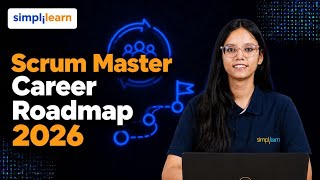
This video from Simplilearn debunks common myths about the Scrum Master role and provides a clear, five-stage roadmap for becoming a job-ready Scrum Master. It highlights the role's true responsibilities, dispels misconceptions about required skills and salary, and outlines a path from foundational learning to specialization.
Chapters
The reality is that a Scrum Master is a servant leader who helps the team follow Scrum properly. While they facilitate daily stand-ups, sprint planning, and reviews, their main responsibilities are removing blockers, coaching the team, improving collaboration, and increasing efficiency.
Coding is not a main requirement. Basic technical knowledge can help with communication, but the most important skills are communication, facilitation, coaching, conflict resolution, and process improvement.
A project manager manages timelines, budgets, resources, and deliveries. A Scrum Master does not control the team or assign work; instead, they help the team self-organize, remove obstacles, and improve how work is done.
Salaries are competitive: a Scrum Master can earn 10-20 lakh per year with ~7% annual growth; a senior Scrum Master earns 15-25.3 lakh with ~11% growth; Agile coaches earn 13-25.3 lakh with growth reaching ~18 lakh annually.
Start by learning the Scrum framework, including its roles, events, and artifacts. Understand terms like sprints, product backlog, sprint backlog, velocity, and impediments.
Learn how to facilitate sprint planning, sprint reviews, and daily stand-ups.
Focus on coaching, mentoring, and improving team performance.
Prepare for certifications such as CSM, PSM I, or SAFe Scrum Master. Build a portfolio that demonstrates improvements you've helped create.
Choose an industry or career path, such as SaaS, fintech, healthcare, or other sectors.
Scrum Masters can grow into Agile Coaches, Release Train Engineers, Agile Program Managers, and other leadership roles with more responsibility and better salaries.
The video effectively debunks common myths about the Scrum Master role and provides a practical five-stage roadmap for career development. It emphasizes that the role is about servant leadership, not technical prowess, and offers strong salary and growth potential.
Mentioned in this Video
Tutorial Checklist
💡 Key Takeaways
Market demand and salary stats
Provides concrete numbers (126,000 jobs, 16 lakh average salary, 82% satisfaction) that validate the career choice.
00:22Scrum Master vs Project Manager distinction
Clarifies a common confusion, emphasizing the servant-leader mindset versus control-oriented management.
01:17Salary growth data
Offers specific salary ranges and growth percentages, making the career path tangible.
02:02Five-stage roadmap
Provides a structured, actionable plan from beginner to job-ready, which is the core value of the video.
02:33Long-term growth opportunities
Shows that the role is not a dead-end, with clear progression into higher-level Agile roles.
03:43Full Transcript
[00:08] few common myths about Scrum Masters because many people misunderstand what this role actually involves. Once you know the reality, you will understand why it has become such a stable and well-paying career in Agile. Now the
[00:22] facts. There are more than 126,000 Scrum Master jobs open globally with an average salary of over 16 lakh per year. Job satisfaction in this role is also
[00:34] around 82%. So let's separate the myth from the reality. Myth one, a Scrum Master is just someone who organizes meetings. The reality is very different. A Scrum Master is a servant who helps the team follow Scrum properly. Yes,
[00:49] they help conduct daily stand-ups, sprint planning sessions, and reviews, but this is only one part of the job. Their main responsibility is to remove blockers, coach the team, improve collaboration, and help everyone work
[01:02] more efficiently. Myth number two, you need coding or a technical background to become a Scrum Master. That's not true. Basic technical knowledge can help you communicate with developers, but coding is not the main requirement. The most
[01:17] important skills are communication, facilitation, coaching, conflict resolution, and process improvement. Myth number three, Scrum Masters and project managers do the same job. They may work towards similar goals, but
[01:32] project manager usually manages timelines, budgets, resources, and project deliveries. A Scrum Master does not control the team or assign work. Instead, they help the team organize itself, remove obstacles, avoid
[01:47] unnecessary distractions, and improve the way work is completed. It is a different role with a different mindset. Myth number four, Scrum Masters do not earn much. This is not true at all. The salary number tells a different story. A
[02:02] Scrum Master can earn between 10 lakh and 20 lakh a year with salaries growing around 7% annually. A senior Scrum Master can earn between 15 lakh and 25.3 lakh per year with around 11% annual growth. Scrum Masters who move into
[02:18] Agile coach roles can earn between 13 lakh and 25.3 lakh per year with growth reaching around 18 lakh annually. Now that we have cleared up all the myths, let's look at the real road map, something that you were actually waiting
[02:33] for. So here are the five stages that can take you from beginner to job ready Scrum Master. Stage one, learn Scrum foundations. Start by learning the Scrum framework including its role, events, and artifacts. Understand basic terms
[02:47] such as sprints, product backlog, sprint backlog, velocity, and impediments. Stage two, build core Scrum Master skills. Learn how to facilitate sprint planning, sprint reviews, and daily standups. Stage three, learn advanced
[03:01] practices and scaling. At this stage, focus on coaching, mentoring, and improving team performance. Stage four, earn certifications and build a portfolio. Once your basics are strong, prepare for certifications such as CSM,
[03:15] prepare for certifications such as CSM, PSM, I or SAFe Scrum Master. Simply Learn has come up with Scrum Master certifications that can offer you real skills and empower your resume. At the same time, build a portfolio that shows
[03:29] the improvements you have helped create. Stage five, choose a specialization. Finally, choose the type of industry or career path you want to focus on. You could work with SaaS companies, fintech teams, healthcare organizations, or
[03:43] something other. Here's one more final myth. There's no long-term growth in this career, and that is also not true. Scrum Masters can grow into Agile Coaches, Release Train Engineers, Agile Program Managers, and other leadership
[03:57] roles. These positions offer more responsibility, better salaries, and the opportunity to improve Agile practices across entire organizations. So, if these myths were stopping you from exploring a Scrum Master career, they
[04:11] should not hold you back anymore. We have created a complete Scrum Master roadmap that covers the skill, learning stages, tools, and certification paths description box below to check it for free. Stay in this video and share it
[04:26] with someone who is trying to choose between becoming a Scrum Manager and a Product Manager. And subscribe to the channel for more such tech roadmaps. And thanks for watching. I'll see you in the next one.