
What is a Scrum Master? Not a Project Manager!
43sClarifies a common misconception and hooks viewers interested in Agile roles.
▶ Play Clip"The title promises a 2026 roadmap and delivers a structured, step-by-step guide, though it includes a promotional segment for Simplilearn's CSM course."
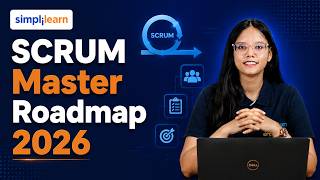
This video from Simplilearn presents a comprehensive roadmap for becoming a Scrum Master in 2026. It outlines a seven-phase journey, from understanding Agile and Scrum fundamentals to building practical experience and advancing your career, with a focus on the role's responsibilities, essential skills, and certification options.
A Scrum Master is not a traditional project manager but an impediment remover, facilitator, coach, teacher, servant leader, manager, change agent, and mentor who helps teams follow Agile principles and deliver better results.
The first step is understanding Agile methodologies, which focus on continuous improvement, customer collaboration, and adapting to change. Scrum, the most popular Agile framework, is based on three pillars: transparency, inspection, and adaptation.
A Scrum Master's responsibilities include facilitating Scrum events (sprint planning, daily stand-ups, reviews, retrospectives), removing team obstacles, coaching teams on Agile principles, and supporting product owners in managing the product backlog.
Key skills include communication, leadership, conflict resolution, problem-solving, and facilitation. These skills help the Scrum Master empower the team to become self-organizing and work efficiently.
Modern Scrum Masters use tools like Jira, Azure DevOps, Trello, Fluence, and Miro. They should understand key concepts such as user stories, product backlog, sprint backlog, and burn down charts.
Popular certifications include Certified Scrum Master (CSM) from Scrum Alliance, Professional Scrum Master (PSM) from Scrum.org, and Agile Certified Practitioner. The CSM is recommended for beginners, and Simplilearn offers a training program with 16 hours of live training, exam prep, and a free retake.
Apply Scrum concepts in real-life scenarios by participating in Agile projects, coordinating team activities, running Scrum ceremonies, creating sample Scrum boards, and working on case studies. This helps in understanding how Scrum collaboration solves problems.
After learning, certifying, and gaining experience, explore roles like Scrum Master, Agile project coordinator, Agile coach, project manager, or product owner. Continue learning advanced Agile approaches like Kanban, SAFe, Lean, DevOps, and product management.
Becoming a successful Scrum Master is a continuous learning journey that requires understanding the framework, developing key skills, gaining certification, and applying knowledge in real-world scenarios. The roadmap provides a clear path from fundamentals to career growth, emphasizing that the more you practice and help teams improve, the better you become.
What are the three pillars of Scrum?
Transparency, inspection, and adaptation.
02:02
What is the primary role of a Scrum Master?
To help the team become self-organizing by removing impediments, facilitating Scrum events, coaching, and supporting the product owner.
02:48
Name four essential skills for a Scrum Master.
Communication, leadership, conflict resolution, problem-solving, and facilitation.
03:59
What is a user story?
A requirement written from the user's perspective, e.g., 'As a customer, I want to track my order so that I know when it arrives.'
05:22
What is a product backlog?
A prioritized list of all features, enhancements, and fixes for the product.
05:38
What does a burn down chart show?
A visual report showing how much work remains in the sprint.
05:38
Which certification is recommended for beginners?
Certified Scrum Master (CSM) from Scrum Alliance.
06:10
What are the three pillars of Scrum?
Transparency, inspection, and adaptation.
02:02
Scrum Master as a Servant Leader
Clarifies that a Scrum Master is not a project manager but a facilitator and coach, which is a key distinction for understanding the role.
00:22Three Pillars of Scrum
Provides a foundational framework for Scrum, essential for any practitioner.
02:02Essential Skills for Scrum Masters
Lists the core competencies needed to succeed, offering a clear checklist for aspiring Scrum Masters.
03:59Certification Options
Highlights recognized certifications (CSM, PSM, ACP) that validate Scrum knowledge and are important for career advancement.
05:55Continuous Learning Journey
Emphasizes that becoming a Scrum Master is an ongoing process of improvement, not a one-time achievement.
08:16[00:07] thing in common, a team that works together efficiently. But behind every high-performing Agile team, there is often someone who keeps everyone aligned, remove roadblocks, and helps the team continuously improve. That
[00:22] person is a Scrum Master. So today, in this video, we are going to look at the this video, we are going to look at the complete Scrum Master roadmap for 2026. From understanding Agile and Scrum fundamentals to building the skills,
[00:35] certifications, and experience needed to start your career as a Scrum Master. So stay till the very end because it's going to be very fruitful. Trust me. So let's first understand who is actually a Scrum Master. So a Scrum Master is not a
[00:50] traditional project manager. They are an impediment remover, facilitator, coach, teacher, servant leader, manager, change agent, and a mentor. Who helps team
[01:02] follow Agile principles and deliver better results. With companies across industries adopting Agile ways of working, Scrum Masters have become an important role in software development, IT, finance, healthcare, and many other
[01:17] sectors. So now let's look at the complete Scrum Master roadmap step-by-step. So let's first start with the first phase, that is understanding Agile and Scrum fundamentals. Before becoming a Scrum Master, your first step
[01:31] is understanding the foundation, that is Agile methodologies. Traditional project management follows a sequential approach. Everything is planned up front. But Agile works differently. It focuses on continuous improvement,
[01:46] customer collaboration, faster delivery cycles, and adapting to changing requirements. Do you know about the most popular Agile framework? Yes, it is Scrum. Scrum is based upon three pillars. First, transparency. Everyone
[02:02] understands the work and the progress. Second, inspection. Teams regularly review their progress. And third, adaptation. Teams improve their process based upon the feedback provided. So, as a beginner, you should learn the key
[02:17] Scrum concepts. That includes Scrum roles, Scrum events, Scrum artifacts, Scrum planning, daily Scrum meetings, sprint reviews, and sprint retrospectives. These concepts create the foundation for your Scrum Master
[02:33] journey. Now, the phase two. Learn the Scrum Master role. Now, let's understand what a Scrum Master actually does. A common misconception is that Scrum Master assign tasks and manage employees. That is not their role. Scrum
[02:48] Master helps the team become self-organizing. Now, let's look at some basic responsibilities of Scrum Master. First, facilitating Scrum events. A Scrum Master ensures that Scrum meetings like sprint planning, daily stand-ups,
[03:03] sprint reviews, and sprint retrospectives are well-organized, focused, and productive. Second, removing team obstacles. This is another responsibility of a Scrum Master. When teams face blockers, unclear
[03:17] requirements, or process changes, the Scrum Master help identify and remove these obstacles so the team can work smoothly. Now, let's look at the third responsibility, that is coaching teams. Scrum Master guides the team on Agile
[03:31] principles, encourages collaboration, and helps members improve their way of working. And last but not the least, supporting product owners. They work with product owners to maintain clear priorities and ensure the product
[03:45] backlog is well-managed. So, a great Scrum Master does not control the team. They empower the team to become self-organizing and deliver better results. Now, the phase three. Developing essential Scrum Master
[03:59] skills. Scrum Master needs to have a strong set of professional skills to help team work efficiently. And the skills contained first. So, let's look at the skills. First, communication skills. They work with developers,
[04:13] managers, and stakeholders. So, clear communication helps keep everyone aligned. Second, leadership skills. Scrum Master lead by building trust, guiding teams, and encouraging collaboration. Third, conflict
[04:27] resolution. They help teams resolve disagreements and maintain a positive working environment. Fourth skill, problem-solving skill. So, the Scrum Master identify challenges, remove blockers, and help team find effective
[04:40] solutions. Last but not the least, facilitation skills. They run productive meetings by asking the right questions and encouraging participation, and keeping discussions focused. So, these are some of the key responsibilities of
[04:54] a Scrum Master. Now, coming at fourth phase, that is learning Agile tools and practices. Modern Scrum Masters work with various Agile tools to manage workflows and team collaboration. So, some commonly used tools includes Jira,
[05:10] Azure DevOps, Trello, Fluence, and Miro. See, as a Scrum Master, you should understand some key Agile concepts. That includes first, user stories. Comments
[05:22] written from the user's perspective. Example, as a customer, I want to track my order so that I know when it arrives. Second, product backlog. A prioritized list of all features, enhancements, and fixes for the product. Third, sprint
[05:38] backlog. The set of tasks the team commits to completing in a sprint. And fourth, burn down charts. Visual reports showing how much work remains in the sprint. So, knowing these concepts help you work effectively with Agile teams.
[05:55] Now, the fifth phase, that is getting Scrum Master certification. Once you understand Scrum fundamentals, the next step is to validate your skills with a recognized certification. Popular option includes Certified Scrum Master, that is
[06:10] CSM, from Scrum Alliance, Professional Scrum Master, PSM, from Scrum.org, and Agile Certified Practitioner, which covers multiple Agile approaches. For beginners, the Certified Scrum Master certification is a great way to start
[06:25] your Agile career. Simplilearn CSM training helps you prepare with 16 hours of live training by a certified Scrum Trainers, hands-on activities, real-world case studies, and exam preparation. The program also includes
[06:40] preparation. The program also includes the CSM exam fee, free exam retake, 2-year Scrum Alliance membership, 20 PDUs, 16 SEUs, and access to additional Agile courses. With this certification, you can build confidence in Scrum
[06:54] practices and prepare for roles like Scrum Master, Project Manager, Product Owner, and Agile Team Member. So, why wait? The program link is given in the description box below. Go check it out right away and start your Scrum Master
[07:08] let's look at the sixth phase, that is gaining practical experiences. See, learning Scrum concepts gives you the foundation, but applying them in the real-life scenarios is what helps you become a better Scrum professional. So,
[07:22] start by practicing Scrum in everyday scenarios. You can participate in Agile projects, help coordinate team activities, practice running Scrum ceremonies, create sample Scrum boards,
[07:35] and work on Agile case studies. The more you practice, the better you understand how Scrum team collaboration solve the problem and deliver work effectively. Let us understand this with a simple example. Imagine a software team
[07:49] struggling with missed deadlines. As a Scrum Master, your role would be identifying blockers, improve the communication, facilitate Scrum meetings, and help the team create a smoother workflow. Remember, Scrum is
[08:03] not just about knowing the framework. It is about helping teams continuously improve and deliver better results. Now, the last phase, that is the seventh phase, building your Scrum Master career. Once you have learned Scrum,
[08:16] earned your certification, and gained some hands-on experience, it's time to focus on building your Scrum Master career. You can start exploring roles like Scrum Master, Agile project coordinator, Agile coach, project
[08:28] manager, or product owner. As you grow, continue improving your skills by learning advanced Agile approaches, such as Kanban, SAFe, Agile Lean principles,
[08:40] DevOps practices, and product management fundamentals. At the same time, build your professional profile by showcasing your Scrum certifications, Agile project experiences, tools you have used, and your ability to facilitate team
[08:54] collaboration. Remember, becoming a successful Scrum Master is a continuous learning journey where you keep improving your skills and help better work together. So, let's quickly summarize the complete Scrum Master
[09:09] roadmap. First, understand the fundamentals of Agile and Scrum, including Scrum roles, events, artifacts, and Agile principles. Next, learn the responsibilities of a Scrum Master, from facilitating Scrum events
[09:23] and removing blockers to coaching teams and supporting product owners. Then, communication, leadership, conflict resolution, problem-solving, and facilitation. After that, get familiar with Agile tools and practices such as
[09:38] Jira, Azure DevOps, user stories, product backlog, sprint planning, and burn down charts. Once you have the foundation, validate your knowledge with a recognized Scrum certification and start applying your skills through
[09:51] practical projects and real-world experiences. Finally, continue growing your career by exploring advanced Agile practices and building your professional profile for roles like Scrum Master, Agile Coach, Project Manager, and
[10:05] Product Owner. Remember, becoming a Scrum Master is a continuous learning journey. The more you practice, collaborate, and help teams improve, the better you become in this role. If you found this road map helpful, then
[10:19] subscribe to Simplilearn for more insights and check out our related videos. Thanks for watching, and I'll see you in the next one.
⚡ Saved you 0h 10m reading this? Transcribe any YouTube video for free — no signup needed.