
From $2K to $25K in 24 Hours: My Self-Publishing Path
60sSpecific money numbers and a rapid success story hook viewers looking for lucrative side hustles.
▶ Play Clip"The title is generic and the content is a live chat with significant filler, but it does deliver on the core topic of self-publishing for consultants."
In this live Hangout, Brennan Dunn and Nathan Barry discuss how self-publishing technical books can serve as a powerful marketing tool for consultants and freelancers. They share personal success stories and case studies, demonstrating how writing a book can generate direct revenue, attract high-paying consulting clients, and establish authority in a niche.
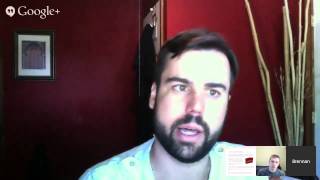
Brennan introduces Nathan Barry, noting their similar product-based businesses and Nathan's expertise in self-publishing and digital products, particularly relevant to consultants and freelancers.
Nathan's case studies show that self-published e-books not only generate direct revenue but also create a stream of consulting inquiries, as readers seek the author's expertise.
Nathan shares that he used product revenue ($2,000/month) to level out the income rollercoaster of freelancing, providing a consistent base that allowed him to quit his job.
After publishing his first book, Nathan received about 10 consulting calls within 30 days, all related to the book's topic, and at higher rates than his previous consulting work.
Nathan declined all consulting offers to write another book, which earned $25,000 in 24 hours, showing the potential of publishing over consulting.
Traditional publishers offer small advances ($5,000-$7,000) that rarely earn out, leaving authors with little profit, whereas self-publishing can yield significant revenue.
Nathan's book 'Designing Web Applications' made nearly $80,000 within the first six months, and his 'Authority' book has been out for a year with continued success.
Pete Keene wrote 'Mastering Modern Payments' about Stripe and Ruby on Rails, generating about $30,000 in sales and an unlimited consulting pipeline.
Self-publishing a technical book can serve as a dual revenue stream and a powerful client acquisition tool, positioning the author as an authority and attracting high-paying consulting opportunities.
How much did Nathan's first book earn in the first 24 hours?
$12,000
00:15:38
What was the revenue from Nathan's second book in 24 hours?
$25,000
00:15:57
How many consulting calls did Nathan receive within 30 days after his first book launch?
About 10
00:14:40
What is the typical advance offered by traditional publishers for technical books?
$5,000 to $7,000
00:17:14
How much did Nathan's book 'Designing Web Applications' make in the first six months?
Nearly $80,000
00:18:09
What was Pete Keene's book about?
Implementing Stripe with Ruby on Rails
00:20:36
Product revenue stabilizes freelancing income
Shows a practical strategy for smoothing income volatility in freelancing.
00:12:55Book launch leads to consulting offers
Demonstrates the direct link between publishing and client acquisition.
00:14:40Traditional publishing pitfalls
Highlights the financial disadvantage of traditional publishing for technical authors.
00:16:41Self-publishing success metrics
Provides concrete revenue figures that validate the self-publishing approach.
00:18:09[00:00] All right. Okay, this is a live. Brennan, how's it going? I'm good. How are you? He's typing in the chat thing. Let's see there. Good evening. How are you?
[00:12] Good. Congrats on the move. Thanks. Two guys' voices aren't quite in order yet. I'm in one of the last rooms that still has stuff in it, so not my usual office.
[00:26] But, yeah, I just carted my iMac around and got a new phone for it. yep so I had this moment where I was like what am I gonna do cause I cradled off my desk and
[00:38] you know moved everything and anyway it was uh it worked out I'm here we're live and we're gonna give it a couple minutes before we actually
[00:50] start but yeah I think we're still a few minutes early but uh where's everyone joining us today from it's always a nice icebreaker yeah I saw a few who've got someone from Washington State.
[01:03] That's Renee. All my family's from Washington State, so. Ooh, wait. So there's someone from North Idaho. Man, my home state. Representing in the chat room.
[01:15] This is great. That never happens. Unless you're, like, someone I know who, you know, is from Boy State and is, like, just coming on to hang out or something.
[01:27] Okay, you're from Washington, right? I hear Renee. Yeah, Renee is from eastern Washington. That's right, she is from there. Alright, we've got Ontario, Canada and the Netherlands, Tennessee. Alright.
[01:43] Oh, people are asking for a hashtag. Should we give them a hashtag? I'm hashtag authority. That's good.
[01:56] I'm a very Catholic hashtag. I would not have thought Catholic at all. Whatever we're doing.
[02:08] Okay. Let's go for all results. Yeah, it's a moderately clean hashtag. How often are people... 42 minutes? Yeah. Yep, hashtag authority will work.
[02:26] Um, oh, but now... I gotta monitor the Twitter hashtag and the chat. I can help with that. The amazing multitasking this is going to require.
[02:40] I need my second monitor. Maybe authority isn't great. I see a lot of, okay, maybe there's a need for authority. I see a bunch of stuff about politics, reach, money, war, and authority.
[02:53] Okay, let's go with authority cat, authority, I don't know. Though, you know what?
[03:05] actually most of the stuff on the authority hashtag is there's not a lot going on right now. Looks like about a couple an hour are on different things.
[03:18] Let's do it. Authority freelance. Two worlds. Authority freelance. I like it.
[03:30] Hashtag authority freelance. Okay. Okay. what else was I going to bring up I'm just like filling my window with my notes you know our questions
[03:42] our chat ooh got everything alright from Israel
[03:56] yeah and people like to be on the other hashtags but we're going with authority freelance we made the decision that we're sticking to it. And yes, the query will be provided for a little while at least there will be a
[04:14] a request. Alright, how many... we've got a good number of people here. I don't think we have any technical issues or that sort of thing. No one's emailing me and complaining about, you know, I
[04:31] I can't get in or I can't see it or anything like that. Yeah, there will be a recording, Jared. Since the Hangout on Air is recorded by default.
[04:45] People just have to suffer through our first three minutes of deciding what hashtag to use. Important, important info. Or questions, or decisions need to be made, rather.
[04:59] Exactly. I'm a little out of it. I'm suffering from a pretty big allergy attack today, so don't mind my puffy eye. Yep, that happens. I'm out of it because I'm moving today.
[05:13] But yeah, soon life is going to be normal, and I'm going to get all kinds of work done. But until then I just going to try to get by as far as juggling business and life and all of that Let see Ooh we got someone from San Diego
[05:38] I feel like there's a lot of people in San Diego now where, like, the blogging and business and tech community there. There's really a lot of people. Or people who moved there recently.
[05:51] I guess it's a good spot. Are you ever leaving Virginia? We're going to the mountains soon, next summer.
[06:03] I think we're going to be going out of the suburbs and into literally the middle of nowhere, which is where I belong. Yeah, into the middle of nowhere. Just you and your...
[06:15] with an internet connection. And the way I see it, if I sell my house, the money I'll make off of the difference from when I bought it, when I sell it for, will pay for the land at the end of the year
[06:27] and then I'll have no mortgage, no otherwise debt and I can live off my little homestead. I like this programmer homestead
[06:39] thing that you're going to have going on. You're a dweller. Oh, Andy's asking if I'm moving out of Idaho. No, I'm staying here in Boise just moving down the street. We bought a house
[06:51] and I have been remodeling it for the last couple months and finally kind of moved in. Really, the house is not done. I just have to be out of my current house next week. So, oh well.
[07:06] Alright. Thank you. Should we keep going? We should keep going. Otherwise we've been talking about nonsense for a long time. And I actually enjoy talking about publishing more than random nonsense.
[07:19] So speaking of publishing, I read it, I was on Amazon, I found a guy who wrote a book on living in a yurt. I read the book and I realized, oh wow, he's talking, like he lives where I'm looking to move, like this small little hippie community up in the mountains, Virginia.
[07:34] I Googled him, emailed him, and little did I know, he actually is moving to North Carolina and is looking to sell his yurt, so he might be the one I buy from. Therefore, he might get like an $80,000 ROI on his book, a $2.99 Kindle book on living in New York.
[07:54] That's amazing. I'll give you an example of how it pays off. Yep, that's good. All right.
[08:06] We've got 111 people. Awesome turnout. Yeah, that's fantastic. Okay, I'm going to let you kick things off. Okay, let me tweet, say, join on second.
[08:18] Mason Berry and I now. So, yeah, so I wanted to basically have Mason just kind of do a little chat with me.
[08:31] Because Nathan and I, we both have somewhat similar businesses is in that we create product. His products are more in the design space and in this kind of self-publishing product space,
[08:46] whereas mine are more in the consulting space. And we both follow a lot of the same kind of, I guess, product ideologies and everything. And why I wanted to introduce Nathan to you,
[08:58] if you don't know him already, although I'm sure a lot of you already know him, talked about him literally a million times to my newsletter over the last few years, is he's got a lot of really good insights into specifically self-publishing
[09:12] and creating digital products. But in the context of consulting and freelancing, a lot of the case studies that he's put together over the last few months have been from people
[09:24] who have self-published something on their craft, like Samuel Hollikin when it comes to UX design or peak team when it comes to using Stripe for Ruby on Rails.
[09:38] And what's really cool is how successful these digital products, these e-books have done, not only when it comes to direct revenue from selling that book,
[09:50] but also from generating just a ton of consulting business. So I wanted to bring Nathan on, or I wanted to ask Nathan to host this so that he could talk to you, a pool of primarily consultants
[10:02] and chat about kind of like how you could use self-publishing and products, not only as a revenue source directly but also as a way to get clients who are like, hey,
[10:14] you wrote the book literally on X. I need X. I want to work with you exclusively, pretty much regardless of what you charge. I've kind of done a little of this indirectly where
[10:26] I've done a lot of writing recently on my own staff business, which has netted me a lot of business or a lot of consulting work at a pretty decent rate for software companies and staff companies.
[10:40] So it's definitely been very worthwhile for me. And I've read Nathan's book, Authority, which was pretty instrumental in a lot of different things about my business.
[10:53] But there's a lot in it, specifically on how you could apply a lot of what within Authority to consulting and freelancing that I wanted to get kind of Nathan opinions on So yeah anyway Nathan an awesome guy Take it away I guess And I be here to kind of
[11:11] moderate the chat and take down any good questions that come up. Sounds good. Well, Brendan, thanks for putting this together. We've got, I can't remember when
[11:23] when we first met, and it was over something related to publishing because I came out with my first book, which was the Afterbite Chain book, and that was September 2012. And you sent me an email,
[11:36] and it was basically, congratulations on the book because I had the numbers and that kind of thing. And I think we'd run a little bit of the same circles, but it was basically that you had some feedback on the sales page. And so we hopped on Skype and talked through the sales page.
[11:50] So that's how we first met. So, since then we've done all kinds of things. We seem to hang out at all the same conferences and we even throw on events together.
[12:02] So, we'll get into that. I'll run through kind of what the last two years has been like for me. But I used to work at a software company leading their design team.
[12:15] And then 2011 I left that. I had some iPhone apps that made a little bit of money and, you know, using those products to balance out the, I guess, the income rollercoaster, you know, of freelancing.
[12:30] And so I was still freelancing, but, you know, let's see. Oh, hold on. People are getting an echo. Oh, well. I think it's okay. I think it's nice.
[12:43] Not my problem. So I was getting the, you know, I had that income roller coaster from freelancing once I left the job. And so I wanted products to level that out a little bit.
[12:55] And at the time, I was only making $2,000 a month off of products. But that was a nice consistent base. I only needed like $5,000 a month to live on. And so when I quit my job, those products were really helpful.
[13:09] And that's one thing that we'll talk about a little later is using products to automate your freelancing revenue-wise. Because one thing that I found is, you know, just when I was doing exclusively freelancing,
[13:24] I'd make a ton of money one month, almost no money another month, and then I'd have, like, this emotional rollercoaster that would go with it. and I'm not good at teaching you how to even out your consulting projects
[13:42] so that that kind of thing doesn't happen. I talked to Brennan about that, but I am good at using product revenue to save our exercise because even if you have, say, like $1,000 a month of product revenue,
[13:55] that can be a really nice base for something else. That's what I was after when I got into products, and then, um, let's see, got into, started writing my first book, which is the Afternoon Handbook,
[14:09] because I just cared about design, and, um, through that, I didn't actually think I could make money, I didn't have an audience of any kind, um, but then a couple other designers
[14:21] showed that you could actually make money from writing and selling books, and so, uh, I put more effort into it, finally got the book out, and that's when things just went crazy from there. After the book came out in September 2012, I was just looking back at my calendar
[14:40] from those three weeks after that, and I had consulting, well, I'm trying to think of the word, conversations with a whole bunch of people who wanted to hire me for consulting
[14:56] jobs, all related to ILS designs, because that's what I'd just written a book on. And I had probably 10 of those calls over the next 30 days after the book came out.
[15:08] And they were just from companies all over. And the other thing is, I'd been consulting at one level, and all of these companies were wanting me to do work on a whole other level, and they were willing to pay quite a bit more.
[15:20] And so that was pretty cool. So not only did I have the book revenue, but I had consulting leads. And we'll talk about, oh, later, about a few other people who have done that really, really well. But then going from there, you know, I actually decided I wanted to get out
[15:38] of consulting. And so I turned down every one of those jobs and wrote another book that ended up making far more money. So the first book was $12,000 in the first 24 hours. The next book, which was a design web application, also a design book, was $25,000 in 24 hours.
[15:57] And so I decided not to take these consulting leaves because I wanted to go further into publishing. But it's just amazing to have that much opportunity if a book opens up.
[16:10] So from then, like over the next couple months, the books continued to sell really well. I started getting asked all the time about how to profit from self-publishing, how to
[16:22] make all this work. Really if you going to go to the work of writing a book and it is hard how to get the most from that especially in the technical field Because you know most of you like Brennan and I have technical skills that people pay us for
[16:41] And so that means that we're not going to be writing, you know, fiction books or something like that. We'll be writing a book on, well, a couple of examples that we'll get into later. user onboarding, integrating Stripe with the Rails application, building a Ruby gem, things
[16:58] like that. That's what we write books on. And typically, if you write a book in that field, what happens is you get approached by O'Reilly or ePress or one of those, and they go, you don't have much of an audience.
[17:14] you know, here's an advance of, say, $5,000, $5,000 or $7,000 to go write this book. And, of course, that's split up into different payments. So it'll be like $2,500 to start,
[17:27] and then, you know, $5,000, or then the next $2,500 on delivery of the book. And then what'll happen is most likely you'll never earn out that advance. And so you have all these people who wrote great technical books,
[17:42] many of which you've probably read if you've been trying to learn on a particular topic and they don't actually make any money from them. And so people kept coming to me and saying
[17:55] hold on, you write technical books about design and yet you're making money from it. And to this point my book Designing Web Applications has made like, I think it was pushing $80,000 within the first six months or so of being out.
[18:09] and so I wrote down all the processes and I tried out a few of them on people like Brennan and so got you know
[18:25] blueprint which is on and if you use the multiple file for that one as far as increasing revenue
[18:47] so the total has been out for a year and the fun thing that has happened since then is that we've been able to
[18:59] after reading authority and I want to share some of those with you now. So the first one and Brendan, feel free to chime in at any time
[19:11] if you have something you want to add or any of that. We know most of these people as well. So the first We have flight technical difficulties.
[19:30] I'll turn my camera off.
[19:52] I don't know if I'm the problem. I don't know why it's not working.
[20:07] That's not a big show example. Oh. Now it's up. Now it's up. Oh, I'm confused.
[20:19] Anyway. All right. So the example I want to show you first is a guy named Pete Keene, and he wrote a book called Mastering Modern Penance. And if I remember correctly, it had the exact numbers that Pete did.
[20:36] But basically, he kept getting asked about how to implement Stripe with Ruby on Rails. And so he wrote a book about how to do exactly that. Oh, I have a problem. I don't know.
[20:48] Sorry, I'm getting distracted by people hanging out, causing issues, but I think it's going to work out. So Pete wrote a book called Matching Modern Payments, and this book came out.
[21:04] And when he first sent me a text, I think about $30,000 in sales.
[21:35] and then a lot more in consulting offers and lots more work.
[21:52] So that just, you know, made it basically an unlimited consulting pipeline. Try...


⚡ Saved you 0h 22m reading this? Transcribe any YouTube video for free — no signup needed.