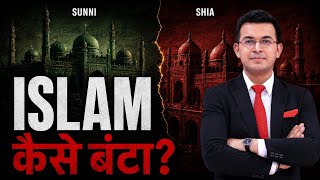

Why Muslims Mourn in the Streets
60sThis visually striking and culturally provocative opening immediately grabs attention with a common sight (processions) and poses a question that sparks curiosity.
▶ Play Clip"Delivers a detailed historical account as promised, but includes a lengthy subscription plea and some dramatization."
This video by Shubhankar Mishra explores the historical split between Shia and Sunni Islam, focusing on the Battle of Karbala. It details the events leading up to the battle, the key figures involved, and the lasting impact on the Muslim world. The video aims to present a factual account based on historical sources, without taking sides.
Every year, some Muslims participate in a procession, wearing black, barefoot, and self-flagellating, mourning the death of a man 1400 years ago. This is not a universal Muslim practice, raising the question of which Muslims participate.
In 680 AD, in a desert in Iraq, 72 people faced the army of an entire Sultanate. The war lasted one day, and all 72 were killed. Despite being a complete defeat, it is mourned by millions today.
All men of the Prophet's family were killed except one, who survived due to fever. The story of the losers was written by a woman in chains, Zainab, whose story is bigger than the war itself.
On March 16, 632, Prophet Muhammad raised Ali's hand and said, 'For whomever I am Maula, Ali is also his Maula.' The dispute over the meaning of 'Maula' (leader vs. friend) is the root of the Shia-Sunni split.
After Prophet Muhammad's death on June 8, 632, the question of who should lead the community arose. One group wanted Ali, the Prophet's cousin and son-in-law, while another wanted a capable person chosen by the community. This led to the first Caliph, Abu Bakr, being chosen.
In 656, Caliph Usman was murdered, and Ali became Caliph. Muawiya, the governor of Syria, demanded justice for Usman, leading to the first Muslim civil war (Fitna), including the Battle of the Camel against Ayesha and the Battle of Siffin against Muawiya.
In 661, Ali was assassinated by a Kharijite, a former follower who turned against him. This deepened the divide.
Ali's son Hasan made a treaty with Muawiya, giving up the throne on the condition that Muawiya would not appoint his son as successor. Muawiya broke this promise by appointing his son Yazid.
After Muawiya's death in 680, Yazid demanded allegiance from Imam Hussain, who refused, seeing Yazid as unjust and unreligious. Hussain left Medina for Mecca to avoid bloodshed.
The people of Kufa, supporters of Ali, sent thousands of letters to Hussain, inviting him to come and lead them against Yazid. Hussain sent his cousin Muslim ibn Aqeel to assess the situation, who reported that Kufa was ready.
Yazid appointed a cruel governor, Ubaidullah ibn Ziyad, who instilled fear in Kufa, causing the people to abandon Hussain. Muslim ibn Aqeel was caught and killed.
Hussain's caravan was blocked by Hur's army. They were forced to stop at Karbala, a dry desert near the Euphrates River. On the 7th of Muharram, water was cut off, and for three days, the camp suffered without water.
On the 9th night, Hussain gave his companions the choice to leave, but none did. On the 10th of Muharram, Hur switched sides, choosing heaven over hell, and was among the first martyrs.
Hussain's final plea to the enemy army was ignored. The battle began, and all 72 men were killed, including Hussain's sons, brothers, and nephews. His six-month-old son, Ali Asghar, was killed by an arrow.
Hussain's young son, Zainul Abedin, survived because he was sick with fever and could not fight. His lineage continued the Prophet's family line.
The survivors, including Zainab, Hussain's sister, were taken prisoner to Damascus. Zainab gave a powerful speech in Yazid's court, challenging his rule and ensuring the memory of Karbala would not be erased.
Yazid died three years later. Rebellions broke out, and those responsible for Karbala were killed. The memory of Hussain turned into a ritual of mourning, with Tazia processions and chest-beating on Ashura.
Sunnis also respect Hussain but differ in how they mourn. Many fast on Ashura instead of self-flagellation, which they consider against religion. They also have different views on Yazid and Muawiya.
The claim of 1 lakh soldiers is disputed. Reliable sources like Al-Tabari mention around 4,000. The number of Hussain's companions is also debated, but the oppression is not measured by numbers.
Today, about 10-20% of Muslims are Shia. Iran is the largest Shia country, and Iraq has a Shia majority. The political tensions between Iran and Saudi Arabia are rooted in this historical divide.
The army that killed Hussain came from Kufa, the same people who invited him. This betrayal led to the Tawwabin movement, where thousands of Kufans repented and fought Yazid's army, almost all dying.
The story of Karbala is a powerful reminder of the consequences of betrayal and the enduring impact of a single day's events. It highlights the deep historical roots of the Shia-Sunni divide and the importance of remembering and learning from history.
What was the name of the event where Prophet Muhammad said 'For whomever I am Maula, Ali is also his Maula'?
Ghadir Khumm
05:32
Who was the first Caliph of Islam?
Abu Bakr
09:11
What was the name of the battle where Ayesha fought against Ali?
Battle of the Camel
10:21
Who assassinated Ali?
A Kharijite
11:50
What was the condition of Hasan's peace treaty with Muawiya?
Muawiya would not appoint his son as successor.
13:05
Why did Imam Hussain leave Medina for Mecca?
To avoid bloodshed, as shedding blood in Mecca is considered haram.
15:20
Who was the governor of Kufa who cut off water to Hussain's camp?
Ubaidullah ibn Ziyad
17:16
How many people were with Imam Hussain at Karbala?
72
20:50
Who was the commander who switched sides to join Hussain?
Hur
21:05
What was the name of Hussain's six-month-old son who was killed?
Ali Asghar
23:28
Who survived the battle due to fever?
Zainul Abedin
24:10
What is the name of the 40th day of mourning after Ashura?
Arbaeen
27:45
According to Al-Tabari, how many soldiers were in Yazid's army at Karbala?
Around 4,000
29:28
What is the term for the group of Kufans who repented and fought Yazid's army?
Tawwabin
31:40
The Survivor and the Storyteller
Highlights the role of Zainab in preserving the story of Karbala, emphasizing the power of narrative.
02:27The Origin: Ghadir Khumm
Identifies the exact event and word ('Maula') that sparked the Shia-Sunni split.
05:32The Night of Ashura
Shows Hussain's leadership and the loyalty of his companions, a key moment in Shia tradition.
20:36Zainab's Stand
Demonstrates the moral victory of Zainab over Yazid, a powerful example of courage.
25:03The Guilt of Kufa
Reveals the betrayal by the people of Kufa, adding a layer of tragedy and moral lesson.
31:15[00:03] Every year a procession of some Muslims passes through your street. who wears black clothes, is barefoot and is seen hitting himself with chains. and is seen hitting himself with chains.
[00:17] these Muslims are crying for the man who has been dead for 1400 years. Due to which the grave is 3000 kilometers away from India.
[00:29] But not all of them are Muslims. Because not every Muslim is a part of this gathering. And then the question comes to mind that which Muslims are part of this procession? Which ones are not? History always belongs to the victors. It is
[00:44] History always belongs to the victors. It is said so. But today, this procession is taken out in many parts of the world including India on the passing of a person 1400 years ago. His story is about a war whose history was
[01:00] story is about a war whose history was written by the losers. That year was 680. A deserted field in Iraq where on one side there were 72 people and on the other side there was the army of an entire Sultanate. There was other side there was the army of an entire Sultanate. There was a river in the middle whose water had stopped for three days. The
[01:14] war lasted only one day. By evening all 72 people were killed. If we look at it from the perspective of war, it was a complete defeat. But after 1400 years, no But after 1400 years, no
[01:29] any Muslim loses the war, crores of people take to the streets to mourn the loss of those who lose. Now the question is what was that defeat which
[01:41] became bigger than the victory? What was that war which And I hear a claim that 72 people fought against 1 lakh people. Is that true or do historical
[01:56] books say something else? Who was that commander of that war who left the side of the victors on the morning of the battle and stood there where death was certain? And did where death was certain? And did this slogan originate from there that
[02:10] death with dignity is better than a life of humiliation. And the biggest question is that when every man who took up the sword in the battlefield was killed, then who wrote this story of the losers? [sound of crying] The answer comes from a woman in chains, and that woman's
[02:27] and that woman's story is bigger than this war. story is bigger than this war. Another interesting part is did you know that in Another interesting part is did you know that in that entire massacre all the men of the Prophet's entire family were
[02:39] that entire massacre all the men of the Prophet's entire family were killed. Only one young man was left alive. And what was left was not saved by the sword. The shield did not save him. He was saved by fever. Now the question is how can fever save someone's life
[02:54] ? I will understand today. Today we will know about the Tazia procession that takes place in Muharram, the mourning that takes place, the fight between Shia and Sunni that you have been hearing about. What is the story behind these? How Islam, one of the world's largest religions, split into Shia and Sunni. Today we
[03:13] will understand this story in detail and to understand this story you will have to understand Karbala. you will have to understand Karbala. from beginning to end we will not take anyone's side in this story. He will only tell you what
[03:26] is recorded in the pages of history and whatever is recorded, he will present it before you with proof. We have given the link of the book or document from which we have taken every major claim of this video
[03:40] question on the intention. Because this topic is very sensitive. He is very very sensitive. And many believed that it was
[03:52] not right for Shubhankar Mishra to make a video on this topic. But we felt that information is never bad and there is that information is never bad and there is only one version of the truth. You have to think about lies. What do you have to think about to tell the truth? Therefore, today
[04:05] we will present before you the truth about how Shia and Sunni Islam got divided. that whatever names will appear in this story like Mohammad Sahib, Ali,
[04:18] Hasan, Hussain, Muslims respect them and Muslims respect them and But for the sake of the story, I will mention the name later. But you should consider respect included with every name.
[04:37] But you should consider respect included with every name. not questioned. Hello, I am Shubhankar Mishra and let's start this story. because we are making this video on a very sensitive topic with very detailed research.
[04:52] with very detailed research. you to show some respect to our hard work and please pause our channel for a minute and subscribe. We would be happy. This will be a gift from you to us. Secondly, if
[05:06] possible, please join our WhatsApp channel so that you and I can strengthen our relationship and in future also, when we make videos on such sensitive issues, the videos should reach your WhatsApp so that you do not have to search for them or they may appear in the feed if
[05:19] such a situation arises. So we can make our relationship a little better. This is a request to you. There is no compulsion. If you wish, please thank us for our hard work. If not, then it doesn't matter. We begin the story.
[05:32] matter. We begin the story. And to understand this story, we will have to go back a little from the death of the Prophet. A little from the death of the Prophet. A place whose name you may not have heard. But on
[05:47] which the biggest debate still remains even today. Name Gadir Kham on 16 March 632. Prophet Muhammad was returning to Medina from his last Hajj pilgrimage. There
[06:03] went in different directions. That is, the place where people had to be separated. It was here that the Prophet, in where people had to be separated. It was here that the Prophet, in front of thousands of people, raised the hand of Ali, whom you also call Hazrat Ali, and said something which is repeated till today that for the one whose
[06:19] said something which is repeated till today that for the one whose Maula I am, Ali is also his Maula. Now here the whole page is in this one word. Maula is an Arabic word which has many meanings. It also means boss and leader. He is also a friend and his own man. And
[06:36] from here two paths branch out. That is, he was saying that those who consider Ali as their leader say that on this day the Prophet had clearly announced that after me, Ali will be the leader of the community. Hazrat
[06:48] that after me, Ali will be the leader of the community. Hazrat Ali, they still celebrate this day as Eid-e-Ghadir. Ali, they still celebrate this day as Eid-e-Ghadir. And people on the other side say that Maula here does not mean leader, he wanted to tell that he is my
[07:02] dear one, he is my own. It was an expression of praise and love for Ali. There was no question of handing over the throne. Now let me make one thing clear here so that no one misunderstands. Both sides accept this incident. It is recorded in the books of both. The fight is
[07:18] not about the incident at all. The dispute is only about the meaning of that one word, whether the word Maula which was quoted was for a leader or for a dear friend. And this was the question that arose for the first time that
[07:32] who would take over the command of the community after the Prophet, which later became a deep chasm. The gap became apparent when the Prophet left this world after a few weeks. Now the
[07:44] Prophet left this world after a few weeks. Now the story progressed from here. From 8 June 632. On that day, the last prophet of Islam, Muhammad Sahib, bids farewell to the world in the city of Medina. As soon as he left, a question arose before the Muslims whose answer has
[07:59] not been found even after 1400 years. The question is who will lead the community now? That means who will become the Caliph? Caliph means the biggest leader of the Muslims who takes care of the religion as well as the Sultanate. People were divided on this question. One section said that leadership should
[08:13] remain within the Prophet's own family. And the most appropriate name for him was Ali, whom the world today knows as Hazrat Ali or Imam Ali. And further we are telling you again that when we take the name, you should understand the respect yourself. So Ali means the cousin of the Prophet
[08:28] and the husband of his daughter Fatima, meaning the man of the house. Grew up with the Prophet since childhood and was close to his heart. The other section used to say that this is not a family matter. The community itself has to decide who will be the leader. The one who is most capable will become it. Those who
[08:43] stood in support of Hazrat Ali later came to be known as Shias. The full name is Shiyan-e-Ali, meaning the party of Ali, and those who follow the path chosen by the community are called Sunnis, meaning those who follow the Sunnah of the Prophet and the ways shown by him. To put it simply, the fight was the same one that is seen even today
[08:59] in every shop, every farm, every company. The throne should go to the man of the house or someone who is more throne should go to the man of the house or someone who is more capable. At that time the victory was capable. At that time the victory was of the Sunni people. Abu Bakr became the first Caliph,
[09:11] followed by Umar and the third was Usman. Now these three were the closest companions of the Prophet. But these were not from the house. He was from outside the family. And Ali, whom you call Hazrat Ali, was left behind. And Ali, whom you call Hazrat Ali, was left behind.
[09:27] in the year 656, an incident occurred that changed everything, shook it all up. Caliph Usman was murdered in his own house. The killers were not external enemies. He belonged to the same community. Angry Muslims who were unhappy with Usman's actions.
[09:43] After this murder, Ali finally becomes the Caliph. The same Ali whose name was famous 24 years ago. But the throne was found when the house caught fire. Meanwhile, Syria's governor, Muawiya, who was
[09:56] also a relative of Usman, insisted that Usman's killers should be punished first. Then I will accept you as Caliph. Here the matter goes beyond words. Swords are drawn and Muslims begin fighting each other for the first time. These battles are
[10:09] called Fitna in history. Meaning the war inside the house. In one battle, Prophet Sahib's widow Ayesha herself comes into the field against Ali. This battle was called the Battle of the Camel.
[10:21] Because here Ayesha ji was present in the middle of the fight sitting on a camel. Now understand one more thing here. For Ayesha ji, the fight was not for the throne. His only demand was that he should
[10:33] punish the murderers of Usman ji. And now in the riwayat, that is, in the old books and stories passed down from generations, it is mentioned that later it is mentioned that later he deeply regretted this war. Well,
[10:48] here Hazrat Ali wins that war and then it is Muawiya's turn. The armies of both sides clash at a place called Siffin. The fight goes on for months. Thousands of dead bodies and still no decision is taken. Ultimately it was decided to leave the sword and resolve the matter through talks
[11:02] and this decision broke Ali Saheb from within. Because a part of his own army was so angry with this conversation that it left Ali Saheb and went away. Those who left are called Kharijī. Meaning those who are leaving. His thinking was that the decision is
[11:18] only of God. Not of the human panchayat. And due to this fanaticism he considered both Ali and Muawiya as his enemies. That is, on one side was Muawiya's army, on the other side was Ali Sahib's old soldiers who were now thirsty for his blood and with every battle, the
[11:33] hold of Hazrat Ali became much weaker. After this, in the year 661, something happened which inflicted the first deep wound in the hearts of the lovers of Hazrat Ali. In the mosque of the city of Kufa, for those who do not know about Kufa, let us tell you that today it is a city in Iraq which was the
[11:50] tell you that today it is a city in Iraq which was the capital of Ali Sahib at that time and when he reached for the prayer early in the morning, there an attacker attacked him, the one who attacked him with the sword was none other than him. He was one of those Kharijis who had once
[12:06] fought in his own army. The struggle between life and death continues for two days and after that Ali Saheb dies. He departs from the world. That means the man who was considered to be the virus of the Prophet's house,
[12:20] considered to be the virus of the Prophet's house, whom the Prophet himself had said was very close to him, was killed not by any stranger but by his own people. And the question of the throne was again open. On one side were the sons of Hazrat Ali. On the other hand, Muawiya,
[12:36] who was now standing with the entire military power of Syria, and here the elder son of Hazrat Ali, who is called Imam Hasan, took a decision which no one had expected. Instead of fighting, he left the throne. But before leaving, an agreement was made in which
[12:52] before leaving, an agreement was made in which something was written which decides the entire story of the future, the entire bloodshed of Karbala, that if it is broken then something like this will happen and this is what happened. Now the question is what was that promise whose breaking laid the foundation of Karbala
[13:05] whose breaking laid the foundation of Karbala ? So the year was 661 in which an agreement was reached between Hasan and Muawiya and its terms are recorded as follows in the old books. Hasan said that I am giving you the throne so that the bloodshed of the community stops. But there
[13:19] is a condition. The first condition is that you will rule with justice. The second biggest condition is that you will not hand over the throne to your son after you. The right to choose the next leader will go back to the community. Muawiya accepted the conditions and became the Caliph. Hasan left everything and returned to Medina. There was
[13:33] peace for about 10 years. But then Hasan Sahib dies in the year 670. Shiva traditions say that he was poisoned. However, historians are [nasal sound] But after his departure, the leadership of the Prophet's family
[13:48] passed to his younger brother, whom you know as Imam Hussain. The same Hussain Sahib whom the world introduced as Imam Hussain and whose name is still mourned today. He was the grandson of the Prophet, i.e. the son of his daughter Fatima ji. Now it is said
[14:04] that Prophet Sahib once carried him around on his shoulders. But then in the year 676, Muawiya did what was against the promise. He announced that after me my son Yazid will become the Caliph. This thing had never happened before in Islam that the son came after the father. The
[14:19] turban which was till now tied by the Panchayat was lifted and placed directly on the throne. The position of Caliph was transformed into a monarchy in one stroke. Many big people became against this decision. The biggest name among them was that of Imam Hussain. Muawiyah died in April 680.
[14:33] And old historians write that before dying he had explained to his son that you should deal with this Hussain carefully. Do not shed their blood because they are the grandsons of the Prophet. But Yazid, who ascended the throne, did this as the first thing he did after assuming the throne.
[14:48] Sent a message to Medina that my allegiance should be taken from Hussain. Now Bait means oath of loyalty. Confess with folded hands that you are my Caliph. Hussain Saheb flatly refused. In his eyes, Yazid was neither unjust nor religious. Much more stories of his drinking and debauchery
[15:04] was neither unjust nor religious. Much more stories of his drinking and debauchery came later. However, this mention is from later books. But one thing is certain that even the early history says that they did not have much respect in their community. One thing about Imam Hussain
[15:20] comes up again and again in the traditions that no one like me can pledge allegiance to someone like Yazid. And that very night Hussain Sahib leaves Medina with his family and goes to Mecca. Why did you go to Mecca? There is a story behind this too because shedding blood inside Mecca is considered haram
[15:35] shedding blood inside Mecca is considered haram and here he was completely safe. Now let's come back to Kufa in the story. The city where Hazrat Ali was killed. And where the admirers of Hazrat Ali were present in every house. The people of Kufa started sending letters to Imam Hussain.
[15:50] According to the traditions, thousands of letters were sent and in all of them the same appeal was made that you should come, you should come back. We are fed up with Yazid. We will fight for you. Here Hussain Saheb did not say yes directly. First he sent his cousin Muslim
[16:05] his cousin Muslim Ibr Aqeel to Kufa to assess the situation. There was good news initially. Thousands of people said that the oath of allegiance in the name of Hussain was taken on the hand of Ibr name of Hussain was taken on the hand of Ibr and Ibr wrote a letter saying come, Kufa
[16:18] is ready and this was the letter which put Hussain on the path of the desert. Many elders in Mecca tried to convince him that the people of Kufa had betrayed his father. Betrayed your brother. Someone said that if you have to go then please do
[16:32] not take women and children with you. But Hussain Sahib, whom you call Imam Hussain, did not stop and in September 680, he left Mecca with his family and companions. There were
[16:44] around 50 people in total, including women and small children. While he was going, he met a famous poet on the way who was returning from the cave, his name was Farazdak. Hussain Saheb asked Farzadak, Farzadak, what is the condition of the city behind? And Farazdak
[17:00] said in response that line which became immortal in history. He said that the hearts of the people are with you , but the swords are with the family of Yazid. And this one line was the revelation of the entire story ahead. But Hussain Saheb still kept moving forward. Meanwhile, the game had changed in Kufa.
[17:16] Yazid appointed a new governor there named Ubaidullah Ibrij Ziyad who was notorious for his cruelty. He created such fear in the city that the streets which used to echo with the name of Hussain Saheb, started having their doors closed as soon as the evening fell. And thousands of people who had taken
[17:33] Bai'at entered their homes one by one. Ibr was left alone, caught, Ibr was left alone, caught, and killed. Imam Hussain got this news on the way. The companions folded their hands and said, Imam Sahib, please return.
[17:46] Kufa is dead. But Imam Hussain did not change his path and then a military contingent blocked his way in the middle of the desert. Now the group that blocked the way here. name of this commander was Hur. Because further in this story, this same hero will do something which no
[18:01] one could even think of at that time. And from here begins the story of Karbala, from here begins the story of Karbala, those eight days of Karbala, about which you will be curious to know what happened. So it is said that Hur came with about 1000 companions to
[18:16] block the path of Imam Hussain. And here in the old books we find a strange story. Hur's army was suffering from thirst in the desert. But Imam Hussain suffering from thirst in the desert. But Imam Hussain
[18:31] [nasal sound] neither allowed Imam Hussain to go to Kufa nor return to Medina. The bus continued moving with the convoy. And here's one thing you might not know. You have been hearing the name of Muharram since childhood. But Muharram is not the name of any grief or incident.
[18:46] This is the name of the month. The first month of the Islamic calendar. Like our Chaitra or Sawan among Hindus. Same thing happens among Muslims. The grief is
[18:59] associated with dates beyond this month. So finally, on the second day of the month of Muharram, the caravan of Imam Hussain was stopped in a dry, deserted field. There was a river here whose name was Euphrates. There was a field a little distance away from the Euphrates River whose
[19:12] name was Karbala. And the very next day the real army arrives there from Kufa. The commander of this army was Umar Ibrad and according to historians, he had about 4000 soldiers.
[19:24] Meaning, there were more than 55 soldiers in front of every man of Imam Hussain. The talks continued for several days. Imam Hussain said that you should let me return or let me go to some distant border area. But Governor Ibr Ziyad had one condition that you should pledge allegiance to Yazid, who is our king.
[19:40] After that we will talk to you. Then on the seventh of Muharram, the order came which is the most cruel part of this whole story. Ibr Ziyad sent an order to stop water supply to Imam Hussain's camp. Not a single drop of water reached. There was a lot of water in the Murat River
[19:54] but the water was not being sent and an army of horsemen was deployed on the river bank. Now understand the situation. The month of October is the scorching land of the Iraqi desert and the camp consists not only of young men but also of women,
[20:08] old people and children. No one was given a drop of water for three days. Now you think what would happen if there is no water in our house for a day and this continued there for three days. And if you go to drink water, there is a soldier standing there with a sword. Now
[20:22] this is the place where Imam Hussain had given water to the thirsty soldiers of the army in the desert. Hussain had given water to the thirsty soldiers of the army in the desert. ninth night of Muharram, the army started preparations for war and on the same night Imam Hussain
[20:36] gathered his companions and said something which was recorded in history. He said this army only wants to kill me. It has no force on any of you. Whoever wants to go can go in the darkness of the night. I won't mind. The tradition is that
[20:50] he even extinguished the lamps so that the people passing by would not feel embarrassed. But when the lights returned, no one left. In total there were 72 people there, including many old people, and everyone said that they would stay. Then, on the morning of the 10th of Muharram, i.e., October 10, 680,
[21:05] just before the battle began, the most surprising twist in the story occurs. The same Hur who first blocked the path of Imam Hussain. He took his horse away from Yazid's army and brought it towards a camp of Imam Hussain. He bowed his head and apologized. Traditions say that
[21:21] this line came out of his tongue that between heaven and hell, I choose heaven. hell, I choose heaven. Leaving the side where the honour and reward were certain, Hur joined the convoy of martyrdom and according to the traditions,
[21:35] Hur was among the first martyrs of that day. Before the battle, Imam Hussain himself sat on a horse and came close to the opposing army and asked for the last time whether it was you who had called me by writing a letter. And am I not the son of your prophet's daughter ? Tell me my fault or let me go back. It is
[21:53] said in old stories that many people from the army started crying after hearing this but no one changed sides. And on the same morning Imam Hussain also said the line which is repeated in every gathering today that death with honour is better than life with humiliation.
[22:07] As per the old tradition, a face to face fight took place. And then everyone was killed one by one. The army broke the tradition. Attacked with a shower of arrows.
[22:19] Many elders who were sitting with the Prophet himself were also killed. Imam Hussain's young son Ali Akbar was also killed. It is said that his face resembled that of the Prophet and Imam Hussain was heartbroken after seeing him going to the battlefield. Hasan's young son, Qasim, was also killed in the same field. The
[22:33] young son, Qasim, was also killed in the same field. The same Qasim whose name is still mentioned in gatherings with tears. Now, one very important thing here is that the names which we are presenting before you are the names which the Muslim community takes with great respect.
[22:47] Calling themselves Imam and Hazrat, all of them were members of the same family. Some of the Prophet's family members were fathers, sons, brothers, nephews, all of them were killed. Hussain Saheb
[23:01] 's brother Abbas who used to carry the flag of the convoy. that he went to the river to fetch water for the children and brought a 'Mashak' (a leather bag for carrying water).
[23:14] He filled it too. While returning, he was also surrounded and killed. he was also surrounded and killed. That water bag was also pierced by arrows. The most painful mention in Shia traditions is that of six-month-old Ali Asghar. Imam Hussain
[23:28] six-month-old Ali Asghar. Imam Hussain least give it water. And in response came an arrow. You think about it. Well, by the end of the afternoon, Imam Hussain was left alone.
[23:44] Tired, hungry, thirsty, wounded, and then they were attacked from all sides. His head was separated from his body. If you want to know the names of those who separated his head from his body, then
[23:56] If you want to know the names of those who separated his head from his body, then And historians are still divided on this. Now there was no one left in the camp to pick up a sword.
[24:10] Only women were left. The children were left and a young son of Imam Hussain was lying in bed with fever. and a young son of Imam Hussain was lying in bed with fever.
[24:23] now remember we told you in the beginning how can fever save someone's life how can fever save someone's life ? This is his answer. That day his illness became his shield. He was not fit to fight so he survived. Watch the play of history.
[24:37] Later, the entire lineage of the Prophet's family descended from this one surviving sick child. That means if he hadn't had a fever that afternoon, this sequence might have ended there. Because Karbala did not actually end that day. It started that day. The
[24:51] started that day. The one-day battle remained alive for 1400 years. However, there is another side to this. After the battle, Imam Hussain's tents were set on fire. The survivors were taken prisoner, first to Kufa and later to
[25:03] Damascus. Straight to the court of Yazid. The severed heads of the martyrs were first cut with spears, then pierced with spears and hung on the spears and
[25:15] taken along with the convoy and from here a real character of this story comes forward, Zainab, the sister of Imam Hussain, daughter of Ali and Fatima, i.e. granddaughter of the Prophet. A captive woman chained and then to the market of Damascus
[25:31] where the chieftains of the Sultanate were sitting on silken cushions. A woman in chains stood in front. A woman in chains stood in front. Zainab still reads and recites the speeches he gave even after 14 years. In her speech recorded in the traditions, she
[25:45] stands right in front of Yazid and says that you can play whatever trick you want. Our memory will not be erased from this world. Just imagine, the person whose brother, son and nephew were murdered in one afternoon and who herself is standing in chains is challenging the same king.
[26:03] Yazid won with the sword in Karbala but Zainab won in the story. And today see the account, people shy away from the name of Yazid And today see the account, people shy away from the name of Yazid
[26:16] think about. The people sitting in the court started changing their minds and the news started spreading from city to city. Ultimately the prisoners had to be released and sent to Medina. Throughout the journey and after reaching Medina, Zainab and Imam Hussain's surviving son
[26:31] Zainul Abedin narrated the story from house to house. And this process of telling stories later became a gathering. That is, those gatherings in which even today the story of Karbala is narrated every Muharram story of Karbala is narrated every Muharram and the listeners cry. The
[26:45] martyrdom of Imam Hussain became a thorn in the side of Yazid's rule and Yazid himself died just three years after Karbala. Could n't even see the age of 40. Then rebellions broke out at many places. Within a few years, a man named Mukhtar rose up in Kufa and
[27:01] avenged Karbala, and those responsible for Karbala, from Umar Ibn Saad to Ibrziad, were killed one by one. The rule of Yazid's family continued but the stain of Karbala stuck to his name so much that within 70 years his entire kingdom was destroyed. The
[27:16] uprooters used to shout the slogan that we are taking revenge for the Prophet's family. On the other hand, the memory of Imam Hussain gradually turned into a ritual. 10th day of Muharram which is called Ashura. It became a day of mourning. In India, the Tazia's own attire was added to it. Tazia means a
[27:32] decorated structure in imitation of the tomb of Imam Hussain which is taken out in procession and finally buried. Somewhere people beat their chests. Somewhere there is mourning of chains. Somewhere there were just black clothes and silent processions. Whatever the method, everyone's aim is that that
[27:45] one day will not be forgotten. Also see the date of this memory. The 40th day of the martyrdom of Imam Hussain is called Arban. And on that day people from all over the world walk hundreds of kilometers to reach Karbala. The count is in crores only. At the grave of the man
[28:01] who had only 72 people standing with him to die. The field of Karbala in which Imam Hussain was not given even a drop of water. Today, every few steps on the same path, people are seen offering free food and water. Now a question should arise in your mind that if Karbala
[28:15] was such a big injustice then why don't all the Muslims mourn ? Which we mentioned in the beginning. ? Which we mentioned in the beginning. other side opens up. The least told part of this story. First of all, Imam
[28:29] Sunni Muslims also remember him with equal love and most Sunni scholars also acknowledge the atrocities of Karbala. The difference is how to remember that day. In Sunni thinking, beating one's chest and inflicting pain on oneself is considered against the religion.
[28:43] Therefore, many Sunnis do not mourn on the day of Ashura but fast. Opinions are divided on this victory also. Some Sunni scholars, i.e. those who know the religion, openly call him a tyrant, while some say that he did not give a direct order for murder. This was the handiwork of their governor Ibr Ziyad
[28:58] and this debate [music] has been going on for 1400 years. Muawiya is also not shown as a villain in the eyes of Sunnis. He was one of the companions of the Prophet and Sunnis believe that it is not permissible in religion to speak ill of any companion. Therefore, many Sunni scholars
[29:14] Therefore, many Sunni scholars or not. The dispute is about how he should be remembered.
[29:28] Who should be held responsible for this? Secondly, that figure of 1 lakh. Old and reliable sources such as Al-Tabari's Tarikh, which is considered one of the oldest and largest books on Islamic history, mention Yazid's army as numbering around 4,000. Later Sunni historians such
[29:43] as Ibr Kathir also repeat more or less the same count. The number 1 lakh kept increasing in later stories number 1 lakh kept increasing in later stories and the same applies to the details of the war. Be it Ali Asghar's arrow or Abbas's waterskin, these details are mostly
[29:57] found in Shia books. That's why I addressed it there as a tradition. The is also famous in the traditions as 72. Whereas historians believe it to be between 70 and 100. But there is one thing to understand here. The weight of oppression cannot be measured by counting. 4000 men in front of 72 men
[30:14] were equally big mountains and whether it is an army of 4000 or 1 lakh men stopping water from thirsty children, it is equal to oppression. Today, out of every 10 Muslims in the world, about one or two are Shia. Iran is the largest Shia country in the world. In Iraq too, more than half the people are Shia and
[30:29] most of the other Gulf countries are under Sunni rule. The tension between Iran and Saudi Arabia that you see in the news. The wars that go on from Yemen to Lebanon involve oil, politics and power. But behind all this, the
[30:44] oldest line is that of Shia and Sunni. That means what happened in the corner of the desert 1400 years ago is still changing on the map. One thing is clear that the sects named Shia and Sunni were not born from Karbala and existed before. After Karbala, the difference was not just of opinion. It turned into
[30:59] blood. But in this entire story, I had kept one thing hidden till now and that was the most hidden thing. The army of 4000 that stood in front of Imam Hussain in Karbala did not come from Syria. She came from Kufa. That means a large number of them were those people
[31:15] who had written thousands of letters to Imam Hussain a few weeks ago and invited him. Come, we will fight for you. Meaning, those who called were among those who killed. Someone was
[31:27] killed. Someone was greedy for the reward. Some were afraid of Ibr Ziyad, but the swords were in the hands of those who had written the letters and the burden of this never went away from the hearts of Kufa. Four years after the martyrdom of Imam Hussain,
[31:40] thousands of people from Kufa gathered at the grave of Hussain Sahib. They cried and apologized and then without any hope of victory, they set out to fight the army of Yazid's family and almost all of them were killed. The debts that could not be repaid while alive were repaid after death. History knows them as Tawwabin.
[31:58] Meaning those who repent, those who regret. So next time when the Muharram procession passes through your street, remember that that mourning is not just the grief of a martyrdom, it is also a warning. That fear has a price to pay for centuries, and that
[32:11] includes a 1400-year-old regret. The one from the city who invited the man he loved the most and then left him playing on the field. This was the story of the separation of Shia and Sunni. This was the story of Karbala. How did you like this story ? What facts about it surprised you
[32:28] ? What facts did you not know? Please tell us in the comment section. Even before the beginning of this story, we had said that many Muslims may not know all the facts. Muslims may not know all the facts.
[32:41] honestly write in the comment section that yes you did not know and tell us which facts you did not know. If you want to verify any fact, as we said in the beginning, we have given the link in the description. We have tried to
[32:53] include videos as well so that you can keep reading and writing. If you want to verify it separately, you can do it. Before leaving, if you liked our efforts then please join our channel. Please please join our channel. Please
[33:07] come on WhatsApp. I would personally be happy. Hello.



⚡ Saved you 0h 33m reading this? Transcribe any YouTube video for free — no signup needed.