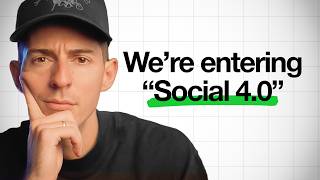

From Artist to Scientist: The Shift
60sReveals a controversial shift in content creation, sparking curiosity about data-driven strategies.
▶ Play Clip"Delivers on the promise of outlining major shifts, but padded with self-promotion and some repetition."
The video discusses ten major shifts in social media strategy, framed as pendulums swinging between opposing approaches. The creator predicts a move from artistic to scientific content creation, from individual to topic-based niches, and from brand accounts to creator-driven strategies, offering tactical advice for each shift.
The pendulum is swinging from an 'artist' approach (original, creative) to a 'scientist' approach (data-driven, engineered). This is enabled by for-you algorithms and AI workflows, allowing creators to test and iterate.
Shift from 'make and pray' to 'test and iterate'. Creators spend less time per video but intentionally test hooks and formats to find winners.
Pendulum moves from 'individual' (you are the niche) back to 'topic' (single-topic focus). Modern algorithms favor topic consistency for hyper-targeting.
Shift from 'mixed variety show' to 'singular TV series' format. Once a winning format is found, stick with it and triple down.
Pendulum currently at 'common' (convergence on few formats) but expected to swing back to 'unique' as saturation makes it hard to stand out. Use 'visual format inversion'.
Content length is diverging (short gets shorter, long gets longer), but visual switching pace is increasing. Reduce dead time, increase visual switches.
Shift from 'maximum viable editing' (flashy, chaotic) to 'minimum viable editing' (focus on hero visual, fewer bells and whistles).
Pendulum shifts from brand accounts to creator accounts. Brands will hire creators to post from personal accounts, not just brand accounts.
Shift from one account to multiple accounts (umbrella strategy). Brands run many creator-driven accounts funneling back to the brand.
Hybrid approach: top-down general (in-house team) plus bottoms-up army (external UGC creators/clippers). This '1+1' is the future.
The video concludes that social media is evolving through ten pendulum shifts across content strategy, editing, and brand social. To succeed, creators and brands should adopt a scientific, data-driven approach, focus on single topics and formats, and use a hybrid of in-house and external creator strategies.
What is the 'approach' pendulum in content strategy?
It swings from 'artist' (original, creative) to 'scientist' (data-driven, engineered).
01:31
What does 'test and iterate' mean in content creation?
Spending less time per video but intentionally testing hooks and formats to iterate toward winners.
03:14
Why is the 'you are the niche' concept considered foolish in the for-you era?
Modern algorithms hyper-target specific audiences based on topic consistency, so a single-topic focus performs better.
04:35
What is 'visual format inversion'?
Using proven storytelling frameworks but visualizing them with a unique visual format to stand out.
08:10
What is the predicted trend for visual pacing?
Faster visual switching, reducing dead time, while keeping verbal delivery clear.
09:44
What is 'minimum viable editing'?
Using fewer chaotic transitions and focusing more on the hero visual (A-roll or core B-roll).
12:13
What is the 'from who' pendulum in brand social?
It shifts from brand accounts posting to creator accounts posting, with brands hiring creators to post from personal accounts.
14:13
What is the 'umbrella' strategy for brand accounts?
Running multiple accounts by different creators that all funnel back to the brand.
15:33
What is the 'god mode' hybrid approach for brand social?
Combining an owned top-down general style (in-house team) with an external army of clippers and influencers.
16:56
Prediction: Social Engineers
Introduces the concept of 'social engineers' as a new specialization, a key insight for future content creation.
02:35Topic Consistency Wins
Explains why single-topic focus is crucial for modern algorithms, a practical tip for creators.
04:35Visual Format Inversion
Offers a specific strategy to stand out visually while using proven storytelling frameworks.
08:10Faster Visual Pacing
Highlights the trend of increasing visual switching to hold attention, a key editing insight.
09:44Hybrid Brand Strategy
Describes the optimal brand social approach combining in-house and external creators.
16:56[00:02] If you're a creator or a business owner, the old playbooks are starting to not work anymore. Now, here's the good news. If you can understand where the puck is actually going, you can win big. Because now there are a bunch of new ways to
[00:14] play the content game that weren't possible before. I know this because I content and marketing. I have a million followers. I've done billions of views. patterns that are not obvious to the average person that are massive
[00:28] opportunities. These are the 10 biggest shifts, really swings of the pendulum for where the content game is headed. And I'll give you the exact tactics for advantage of each one. All right. Now, the first big social media shift we're
[00:42] going to talk about is content strategy. Specifically, how are the top creators and brands changing their strategies based on the trends they're starting to of these trends, I'm going to try to
[00:54] pendulum because that's really what happens in culture and media. Things start one way, eventually they swing to the opposite side and then usually they understand where we're at and more importantly where the pendulum is
[01:07] swinging to next, you can skate to where the puck is going and be there when it arrives. So in this video, I'm going to break down the social media pendulums, specifically where we're at today and where the pendulums are headed in the
[01:19] future. Okay, so for the bucket of content strategy, there are really four components that are important to understand and those are approach, testing, niche, and formats. Each one of those is a separate pendulum that is
[01:31] swinging back and forth. And I'm going to explain all of them. So let's start with approach. And this describes how creators and brands will approach making content in the future. And here is the spectrum. On one side, you have art.
[01:43] Everything is original. The ideas are unique. The approach to ideiation is super creative. The execution is that of an artist or painter. And on the other side, you have science. Everything is remixed. The ideas are more based in
[01:56] data. The content is engineered. And the execution is more that of a scientist or data analyst. Now, from 2010ish to 2022, social media was very clearly in the era of the artist. So much so that the word creator is kind of synonymous with a
[02:11] creative or artistic person. But now we're starting to see the approach pendulum swing from artist to scientist. Now we're not all the way there. So if you're an artist type creator or brand, don't worry, you can still win. But now
[02:23] the door is open to approach social media like a scientist. And this means that creators and brands can now engineer winning videos by studying the data patterns and trends. And this is my big prediction for the future of social
[02:35] media. It's really the mega trend of this video. The word creator will now include a specialization of social engineers. And this new science-based approach to content is now possible because of for you algorithms and
[02:47] AIdriven content workflows. Essentially, people can now test new content ideas brand new account and hit the for you page. And if those new tests and the account, start a new one, and start fresh. And there is now finally enough
[03:02] data on which videos work best for people to start to see patterns and trends. So again, we are moving from artist to scientist on this first pendulum. The second piece in this content strategy bucket that I already
[03:14] alluded to is testing. And this goes handinhand with approach. The first one we talked about. The pendulum for testing is make and pray on one side and test and iterate on the other. Again, we are shifting from make and pray over to
[03:28] people are spending less time making each video, but they're intentionally testing certain hooks and visual formats to try to iterate their way to components of content strategy outside of approach and testing that I want to
[03:42] hit on are niche and formats. Each of those also has a pendulum worth studying that all kind of goes together into this content strategy bucket. Let's hit those quickly. For niche, the pendulum is individual on one side and topic on the
[03:55] other. And this one is really interesting. When we started in the known for topic specific strategies. That's where we were on the pendulum. It was so early that people treated social media like a topic focused blog. But
[04:08] from 2015 to 2022, we entered the universal personal brand where most of the content gurus said things like you are the niche, document your life, make content about anything you talk about, etc. And the pendulum shifted from topic
[04:22] to individual where the individual was the niche. And this worked really well in the pre4U era where content supply was severely lacking and all the content was only seen by people that followed you. But now we're shifting back on the
[04:35] pendulum from individual back to topic. I think the you are the niche concept was a good one in the previous era, but now in the for you era, it's foolish and modern algorithms have been updated to hyperarget match specific audiences and
[04:50] specific channels based on topic consistency. I've covered this in perform better quickly, just narrow the set of topics you talk about to a single one, and the modern algorithms will start pushing you harder. Okay, the
[05:03] pendulum set is format. And this one goes handinhand with niche. The sides of the pendulum for format would be mixed. We'll call this a variety show. And then singular. We'll call this series. In the individual niche era of you are the
[05:16] niche, not only were people making a lot of different topics, but they were making a lot of different formats on the same channel. This is mixed like a variety show. You might see vlogs, studio tours, voiceovers, green screen,
[05:29] the same account. But the future with where we're headed and where the pendulum is swinging is towards singular and a TV series. One format, one topic on one channel run like a TV show. Think about it. When you watch an NFL game,
[05:43] unexpectedly different format every single time you turned it on? Of course the set format that works, and you want them to keep running that over and over. It's the same thing with social media. Once you have a winning format, do not
[05:57] switch it until it stops working. You can start by running a mixed account to test and find a winner. But once you find that winner, you transition it to a singular focus and triple down. Like I said before, creators and brands in the
[06:09] accounts. Each one focused, single topic, single format. All right. Now, the second big bucket of shifts that I want to cover is editing, pacing, and visuals. And we've got three components here which each have their own pendulum.
[06:21] break those down. The pendulum for formats is common verse unique. And the question here really is this. Is the editing and the visual formatting of videos starting to converge on the same common set of visual formats or is it
[06:37] diverging around unique visual formats for every creator? Where exactly are we specific when I say visual formats, what I'm talking about is the hero visual, either the A-roll or the main B-roll and
[06:50] the layout for how it's presented in the video. Now, this pendulum, common versus interesting. As the content engineering process has started to begin over the last year, I've noticed a clear convergence on a few common visual
[07:03] People see winners and they copy those winners. So, this means the pendulum where we are today is much closer to the common visual format side. However, I expect we are going to hit the max threshold of common reduction and head
[07:17] back to unique visual formats over the next couple years. And if you've been this video, that's a bit counter to what you would predict. You'd think, if all the content, then all the content would end up looking the same, and that's what
[07:31] engineering, how are the visual and editing styles going to diverge to be more unique? That doesn't make any sense. Well, here's why. Once everything visually looks the same, it's going to be extremely difficult for people to cut
[07:44] equal and opposite reaction. When it gets difficult to cut through, people will seek an alternative to cut through better. In an era of fully compressed four to five different ones that are really common for everyone, the viewer
[07:57] will not be able to tell the difference between your content and anyone else's. you're really talking advanced mode is to use the proven storytelling frameworks, the way you tell the story, but visualize it with a unique visual
[08:10] format. I call this visual format inversion. And what I mean when I say unique visual format, changing the AI graphics, the branding, the colors, the visually about how you're presenting your core hero visuals, changing it so
[08:25] work because people cannot outrun their psychology on the storytelling, but they and gravitate towards something different visually. Now, a good example of someone who did this to prove my point is Chris Williamson on the Modern
[08:38] Wisdom podcast. He wasn't the first to create the storytelling format of long- form conversational podcasts. However, he was the first to do cinematic 4K movie like shots to change the visual expression. Now, on the visual pacing
[08:52] front, we have two sides of the pendulum, slow and fast. Are we getting slower with our editing pacing or are we getting faster? Where is the trend going? And this one is a bit tricky. Essentially, I see two types of content
[09:05] lengths emerging. Two types of content that we're seeing over and over. We have the shorter content which is getting shorter. That's the Dopamine Casino short form video feed. And then we have the longer content getting longer.
[09:17] 3-hour Joe Rogan podcast, 8 hour Kaisen streams. Even these types of medium form YouTube videos are getting longer. Mr. Beast's average video is up from 12 20 plus minutes. You're seeing these medium form extend, long form extend,
[09:32] short form compress. We're seeing a divergence in content length. End of the barbell. So for a sense of content length, there's actually two paths. But from a pacing perspective, where on the pendulum are we headed? Slower or
[09:44] faster? I think the answer is faster visual switching. Let me explain what a ton of videos on 2x speed for a long time? When you shift back to 1x speed, it feels way too slow, like you're watching in slow motion. Well, the truth
[09:57] is our brains preferred consumption speed is slowly drifting faster and faster and faster because of the Tik Tokification and clipification of means our brains get bored faster when the pacing is too slow. So, it's not
[10:11] that the verbal delivery of words in long form content or short form content that can get any faster. It's max peak. But the dead time in terms of wasted segments, zero visuals on the screen, no switching, that is going to go away.
[10:25] This is what I call visual switching or visual pacing. If you really watch and study these long form podcasts, even Joe Rogan or these Twitch streams, they are constantly switching camera angles and adding visuals on the screen. They're
[10:37] constantly switching the visuals. And I think this trend is going to continue. We are shifting towards from slow to fast visual pace switching. So, the content, you want to speak slow enough where every single word can be
[10:52] understood. you don't lose clarity, but increase the visual switch pacing, the visual pacing on screen so that you can hold attention better. These are two together to equal the editing. Now, the best way to tactically improve your
[11:05] visual pace switching cuz it's kind of a hard thing to focus on. Find a creator you like, download their video, upload it into Premiere Pro or another editing software, and make a cut every time they switch the visual. You can then measure
[11:17] switching. All right, the last component, the last pendulum in this visuals editing section is editing style. And the spectrum for editing style is minimum viable editing verse maximum viable editing. Now, when I say
[11:31] editing style, I'm talking about all the extra bells, whistles, graphics on top of the edit, on top of the core visuals. The visual format is the hero visuals pacing is how quickly you're switching on the screen. The editing style is
[11:46] everything else. sound effects, flashbangs, pop-ups, transitions, gifs, color pops, anything else you're adding on top, the icing. That's what editing spectrum for minimum viable editing versus maximum viable editing? Over the
[12:00] last few years, we've squarely been on the maximum viable editing train. editing. Literally fireworks in every trying to basically hook people on the dopamine release with so much on the
[12:13] screen. We are now shifting back to minimum viable editing. And shout out maximum viable editing. I really like this. Minimum viable editing means that people will use less and less crazy chaotic transitions and focus more and
[12:26] more on the hero visual. Whether that's the A-roll of the speaker or one core B-roll visual. So to me, in the editing, pacing, and visual zeitgeist, if you pendulums, here's where we're headed. This is the trend that's going to work
[12:39] better in the next couple years for hero visuals and layout. the format. We're headed towards common, this convergence on a couple formats that work. We're going to bounce off that and go back to unique. So, I think visual layouts or
[12:52] visual hero visuals being a little bit different is where we're headed on the unique side. On visual pacing, we are headed towards faster faster switching, that are still easy to understand. And on the editing style, all the bells and
[13:06] whistles, crazy transitions, we are headed towards minimum viable editing, less and less of that over time. If you optimize for these three things in your think your content will do better. All right, guys. I've got one more big
[13:19] over. And this one is about brand social, brand social strategies, and how brands are going to attack using social media. But before I go through it, I been a little bit nerdy on the nerdy side talking about content. If you like
[13:33] trying to get better at content, you kind of like finding the edges and where the opportunities are in social media, I built a free community for people just like you called Wavy World. We have 25,000 other entrepreneurs that are in
[13:46] whites space and help each other grow. And there's a ton of free trainings, need to get started with content. It's all in there, completely free. I've got an invite link for you below if you want to join. Okay, the final bucket of
[13:59] shifts to know is the brand social bucket. Specifically, these are going to cover how the future of brand social is going to change for companies and what a business or you plan to launch a brand in the future, these are going to help
[14:13] three components here as well. The first one is called from who. And specifically, this applies to who is actually posting the content. On one side of the spectrum, we have brand accounts with people from the brand like
[14:26] faceless people, the brand, big brother brand, posting the videos. And on the where you have individual faced creators posting the videos. Now, in the early weren't that many brand accounts that were active. So, almost all of the
[14:41] accounts were creator accounts. Then, we've had a long era where we shifted branded content were coming from the brand account, not a faced person. kind of like the collective brand house messaging. Well, lately in the last year
[14:55] or two, we've started to shift pretty heavily back from brands to creator everyone is that brands are starting to hire creators inhouse to post from the brand account. But what's not as obvious is that the pendulum is going to
[15:08] continue shifting towards the creator side where brands hire creators to post from creator accounts that are not as directly connected with the brand. And this leads to the second component of this brand social bucket, which is
[15:20] number of accounts. The spectrum for this one is one account on one side versus multiple accounts on another. Now, I talked about this a lot in a of brand social as having an umbrella of accounts, multiple accounts run by many
[15:33] different creators that all link together to funnel back to the brand. based on what we've said in this video, that umbrella is going to be engineered mean the brand is going to abandon aesthetics or creativity or brand
[15:48] are shifting from the brand account to the creator account and from one account to many accounts. Many accounts run by creators. That's the future of brand strategy. Now, to build on this, the third and final component, the third
[16:00] pendulums by now that I want to talk about is the approach to brand strategy. On one side, you have the top-down general, where maybe you believe there's but they're all going to be controlled inhouse by the brand. On the other side,
[16:14] you have the bottoms up army where the brand is only doing one thing, but they're really hiring and contracting an army of UGC creators outside of the traffic to the brand. Now, today, weirdly, we're at the bottoms up army
[16:28] side, but instead of UGC creators and clippers, really, brands are working outside in. That's this bottoms up piece. We are starting to shift to this top-down general approach. Brands are hiring social strategists, social
[16:41] scientists in house and creating this owned network of accounts inhouse. But I think the true god mode trend for where the best brands will land is right in the middle. An owned top-down general style with many accounts in an umbrella
[16:56] plus an army outside in of clippers and influencers that can drive traffic from the outside. This hybrid style oneplus 1 is where the future of brand social is we're splitting the pendulum in the middle on this one. All right, guys.
[17:09] That is all I've got for this video. As a summary, I went through 10 different pendulums or spectrums for how I see social media changing in the future, and to where the puck is going. We covered these three major buckets: content
[17:23] strategy, editing, visuals, and pacing, and brand social. And within those buckets, we covered 10 specific shifts. Here's a quick summary of how I would play each one. For content strategy, we covered approach, testing, niche, and
[17:35] formats. I see the pendulum shifting to a science-based approach with heavy testing where every account is focused on a single topic, single format. To creator or brand, you want to start building a system for making content
[17:47] that is more datadriven and focuses on that iterative testing a little bit more. I'm literally building Sandcastle.ai to be the tool to do this. running short form academy on the short form video side Instagram, Tik Tok,
[18:00] Facebook, LinkedIn so that you can learn the workflows and playbooks for how to editing visuals and pacing, we covered visual formats, pacing and editing style. And I see the pendulum switching to unique visual hero formats, faster
[18:14] visual switch pacing, and minimum viable editing styles. To build this into your to start learning how to figure out where the winning visual formats are and space looks like so you can create something a little bit more unique.
[18:28] graphics and visuals that are unique to you is a great way to do this. To you want to do is download a video that works, make slices everywhere they switch visuals, and try to train your eye to learn what optimal pacing looks
[18:42] social. The three components were from who, number of accounts, and general verse army. And where I see the pendulum lot of creator driven accounts.
[18:54] Creators, many accounts in-house, plus an army externally combining to drive you're a brand, the best way to really build this system is to find a creator somebody kind of like me who knows what they're talking about and would know how
[19:09] There are not a lot of people who know this stuff right now. So, if you can find one, I'd pay anything to get them in house. As always, guys, I'm trying to cheat codes to grow your business faster. By now, if you've watched, we
[19:22] doing is trying to give you the answers. So, if you like that, please subscribe to see from me in the next video. I'm trying to predict what you guys want. If video selection. As always, we'll see you guys on the next one. Peace.


⚡ Saved you 0h 19m reading this? Transcribe any YouTube video for free — no signup needed.