
AI Summary
SpaceX's Starship aims to dramatically reduce launch costs to under $100 per kilogram through rapid full reusability, but the heat shield remains a major engineering challenge. The video explores the economics, technical hurdles, and comparisons with historical rockets.
Chapters
SpaceX's long-term goal is to achieve launch costs below $100 per kilogram for Starship, which would revolutionize space access.
Flight 13 marked a milestone with S40 surviving splashdown, paving the way for catching Starship with Mechazilla.
Falcon 9's reusability lowered costs and increased launch frequency, but Starship aims for full reusability of both stages.
Musk stated that with immediate and complete reusability and local methane/oxygen production, costs could drop well below $100/kg.
A 100-ton Starship mission could cost around $10 million, compared to Falcon 9's $67 million per launch.
Historical heavy-lift rockets like Saturn V and SLS were expendable, making Starship's reusability a game-changer.
Rideshare missions on Starship could further reduce costs for small satellite operators.
Methane is cheap, burns cleanly, and can be produced on Mars, while stainless steel keeps construction costs low.
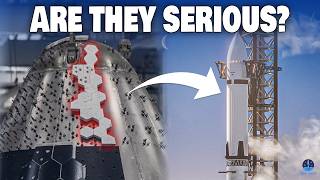
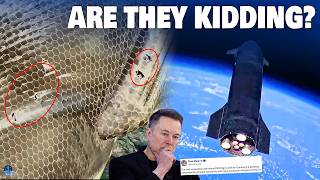
Flight 13 showed improved heat shield performance, but coolant leakage indicates gaps still allow hot plasma ingress.
Heat shield and orbital refueling are the two biggest technical hurdles for Starship's rapid reusability.
Mentioned in this Video
Study Flashcards (6)
What is SpaceX's long-term cost target per kilogram for Starship launches?
easy
Click to reveal answer
What is SpaceX's long-term cost target per kilogram for Starship launches?
Under $100 per kilogram.
00:21
What is the estimated cost per launch of NASA's Space Launch System (SLS)?
medium
Click to reveal answer
What is the estimated cost per launch of NASA's Space Launch System (SLS)?
Approximately $2.5 billion per launch, excluding the Orion spacecraft.
02:03
What material did SpaceX choose for Starship's construction to keep costs low?
easy
Click to reveal answer
What material did SpaceX choose for Starship's construction to keep costs low?
Stainless steel.
09:10
What propellant combination does Starship use, and why is it cost-effective?
medium
Click to reveal answer
What propellant combination does Starship use, and why is it cost-effective?
Liquid methane and liquid oxygen.
08:43
What are the two biggest technical hurdles for Starship according to Elon Musk?
hard
Click to reveal answer
What are the two biggest technical hurdles for Starship according to Elon Musk?
The heat shield and orbital refueling.
11:20
What issue was still evident with S40's heat shield after Flight 13?
hard
Click to reveal answer
What issue was still evident with S40's heat shield after Flight 13?
Coolant leakage, suggesting re-entry heat is finding its way through small gaps between tiles.
10:08
💡 Key Takeaways
Starship's Cost Target
Sets a revolutionary benchmark for space access costs.
00:21Falcon 9 as Practice
Explains SpaceX's iterative approach to reusability.
03:00Methane Fuel Strategy
Highlights the economic and planetary advantages of methane propellant.
08:43Heat Shield Challenge
Identifies the critical engineering bottleneck for rapid reusability.
10:08Full Transcript
[00:09] enormous costs. But what if that could change? Imagine launching cargo to orbit for less than $100 per kilogram. It sounds almost impossible, yet that's the
[00:21] long-term goal Musk and SpaceX have set for Starship. There's just one major obstacle, the heat shield. It's arguably the biggest challenge standing between Starship and rapid fully reusable operations. So just how ambitious is
[00:37] SpaceX's pricing target? Why does the heat shield remain such a difficult engineering problem? And can Starship really make access to space dramatically cheaper? Let's find out in today's episode of Great SpaceX. Flight 13 has
[00:51] wrapped up delivering one of the biggest milestones in Starship history. S40 survived splashdown. It didn't explode. Even better, SpaceX is preparing to recover it and return it to Starbase for detailed inspection. That success has
[01:06] already prompted Musk to openly discuss catching Starship with the Mechazilla chopsticks on future missions. A major step toward rapid full reusability. And believe it or not, that may be just the beginning. If you don't want to miss the
[01:20] next breakthrough, be sure to subscribe to Great SpaceX. We'll keep bringing you every major Starship development and the biggest stories from across the aerospace industry. Now, let's talk about the real prize, fast and complete
[01:35] reusability. When people hear those words, they usually think about the spectacular catches with giant robotic arms. And yes, those are definitely cool, but that's not the real reason SpaceX wants to achieve them. The true
[01:50] reward is dramatically reducing the cost of getting to space. Historically, rockets have never been cheap. In fact, they've often been unbelievably expensive. Take NASA's space launch system for example. Each launch is
[02:03] estimated to cost roughly two and a half billion dollars even before including the Orion spacecraft. And when you consider the total development program, billions of dollars. That's an
[02:17] incredible amount of money for a single launch system. Because Starship is even larger than most previous rockets, many people naturally assume it will also be incredibly expensive. That would certainly be true if SpaceX followed the
[02:31] traditional aerospace playbook, but that's never been the company's style. Long before Starship existed, SpaceX committed itself to reusable rockets. Falcon 9 fundamentally changed the commercial launch industry by repeatedly
[02:45] flying the same first stage boosters. That single innovation helped lower launch costs while dramatically increasing launch frequency. Today, Falcon 9 dominates the global launch market, but Elon Musk doesn't see Falcon
[03:00] 9 as the final destination. He sees it as practice. Starship takes the same philosophy much further. Instead of recovering only the booster, SpaceX wants to recover everything. The Super Heavy Booster, the Starship upper stage,
[03:15] Heavy Booster, the Starship upper stage, both vehicles, every flight with minimal refurbishment between launches. Imagine an airliner. When a passenger's jet lands, nobody throws it away. Technicians inspect it, refuel it,
[03:29] perform routine maintenance, and send it back into service. That's the model SpaceX wants for rockets. If Starship reaches that level of reusability, production costs drop dramatically. Instead of constantly
[03:42] building entirely new rockets, the same hardware flies again and again. That changes everything. Recently, Musk addressed Starship's long-term launch costs directly on X. He wrote, "The cost
[03:57] would drop well below $100 per kilogram to orbit for Starship if it achieves immediate and complete reusability with local production of liquid methane and oxygen." Let's pause for a moment and think about what that actually means.
[04:12] Current versions of Starship are expected to deliver roughly 100 metric tons into orbit. Future versions may eventually double that to approximately eventually double that to approximately 200 metric tons. If launch costs truly
[04:24] fall below $100 per kilogram, a fully loaded mission carrying 100 tons could cost around $10 million. A future 200-ton mission might cost roughly 20 million. Those numbers are astonishing. For comparison, a Falcon 9
[04:41] mission currently sells for approximately $67 million. Even at the higher estimate, Starship could potentially deliver significantly more payload while costing only a fraction as much. According to the
[04:53] discussion surrounding Musk's post, achieving rapid full reusability could reduce launch costs by roughly 45% compared with an expendable Starship and nearly 60% compared with today's Falcon 9 pricing. Whether those exact
[05:08] percentages ultimately prove accurate remains to be seen. But, the direction is unmistakable. SpaceX wants dramatically cheaper launches. Now, compare Starship with some of history's biggest rockets: Saturn V, Energia, N-1.
[05:25] Each possessed enormous lifting capability, but every one of them was expendable. They flew once, then they were gone forever. Today's Space Launch System follows a similar philosophy. Although the SLS can lift roughly 95
[05:40] tons into low Earth orbit, every launch consumes an entirely new rocket. That's one reason costs remain so high. Other heavy-lift competitors also face similar challenges. Falcon Heavy can lift
[05:54] approximately 63.8 tons. Blue Origin's New Glenn is expected to carry roughly 45 tons. Both rely on partial reusability. Both still cost well over a hundred million dollars per mission. Starship aims to surpass all of them.
[06:10] Starship aims to surpass all of them. More payload, greater flexibility, much lower costs. And that's before SpaceX introduces even larger future versions of Starship. If the company succeeds, customers could eventually purchase
[06:23] launch capability that once required hundreds of millions or even billions of dollars for only a small fraction of today's prices. More performance, less money. It's easy to understand why so many companies are paying attention. All
[06:39] of this comes back to reusability. Every time SpaceX flies hardware again instead of building new ones, manufacturing costs are spread across multiple missions. That fundamentally changes the economics of launch. Organizations
[06:54] relying on expendable rockets simply can't compete with that model over the long term. And here's something even more interesting. That estimated 10 to 20 million dollar launch price assumes a customer purchases an entire Starship
[07:08] mission. In reality, many customers won't need an entire rocket. That's where rideshare missions become incredibly important. Falcon 9 already operates an extremely successful rideshare program. Multiple customers
[07:21] share one launch. Instead of paying for one whole rocket, each organization pays for only the portion of payload capacity it actually uses. Starship could take that concept to an entirely new level. Its massive payload bay allows numerous
[07:37] satellites from different customers to launch simultaneously. Small companies that could never afford a dedicated mission suddenly gain affordable access to orbit. It's a remarkably efficient system. The larger the rocket, the
[07:49] greater the opportunity for ride sharing. That means launch costs for many customers could fall even lower than the headline numbers suggest. So, what actually makes these low prices possible? Reusability certainly sits at
[08:03] the center of that strategy. Every rocket that flies repeatedly reduces manufacturing costs. Instead of discarding billion-dollar hardware after every mission, SpaceX wants Starships to fly again and again with only modest
[08:16] refurbishment. That lowers costs while dramatically increasing launch frequency. Rather than spending months rebuilding rockets, SpaceX ultimately envisions hundreds, perhaps even thousands of flights per year, with some
[08:29] vehicles flying multiple times within days. But reusability isn't the whole story. Musk also highlighted another key factor, fuel. Specifically, liquid methane and liquid oxygen. Methane is relatively inexpensive, burns cleanly,
[08:43] and easy to produce, and could eventually be manufactured on Mars using atmospheric carbon dioxide and underground water ice. SpaceX also plans to produce propellant near its launch sites to reduce transportation costs.
[08:57] The same philosophy extends to Starship's construction. Instead of costly carbon composites or titanium, SpaceX chose stainless steel because it's inexpensive, widely available, durable, and performs well at both
[09:10] extremely high and low temperatures. Depending on the alloy, it costs only a few dollars per kilogram. So, here's today's question. Do you believe Musk's today's question. Do you believe Musk's vision of sub $100 per kilogram launches
[09:23] will eventually become reality? Let us know in the comments by answering yes or no. Now, let's discuss the biggest obstacle standing in the way, the heat shield. If you watched flight 13, you probably noticed how well S40's heat
[09:38] shield performed compared with earlier Starships that suffered extensive burning, tile failures, and severe oxidation, S40 returned in remarkably good condition. That's real progress, but here's the key question. Is it good
[09:52] enough for rapid full reusability? Probably not. Many engineers believe reliably protecting the vehicle during re-entry, but protecting the spacecraft isn't the same as enabling rapid turnaround. Flight 13 proved that. The
[10:08] heat shield remained largely intact with only a handful of damaged tiles and limited oxidation. But one issue was still obvious, coolant leakage. That suggests re-entry heat is still finding its way through small gaps between
[10:24] tiles, potentially damaging plumbing, cooling hardware, and other components beneath the thermal protection system. The issue may not even be the sealant itself. Vibration, heating, and aero dynamic loads can chip tile edges,
[10:37] creating new pathways for hot plasma. That's why the heat shield remains one of Starship's toughest engineering challenges. Until it can survive repeated flights with minimal maintenance, rapid reusability will
[10:50] remain out of reach. Critics argue this may be Starship's biggest weakness since replacing thousands of tiles after every flight would erase much of its cost damage. So, will SpaceX give up? History would suggest otherwise. The company has
[11:05] repeatedly solved challenges once considered impossible. From vertical booster landings to autonomous drone ship recoveries and rapid booster reuse. Instead of avoiding difficult problems, SpaceX tackles them through relentless
[11:20] testing. Musk has repeatedly said Starship's two biggest technical hurdles are the heat shield and orbital refueling. Both essential for making humanity a multi-planetary species. More importantly, SpaceX continues investing
[11:34] heavily in that vision. Despite Falcon 9's success, the company has reportedly availability later this decade as Starship gradually takes on a larger role. That decision says a lot. SpaceX believes Falcon cannot fully support its
[11:49] long-term goals of permanent lunar operations, Mars missions, and massive satellite deployments. Starship is designed to be that vehicle. The road ahead remains challenging, but if SpaceX succeeds, the reward could fundamentally
[12:03] change humanity's relationship with space. Launches that once cost billions could eventually cost millions. Access to dream of building permanent settlements
[12:16] on the moon and Mars would suddenly feel much closer than science fiction. Flight 14 and the missions that follow will continue writing that story. We'll be watching every launch, every landing, every recovery, and every breakthrough
[12:28] episode, don't forget to leave a like, subscribe to Great SpaceX, and ring that notification bell so you never miss the latest updates on Starship, SpaceX, and humanity's exciting journey into the future of space exploration. Thanks for
[12:42] watching, and we'll see you in the next one.