
Trading with under $100? Yes, it's possible!
60sDirectly addresses a common pain point for new traders with limited capital, offering a practical solution that feels attainable and exciting.
▶ Play Clip"Delivers on the promise of a sub-$100 options strategy with concrete examples, though the title oversells 'new'—the strategy is a classic put credit spread."
This video teaches viewers how to start trading options with less than $100 in capital, focusing on an at-the-money put credit spread strategy using XSP index options. The presenter, Seth Freudberg from SMB Capital, explains the mechanics of the strategy, provides real trade examples, and emphasizes the importance of starting small to build experience and a track record.
The video addresses viewers with limited capital, aiming to teach them how to start trading with under $100 per trade, emphasizing that small accounts can grow through options trading.
Seth Freudberg shares that he made his first trade in college with a net worth under $2,000, illustrating that significant wealth can be built from a small starting point.
Most trading influencers recommend buying options, but with a small account this is like buying lottery tickets—high risk of losing everything. The video instead promotes an options selling strategy.
XSP index options are priced at 10% of the SPX index, making them accessible for small retail traders. For example, if SPX is at 6,500, XSP is at 650.
The strategy uses a simple rule: enter a trade when the XSP index closes above the 20-day moving average, and exit if it closes below. The first example is from April 24, 2025.
Sell an at-the-money put and buy the next put strike below. In the first example, selling the 548 put for $9.56 and buying the 547 put for $9.18 resulted in a net credit of $38, with a capital requirement of only $62.
On expiration, the index closed at 566.39, well above the strikes, so both puts expired worthless, resulting in a profit of $38.
The next signal occurred on August 4, 2025. Selling the 632 put and buying the 631 put collected $33, with a capital requirement of $67. The trade expired profitably at $33.
A third trade in September collected $37, but the index gapped down and closed below the 20-day moving average on September 2nd, triggering an exit. The loss was $23, illustrating that losses can be smaller than wins.
Over the period, the strategy produced a net profit of $187, a 62% return on $300 starting capital, with three losses each smaller than the wins.
Starting small allows you to build a track record. Proprietary trading firms value consistent profitability and discipline over the amount of capital, and some traders at SMB started with almost nothing and now earn seven or eight figures annually.
What is the XSP index and how does it relate to the SPX?
XSP is priced at 10% of the SPX index value, making it accessible for small retail traders.
03:06
What is the entry signal for the put credit spread strategy?
Enter when the XSP index closes above its 20-day moving average after being below it.
04:47
What is the exit rule for the strategy?
Exit if the index closes below the 20-day moving average at any point during the trade.
05:32
How is the capital requirement for a put credit spread calculated?
It is the maximum possible loss ($100 for a 1-point spread) minus the net credit received.
07:32
In the first example, what was the net credit and capital requirement?
Net credit was $38, and capital requirement was $62.
07:20
What happens if both puts expire worthless?
The trade profit equals the initial net credit received.
08:43
What was the total profit and return over the period shown?
Total profit was $187, a 62% return on $300 starting capital.
13:20
Why is it important to start with multiples of the capital requirement?
To withstand a series of losses without needing to add capital.
13:36
Avoid Lottery Ticket Options
Contrasts common advice to buy options with a safer selling strategy, highlighting the high risk of losing everything.
01:40XSP Index Accessibility
Explains how XSP's 10% pricing makes index options affordable for small traders.
03:06Capital Efficiency
Demonstrates that a trade can be executed with only $62, making it accessible to nearly anyone.
07:32Losses Smaller Than Wins
Highlights a key advantage of the strategy: losses are often lower than average wins, improving risk-reward.
12:39Track Record Over Capital
Emphasizes that trading firms value consistent profitability and discipline over the amount of capital.
14:02[00:01] guys watching our channel don't have much in the way of capital and you can't understand how with such little in capital and savings, you could imagine getting involved in trading and growing your net worth substantially, but that's
[00:13] okay because in this video, we're actually going to be teaching you how to get started trading even if you only have a tiny amount of capital to get started. And when I say tiny, I'm talking really tiny, like trades that
[00:26] require under $100 in capital. And we're making this video because we want to find a way for regular folks who have no experience in trading and, you know, limited capital uh to get started trading. Get started with the experience
[00:40] of trading so that eventually you could get to the point where you've started making some real money because you got started small, but you figured out a way to gain a lot of experience trading a very small account, which we found is
[00:55] key to get you trading as soon as you can so you can start to build that experience base to eventually become potentially a person with major trading skills making a great deal of money one day. For me, I made my first trade when
[01:10] I was actually in college and my net worth was under $2,000. I'm not kidding that, you can still grow your wealth and you can do that by trading options. You can steadily build your portfolio until you reach a level where more strategies
[01:25] become available and things can then get to really open up for you exponentially. In short, today I'm going to show you how to grow a small account using option how to grow a small account using option strategies that require less than $100
[01:40] per trade in capital. And we hope that this can be life-changing for you. You see, most trading influencers out there will tell you to buy options. But what options with the small account is basically like buying lottery tickets.
[01:56] You might triple or quadruple or quintuple your money or you might lose everything and quit trading altogether, which is actually the more likely outcome and a distinct possibility if you understand how quickly and easily
[02:11] options lose their value much faster than most traders understand. And so we're not going to suggest you go down that road. To help you to grow your going to be teaching today is not a buying strategy. It's essentially an
[02:26] options selling strategy. This approach is very inexpensive, capital efficient, and designed to help you grow consistently without needing a lot of money. Now, before we jump in, understand this.
[02:40] Growing a small account is challenging. You're limited. You don't have many strategies available to you. You have to stay focused and you need to manage positions carefully. But the good news is that we're going to show you exactly
[02:53] how to manage and close these trades. So let's get into it. I'm Seth Freudberg and I'm the head trader of SMB Capital's options trading desk here in Manhattan. And one of our jobs in the trading community is to stay aware of changes
[03:06] and various offerings in the trading world. And so today we're going to discuss a topic we've never covered before and that is trading XSP index You see, many professional and experienced retail traders trade the S&P
[03:22] 500 index options, but the SPX index is trading near $7,000 now and it's gotten so large that it's kind of priced small retail traders out of the market when it comes to trading option strategies using SPX. And so the XSP index options solve
[03:40] that problem because they are priced at pretty much exactly 10% of the value of pretty much exactly 10% of the value of the SPX index because the XSP index the SPX index because the XSP index value is priced at 10% of the SPX index.
[03:54] And so if the SPX index is trading at 6,500, then the XSP index will be 6,500, then the XSP index will be trading at 650 and so forth. And so XSP important for developing options traders. And so we're going to be
[04:08] looking at a particular option strategy using XSP index options and you'll see just how little capital you'll need to start trading option strategies to build your wealth. Before we get into the options trading technique that we're
[04:22] video, if you're absolutely brand new to options trading and you don't know much about how options work at all, we've put together a video for you to understand options basics. And if you click the video appearing on your screen right
[04:35] now, it will lay the groundwork for you to understand the option strategy that we'll be sharing with you in this video. Then, when you're finished, you can come back and watch the rest of this video. So let's get started by taking a look at
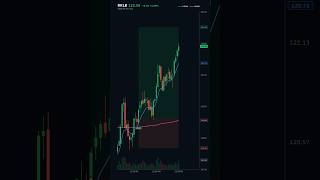
[04:47] the XSP index just about a year ago on April 24th, 2025, a few weeks after the Liberation Day Tariff Program when was announced by the White House. And we've superimposed the 20-day moving average of the XSP index onto the price chart.
[05:04] And so as you can see, the first day since the beginning of the month that since the beginning of the month that the XSP index closed above the 20-day moving average up at 548.48 is this day, April 24th. And so [snorts]
[05:19] let's say that we're going to use the 20-day moving average as our criterion for entering and exiting the exiting the trade with very simple rules. If the index closes cleanly above the 20-day moving average, we're going to
[05:32] start the trade. And if at any point during the trade it closes below the 20-day moving average line, we just close the trade. Simple enough, right? But how can we do this for under $100 if the index is
[05:45] priced at over 500? And the answer is that we're going to implement an option that we're going to implement an option strategy that I can guarantee every time will never require more than $100 in capital. And let me show you how it
[05:58] works. So let's pull up an options chain of the XSP index on that day back in April of 2025. And as you can see, that options chain expires in 2 weeks on May 8th. And so we're going to use the first put option strike right below where the
[06:13] put option strike right below where the index closed that day at 548.48. So the 548 put is what we're going to be using and we're going to go ahead and sell that put for $9.56 and we're going to simultaneously buy
[06:26] the put right below it at the 547 strike and we're going to pay 918 for that put. So when you do that, selling an option higher up on an options chain and buying another option below that on the same options chain, when you do that, you're
[06:41] entering into what is known as a put credit spread. And since the put we sold was right below where the market's trading, that's called an at-the-money put credit spread. Okay, so now let's take a look at why I
[06:54] say that this could be done for less than $100 guaranteed every time. You see, when that 548 put, we received a price of $9.56. But remember, index
[07:06] options pay off at a rate of $100 per point, so you multiply that by 100. And so we actually received $956 in cash in our account. But remember, we in cash in our account. But remember, we also bought the 547 option for 918, so
[07:20] that cost us 918. And so when you net it down, we received net cash directly into our account in the amount of $38. And now, this is key, your broker is
[07:32] going to require you to have $62 in capital in your account when you first put this trade on. And the reason for that is that the largest loss that you could possibly pay out under this trade is $100 if you think about it because
[07:46] the long put is only one point below where the short put is. However, you received $38 initially. So the net amount of capital you'll need is only $62. And that's the exact amount of capital that your broker will require
[08:01] trade. So that's the capital requirement to put this trade on. Nothing more. So let's now move to the day that this trade expired, May 8th. And as you can see, the price of the
[08:14] index stayed above the 20-day moving average during the entire course of the trade, closing on expiration day at a price of 566.39. And so what does that mean for the outcome of our trade? Well, starting
[08:27] with the $38 we initially received when we first sold the spread, and when you consider the fact that both of the put options expired way below the closing price of the index on expiration day down at 548 and 547, then obviously
[08:43] those both expire worthless and therefore the trade profit is the initial cash you received when you first sold the the spread, in other words, $38. And so let's say that we decide to make this trade every time we see the
[08:57] make this trade every time we see the XSP index close below the 20-day moving average and then break above it and close above it. And we trade this every time it happens consistently over time. Well, the next time that happened was on
[09:11] August 4th of that year, about 3 months later, where as you can see, it had slipped below the 20-day moving average on the prior trading day and then subsequently broke above it on the next trading day, closing at 632.99.
[09:26] So that's our signal to initiate the trade. So again, we pull up an options chain expiring 2 weeks later on August 18th this time, and we sell the put right below where the index closed just like before. We sell the 632 put for 557
[09:42] and we buy the 631 put right below it for 524. So now we've created an at-the-money put credit spread just as we did in the last example. And as you we did in the last example. And as you can see, in this case we collected $33.
[09:57] And in this case, your broker will require $67 of capital to execute this trade. So again, these trades are going to require well under $100 to execute. And these amounts will vary depending on market conditions, but typically the
[10:12] credit you'll receive will be around the $30 to $40 range, and the amount of capital required will be in the $60 to $70 range. And so let's take a look at the price chart of the XSP index on the day this trade expires, which is August
[10:27] 18th. And as you can see, the index continued to rally after trade entry, closing at 644.91 on the day this put credit spread expired. And so just like the initial trade that we covered, the index closed
[10:42] well above both the 631 and 632 puts, resulting in a $33 profit on this trade. Now, the next time this trade signal took place was actually in that next week, where the index briefly closed
[10:56] below the 20-day moving average, and then powered up far above the 20-day moving average the next day, closing at 646.69. And by now, you probably get the drill. So we're going to pull up the September
[11:09] 5th options chain, expiring 14 days, and we're going to sell the 646 645 put credit spread, again right at the money, collecting this time $37, as you can see
[11:21] collecting this time $37, as you can see from the calculation, with a $63 capital requirement this time. But this time something unexpected happened, and time something unexpected happened, and that is that on September 2nd, 2025,
[11:33] the index gapped down and closed below the 20-day moving average. And as a result, our rules say that we get out of the trade. We exit the trade at that the trade. We exit the trade at that point, with the index closing at 641.55.
[11:45] Now, so let's see what that means to us. At the close on September 2nd, here's what was going on with our trade. The 646 put, which we originally sold for 646 put, which we originally sold for 468, now that has spiked to 602. And the
[11:59] 468, now that has spiked to 602. And the 645 put is now trading at 542. And so the calculation at the end of the of the trade goes like this. You see, to close a put credit spread, you need to buy back the put you sold and sell off the
[12:11] put you bought. So as you can see from the calculation, after taking into consideration the initial $37 of cash flow, we had to buy back the 646 put for flow, we had to buy back the 646 put for 602, which therefore cost us $602.
[12:25] But on the other hand, we were able to sell off the 645 put for 542. And so netting it all down, there was a loss on this trade of $23. And that's going to be a very common occurrence. When you lose the trade, the
[12:39] loss will frequently be lower than the average win, which is a very good feature for systematic options trades like the one we're sharing with you Okay. And so as not to be too tedious, we've created this table, which provides
[12:54] the results of all of the occasions where our signal fired off and we executed an at-the-money put credit spread from uh that first April trade that we showed you at the beginning of the video through to today. And while
[13:07] most of the trades were wins, there were three losses, as you see. But if you scrutinize this table, you'll see that in each case, the losses were lower than each of the individual wins. And so when we netted all down, the result is a
[13:20] profit of $187, which comes out to a little more than a 62% return on the initial starting capital of $300. And of course, we didn't need that $300 actually for any one trade, but with a trading system
[13:36] like this, it's a good idea to start out with multiples of the amount of capital necessary for any individual trade, so that if you do have a series of losses in a row, you'll still be in a position to continue trading your system without
[13:49] having to add capital. And so to be conservative, we used $300 as the denominator of the return calculation, and that's what how we got that percentage. And so what I'd like you to take away from today's video is that you
[14:02] can begin to establish your trading career with very little capital, and the potential with well-designed option strategies to achieve exceptional returns, far beyond what you could do with conventional investments like
[14:15] buying ETFs of major market indexes like SPY, which have much lower returns, usually close to 10% or even less per year. >> And once you start achieving exceptional returns, the compounding effect on your
[14:29] account will be remarkable. And I can tell you that proprietary trading firms like ours become very interested in traders who can produce consistent levels of profitability without substantial drawdowns, regardless of the
[14:43] amount of capital that you're personally trading. If you show discipline, maturity, and a firm understanding of options and your strategy, that is far more important to us than the amount of zeros that you have in the capital base
[14:56] that you're trading from. You can start your trading journey right now, establishing your track record for a career in trading, if you're careful and deliberate about what you're doing. I hope that this video inspires you to
[15:09] move forward in your trading career and not be discouraged by your current capital level. Some of the greatest traders here at SMB started out with almost nothing personally, and now some of them have ended up as seven- and even
[15:23] eight-figure-a-year traders. Now, if you'd like to learn three more options strategies that our pro traders use, including the unique options trick that allows you to make money while you wait to buy stocks or ETFs at the price you
[15:37] want, and the options income strategy that allows you to make consistent money whether the market goes up or down or sideways, and how to make money on a stock or index trade even if you're wrong on the direction, then click the
[15:53] link that's appearing right now at the top right-hand corner of your screen. That will open up the free workshop registration page in a new window, so don't worry, you won't lose this video. Or you can register directly for free at
[16:08] Or you can register directly for free at optionsclass.com.
⚡ Saved you 0h 16m reading this? Transcribe any YouTube video for free — no signup needed.