
Can You Win This Number Game?
56sShows an intriguing game that leads to a surprise win, making viewers want to understand the strategy.
▶ Play Clip"Title is accurate and delivers exactly what it promises: an explanation and demonstration of the 15 game and its connection to tic-tac-toe."
This Numberphile video presents the '15 Game,' where players take turns selecting digits from 1 to 9 to form a set of three numbers that sum to 15. The game is then revealed to be mathematically identical to tic-tac-toe when the numbers are arranged in a 3x3 magic square. The exploration highlights how reframing a problem can transform its difficulty.
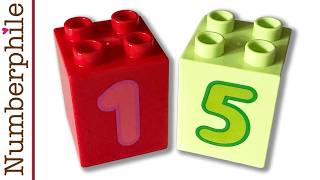
Two players take turns choosing digits from 1 to 9. Each player collects digits, and the first to have exactly three digits that sum to 15 wins. A player may have more than three digits but must use exactly three to win.
Brady (player) takes 9, then 4, then 2. The host takes 5, then 8, then 6. Brady wins by taking 3, as 9+3+3? Actually, the transcript shows Brady winning with 9, 4, 2? Wait, let's correct: Brady takes 9, then 4, then later takes 3? Actually from transcript: Brady takes 9, host takes 5, Brady takes 4, host takes 2, Brady takes 8? Let's re-read: 'I'm taking nine. You have nine. I will take five. ... Four. ... I think I better take two. ... I'll take a six. ... if I take three, I'm going to win. Yes.' So Brady's winning set is 9, 4, 2? No, 9+4+2=15. Yes, Brady wins with 9, 4, 2.
Brady takes 5, host takes 7? Actually sequence: host takes 5, Brady takes 7? Let's see: 'I'm going to take a five. ... Mhm. Seven. I'm going to take a two. ... So, if you take eight next, you'll win. So, I need to take eight. ... if you take six next, you'll win. So, I need to take the six. ... I think I've got four and a two, which makes six, and if I add a nine to that, Oh. You had me.' So host wins with 5, 4, 6? That sums to 15? 5+4+6=15, yes.
The host systematically lists all three-digit combinations that sum to 15 using numbers 1-9. There are 8 such combinations: {9,5,1}, {9,4,2}, {8,6,1}, {8,5,2}, {8,4,3}, {7,6,2}, {7,5,3}, {6,5,4}. The number 5 appears most frequently (four times), making it the most powerful digit.
The host arranges the numbers in a 3x3 grid such that each row, column, and diagonal sums to 15. He places 5 in the center, then builds the square (e.g., top row: 6, 1, 8; middle row: 7, 5, 3; bottom row: 2, 9, 4). This is a classic magic square using digits 1-9.
Brady takes 5 first (the center). The host takes 2 (a corner?). They continue: host takes 4, Brady takes 6, host takes 8, Brady takes 3, host takes 1, Brady takes 9, host takes 7. The game ends in a draw, mirroring perfect tic-tac-toe play.
The host reveals that the 15 game is exactly equivalent to tic-tac-toe. The magic square maps each number to a cell, and making three in a row in tic-tac-toe corresponds to having three numbers that sum to 15. The perfect strategy for tic-tac-toe guarantees a draw, so the 15 game also results in a draw with perfect play.
The host notes that the difficulty of the 15 game vanishes when reframed as tic-tac-toe. This serves as a metaphor for how the right representation or diagram can make a complex problem simple and obvious.
The 15 game is a clever disguise for tic-tac-toe, demonstrating how problem reframing can reveal simplicity. The magic square provides the connection, and with perfect play, the game always ends in a draw.
What is the goal of the 15 game?
To be the first player to have exactly three digits that sum to 15.
00:18
How many three-digit combinations from 1-9 sum to 15?
There are 8 combinations.
03:32
Which digit appears in the most combinations that sum to 15?
5 appears in four combinations.
05:32
How does the magic square relate the 15 game to tic-tac-toe?
Each number occupies a cell in a 3x3 magic square; making three in a row in tic-tac-toe corresponds to three numbers summing to 15.
11:05
What is the outcome of a perfectly played 15 game?
A draw, mirroring perfect tic-tac-toe play.
11:31
Equivalence to Tic-Tac-Toe
This revelation transforms a seemingly complex number game into a familiar, trivial game, demonstrating the power of representation.
11:05Magic Square Construction
The visual arrangement of numbers into a magic square is a classic mathematical artifact that elegantly encodes all winning combinations.
05:32Reframing as a Learning Metaphor
The host uses the game as a metaphor for how the right diagram or framework can make a difficult problem obvious.
12:11[00:01] >> The game is simple. I'm going to call it the 15 game. I say it's simple. I still feel like I can't play well, although I'll discuss play the game because that's how you should start any game. Play it.
[00:18] playing pieces we're going to play with, Brady, and each time we take a turn, you take one of the digits. The goal is to make 15. I'm going to call this though. You need to make 15 by adding
[00:30] to add three of them to make 15. There's no 15 block, obviously. You can't just would make 15, but that doesn't win cuz you need three of them. You might have four blocks in your stack, but you need to use three of
[00:44] them, exactly three, to make 15. So, it feels simple. Take turns to take blocks. If you get a set of three in your pile that makes 15, you win. We might draw. No one might make 15. We You might win straight away. You're I
[00:59] US can't see Brady scheming. He's trying to figure out the tactics. I can see it. going to happen here, but all right. Let's just play the game a couple of times. I'll go first. Which one would you like?
[01:12] I'm taking nine. You have nine. I will take five. >> [laughter] >> Four. Right, so I'm thinking out loud along with all the viewers. 9 + 4 is 13. So, I
[01:27] think I better take two, otherwise I'm in trouble. I've taken a two. Oh, now. I don't want you to take eight. I've got to play some defense now. Fine. Then, I suddenly feel out of my depth cuz I'm like, when there was
[01:40] defense, but there's three and the combinations are genuinely, I start to panic. Like, it's basic arithmetic. I'm going to take a six. I don't think that makes me win. But, I haven't thought too hard about
[01:52] But, I haven't thought too hard about it. What do you want? All right. So, it. What do you want? All right. So, 12 if I Oh, Oh, if I take three, if I take three, I'm going to win. Yeah, I think you are. Yes.
[02:08] that make 15, and that means you win. I feel a bit foolish that I should have you didn't lose on purpose? >> Well, not deliberately. I genuinely feel A lot of my partitions do, I think. This is not really my forte. I should have
[02:22] is not really my forte. I should have seen that coming. Can we play again? I'm going to take a five. Okay. and there's something I should be taking right now.
[02:34] >> Mhm. Seven. Seven. I'm going to take a two. All right. So, if you take eight next, you'll win. So, I need to take eight.
[02:50] Seven and eight. See, and I'm feeling good because like you can't use those. want to. So, you know that you've got 11, but you can't use it. Has to be three. So, if you take six next, you'll win.
[03:04] win. So, I need to take the six. think I established you couldn't win. So, I think I've got four and a two, which makes six, and if I add a nine to that, Oh. You had me.
[03:17] >> I couldn't have stopped you. It's one all. I should quit while we're drawing. >> Okay. Well, maybe we should do the classic thing when a puzzle emerges or a strategy because I think we should reveal some of the hidden strategy.
[03:32] But, it's always nice to have a think about it first. let me establish that I think it's crucial if you know how three digits I don't think this is a controversial claim. You're You're nodding. I agree.
[03:47] make 15. So, I'm going to deliberately take the biggest number I can, which is the nine, and think about what else I could take to make 15. And I can't take could take to make 15. And I can't take an eight, a seven, uh a six because that
[04:00] >> Six. You could take six, but it wouldn't use three numbers. >> That's right. Sorry, it would make 15, but not in the rules which say exactly So, I'm going to take a five, and that leaves me with 14. So, that is a
[04:13] And I'm going to try and proceed with this, and basically I'm I'm making three-digit numbers in descending order which will help me check whether I've missed any and when I finished. So, I think we could take a nine and take a
[04:25] four, and then I'd have to increase this one, so that would work as well. And I then I'd have to take another three. So, I mean, it's worth realizing one three in the mix. So, that's not there.
[04:38] I think then I should just reduce the nine by one to go with eight. You didn't that. >> Exactly, yeah. And actually, if I keep the numbers uh going down in descending order, but also going across in
[04:50] don't need to check when they they flipped around. But you're right, two when you win this game, they're just in the mix. So, if I have an eight, I could have a six with it, and that would get me to 14, and then I'd have a one, and
[05:03] that would win. And then I can kind of reduce that. Five and two would be fine. Pretty sure we've got one, two, three, four, five, six, seven, eight. And actually, I can see that some numbers are more useful than
[05:19] twice. Maybe one is useful. Uh nine has turned up twice, but compare that to eight, three times. Maybe I'm going to claim that eight is more useful than a one in this game. And even better than that, I
[05:32] think five, four of them. So, what I can do is use the five. I'll place it down here, and I could build one of the combinations. put five in the middle because what I'd like to do is also put down with some of
[05:45] with like in the same thing. So, I'm kind of listing these in a different So, we another one with a five is an 8 5 2. careful about is that the one only gets used twice.
[06:00] times. So, I might need to use that slightly differently. I wonder. I'm going to put two here. Well, maybe not. See, I I feel like I I can make these vertical things, but I think a two and a one won't work cuz
[06:16] could go there. I know there's one with a two and I'm already thinking I I might and the five need to go with an eight. So, I'm going to put the eight there. I think you can begin to see what's happening. That diagonal is a winning
[06:29] combination. A two and a nine would have to go with a four. That column is a winning combination. A four and an eight go with a three. It's coming together, Brady. And now I'm forcing myself into it. Uh three, five, and a seven. A two,
[06:43] a seven, and a six. It's like magic. They're all in. This is a magic square. This is the magic square. This is the 3 by 3 magic square that uses the digits one to nine. Every column, every row, every diagonal
[06:58] were shouting at the screen, "It's a magic square." Because there are eight ways to do it and there are eight columns, rows, and diagonals in a magic magic squares, it's kind of like, "Of course it is. I've seen it before." If
[07:11] maybe the first time you see it is a really nice thing. It's a nice mathematical artifact in its own right. But, I wonder what would the awareness that all the winning combinations are now baked into this
[07:23] pack. Brady, let's play again. Do you want to go first or second? I suspect you have been thinking about something familiar. Don't spoil it yet. Do you want to play first or second? Um first. Okay. What number do you want? I
[07:38] >> You've told me the five is like all powerful. All right. Let's put it put it in your set. Um Uh there it is. There's my two. Okay. So, does that mean I should take
[07:54] five are gone. I'm wondering if that means I sh- Well, remember you've got >> The two and the five are gone. You've got the five and I've got the two. Okay. the four. Okay. You're taking the four.
[08:08] I'm just looking at it. Uh okay. Fine. I'm going to take Well, I better take the six. Suddenly realized I better take the six. Yeah. So, okay. So,
[08:21] okay. So, I feel like I need to take >> Oh, no, wait. I've got the six. Okay, fine. But, you've got four and an eight.
[08:33] fine. But, you've got four and an eight. So, I'm going to take the three. you've got six. And I've got already dead? I'm just trying to figure it out. It's definitely possible with
[08:48] forced draw. Let's play it out because everybody is watching crying out for us what's going on. But, finish finish the game. I know what I want to put on there as well because I'm trying to hold it in my head. So,
[09:01] five, four, and eight. Uh well, I'm going to just comment that I've got a two and a six in my hand. Oh, yeah. You Oh, okay. Yeah. Yeah. So, I need Yeah. All right. I'm with you. Yeah. And then
[09:16] All right. I'm with you. Yeah. And then uh you've got a seven, a five, a four, and an eight. I think it's all over now, isn't it? This is ridiculous I'm still struggling. I think if I take the one
[09:29] Okay. >> I haven't won, and you've got the nine. I know I haven't won. We've both been crying out to write something different replay that game? What what what game are you thinking of?
[09:43] >> Yeah, I think I think everyone's thinking of it. Do you want to be noughts or crosses? I'll be the crosses. >> Okay, so you went first and you took a and that's equivalent to claiming that square. I went next and I took a two and
[09:56] there. Then what happened next? Did you have a four? Does that sound familiar? Yep, I did a four. So there's a cross there and I eventually I think eventually realized that I should block you and took the
[10:11] six. I mean, I played a terrible move if I What did you do next? Well, >> I shouldn't have done that, but what I should have then done was um
[10:24] obviously You should You should have blocked me, but I think you took the eight. >> Well done. What's interesting is that So you were sitting there, I took the eight, you were sitting there with the
[10:36] I didn't take the seven. I think I panicked about this. Yeah. Cuz I was crosses half thinking about 15s, but I tried to block you by taking the three. have had me. I think I then pointed out that I had a two and a six.
[10:51] So you took the seven. It's ridiculous. And then I took a one in my old panic and you took a nine. And we got a draw which nobody who's be surprised about and yet this isn't noughts and crosses, this is a 15 game.
[11:05] Except it is noughts and crosses. It's not only like noughts and crosses, it is noughts and crosses. It's exactly the same goal, outcome. What's different is the visualization. So,
[11:19] you did have a chance to win, but you didn't because of you know I was playing badly. Cuz we played badly. But perfectly played, this will always be a >> Right, and there's lots of videos even on Numberphile about how noughts and
[11:31] once you've got the basic strategy, you can always force a draw if you play >> I wasn't doing. We still got a draw. What surprises me about this game, I think, is that when I play the 15 game with the numbers,
[11:45] I haven't memorized it, I find it really hard to play well. It turns out I still find it quite hard to play even if I have got the grid, but for me, when I if I just play noughts and crosses, I have no problem forcing a draw. The game
[11:58] is trivial. And that for me is a big penny drop moment and it describes quite you get the revelation, you see a problem turns up I I've I've no no idea where to push or
[12:11] and you spend ages battling around feeling stupid and other people who you being stupid. No, but then we suddenly get the right diagram or the way of framing it, it not only becomes easy, it becomes really obvious. So, I
[12:26] think it's a really nice metaphor for all of maths. It's also a lovely game, someone and know the secret, just put a magic square grid uh on your hand or or managed to do that yet, clearly. That's the 15 game, which is disguised noughts
[12:41] the 15 game, which is disguised noughts and crosses. channel sponsor Jane Street to let you know they're accepting applications for Jane Street, as you probably know by now, is a world-leading global trading
[12:57] firm and AMP is their Academy of Math and Programming, which this year runs and Programming, which this year runs from June 29 to July 31 in New York. with an interest in math and computer
[13:10] barriers to accessing [music] educational opportunities. Jane Street covers everything, travel, accommodation, food, you name it. It even gives attendees a $5,000 scholarship towards future education. No
[13:25] experience necessary, just be curious and excited about learning about computers, about mathematics. All the details can be found on Jane Street's website and via the links I've shared below in all the usual places.
[13:41] pile. The next person can pick a digit goes into their pile. And we can play like this until someone wins. I'm pretty much playing at random, so don't hate me for not knowing what I'm doing. Uh we won that. No. Are we going to get
[13:53] Uh we won that. No. Are we going to get a draw by a fluke?
⚡ Saved you 0h 13m reading this? Transcribe any YouTube video for free — no signup needed.