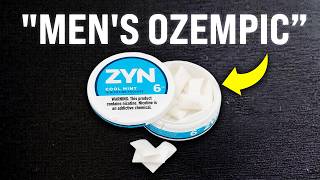

How Zyn Disrupted Nicotine
40sExplains the origin of a viral product and the gap it filled, perfect for educational shorts.
▶ Play Clip"Delivers a solid breakdown of Zyn's business strategy, but the promised 'behind the scenes' is more high-level than deep insider info."
This video breaks down the $16 billion business behind Zyn, a nicotine pouch brand that disrupted the tobacco industry. It examines how Zyn created a new category, built a cultural movement, and achieved a massive acquisition by Philip Morris. The analysis covers the brand's origins, risky investments, viral marketing, and key lessons for entrepreneurs.
Zyn is a $16 billion e-commerce prodigy that took over the nicotine market without using tobacco, flipped US regulation, and became a cultural icon.
Swedish Match saw a gap in the nicotine market around 2014-2015: a tobacco-free nicotine pouch with no smoke, spit, or smell. They launched Zyn in the US.
Swedish Match invested $100 million in US production before the product took off, a huge risk that paid off when demand exploded.
Zyn caught fire in 2019, gaining over 70% of the US nicotine pouch market through popularity with athletes, gamers, and entrepreneurs.
Philip Morris acquired Swedish Match, Zyn's parent company, for $16 billion in 2022, largely to own the nicotine pouch category.
Email marketing and automation are crucial for e-commerce success, highlighted by the sponsor Omnisend.
Zyn won on vibes: minimalist branding, TikTok memes, influencer fights, and a lifestyle that made people feel part of a movement.
Competitors like Sesh and Rogue emerged, but none matched Zyn because Zyn built supply chain and distribution first.
Zyn faced supply shortages and legal pressure over marketing to youth, but they doubled down on production and legal defense.
Zyn held over 70% US market share, saw 60% year-on-year growth at peak, and was acquired for $16 billion.
Create a new category instead of improving an existing one; build with culture so customers market for you; scale like you're already winning.
Zyn's success was not just about product but about creating a new category, building infrastructure ahead of demand, and tapping into cultural movements. Entrepreneurs can learn to take calculated risks, be ready for opportunities, and build conviction in their vision.
What year did Zyn launch in the US?
Around 2014-2015.
01:06
How much did Swedish Match invest in US production before Zyn took off?
$100 million.
02:12
What percentage of the US nicotine pouch market does Zyn own?
Over 70%.
03:05
Who acquired Zyn's parent company and for how much?
Philip Morris acquired Swedish Match for $16 billion.
03:19
What was Zyn's year-on-year growth at its peak?
Over 60%.
08:33
Name three lessons from Zyn's success mentioned in the video.
Create a new category, build with culture, and scale like you're already winning.
08:52
What were the main challenges Zyn faced?
Supply shortages, legal pressure, and accusations of marketing to youth.
07:11
The $100M pre-revenue gamble
Demonstrates the power of betting big on infrastructure before demand exists.
02:12Culture as a growth engine
Zyn's branding and TikTok virality turned customers into marketers, highlighting the leverage of cultural product-market fit.
05:22Create a category, don't just improve
Zyn didn't make better cigarettes; they made cigarettes irrelevant, showing the value of category creation over incremental improvement.
08:52Be ready when opportunity strikes
Zyn's infrastructure readiness allowed them to capitalize on viral demand, underlining the importance of preparation.
07:52[00:01] station and I picked up this little white can off the shelf. And if you aren't on social media, these are Zins. And this video is basically going to be talking about the $16 billion business behind this company. It's an absolute
[00:14] e-commerce prodigy. People are obsessed with these, like actually obsessed. I these after every single meal. They always have this. You see it on Tik Tok. You see memes about it. It's in all the group chats. Almost everyone uses these.
[00:27] Now, personally, I don't touch nicotine. I really want to dive into what makes this brand actually go viral, how they succeeded, the behind the scenes of their $16 billion acquisition, and yeah, there's tons we can learn by studying
[00:40] this brand. So, yes, Zen, they took over the nicotine market without using tobacco. They flipped US regulation on its head. They got acquired for $16 billion. And last of all, they became a cultural icon. So, let's dive in. The
[00:53] story basically starts in Sweden. There's this company called Swedish Match and they've essentially been around for forever. They did old school tobacco, matches, snooze, all that stuff. But then basically what they saw
[01:06] was that cigarettes were dying. The whole nicotine industry was sort of being flipped and they also saw that vaping was pretty controversial. So they essentially noticed a gap before anyone else did. Around 2014 2015, they
[01:19] launched Zen in the US. So essentially what it is, it's a tobaccofree nicotine pouch. So there's no smoke, no spit, and there's also no like smell. Essentially, that problem was how can we deliver nicotine without all the really gross
[01:33] stuff. That's really important because when a brand is born out of frustration, that's often where disruption happens. And yeah, clearly no one had really solved this in the US. So basically, Swedish match, they saw the gap and then
[01:46] they basically went for it. So here is where things get a little bit gutsy. And I love it when companies break the rules, they go risky because basically higher risk means higher reward. That applies to anything in life. So if you
[01:58] look at Zen's early days in the US, they were really rough. The product actually looked really weird. Retailers didn't really like it. Consumers were extremely "Nicotine pouches? Like what is that?" But Swedish Match, they went all in.
[02:12] Anyways, they basically dropped $100 million into building a US production Kentucky. Let me repeat that. They invested $100 million before the product even popped off. So that's basically like launching a startup and then hiring
[02:27] a hundred employees before you get your first customer. It's a really really big risk and it also was not smooth either, right? There were tons of regulatory issues. There were tons of confused customers, but they wanted to really go
[02:39] Sometimes having this back-end infrastructure is what really sets you up for your breakout moment, even if no one else sees it yet. And that's exactly what happened with Zinn. Let's fast forward to 2019. This is basically when
[02:53] Zinn started catching fire. First with nicotine users looking for an alternative to vaping, then with athletes, then with entrepreneurs, gamers like Wall Street Bros. And then suddenly everyone was zinning. They own
[03:05] suddenly everyone was zinning. They own over 70% of the US nicotine pouch market and it wasn't even close. So, a few years later, by 2022, Philip Morris, you knocking and they acquire Swedish Match, aka Zen's parent company, for $16
[03:19] billion. The reason why they went after Zen wasn't because they are necessarily a better product, but they essentially just own the entire category. Okay, so way that Zin did, people love talking about the product and the hype, but no
[03:32] one actually talks about the backend and all the unsexy stuff that actually kept the business alive when demand went crazy. That brings me to email marketing sponsoring today's video. So, I've said this before, but email is still one of
[03:45] the most slept on ways to make money in e-commerce. So, if you run any type of automation setup, you're basically leaving free money on the table. Now, you get everything you need, right? You get the ability to do SMS marketing,
[04:00] access to templates that make it easy to create emails, and automations that are only 2% of total email volume drive around 37% of all sales for brands using automation to send a personalized email series whenever someone signs up on your
[04:15] site. You set this up once and then it will quietly work in the background to customers. That's passive income, baby. Omnison has a free plan that gives you 500 emails per month, which is fine until your automations start firing and
[04:28] think. Their standard plan gives you 6,000 emails, removes the omniscent without limits. And then also, if you want to save money, you can use code charliechain 30 for a discount. Oh, and if you already run emails for a
[04:42] to a different platform is really daunting. That's where Omnisand's paying 250 per month or more on Omnisend, they'll migrate everything for templates, all of it. And if you're a smaller account, you still get a
[04:55] one-click migration that carries over all your contacts, tags, and up to 12 is huge. So, if you want to test it out for free or upgrade to the Smarter plan, check out my link below and use code Charlie Chain30 for 30% off your first 3
[05:08] story. Now, here's where it gets even of their product. I'm assuming it's a pretty solid product since I have so many friends that love it. But they also won on vibes. The branding, it's super
[05:22] subtle. It's pretty minimalist, very clean, but there's this whole culture around it. And that's essentially why it really took off. Tik Tok started popping off with Zen reviews. There were memes about being zinned out. Athletes were
[05:34] making videos about it. And there were even fake influencer fights about their basically convenience stores couldn't keep them in stock. They were always out. But there's no perfect story, especially in the world of business and
[05:47] came. So critics said that they were marketing to young people. There were walk a tight rope. They had to grow fast but not recklessly. But the thing is when you create a movement, people want to be part of it. And Zen, they leaned
[06:02] in. They built a lifestyle brand around what used to be a pretty gross habit. So now, I want you to ask yourself, what culture am I tapping into? If there is definitely go for it because once you get culture right, that's essentially
[06:15] when all your customers are doing the marketing for you, all organic and basically creates a shock wave getting your product known by a huge amount of competitors, they started coming in. Big brands like Sesh, Rogue, Vello, they're
[06:29] are actually taking a lot of market share. Sesh is doing extremely well. They position themselves as a clean like minimalistic DTC focused alternative to Zin. But none of them have actually hit the same way as Zin and that's because
[06:43] Zen did all of this boring stuff first. They built the supply chain. They worked stores and then they scaled. They have a huge advantage because they were the first people to do it and because they built so much infrastructure. So that to
[06:56] story. It's extremely smart. They definitely took a big bet but it was a about some of the other challenges that Zen had because any company like this, I think it's very helpful to look at the things that almost broke them. So, Zen
[07:11] definitely had big supply shortages. Even with all that infrastructure, their demand. And so, they had to scale operations extremely fast. And when you substance, that is a nightmare. They also faced a bunch of mounting legal
[07:26] pressure. There were accusations of them marketing to really young people. There were calls for bans. politicians were getting involved. But instead of backing off, Zin doubled down. They expanded production, they lawyered up, and then
[07:38] game. I think this is where most businesses tap out, but Zinn's playbook was be ready when everyone else quits. It's not a direct overlap, but I love this lesson because the takeaway is just you need to be ready. There are
[07:52] opportunities flying around everywhere, but most people can't see them because to see those opportunities. And so if you're prepared, meaning you have the something great, a great opportunity flies by next to you, that's when you
[08:06] can grab it. Most people aren't getting lucky, they're not doing things because they actually can't see the opportunity. And that's essentially because they're not ready. So the takeaway is you got to be ready. And that's why building skills
[08:19] in my opinion is the best thing you guys can do. Okay, going back to Zen, let's talk about the numbers. They have over 70% US pouch market share. They saw over 60% yearon-year growth at their peak and they were acquired for $16 billion by
[08:34] types of numbers, it's not just a business, it's basically category domination. And so what we saw was Zen didn't win by just being loud. They won by solving a problem going to market first with the infrastructure already in
[08:47] place. So what can you guys take away from all this? One is don't just improve a product. Create a new category. Of course, this doesn't apply to every type tons and tons of companies out there that just took an existing product,
[09:00] improved it, and saw success that way. But the thing is, they didn't create a dominate that category. That's because make a better cigarette. Instead, they made cigarettes irrelevant. Two is they
[09:14] built with culture. People don't just buy products. They join movements. And so, Zen tapped into productivity culture, gym culture, hustle culture. they took advantage of all this free organic marketing. When you have
[09:27] marketing. And think about it, if you don't spend on marketing, but you're getting tons and tons of business, customers, clients, you can basically scale infinitely. Three is they scaled like they were already winning. Now,
[09:39] obviously, taking big risks like this is very risky, and I don't suggest everyone something and you think that's the right direction for the company, doubling down on that before all the hype is really going to set you up. Having that type of
[09:53] entrepreneur, it's really important that you have conviction in whatever it is that you're building. You won't necessarily take the same crazy risks you have the conviction, if that's built deep inside of you, you will build a
[10:07] harder. So, yeah, that's the billion-dollar business behind Zin, this little bit different than my usual videos, but I kind of want to break down more of these really cool businesses, go through what I learned from them,
[10:21] because yeah, there are so many lessons we can learn from all these successful their failures. And if we apply that to our own businesses, then we have a huge millions or billions of dollars making those same mistakes. If you guys got any
[10:35] it, subscribe. This whole channel is dedicated to helping you guys live a hopefully check out some of my other videos. Thank you so much for your time and I'll see you in the next video. Peace.




⚡ Saved you 0h 11m reading this? Transcribe any YouTube video for free — no signup needed.