
Why I Use Opportunity Keywords Instead of Regular Ones
40sReveals a counterintuitive SEO insight that challenges common advice and offers a clear, actionable strategy for higher rankings.
▶ Play Clip"Delivers on the promised 8-step strategy with actionable tactics, though some steps are high-level and require further research."
This video presents an eight-step SEO strategy designed to improve search engine rankings. The speaker emphasizes actionable, tactical advice over generic tips, focusing on opportunity keywords, content differentiation, and backlink building.
Focus on keywords with few ads and SERP features to reduce competition for organic clicks.
Review existing top content for your keyword to understand what format works (e.g., list posts, guides) and create similar or better content.
Either improve upon existing content (e.g., more comprehensive guide) or create something unique (e.g., a different format).
Find a 'hook' (e.g., unique data, new technique) that makes your content linkable, then promote it to relevant blogs.
Use short URLs and strategically link from high-authority pages on your site to new content.
Match content format to search intent (e.g., list post for broad queries, guide for deep dives). Example: Rewrote a guide into a list post and saw 70.4% traffic increase.
Invest in visuals like images, screenshots, and charts to improve user experience and SEO.
Use content roadshow (personalized outreach), dead link building (replace broken links), and encourage comments to foster community and shares.
The eight-step strategy provides a comprehensive framework for improving SEO, from keyword selection to backlink building, with a focus on creating valuable, differentiated content.
What is an opportunity keyword?
A keyword with few ads and SERP features, making organic results more visible.
01:07
What should you do before creating content for a keyword?
Analyze top-ranking content to see what format works.
02:29
What are the two options when creating content for a competitive keyword?
Create something better (more comprehensive) or something different (unique format).
03:54
What is the Skyscraper technique?
Create content with a hook (unique data, technique) and promote it to relevant bloggers.
05:40
How can you improve on-page SEO according to the video?
Use short URLs and internal links from high-authority pages.
09:13
What is Skyscraper technique 2.0?
Matching content format to search intent (e.g., list post for broad queries).
10:46
What percentage traffic increase resulted from rewriting a guide into a list post?
70.4%.
12:00
Name one method for building backlinks mentioned in the video.
Dead link building: replacing broken links on other sites with your content.
15:02
Opportunity Keywords
Shifts focus from generic keyword selection to targeting terms with less SERP competition.
01:07Better or Different Content
Emphasizes the need to differentiate content to stand out, a core principle of SEO.
03:54Search Intent Alignment
Illustrates with concrete data (70.4% traffic boost) how matching content to intent impacts rankings.
10:46Building Backlinks
Covers multiple actionable link-building strategies including outreach and dead link replacement.
14:07[00:00] my entire eight step SEO strategy. In fact, this is the exact strategy that I used for competitive key words,
[00:13] like on-page SEO, video SEO, key word research tools, This video isn't gonna be a bunch of high level fluff. is gonna be super tactical and actionable.
[00:28] Let's face it, SEO can be hard, the same advice over and over again. Optimize your title tags.
[00:40] Oh, publish great content. And hey, this advice isn't completely useless but it's not gonna rocket your site to the top of Google.
[00:54] the exact same advice. completely different, which is exactly what Starting with step number one,
[01:07] An opportunity keyword is like a regular keyword but better. is packed with more stuff than ever before.
[01:19] You've got a bunch of ads above the fold, and news results, which is exactly why now I focus almost 100% on opportunity keywords.
[01:33] Opportunity keywords are keywords In other words, they're terms that don't have that distracts people from the organic results.
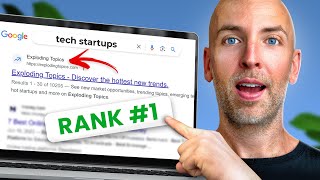
[01:47] A while ago, I created a page on my site And as it turns out, SEO checklist Yep, there are a few ads on the page,
[02:01] It's actually in a way a good thing, on that keyword in Google ads. which means the focus is on the organic results.
[02:14] before picking a keyword. consider going for an opportunity keyword With that, let's move on to step number two.
[02:29] Okay, so you've found an opportunity keyword. Well, most people whip open WordPress and start writing. In fact, that's what I used to do back in the day.
[02:44] Today, I know better. to see what's already working. And once I figure out the type of content
[02:57] then I start creating content. for the keyword paleo desserts. As you can see, the results are lists of dessert recipes.
[03:10] you wouldn't wanna write a blog post like Instead, you'd want a post One of my most important keywords
[03:24] And back in the day when I looked at the content I noticed that they didn't list out Instead, they were all huge guides.
[03:38] pretty much everything there is to know for this super competitive term. Create content that's different or better.
[03:54] you have two main options. Option number two is to create something better. that's just way better than what's already out there.
[04:10] to create something completely unique. the opportunity keyword mobile SEO, I noticed that most of the results were list posts
[04:25] Now I could've created a giant list post like 150 ways to mobile optimize your site, In this case it made more sense
[04:38] I spent two weeks writing this ultimate guide and because my content was completely different which led to tons of shares on social media,
[04:53] Like I mentioned earlier, you can also just For example, a while back I wanted to rank And when I looked at the content that was already ranking
[05:08] of about 20 to 30 tools. but I know that that would just blend in. Specifically I published this complete list of SEO tools.
[05:25] It took about six weeks to test all these tools. But at the end of the day, that post did really well. for my main keyword SEO tools.
[05:40] This is an advanced SEO strategy so if you're new to SEO, you might wanna skip this step. You probably already know that in general,
[05:53] pages with the most backlinks rank highest in Google. Here's a simple two-step process. link to content in your industry, AKA the hook.
[06:08] Step number two, include that hook in your content. that more and more marketing blogs were publishing content I noticed something super interesting.
[06:23] When people wrote about voice search, and when they mentioned a stat, So I created a post about voice search
[06:37] So, how did it go? thousands of times, and if you look at those a specific step from my post.
[06:52] Here are three others that are working First up we have unique techniques. New stuff.
[07:07] you've got yourself a hook. a new strategy called Guestographics. that no one had heard before,
[07:20] racked up a ton of links. as an ultimate guide. Because it's really straight forward.
[07:33] your guide itself is the hook. A few years ago, I published Now, in my opinion, this is the most comprehensive guide
[07:48] everything there is to know about that topic, is the hook. the concept of backlinks in their post.
[08:00] right in the middle of their post. for their readers to learn more. from case studies in your content.
[08:13] easiest hooks that you can use. one result in your case study. For example, a few years ago I published
[08:27] And this case study featured a ton of results. and other stats were related to email subscribers. lacked that single hook that would make someone
[08:43] And that's one of the reasons that my post struggled On the bright side, I did learn a valuable lesson you need to feature one specific result.
[08:58] I made sure to really zero in on one specific result. A 785% increase in conversion rate. it gets linked to all the time.
[09:13] Optimize your site's on-page SEO. your content for SEO. I'm gonna focus on two strategies
[09:27] The first strategy is to use short URLs. we found a clear correlation between short URLs
[09:39] So if you're URLs tend to be super long, cut them down going back and changing your existing URLs
[09:51] Instead, just make your new URLs short and sweet. or my main keyword plus a word before or after it.
[10:05] Yep, internal links still work, Specifically you wanna link from high authority pages Those internal links will send authority
[10:19] which can give them a nice rankings boost. For example, last year I published this post on my site it had absolutely zero authority.
[10:32] that lots of people had already linked to That's all there is to it. The skyscraper technique 2.0.
[10:46] A content marketing and SEO approach Now the original skyscraper technique is pretty cool for ranking in Google today.
[11:01] Search intent is what a Google searcher is looking for And the better your content matches their intent Let's look at how this works with a quick example.
[11:14] and in general this post did pretty well But no matter what I did, it wouldn't rank for any keyword including my main keyword increase website traffic.
[11:29] My page didn't match the search intent for that keyword. for increase website traffic were bite sized
[11:41] In other words, they were list posts. People that searched for my keyword they wanted a list of bite sized strategies.
[11:57] Specifically I rewrote my content So I turned this high level process And this single change boosted that page's
[12:12] organic traffic by 70.4%. content design. can make or break your SEO.
[12:26] but it looks like this. and Google searchers that see an ugly page like that, That's why I personally spend a lot of time,
[12:41] I've already mentioned a few In my opinion, these custom guides look really nice But each guide is custom designed and custom coded,
[12:56] So if you don't have thousands of dollars to spend Here are three simple ways First up, we have images, screenshots and pictures.
[13:11] For example, this single post has over 75 images. with blog post banners.
[13:23] that go at the top of your post. Now sometimes I use a 220 by 220 pixel image in my intro Finally, we have charts and visuals.
[13:37] but they help people understand And they don't need to be super fancy or expensive to work. how every version of your site
[13:52] Now it's kinda hard to picture this idea So I hired a graphic designer to make this simple visual. Step number eight, build backlinks.
[14:07] A piece of content that has a hook So what's next? First, use something called the content road show.
[14:23] in front of the right people. People that run blogs in your industry. A few years ago, I wrote a case study
[14:36] and to get the word out, I found people And I sent each of these people a personalized version Notice how I'm not being a pushy jerk face,
[14:50] And I sent this simple email to anyone that replied a ton of social shares from authority bloggers.
[15:02] This strategy is pretty simple. then pitch your content as a replacement for the dead link.
[15:14] to this giant list of SEO tools that I published on my site. and sent the people that ran those blogs And because I helped the person out
[15:29] they were happy to add my link. Encourage comments and community. when he said that comments can help your Google ranking.
[15:45] Personally, I think he meant that comments and community For example, people that feel like are gonna be more likely to share and link to your stuff.
[15:58] between comments and rankings. One thing that's really helped me I see lots of people complaining
[16:11] But when I do look at their blog, (sighing) you gotta reply to comments.
[16:25] Last I checked, we have about 25000 comments And about half of those are me replying to people, Why?
[16:39] about their thoughts and comments. of the Backlinko community. So that's it for my eight step SEO strategy.
[16:51] to my YouTube channel right now. that I only share with subscribers, It's free.
[17:05] Which strategy from today's video are you gonna use first? Or maybe you're ready to start replying to comments. Let me know by leaving a comment below right now.
[17:19] Good old fashioned face palm. Am I good? So that's it for my at- (sighs).
⚡ Saved you 0h 17m reading this? Transcribe any YouTube video for free — no signup needed.