
The Cold War Started in 1945
39sProvides a quick, engaging overview of the Cold War's origins and central conflict, perfect for viewers new to the topic.
▶ Play Clip"Delivers exactly what the title promises — a concise, informative overview of the Cold War in 15 minutes."
This video provides a concise, 15-minute overview of the Cold War, from its origins after World War II to the collapse of the Soviet Union. It covers key events, policies, and figures, including the Truman Doctrine, the Berlin Blockade, the Cuban Missile Crisis, and the Reagan-Gorbachev summits.
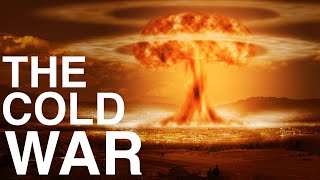
The Cold War began after WWII, with the world divided between the US and Soviet Union. It was an ideological battle between communism and capitalism, with nuclear weapons central to the conflict.
Winston Churchill famously stated that 'an iron curtain has descended across the continent,' dividing Europe into Eastern and Western blocs.
The Truman Doctrine was a policy of containment, sending military aid to Greece and Turkey to stop Soviet expansionism.
The Marshall Plan provided almost $13 billion to improve European economies, with the idea that communism would lose its appeal.
Stalin began the Berlin Blockade in June 1948, stopping all ground access to the city. The US responded with the Berlin Airlift, delivering supplies for 15 months.
NATO was created in 1949 as a defensive pact against the Soviet Union, bringing together Canada and most of Western Europe.
The CIA grew tenfold from 1949 to 1952, with its budget increasing from $4.7 million to $82 million. It interfered in Iran and Guatemala, overthrowing leaders and installing dictators.
Mao Zedong's victory in China in 1949 led the US to increase support for Japan and aid the French in Vietnam against Ho Chi Minh's communist movement.
The Korean War (1950-1953) showed that communism could be contained, but the border hardly shifted and over two million lives were lost.
Khrushchev authorized the construction of the Berlin Wall in 1961 to stop defections from East Germany. It became a 12-foot-high, 100-mile-long barrier.
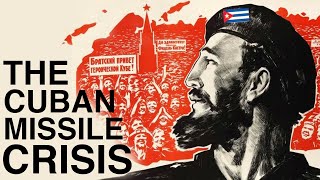
The Cuban Missile Crisis in 1962 brought the world to the brink of nuclear war. A Soviet submarine officer, Vasily Arkhipov, refused to launch a torpedo, preventing a nuclear exchange.
The Vietnam War proved containment ineffective, with over 58,000 American deaths and millions of Vietnamese casualties. It led to widespread protests and Johnson's decision not to seek re-election.
Détente, a period of easing tensions, led to the SALT treaty freezing ICBM numbers. However, it proved temporary.
Reagan's 'peace through strength' policy, including the Strategic Defense Initiative (SDI), forced the Soviets into an arms race they couldn't win.
Gorbachev introduced perestroika (restructuring) and glasnost (transparency), leading to the INF Treaty and eventually the collapse of the Soviet Union in 1991.
What was the US policy aimed at preventing the spread of communism called?
Containment
02:20
What event in June 1948 did Stalin initiate to drive out Western powers from Berlin?
The Berlin Blockade
03:17
What was the US response to the Berlin Blockade?
The Berlin Airlift
03:29
What defensive pact was created in 1949 to counter Soviet expansion?
NATO (North Atlantic Treaty Organization)
03:58
Who single-handedly prevented a nuclear war during the Cuban Missile Crisis?
Vasily Arkhipov
09:20
What was the failed CIA-backed attempt to topple Fidel Castro called?
The Bay of Pigs Invasion
08:10
What physical barrier was built in 1961 to stop defections from East Germany?
The Berlin Wall
07:28
What treaty froze the number of intercontinental ballistic missiles on both sides?
SALT (Strategic Arms Limitation Treaty)
12:10
What were Gorbachev's two key reforms to restructure the Soviet economy and government?
Perestroika and Glasnost
14:37
What treaty, signed in 1987, banned all short and intermediate-range missiles?
The Intermediate-Range Nuclear Forces (INF) Treaty
15:07
Soviet Casualties in WWII
The staggering number of 27 million casualties contextualizes Soviet post-war behavior and the desire for a buffer zone.
01:21Containment Policy
This policy became the cornerstone of US Cold War strategy, shaping interventions for decades.
02:20Vasily Arkhipov's Decision
A single individual's refusal to launch a nuclear torpedo averted a potential nuclear war, highlighting the fragility of peace.
09:20Peace Through Strength
Reagan's strategy of forcing an arms race the Soviets couldn't win is a key example of economic and military pressure.
13:37Gorbachev's Reforms
Perestroika and glasnost were pivotal in unraveling the Soviet system, showing how internal reforms can lead to collapse.
14:37[00:12] at the end of the second world war the cold war had begun the world lay divided between two great superpowers the united states and the soviet union it would not be a conventional war with the two sides never directly fighting
[00:27] battle between communism and capitalism the east first the west ideological influence and power both sides would stockpile
[00:39] nuclear weapons with questions over how to use control and eliminate them becoming central to the conflict from stalin to reagan from the arms race to the cuban missile
[00:51] from the berlin wall to vietnam and korea korea this is the story of the cold war
[01:09] europe lay divided between two camps the soviet union the world's leading communist power would rule over what would become known as the eastern bloc after suffering almost 27 million
[01:21] casualties during the war soviet leader joseph stalin had been west installing communist governments across as former british prime minister winston churchill would famously state
[01:35] an iron curtain has descended across the continent capitalist power would also emerge as a post-war their economy was thriving and they had
[01:48] in human history the atomic bomb two of which president harry truman had dropped on japan to end the war
[02:06] the removal of soviet troops from iran and pressured turkey into giving him control over the turkish straits wanting to stop soviet expansionism truman doctrine sending military aid to greece and
[02:20] it was a policy aimed at containing the soviet union and would become the basis of american cold war strategy for years to come this policy was known as containment fearing the spread of communism in
[02:34] europe the united states would also introduce the marshall plan in it was thought that by improving europe's economies communism would lose its appeal the plan provided almost 13 billion
[02:47] encouraging economic integration and the promotion of free markets symbols of the newly divided world having been split in half after the war
[03:03] the soviets would occupy the east with britain france and america occupying the west berlin despite laying 100 miles within the soviet zone was divided in the same way in june 1948
[03:17] stalin would begin the berlin blockade stopping all ground access to the city in an attempt to drive out the americans british and french but truman quickly responded beginning the berlin airlift
[03:29] delivering supplies to the city for 15 months and forcing stalin to end at the blockade with tensions high the us and its allies german state the federal republic of germany the
[03:43] the following month by creating the german democratic republic in the east in response to soviet expansion and influence organization was created in 1949 bringing together
[03:58] canada and most of western europe in a defensive pact against the soviet union
[04:12] 1947 with the organization growing in size and strength over the coming years from 1949 to 1952 cia personnel would increase tenfold with their overseas bases growing from 7
[04:28] and their annual budget increasing from 4.7 million to 82 million dollars they would go on to interfere in developing countries where independence movements were often seen as potential paths to communism
[04:42] in 1953 and 54 they would overthrow the leaders of iran and guatemala installing highly unpopular dictators in their place earning the organization an infamous reputation
[05:02] cold war into a global conflict in china mao zedong had led communist revolutionaries to victory in 1949 establishing the people's republic of the u.s would respond by increasing economic support to its new ally japan
[05:18] growth in the region as well as sending aid to french who were fighting against a communist independence movement independence movement led by ho chi minh in 1950
[05:32] korea with domino theory at the height of nation fell to communism others would as well the united states troops to push the invaders back north the korean war would drag on for
[05:49] three years with the armistice of july 1953 leaving either side the border between the two careers had hardly shifted at all with the loss of life totaling over two
[06:02] but crucially the korean war showed that communism could be contained the main thinking behind future conflicts in particular conflicts in particular vietnam
[06:20] khrushchev had become leader soon creating the warsaw pact to counter the growing power of nato but khrushchev would soon prove to be a provocative and unpredictable leader in november 1956 he would threaten
[06:34] britain and france with rocket weapons after they invaded egypt and he was known for his emotional outbursts allegedly banging his shoe on a table at allegedly banging his shoe on a table at the 1960 united nations general assembly
[06:46] when a new president john f kennedy came to power in 1961 berlin there had been around 2.7 million defections from communist east germany since 1949 most of which had escaped
[07:01] securing the city was therefore vital to the survival of the german democratic with defections usually of the highly trained and educated trained and educated growing by the day at a 1961 meeting in
[07:14] khrushchev gave kennedy six months to vacate berlin but kennedy refused now desperate khrushchev authorized the construction of the berlin wall on august 12 1961 creating a physical
[07:28] barrier between east and west berlin starting as a barbed wire fence it soon wall 12 feet high and nearly 100 miles long complete with armed guards and minefields it was an embarrassment for
[07:43] everywhere [Music] but kennedy was having difficulties of his own cuba had been taken over by
[07:56] communist revolutionaries in early 1959 led by fidel castro the revolutionaries began freeing cuba of its economic and political reliance on the us eventually turning to the soviet union for help
[08:10] to home kennedy attempted to topple castro from power in the bay of pigs invasion using a group of cia-trained cuban but it would turn out to be a disaster with the invaders surrendering
[08:25] embarrassment to kennedy and convinced khrushchev that he needed with him sending nuclear missiles to the island in 1962 american reconnaissance aircraft soon spotted the missiles
[08:40] causing kennedy to begin a naval blockade of cuba to prevent any further soviet shipments from arriving a hundred and forty thousand u.s florida and the u.s alert system was raised to
[08:53] defcon 2 for the first time in history they were preparing for nuclear war as negotiations were underway a confrontation in the atlantic almost ended in disaster u.s ships had
[09:06] used signaling depth charges to alert a soviet submarine that it had strayed too close to the blockade thinking they were under attack the torpedoes to be launched but the decision required the approval
[09:20] of all three onboard officers one of the officers vasily arkipov refused to go through with the launch single-handedly preventing the outbreak of a nuclear war the very next day on october 28th
[09:35] to an agreement kennedy promised not to invade cuba and khrushchev removed the soviet missiles it was the closest the world has ever and it significantly impacted the outlook of both powers
[09:50] the white house and the kremlin to provide better communication if to provide better communication if another crisis occurred
[10:04] vietnam where the u.s had been supporting the south in their struggle decade after kennedy's assassination in 1963 lyndon b johnson was left to deal with vietnam
[10:18] believing america would look weak on the international stage if he allowed the south to fall to communism johnson chose to rapidly increase u.s military involvement but the war was deeply unpopular and in
[10:30] 1968 protests would break out across the western world the largest would be seen in america where a politicized youth demonstrated against a war they thought unjust and unwinnable
[10:42] for johnson who decided not to seek re-election the war would last for another five years before the us decided to withdraw over the south more than 58 000 americans had died as
[10:58] well as 250 000 south vietnamese soldiers over a million north vietnamese soldiers and vietcong gorillas would also perish both the north and the south and thousands more from laos and
[11:12] cambodia while containment had worked in korea korea it had proven ineffective in vietnam
[11:27] internal difficulties khrushchev had been deposed and replaced by leonid whose reign was marked by nepotism corruption and economic stagnation standards of living within the soviet sphere were deteriorating
[11:42] and disillusionment was growing with the brezhnev doctrine suppressing dissidents force this would lead brezhnev to seek a more stable soviet american relationship facing large protests over vietnam and
[11:57] president richard nixon was also looking to stabilize relations in late 1969 he began talks with brezhnev about a strategic arms limitation treaty or salt which would freeze the existing
[12:10] number of intercontinental ballistic missiles on both sides it was the beginning of a period of detente a french term that refers to the easing of tensions between nations ditant would lead to a tense but
[12:23] relatively stable decade during which both sides would attempt to control their nuclear arsenals and avoid proxy conflicts proxy conflicts but it would ultimately prove
[12:41] presidency in 1981 the conventional wisdom of how to deal with the soviet union was falling apart dayton was not working was falling apart dayton was not working in 1977 the soviets had placed ss-20
[12:54] ballistic missiles in eastern europe and had invaded afghanistan in 1979 fiery speeches would become a trademark of reagan with him describing the soviet union as an evil empire and declaring that democracy will
[13:08] leave marxism leninism on the ash heap of history but reagan's he wanted to see a world in which they did not exist and where nations were annihilation the only way he saw to achieve this was
[13:23] to force the soviets into a new arms race they would lose reduction agreement as reagan stated their choice is to break their backs to keep up or to agree to reductions this policy
[13:37] would be called peace through strength the cornerstone of this initiative or sdi nicknamed star wars by the media the project aimed at creating a radical new missile defense system
[13:52] using lasers and space-based missile systems that could defend against a reagan knew that the soviet union was lagging far behind in computer and could never hope to match the programme leaving them dangerously
[14:05] exposed this policy worked as predicted with the soviets soon forced to negotiate meeting with the us in a 1985 summit to discuss the ongoing nuclear arms race [Music]
[14:24] new soviet leader mikhail gorbachev who would prove to be one of the most important figures of the entire cold war facing years of economic stagnation and growing discontent in eastern europe
[14:37] gorbachev knew things had to change he would introduce perestroika or restructuring to reform the economy and glasnost or transparency to address corruption and political unrest he knew that the arms race was crippling
[14:51] and that the only way forward was to negotiate with the united states gorbachev would meet with reagan on five separate occasions between 1985 and 1988 with each meeting building trust and respect between the two
[15:07] reagan happily negotiated with such an open and cooperative soviet leader nuclear forces treaty on december 8 1987 banning all short and intermediate range missiles within three years the treaty had led to
[15:22] thousand nuclear weapons with each side allowing access to their nuclear sites to check compliance it was a momentous agreement being the first time both sides had pledged to eliminate an entire class of
[15:36] nuclear missile but soon gorbachev's reforms would begin to unravel the soviet union itself in december 1988 he would make a speech vowing to cut the soviet ground force commitment in eastern europe by half a
[15:51] signaling that the brezhnev doctrine would no longer be enforced by the soviet military reformers began to emerge across eastern europe and in 1989 a string of democratic revolutions would
[16:06] see nearly every communist government ousted from power on november the most symbolic monument of the cold war the berlin wall would come down and germany itself would be reunited the following year
[16:21] the soviet union would collapse in 1991 dissolving into 15 independent states a surprisingly quick and bloodless conclusion to the cold war international relations for over 40 years
[16:35] for over 40 years [Music]
[16:54] [Music] you
⚡ Saved you 0h 16m reading this? Transcribe any YouTube video for free — no signup needed.