
How Long to Become a Frontend Developer?
44sDirectly answers a common question with a realistic timeline, sparking curiosity and debate.
▶ Play Clip"Solid roadmap, but the title promises a complete roadmap and it delivers, though with some filler and self-promotion."
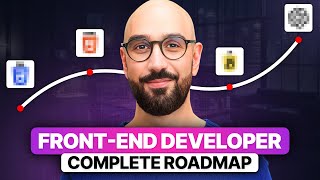
This video provides a comprehensive roadmap for becoming a frontend developer, covering essential skills, learning timelines, and additional skills to stand out in the job market. It is aimed at both beginners and those looking to level up their skills.
The video introduces the roadmap, explaining that frontend development focuses on what users see and interact with, while backend handles behind-the-scenes logic. It promises to cover each skill, its importance, and realistic learning timelines.
Web development is divided into frontend, backend, and full stack. Frontend is about the user interface, backend handles data and logic, and full stack combines both. The video focuses on frontend, with a promise of a future backend video.
It takes 6 to 12 months of consistent study and practice to become a frontend developer. Consistency and continuous learning are key. A free supplementary PDF is offered to help track progress and prepare for interviews.
Frontend development is built on three core languages: HTML for structure, CSS for styling, and JavaScript for interactivity. HTML basics can be learned in 1-2 weeks, CSS in 2-4 weeks, and JavaScript in about 2 months.
Git is a tool for tracking code changes and collaborating, while GitHub is a platform for hosting repositories. The 80/20 rule applies: 80% of the time you use 20% of Git's features. 1-2 weeks of practice is sufficient.
TypeScript adds static typing to JavaScript, making code more robust. Most companies prefer TypeScript for large-scale applications, making it a must-know for 2024 and beyond. It takes 2-3 weeks to get up and running.
UI frameworks like React, Angular, and Vue help build user interfaces with reusable components. React is the most popular and has the most job opportunities. A solid JavaScript foundation is essential before learning React.
The core skills (HTML, CSS, JS, Git, TypeScript, React) are listed on nearly every job description. With continuous learning, they can be learned in about 6 months. However, additional skills are needed to stand out.
CSS pre-processors like Sass, Less, and Stylus allow more efficient CSS writing. Sass is recommended as the most popular. CSS frameworks like Bootstrap and Tailwind provide pre-written CSS; Tailwind is recommended for newer projects.
Automated testing involves writing code to test your code, minimizing bugs and enhancing quality. Popular frameworks are Jest and Vitest, which are similar. 3-4 weeks is enough to learn the essentials.
Meta frameworks like Next.js and Remix enhance core UI libraries. Next.js is recommended for React, taking 4-6 weeks to master. React Native allows building cross-platform mobile apps with React, taking about 2 months.
The video concludes that the essential skills for frontend development can be learned in about 6 months, but to stand out, additional skills like Sass, Tailwind, testing, meta frameworks, and React Native are recommended. The presenter encourages questions and likes.
What are the three core languages of frontend development?
HTML, CSS, and JavaScript.
01:29
How long does it take to become a frontend developer with consistent study?
6 to 12 months.
00:52
What is the 80/20 rule in Git?
80% of the time you use 20% of Git's features.
03:36
Why is TypeScript preferred by companies for large-scale applications?
It adds static typing and additional features, allowing more robust code.
03:50
Which UI framework is the most popular and has the most job opportunities?
React.
04:33
What is the recommended CSS pre-processor to start with?
Sass, because it's the most popular.
06:08
Which CSS framework is recommended for newer React projects?
Tailwind.
06:49
What are the two most popular automated testing frameworks mentioned?
Jest and Vitest.
07:16
What is a meta framework?
A higher-level framework that sits on top of a core UI library or framework and enhances its capabilities.
07:43
Which meta framework is recommended for React applications?
Next.js.
08:09
Realistic Timeline
Provides a realistic expectation of 6-12 months, which is crucial for beginners to plan their learning.
00:5280/20 Rule for Git
Highlights that you don't need to know everything about Git, making it less intimidating.
03:36React's Popularity
Emphasizes React's dominance in the job market, guiding learners on where to focus.
04:33Tailwind Overtaking Bootstrap
Shows the shift in CSS framework trends, helping learners choose the right tool.
06:49Meta Frameworks for Competitive Edge
Explains how meta frameworks can give a competitive advantage for better positions and salaries.
07:43[00:01] complete road map of the essential skills you need to become a frontend developer whether you're a beginner wanting to know what to learn to land a frontend developer job or someone with some experience looking to level up your
[00:13] skills and filling the gaps this video is for you we'll cover what each skill is why it's important and a realistic timeline for learning it ready let's dive in web development is generally broken down into two areas front end
[00:26] development and backend development and then full stack development which is a combination of both front end development is all about what the user sees and interacts with it's the website in your browser or the app on your
[00:38] mobile phone or tablet backend development handles everything behind the scenes like data processing storage and logic in this video our focus is planning to create a similar video on backend development so check the
[00:52] description box for the link now before we get started let's answer a common question how long does it take to become a front-end developer well the answer anywhere from 6 to 12 months of
[01:04] consistent studying and practice the key here is consistency and continuous learning to help you on this journey I've created a free supplementary PDF that breaks down the specific Concepts you need to learn for each skill it also
[01:17] includes several project ideas to help you practice and apply what you have learned it's a great resource to review your progress find gaps in your knowledge and prepare for interviews you can find the link in the description box
[01:29] languages and Technologies you need to learn front and development is built on Three core languages HTML CSS and JavaScript HTML or hypertext markup language is used for structuring web pages we can Define headings paragraphs
[01:45] images links and more it's quite simple and if you dedicate a few hours a day you can learn the basics in a week or two by the way I have a bunch of courses on my website if you're looking for structured Learning Links are in the
[01:58] description box then next thing you need to learn is CSS or cascading stylesheets CSS is used for styling web pages it allows us to control colors fonts layouts and so on it helps create responsive designs that adapt to
[02:12] different screen sizes with a few hours of practice a day you can learn the essence of CSS in 2 to 4 weeks you won't be an expert but you'll have practical you work on different projects you will learn additional techniques along the
[02:26] way the next thing you need to learn is Javascript and this is is where programming starts HTML and CSS are for structuring and styling pages but programming is about logic it's about algorithms and this is where JavaScript
[02:39] comes in with JavaScript we can make our web pages interactive we can handle user clicks validate form data show popups get data from the back end and basically have never programmed before this might be the most challenging part of your
[02:54] think like a programmer it might feel weird at the beginning but with Contin study and consistent practice I'm sure you can get a reasonable grasp of it in about 2 months again I have a bunch of tutorials on this channel and complete
[03:08] structured Learning Links are in the description box now as we code we need a way to track changes and collaborate with others that's where Version Control Systems particularly git come into play git isn't a programming language it's a
[03:23] tool that allows us to track changes to our code and revert to previous versions GitHub on the other hand is one of the many platforms that hosts G repositories enabling us to share our code with others and work in a team environment
[03:36] both skid and GitHub are essential for every developer G has a ton of features but you don't need to know them all for everyday use think of it like the 8020 rule 80% of the time you use 20% of gits features one to two weeks of practice is
[03:50] enough to get up and running the next thing you need to learn is typescript it's a language that's built on top of JavaScript that adds static typing and additional feature allowing us to write more robust code these days most
[04:03] companies prefer typescript for large scale applications so if you want to land a front and developer job in 2024 and Beyond typescript is a must know JavaScript and you can get up and running in about 2 to 3 weeks next on
[04:18] our list is a UI or user interface library or framework a UI framework is for building user interfaces using reusable components or building blocks examples incl include react angular View and so on react is the most popular and
[04:33] has a ton of job opportunities so if you're looking to land a front and developer job react is your best bet now to learn react effectively you need to have a solid understanding of JavaScript and basic grasp of typescript because
[04:46] most react projects these days use typescript so make sure to build a strong foundation in JavaScript before diving into react otherwise you're going to face numerous challenges with a solid understanding of JavaScript you can get
[04:59] months then you can explore other options like angular or view to add to your resume focus on one framework at a time learn it properly do a few projects and once you have a solid understanding you can learn other Frameworks if you
[05:13] wish so that's the core of front and development these skills are listed on nearly every job description and with continuous learning and consistent practice you can learn them all in about 6 months but I'm going to be honest with
[05:26] you front and development is competitive so to truly stand out there are additional skills you need to learn to increase your job opportunities so let's go over them one by one you learn that with CSS we can style web pages and make
[05:39] them beautiful now as our projects grow and get more complex styling Pages using plain CSS can become painful and messy so over time many solutions have been created to address this problem one of them is CSS pre-processors which allow
[05:54] us to write CSS in a more efficient syntax using additional features and then compile it down to plain CSS examples include SAS Les and stylus different projects use different tools and you don't need to learn all of these
[06:08] to apply for a frontend developer job if you're familiar with one of them you can quickly learn others on the job out of these I would suggest SAS because it's the most popular and a good one to start with one to two weeks is enough to get
[06:20] up and running with SAS another approach to writing manageable CSS is using a CSS framework a CSS framework provides pre-written CSS that we can use in our applications some of the popular ones are bootstrap Tailwind Foundation
[06:35] skeleton and so on now as you can see here on npm Trends bootstrap used to be very popular and a lot of projects are still using it but over the past couple of years Tailwind has been emerging and overtaking bootstrap so a lot of newer
[06:49] projects particularly react projects use Tailwind so out of these I recommend learning Tailwind it's not that complicated and you can get a decent grasp of it in about two to 4 weeks another key skill that employers are
[07:02] looking for especially in senior developers is automated testing with automated testing we can write code to test our code and make sure it functions correctly automated testing minimizes bugs and enhances the overall quality of
[07:16] our applications there are many testing Frameworks out there but the two most popular ones are just and vest which are pretty similar so once you learn one of them you can learn the other pretty quickly just is the most popular one but
[07:29] but it has some baggage so newer projects often use vest again they're very similar and you can start with either of them I believe 3 to four weeks is enough to learn the essence of just and automated testing principles next on
[07:43] our list is meta Frameworks a meta framework is a higher level framework that sits on top of a core UI library or framework and enhances its capabilities it's not something that all employers are looking for because it's only used
[07:57] in newer projects a lot of older projects don't use a meta framework but if you want to have a Competitive Edge if you're looking for a better position with a better salary I would recommend learning a meta framework for react
[08:09] applications we have nextjs which is the more popular option and remix I recommend learning nextjs which you can master in four to 6 weeks if you have a strong foundation in react now if you want to get into Mobile development and
[08:22] further increase your job opportunities learn react native it's a framework for building crossplatform mobile apps using react if you have a solid understanding of React 2 months is enough to get a good grasp of react native so that
[08:36] really sums up the essential skills you need to become a frontend developer if you have any questions please let me know in the comments below and I will do my best to answer you right here or in my future videos If you enjoyed this
[08:48] video please give it a like And subscribe for more useful content




⚡ Saved you 0h 08m reading this? Transcribe any YouTube video for free — no signup needed.