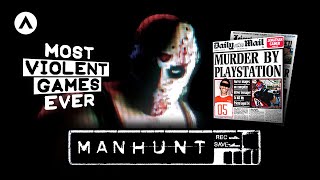

The Most Controversial Video Game Ever?
46sOpens with the shocking premise of a game that simulates murder, instantly grabbing attention.
▶ Play Clip"Delivers a thorough, well-researched history of the franchise, matching the title's promise of controversy and violence."
This video provides a comprehensive history of Rockstar Games' Manhunt franchise, detailing the development, release, and immense controversy surrounding both the original 2003 game and its 2007 sequel. It explores the creative origins, the moral panics and political backlash, the infamous Pakeerah murder case, and the ratings battles that shaped the series' legacy.
The video opens by placing Manhunt among the most infamous violent video games, alongside Mortal Kombat, Carmageddon, and GTA. It highlights the game's premise: a death row inmate coerced into killing for a mysterious figure, and notes the controversy that enveloped it, including bans and a murder investigation link.
Rockstar North began production around 2000. A 2007 blog post by former employee Jeff Williams revealed that Manhunt's creation nearly caused a mutiny because it lacked the moral nuance of GTA III and Vice City, where players could avoid killing. Co-creator Christian Cantamessa later described it as a 'contemplation of violence'.
The core idea came from Sam Houser's desire for a horror game with no monsters. Cantamessa and illustrator Alan Davidson conceived a narrative of a man being chased, inspired by Davidson's art and A Clockwork Orange. The snuff film concept was influenced by The Running Man, leading to the security camera feature.
Manhunt was first teased as 'Project Manhunt' in December 2002. The game's protagonist, James Earl Cash, survives a lethal injection and wakes in Carcer City, where he is hunted by gangs for the Director's snuff film. Previews praised the stealth mechanics, comparing it to Splinter Cell.
The game featured three execution types indicated by color-coded arrows: white (immediate), yellow (after a few seconds), and red (after six seconds, most gruesome). The security camera perspective accentuated the snuff film aspect. This violence was a major source of controversy.
Manhunt reviewed favorably for its stealth mechanics, visuals, and audio, but was criticized for subpar enemy AI, clunky combat, and a weak narrative. The game's reputation as the 'most violent game ever' overshadowed its technical merits, leading to bans in New Zealand and criticism from politicians like Joe Baca.
In 2004, 14-year-old Stefan Pakeerah was murdered by Warren Leblanc. The victim's mother claimed Leblanc was obsessed with Manhunt, leading to media frenzy and retailers pulling the game. However, police later revealed the game was found in the victim's belongings, not the killer's, and the motive was robbery.
Despite the backlash, Rockstar developed Manhunt 2, starting in 2004 with Rockstar Vienna. The sequel aimed to expand on the original's themes with a psychological focus. The announcement in 2007 reignited controversy, with the victim's mother and politicians like Keith Vaz condemning it.
Attorney Jack Thompson attempted to sue Take-Two to block Manhunt 2 and GTA IV sales to minors. Take-Two countersued, and the saga ended in a 2007 settlement restricting Thompson from further legal action against the publisher. This was part of a broader pattern of political attacks.
The BBFC banned Manhunt 2 in the UK, and the ESRB gave it an AO rating, which prevented major retailers from stocking it. Take-Two suspended the release, and Rockstar censored the game, blurring executions and removing content. The ESRB later re-rated it Mature, but the BBFC only allowed it after an appeal.
Manhunt 2 follows Daniel Lamb, a scientist with amnesia from a neurological weapons program. Reviews were middling, with criticism of AI, glitches, and the censored executions. The game's vision was seen as compromised, and it failed to match the original's praise.
Despite the controversy, the original Manhunt has become a cult classic. Co-creator Cantamessa suggested the backlash was due to timing. With 1.7 million copies sold, a third installment is unlikely, but the video notes that the zeitgeist may now be more accepting of mature games.
The Manhunt franchise remains a landmark in video game history, not only for its brutal content but for the intense societal backlash it provoked. The series' legacy is a testament to the ongoing debate about violence in media, and while a third game seems unlikely, the original's cult status endures.
Christian Cantamessa
person
Alan Davidson
person
Sam Houser
person
Jeff Williams
person
Jack Thompson
person
Jeronimo Barrera
person
David Cooke
person
Leland Yee
person
Patricia Vance
person
Hillary Clinton
person
Joe Baca
person
Keith Vaz
person
Stefan Pakeerah
person
Warren Leblanc
person
Jurie Horneman
person
Jeux Vidéo Magazine Masterclass
link
GameSpot interview
link
MTV News interview
link
IGN
link
MCV
link
What was the core premise of the original Manhunt?
A death row inmate, James Earl Cash, is coerced into killing for a mysterious figure known as the Director, who films the murders for a snuff movie.
00:30
Who were the co-creators of Manhunt?
Christian Cantamessa and Alan Davidson, with James Worrall also contributing to the script.
03:06
What was Sam Houser's key caveat for the horror game that became Manhunt?
No zombies, vampires, or other monster-like creatures; just make it scary.
03:36
What were the three execution types in Manhunt, and how were they indicated?
White arrow for immediate execution, yellow arrow after a few seconds for a violent execution, and red arrow after six seconds for the most gruesome execution.
07:16
What was the outcome of the Pakeerah murder case regarding Manhunt's involvement?
Police found no link between Manhunt and the murder; the game was actually found in the victim's belongings, not the killer's, and the motive was robbery.
12:44
Who was Jack Thompson, and what was his role in the Manhunt controversy?
Jack Thompson was a disbarred attorney who campaigned against violent games, attempted to sue Take-Two to block Manhunt 2 and GTA IV sales to minors, and was later restricted from legal action against the publisher.
12:11
What rating did the ESRB initially give Manhunt 2, and why was it problematic?
Adults Only (AO), which meant most major retailers wouldn't stock it and it couldn't launch on PlayStation or Nintendo platforms.
18:28
How did Rockstar censor Manhunt 2?
They blurred execution animations and added color overlays, removed the scoring system, and cut content like the pliers execution and some environmental kills.
20:56
What was the combined sales figure for the Manhunt franchise as of March 2008?
1.7 million copies sold.
25:21
Internal Mutiny Over Manhunt
Reveals that even Rockstar developers felt the game crossed a line, showing the controversy was not just external.
02:34Sam Houser's Horror Vision
The origin of Manhunt as a horror game without monsters shaped its unique identity.
03:36Snuff Film Aesthetic
The security camera perspective was a deliberate design choice to enhance the snuff film concept, a key element of the game's controversy.
07:48Police Disprove Manhunt Link
The revelation that the game was found with the victim, not the killer, undermined the media narrative but did little to stop it.
12:44AO Rating and Retail Impact
The AO rating effectively banned the game from major retail, demonstrating the power of ratings boards.
18:28[00:14] The never-ending violence in video games discussion has revolved around a select few experiences. Mortal Kombat, Carmeggedon, and Grand Theft Auto count among the most infamous. So, too, does the murder-filled Rockstar Games staple, Manhunt.
[00:30] Released in 2003 on the PlayStation 2, and then on PC and Xbox in 2004, the first Manhunt captivated players with its premise of a former death row inmate who s coerced into killing at the behest of a mystifying figure. Obscene violence steeped in dizzying levels of gore made for what
[00:47] some consider a murder simulator. Yet, others, especially in retrospect, perceive a semblance of depth that s long gone unappreciated. Everything that intrigued gamers and countless critics about it didn t go over well in other circles, however. Controversy enveloped
[01:02] Manhunt soon after its arrival, manifested in the outcries of parent-led organizations, the violent video game-banning efforts of many politicians, and the discourse surrounding the psychological effects of such games. Arguably, the contempt that plagued Manhunt
[01:16] harkened back to that which was leveled at horror films throughout the 1980s. It even became embroiled in rumors and conjecture regarding a murder investigation. Despite the tumultuous drama, which inevitably led to Manhunt being banned in a number of countries,
[01:29] Rockstar managed to secure approval for a sequel. Unsurprisingly, the mere announcement of Manhunt 2 spawned a fair helping of controversy. And, still, both adventures went on to become beloved cult classics. This is the history of Manhunt.
[02:00] By the time leading development team Rockstar North began production on Manhunt around the year 2000, a separate Rockstar team was well on its way to causing a stir with Grand Theft Auto III and Vice City. These seminal experiences launched on the PlayStation 2 in 2001 and 2002,
[02:17] respectively, resulting in backlash that even unsettled some of the developers. According to a 2007 blog post by former Rockstar employee Jeff Williams, Manhunt s creation nearly caused a mutiny within the company. It was too controversial, specifically on the heels of GTA
[02:34] III and Vice City, both of which featured a level of violence that could be rationalized. Apart from the standard bad guy, players were never forced to kill anyone. Therefore, Williams argued, it was possible to play the series with a degree of moral fiber. Manhunt, on the other hand, lacked
[02:50] similar nuance. The studio couldn t explain away that game, Williams surmised, while expressing his belief that they d crossed a line. Manhunt co-creator Christian Cantamessa, who wrote the 200-page script with fellow co-creator Alan Davidson and Vice City scribe
[03:06] James Worrall, later explained that Manhunt wasn t designed to incite so much contention. Rather, especially in video games. During a Masterclass discussion with Jeux Vid o Magazine in 2019,
[03:20] Cantamessa called the project a contemplation of violence, one wherein Rockstar aimed to explore the player s role and that of game developers who orchestrate said violence. Interestingly, this was all born out of a relatively simple idea. In the Masterclass, Cantamessa divulged that
[03:36] Manhunt s origins were cultivated within an experimental phase for Rockstar. The core idea was set in stone by studio President Sam Houser s desire to produce a horror game. Houser left Cantamessa to work out the specifics with one key caveat no zombies,
[03:51] vampires, or other monster-like creatures. Just make it scary, Cantamessa was told. With these instructions, Cantamessa and Davidson, an illustrator with a graphic artstyle akin to that of Frank Miller, set about conceiving a narrative wherein the protagonist must hide while
[04:07] being chased. The basic premise originated from a piece of art drawn by Davidson, which depicted a man running beneath an underpass. Only his shadow and lower body were on display; meanwhile, the shadows of unseen figures chasing him loomed close behind. A Clockwork Orange immediately came
[04:23] to mind for Cantamessa; he thought it would be ingenious to have players assume the role of a homeless man who s tormented by gangs. The creative team then began riffing off the gang-centric angle, setting the foundation for Cantamessa to script a serial killer backstory.
[04:37] Workshopped story ideas informed the snuff movie aspect, resulting in a twisted version of the 1987 film The Running Man. Thus, Manhunt came to life, a game centered around someone directing a snuff movie that showcases the player-character s killing and being
[04:52] killed. The security camera feature felt very appropriate, Cantamessa remembered. Little did the studio know during these incipient stages of production that what did and did not pass as appropriate would rule much of the discourse surrounding their experimental horror project.
[05:13] Manhunt first entered public consciousness as Project Manhunt in December of 2002. In an earnings statement, Rockstar s parent company Take-Two Interactive boasted of plans to deliver multiple blockbusters in fall 2003,
[05:26] including Project Manhunt a title Take-Two had yet to announce. According to IGN, Rockstar expressed an unwillingness to comment further, considering it too early in development to share details. Neither hide nor hair would be heard of Manhunt again until the next summer,
[05:41] once media outlets began previewing the title. Within said previews were tales of a grisly adventure that tasked players with surviving the most sordid of circumstances as James Earl Cash.
[05:53] As a death row inmate, Cash s in-game introduction saw him entering a death chamber before his execution by lethal injection. The capital punishment didn t take, though. Cash awoke sometime later in Carcer City, a hellish ghost town mimicking urban decay. Lionel
[06:11] Starkweather, an enigmatic figure known as the Director, greeted Cash through an earpiece, merely explaining that he d received another roll of the dice. Of course, there existed a catch a series of gangs, comprised of the worst kind of criminals, were on the hunt for Cash,
[06:27] all wanting to murder him. Because of Carcer City s carefully guarded perimeter and the myriad strategically placed cameras, every bit of the action would be captured on tape for the Director s reality TV-style snuff film. This premise alone seemed daring for a video game at the time.
[06:44] Previews in the months ahead of launch spoke of the paradoxical sense of control, whereby players represented both hunter and prey. Many journalists described Manhunt as the perfect stealth experience, drawing comparisons to Splinter Cell. Stealthily slinking through
[06:59] shadows was tense, with sight and sound proving crucial to Cash s survival. Being spotted or heard seemed a death sentence, then. And what a death sentence these mistakes incited. However, a number of previews hinted that Manhunt s truly grim nature manifested in the executions
[07:16] Cash performed on others. Successfully sneaking behind an enemy triggered three different types of kill animations, each assigned color-coded indicators that came in hues of white, yellow, and red. Immediate executions were marked by a white arrow, allowing players to unleash a hasty
[07:32] execution tamer than the rest. A yellow arrow appeared when players waited a few seconds, resulting in a violent execution that was slower to unfold and notably gross. Finally, the red indicator flashed after six seconds, meaning Cash would perform a gruesome
[07:48] execution an unsettling display of savagery even by violent video game standards. The camera s switch to security footage of Cash s behavior accentuated the snuff film factor, further proof the sadistic Director watched and recorded every act of brutality.
[08:04] Such talk of Manhunt s vicious gameplay circulated like wildfire ahead of its November 2003 release on the PS2. Suffice it to say, few were surprised by the controversy that ignited post-release.
[08:16] Manhunt reviewed favorably upon its PS2 launch. Though lackluster in places due to subpar enemy AI behaviors, many critics found the stealth mechanics impressive. Other core gameplay mechanics failed to receive similar praise. Combat, for example,
[08:31] felt serviceable at best. Against three or more enemies, shooting and melee efforts, which functioned in a crude manner akin to GTA, were fruitless. This especially held true since Manhunt rewarded stealth above all else. A faulty control scheme intensified frustrations,
[08:47] specifically when the camera switched perspectives for cinematic scenes. The cinematic sections were worth the hassle, though if one could stomach the brutal encounters. Thanks to Rockstar s work with Renderware, the game engine that powered previous GTA entries,
[09:02] Manhunt s grisly cutscenes appeared stylish. Overall, the visuals warranted praise across the board. Noteworthy lighting effects and detailed character models particularly elevated the experience. This same attention to detail surfaced in the game s environments,
[09:16] which Rockstar achieved because of Manhunt s comparably smaller spaces. Audio design and music received a bulk of the applause, as well. The soundtrack s synthesized tunes were reminiscent of those that pervade John Carpenter films. Carefully navigating
[09:30] environments felt all the more tense due to ambient sounds and enemy chatter. And the Director s eerily gleeful commentary ensured discomfort remained ever-present. Despite Rockstar s storytelling efforts, Manhunt s narrative didn t garner many compliments. In fact,
[09:45] most agreed that while the premise stimulated intrigue, the story itself failed to offer any substance. Cash merely moved from one level to the next with no payoff; consequently, players would pass through several sections without gleaning new information.
[10:00] To a number of critics, though, even those outside of the gaming press, Manhunt s highs and lows were undermined by what was perceived as gratuitous violence. It quickly earned the reputation of the most violent game ever made. In turn, the stunning visuals, detailed character models,
[10:15] and exceptional audio design didn t do Rockstar s venture into horror any favors. New Zealand s ban on the title further increased Manhunt s notoriety. So, too, did the harsh critiques from U.S. politician Joe Baca. Though he hadn t played it, the California state Representative referred
[10:31] to Manhunt as a tool teaching children how to kill. Regardless of the incessant negative press, no one could ve anticipated the game s implication in a murder investigation.
[10:44] In February of 2004, 14-year-old Stefan Pakeerah was lured to a park in Leicester, England by a friend, 17-year-old Warren Leblanc. Amid what s cited as a robbery gone wrong,
[10:56] Leblanc stabbed Pakeerah to death numerous times with a claw hammer and knife. Following a July 2004 court hearing wherein Leblanc pled guilty to murder, Pakeerah s mother claimed she heard Leblanc s friends speaking of how he d been obsessed with Manhunt prior
[11:10] to enacting the heinous crime that took her son s life. Having read promotional excerpts online, Mrs. Pakeerah believed the game encouraged brutal killing. As far as she was concerned, if Leblanc was obsessed by it, it could well be that the boundaries for him became quite hazy. The
[11:25] victim s father agreed; before long, both parents began advocating for the banning of Manhunt. Print media, online publications, and TV broadcasts latched on to the claims with haste. British tabloids notoriously fueled the fire at every opportunity. Moreover,
[11:40] several retailers responded to the unsubstantiated allegation by pulling Manhunt from store shelves. The now-defunct Dixons famously ceased sales of the game, conjecturing in a statement that it had sparked the murder of Stefan Pakeerah. Similarly, UK-based retailer Game promised
[11:57] to no longer stock the product out of respect for the victim. Rockstar and Take-Two responded with a statement, sending condolences to the Pakeerah family, but rejecting any connection between Manhunt and the tragic killing. Instigation from since-disbarred U.S. attorney
[12:11] Jack Thompson exacerbated the situation. Thompson had been known for campaigning against the sale of violent games to youth, considering such titles murder simulators. Upon joining the Manhunt discourse, Thompson claimed he sent a letter to producers, warning of potential copycat murders.
[12:26] The Pakeerah family hired him not too long thereafter in an attempt to sue Rockstar and Sony. But any intended lawsuit lasted a short while, due to an unexpected turn of events. the media falsely reported the game as having been discovered in Warren Leblanc
[12:44] s bedroom. By early August, however, the police divulged that Manhunt was actually uncovered among the belongings of the victim, Stefan Pakeerah. Consequently, the Leicestershire Constabulary insisted it could discern no link between Manhunt and the murder; the motive,
[12:59] a spokesperson confirmed, was robbery. This revelation did little to obstruct the tabloid narrative, however. Within its report on Leblanc s sentencing in September of 2004, one month after police released the aforementioned statement, Daily Mail referred to the Pakeerah case as the
[13:14] Manhunt Murder in its headline. In an act reeking of yellow journalism, the article later described Leblanc s actions as those inspired by an apparent obsession with a violent video game. Manhunt 2 inevitably inherited its predecessor s contrived connection to this particular case.
[13:36] Rockstar s Vice President of Production Development, Jeronimo Barrera, told GameSpot in a 2007 interview the company did not hesitate to develop another Manhunt when the opportunity arose. Apparently, fans constituted a major motivating factor;
[13:50] it performed well enough and gained quite the cult following. The studio s love for horror also made the decision a no-brainer. Therefore, production on Manhunt 2 began in 2004; Rockstar
[14:05] Vienna stepped in as lead developer, while Rockstar North was hard at work on San Andreas. Instead of a true sequel, Manhunt 2 functioned akin to each GTA successor, expanding upon the previous entry s narrative themes, style, and gameplay mechanics. According to Barrera,
[14:20] Rockstar wanted to thrust players into a situation reminiscent of Manhunt, then present them with more difficult survival choices borne out of an emphasis on heavy psychology. Apart from outlining these basic tenets, Rockstar initially focused its efforts on fleshing out the story.
[14:34] Writers were then able to work alongside game designers, guaranteeing gameplay operated in tandem with the carefully crafted world. Not every developer was able to see this vision through to completion. Take-Two shuttered Rockstar Vienna in May of 2006. Rockstar Vienna
[14:50] Designer Jurie Horneman divulged in a blog post that Take-Two s decision was reportedly based new console generation. In terms of Take-Two s wider business operations, these growing pains
[15:03] paled in comparison to the deluge of obstacles that emerged following the sequel s unveiling. Take-Two announced Manhunt 2 on February 6, 2007 for the PS2, PSP, and Wii. Rockstar
[15:18] London had taken over production for the PlayStation versions after the Vienna studio s closure. Meanwhile, Rockstar Toronto, known for the beat em up The Warriors, was assigned Rockstar preemptively addressed the forthcoming backlash, telling MCV the sequel would only be
[15:36] suitable for those old enough to purchase it. The statement further acknowledged that certain individuals continued to wrongfully link Manhunt to the Pakeerah case, despite court transcripts proving that no correlation existed. Pakeerah s mother issued a statement of
[15:49] her own soon thereafter, calling Manhunt 2 s reveal an insult as it had come during the anniversary month of her son s killing. Mrs. Pakeerah went as far as to condemn violent games in their totality. Game moguls, she called big video game companies, steadily obtained wealth
[16:04] from morally indecent products. As far as she was concerned, there remained much work to be done. Member of Parliament for Leicester Keith Vaz lent his full support to the Pakeerah family s stance, brought under control. Unbeknownst to Take-Two and Rockstar, Vaz s comments would soon prove true.
[16:25] Evidence of such a crusade first manifested in the return of attorney Jack Thompson. The month following Manhunt 2 s reveal, Thompson shared a press release concerning his intention to sue Take-Two in an attempt to prohibit the sale of Manhunt 2 and GTA IV to anyone under the age of
[16:40] 17. Because neither had received a rating from the ESRB, Thompson s efforts seemed premature. Still, his bravado served as a boon for Take-Two, which preemptively filed a petition to prevent Thompson from moving forward with his objective. In a rather amusing countersuit,
[16:55] Thompson accused Take-Two of partaking in a RICO conspiracy, a racketeering scheme that he alleged also involved various games media outlets, including Joystiq, the ESA, and GameSpot. Ultimately, the yearslong Take-Two and Jack Thompson saga concluded with a settlement in
[17:10] April of 2007, restricting Thompson from pursuing further legal action against the publisher s games. In turn, Take-Two dropped two lawsuits it had filed against the attorney one stemmed from a contempt of court issue during a case regarding another controversial Rockstar project Bully.
[17:26] This settlement rid Take-Two and Rockstar of Thompson s interference for the most part. Yet, within months the two companies found themselves dodging slings and arrows from politicians, ratings boards, and other entities hellbent on ensuring Manhunt 2 hit stores shelves in
[17:41] as restricted a manner as possible. Days after the Jack Thompson situation s resolution, Take-Two unleashed an official trailer for Manhunt 2. At the time, the sequel remained on schedule for a summer 2007 release. These
[17:58] launch plans were eventually derailed by a series of ratings issues. Two of the sequel s most significant pre-release blows came from rulings by the BBFC, then the UK games ratings board, and the ESRB. On June 19th, the BBFC refused to classify the sequel,
[18:13] banning the title in one of the world s leading markets. Board Director David Cooke claimed the game encouraged visceral killing that veered into a realm of casual sadism. This marked the first time the BBFC had banned a game since 1997 s Carmageddon.
[18:28] Rockstar s horror venture didn t fare any better across the pond, since the ESRB assigned Manhunt 2 an AO rating for Adults Only. An AO rating meant the majority of American retailers wouldn t stock the product Target, Walmart, Best Buy, and GameStop among them. Worse still,
[18:44] an Adults Only tag guaranteed a title could launch on neither a PlayStation nor a Nintendo platform. By June 23rd, Take-Two had no choice but to temporarily suspend Manhunt 2 s release, while Rockstar went about censoring the project. Rockstar completed its content edits rather
[19:01] quickly, resubmitting the sequel for revised ratings in August of 2007. The ESRB found the changes sufficient enough to warrant a Mature rating. As expected, this ruffled the feathers of a few anti-violent video game activists, chief among them California State Senator Leland Yee,
[19:16] best known for his 2005 legislation that attempted to ban the sale of violent games. Yee demanded the ESRB disclose its reasoning for Manhunt 2 s downgrade to an M rating. ESRB President
[19:28] Patricia Vance refused, noting that their dealings with publishers were confidential. Alongside the Campaign for a Commercial-Free Childhood, Yee made another attempt to force the board s hand by urging the Federal Trade Commission to investigate the ESRB s rating
[19:42] practices. This, too, proved fruitless. Efforts to reinstate Manhunt 2 s AO rating cropped up once more post-launch, after hackers managed to unlock the game s uncensored version on PS2 and PSP. The Parents Television Council and a handful of Senators,
[19:58] Hillary Clinton included, implored the ESRB to re-review its ruling. Again, the board refused, arguing that neither Rockstar nor the ESRB were responsible for the unauthorized use of software.
[20:10] Take-Two and Rockstar had a harder time appeasing the BBFC. Even after Manhunt 2 was censored, the organization wouldn t budge. According to Board Director David Cooke, the revisions were insufficient, specifically with regards to a number of execution kills that retained their
[20:25] casually sadistic nature. Manhunt 2 finally launched in Britain on Halloween in 2008, following the Video Appeals Committee s overturning of the BBFC ruling. Naturally, such controversy spawned from the game s original version. Thus,
[20:43] the censoring of Manhunt 2 was rather significant. Rockstar only discussed a select number of alterations publicly, but other details concerning excised content surfaced courtesy of the aforementioned hack on PlayStation systems.
[20:56] Though floored by the ratings debacle, Rockstar focused on how best to retain its vision in having to censor Manhunt 2, Jeronimo Barrera told MTV News in a post-launch interview. Interestingly, obscured execution kills served as the more conspicuous changes. Rather than
[21:11] depict bloody encounters in detail, execution animations were blurred and altered with color overlays. MTV News additionally noted it saw a preview build earlier in 2007, which featured a
[21:23] scoring system akin to the original Manhunt. The final product included no such element. Barrera explained the rating fiasco encouraged Rockstar to reevaluate the system s effectiveness. Ultimately, the team decided the sequel flowed better without a score screen flashing between
[21:38] levels. Other pre-release previews had teased the notorious pliers execution, in which male genitalia were gruesomely mutilated. This landed on the cutting room floor, as well. A whole host of other cuts to Rockstar s uncensored build included unused weapons and
[21:53] environmental kills. Some scrapped pieces of code suggest a number of levels were cancelled, while those that remained were shifted around in order of appearance. Arguably, the most fascinating of content cuts emerged via unused audio files. A few files in particular revolve around the Sexual
[22:09] Deviants level that s set in a dungeon beneath a strip club. In the censored version, players encountered a man being tortured near a dentist s chair. Evidenced by the sound of a whirring dentist s drill, uncensored audio clips indicate a female was originally on the receiving end of the
[22:24] torture scene. Other files imply players would ve stumbled across female asylum patients, too. In the end, fans and critics shared mixed opinions about the effects of Manhunt 2 s myriad changes.
[22:40] Narratively, Manhunt 2 centered on Daniel Lamb, a scientist who once took part in a covert neurological weapons program The Pickman Project. Amid the discontinuation of the project s funding, Lamb volunteered as a test subject. He awoke six years later in Dixmor Asylum, mentally insane and
[22:58] completely unaware of his identity. Luckily for Lamb, a power outage gave him the opportunity to learn about his past and The Pickman Project, alongside his companion Leo Kasper. While Manhunt
[23:10] 2 s core story wasn t as inherently controversial as its predecessor s, the execution clearly managed to kick up even more of a stir. The sequel failed to garner Manhunt s praise, though. Reviews for Manhunt 2 were middling. As with the first entry, reviewers agreed that
[23:26] Rockstar managed to craft an intriguing plot. However, the overarching narrative failed to feel engaging. Enemy AI hadn t improved much either. Several critics mentioned running into glitches, citing instances of enemies getting stuck between objects,
[23:40] failing to acknowledge Lamb s presence, or patrolling areas for longer than necessary. These issues were exacerbated by Quick Time Events that triggered when foes prowled nearby. Despite AI-related troubles, and rudimentary combat controls, the game never presented
[23:55] players with a true challenge. Unlike Cash in Manhunt, Lamb hardly seemed as if he was in any real danger. Players simply moved from level to level, engaging in the same monotonous actions. And once guns entered the mix, the challenge only diminished further.
[24:12] The censoring of executions represented another downside; many argued that Rockstar s vision seemed crippled or neutered. Stripping Manhunt 2 of the franchise s identity, then, reduced it to a bland stealth game in some respects. We ll never know if Rockstar s uncensored vision
[24:28] for Manhunt 2 would have culminated in a more compelling sequel, especially given the change in development teams partway through production. Although, it s worth noting that in the wake of Manhunt 2 s release, an ex-Rockstar Vienna producer revealed over 50 former
[24:41] staff members weren't credited. While Manhunt 2 received modifications after Vienna s two-year tenure ended, the producer alleged that much of Vienna s work made it to the final build.
[25:05] Despite the controversy, time has been kind to the Manhunt franchise, particularly the initial installment the subject of many a celebratory retrospective in recent years. During his 2019 Masterclass with Jeux Vid o, series co-creator Christian Cantamessa posited that perhaps the
[25:21] animosity was a product of the timing not being right for an uncomfortable conversation about society s relationship with violence. At a combined 1.7 million copies sold as of March 2008,
[25:33] a third Manhunt wouldn t be the most lucrative option for Rockstar. And, apart from a recent update to Manhunt 3 s website, nothing substantial suggests that such an endeavor is on the studio s radar. However, the zeitgeist has shifted in favor of more mature games since the PS2 era,
[25:49] so perhaps the time is right for a third trek through Rockstar s sordid world of cruelty.
⚡ Saved you 0h 27m reading this? Transcribe any YouTube video for free — no signup needed.