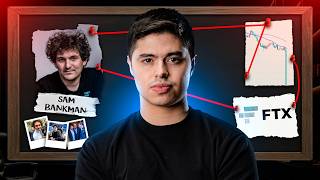

Larry David's FTX Ad Disaster
45sThe irony of a famous skeptic endorsing a crypto exchange that collapses 100 days later is both shocking and highly shareable.
▶ Play Clip"Delivers a thorough, well-structured breakdown of the FTX collapse, matching the title's promise of the century's biggest crypto fraud."
This video recounts the dramatic rise and fall of FTX, once the world's third-largest cryptocurrency exchange, and its founder Sam Bankman-Fried. It details how FTX's aggressive marketing, celebrity endorsements, and facade of altruism masked a massive fraud that led to the loss of over $8 billion in customer funds and Bankman-Fried's 25-year prison sentence.
The video opens with FTX's Super Bowl ad featuring Larry David, which mocked past inventions and dismissed crypto. 100 days later, FTX declared bankruptcy, losing over $8 billion in customer funds, and its founder was convicted of fraud.
Born in 1992 to Stanford professors, Sam was introverted and logical, finding passion in riddles and quantitative finance. He studied physics at MIT and interned at Jane Street, a quantitative trading firm.
Sam embraced effective altruism, believing he could do the most good by earning money in finance and donating it to effective causes. This philosophy justified his pursuit of wealth as a means to charity.
In 2017, Sam left Jane Street to found Alameda Research, a crypto hedge fund. He hired colleagues from math camp, MIT, and Jane Street, including Gary Wang and Caroline Ellison. Alameda profited from arbitrage, generating $1 million daily profits.
In 2019, Sam founded FTX, a cryptocurrency exchange offering advanced products like futures and options. It attracted institutional investors, and Binance invested in 2019, later selling its stake in 2021.
FTX used celebrity endorsements (Tom Brady, Steph Curry) and a $6.5 million Super Bowl ad to build trust and FOMO. This made FTX a globally recognized brand.
Sam cultivated an image of an eccentric, frugal genius, sleeping in the office and wearing casual clothes. He was featured in Forbes and Fortune as 'the next Warren Buffett'.
FTX and Alameda were secretly intertwined. Alameda used FTX customer funds as collateral for loans, and FTX created the FTT token, which was used as collateral for risky bets. This created a fragile house of cards.
FTX operated with no proper accounting or oversight. Financial decisions were made via Slack messages, moving millions without documentation or approval.
In November 2022, CoinDesk reported that Alameda held most of its assets in FTT, raising liquidity concerns. Binance CEO CZ announced selling $500 million in FTT, triggering a bank run on FTX.
FTX collapsed within days, causing over $8 billion in losses. Sam was arrested, extradited, and sentenced to 25 years in prison. Investors sued celebrities who promoted FTX.
The video advises diversifying, not keeping funds on exchanges ('not your keys, not your coins'), and doing your own research (DYOR) before investing.
The FTX collapse serves as a cautionary tale about the dangers of blind trust, lack of regulation, and the fragility of crypto platforms. It underscores the importance of self-custody and thorough research in the crypto space.
What was the name of Sam Bankman-Fried's hedge fund?
Alameda Research
06:10
What strategy did Alameda initially use to generate profits?
Cryptocurrency arbitrage, buying on cheaper exchanges and selling on more expensive ones.
07:24
What is the motto 'not your keys, not your coins' warning about?
If you don't hold the private keys, your cryptocurrencies are under the exchange's control and you could lose them if the exchange fails.
08:49
What was the main issue with FTX's internal controls?
There was no separation between company and customer funds, and financial decisions were made informally via Slack messages without documentation.
18:02
What triggered the collapse of FTX?
A CoinDesk report revealed Alameda's heavy exposure to FTT, and Binance CEO CZ announced selling $500 million in FTT, causing a bank run.
19:01
What was Sam Bankman-Fried's sentence?
25 years in prison for fraud and conspiracy.
23:39
What is effective altruism?
A philosophy that uses reason and evidence to maximize positive impact, often by earning money in high-paying jobs and donating to effective causes.
04:39
Super Bowl Ad Irony
The ad mocking skepticism about crypto is a stark contrast to the subsequent collapse, highlighting the power of marketing.
00:02Effective Altruism as Justification
Sam's use of effective altruism to justify his actions shows how a noble philosophy can be twisted to rationalize fraud.
04:14Not Your Keys, Not Your Coins
This principle is crucial for crypto security and is a key takeaway for investors.
08:49The Jenga Tower Analogy
The analogy effectively explains the fragility of FTT's market cap and the risk of illiquid assets.
19:01DYOR and Diversification
These are fundamental investment principles that could have protected users from the FTX collapse.
24:29[00:02] most important advertising event on the planet, the Super Bowl, millions of people witness one of the most iconic and best produced ads of the year. On screen we see a man flying off one of the greatest inventions in the history of humanity. The
[00:15] wheel, electricity, the toilet, coffee, each presented with awe as a great revelation and each ridiculed by the same character. Larry David, professional skeptic, king of sarcasm and star of The
[00:30] Larry David Show, a comedy of errors in which all his hunches go wrong. Finally, a young man shows him an application on his cell phone. FTX, a safe and easy way to enter the crypto world. Larry looks at him with contempt. Yes, I don't think so
[00:44] . And I'm never wrong about these things. Never. The commercial ends with a warning. Don't be like Larry. Don't miss out on crypto. 100 days later, FTX, the world's third-largest cryptocurrency exchange , declared
[00:59] bankruptcy, taking with it more than $8 billion in customer funds. Its founder, Sangman Pride, who ranked 15th among the world's richest men and was named the next Warren
[01:13] found guilty of fraud and exposed as the mastermind behind the biggest fraud in the history of the crypto world. But what went wrong? This is the story of the biggest cryptocurrency fraud in history. The
[01:27] cryptocurrency fraud in history. The FTX case. To talk about FTX, we first have to talk about its founder.
[01:49] 1992 in Stanford, California, into an upper middle-class family. His parents, Barbara Fright and Jos Bman, were university professors at Stanford LA School. The Bangman Fry family had two sons, Keape, the younger brother, who
[02:02] was energetic and cheerful, and Sam, who was serious and introverted. According to his own mother, Sam was not comfortable with other children or with the concept of being a child. For him, things like fashion, movies, or forced smiles
[02:15] were meaningless. Even things like children believing in Santa Claus or adults believing in God seemed as absurd to him as believing that Box Bunny was real. This led him to question everything that was not objective
[02:28] for regular school. He didn't consider himself a genius, but his parents took him to a math camp where he eventually met other children like him who didn't like to express themselves with emotions or gestures. It was in that
[02:41] environment that Sam discovered his passion for riddles, especially those that were difficult to solve. Sam created his own riddles and solve, always looking for ways to make them more difficult. This
[02:54] logical thinking eventually led him to the world of quantitative finance. Sam entered MIT in 2010 to study physics, originally intending to follow in his father's footsteps as a university professor. However, he
[03:08] soon grew bored and at a job fair he met recruiters from James Street, a quantitative finance firm shrouded in mystery. Quantitative finance involves using mathematics, data, and algorithms to
[03:20] make financial decisions. And although Sam wasn't from the finance field, they called him for an interview, which consisted of solving math problems and riddles, his great passion. Sam passed the tests and obtained a
[03:32] summer internship contract in 2014 before being officially hired. Trading firmation ETF deskans to US foreign stocks.
[03:48] EM US listed ETF that owns a bunch of emerging market companies um you know emerging market companies um you know across uh Asia, across Lot and you know across uh Asia, across Lot and you know a few places in Europe and basically
[04:01] combination of like modeling computer trading and real intuition kind of jumbled together. However, even though Sam comes on James Street, something was missing. He money; he wanted to use it to do
[04:14] good. Sam did not identify with any political ideology or social movement. I thought both the right and the left were ridiculous. Identifying with something seemed like a distraction to him. This detachment led him to feel that since he
[04:26] had no connection with anyone in particular, his duty was to do good for everyone. Since his time at university, Sman Fright connected with the effective altruism movement , a philosophy that
[04:39] promotes using reason and evidence to maximize positive impact on the world. This movement raises a moral dilemma. Not all jobs have the same impact on humanity. According to effective altruism, there are jobs that
[04:52] generate a direct benefit, such as being a doctor or researcher, and others that, although they may not seem so remarkable, can generate resources to finance charitable causes. For example, working in finance or technology may not
[05:04] enough money, you can donate a significant portion to organizations that do. For Sam, finance was not an end in itself, but a means to earn money and donate it to effective causes, such as preventing pandemics or
[05:18] reducing external poverty. In 2017, after several years at James Re, Sam decided to leave the firm because although he had thrived, he felt he was not maximizing his potential to do good. According to his vision, he wanted to earn
[05:31] as much money as possible to donate it to causes that would save lives and improve the world. I wanted to get rich not because I like money, but because I wanted to give that money to charity. With all this, Sam began to build
[05:45] his image as a modern hero, an eccentric genius who used his mathematical and financial skills to do good. He presented himself as someone who was hacking the financial system to benefit all of
[05:57] such lengths to portray themselves as a savior, you have to keep your eyes wide as a savior, you have to keep your eyes wide open.
[06:10] Research, a hedge fund that specialized in cryptocurrencies. A hedge fund is a type of fund that invests its partners' money with the goal of generating high returns and, unlike
[06:22] traditional funds, has fewer legal restrictions, allowing managers to make more flexible decisions and invest in a wide variety of assets such as stocks, derivatives, and even cryptocurrencies. But
[06:34] Sam wasn't alone in this project. To found Alameda, he surrounded himself with key people he met during his time at math camp, his studies at MIT, and his former job at James Street. Within this list
[06:46] were big names like Gary Wank, a talented computer programmer who had worked at Google and was the co-founder and CTO in charge of developing the technological infrastructure of all of Alameda. Nich, a
[06:59] software development, joined Alameda as director in engineering after working at Facebook, and Carlolynison, a former classmate from Sen Jane Street, was his love interest and became the chief
[07:12] had been a champion in math tournaments and not only had skills in quantitative finance, but she shared Sam's vision of using profits to do good in an
[07:24] was cryptocurrency arbitrage, a strategy that may sound complicated, but is actually quite simple to understand. $70,000 on an exchange in the United States, but for $70,500 on another in Japan.
[07:40] Arbitrage involves buying Bitcoin on the cheapest exchange and selling it on the most expensive one, making a profit of $500 per Bitcoin minus fees. It's like buying a product in a cheap store and selling it in another where they
[07:53] arbitrage opportunities in markets such as Japan, India, and Europe, where price differences between exchanges were more significant. In one year they managed to generate $1,000 in daily profits, which quickly
[08:07] made the fund one of the most profitable companies in the entire crypto ecosystem. This strategy was much easier to implement in the early days of the crypto market than it is today, but at that time Alameda became
[08:20] a money-making machine. Alameda was a complete success. However, Sam wanted success. However, Sam wanted more and in 2019 decided to found FTX, a cryptocurrency exchange designed to solve the problems he himself
[08:34] an online platform for buying and selling cryptocurrencies. There are many examples such as Binancecrypto.com, Bitzo and back then FTX. These platforms work great for buying and selling quickly, but there's something many people
[08:49] don't know. If you leave your cryptocurrencies on an exchange, they are not really yours. In the crypto world there is a motto that is almost a warning, not your keys, not your coins. Or, in other words, if you don't have the private keys, your
[09:02] cryptocurrencies are under the control of an exchange. And if that exchange goes bankrupt, freezes your account, or gets hacked, it's over, you lose everything. This is why it's essential to move your cryptos to your own wallet. Wallets allow you to
[09:15] store your private keys and be the sole owner of your cryptocurrencies. There are hot wallets that are connected to the internet and cold wallets that work offline, making them much more secure. In my case, I
[09:27] use a Layer COD Wallet because it gives me complete control of my assets without depending on third parties. My cryptos are not in the cloud, they are not in an application that can be shut down, and they are not at the mercy of someone else's decision; they are
[09:40] with me, and only I can move them. After seeing what happened with FTX, I understood that security is not optional, it's a priority. That's why I buy on exchanges, but I always transfer my cryptocurrencies to my Leder account. If you're
[09:53] use a cold wallet, leave a comment and I'll leave a link to the wallet I use in the description. But let's not get sidetracked. FTX didn't plan to just make another exchange. I wanted to be a platform that would revolutionize the
[10:07] market with innovation, transparency, and an altruistic purpose. EBTX featured advanced financial products such as cryptocurrency futures and options that allowed users to take more complex positions on
[10:20] asset prices. They also offered leveraged tokens that allowed trading in traditional stocks and other assets in the form of cryptocurrencies. These tools attracted not only retail investment, but also large
[10:33] financial institutions. So much so that the world's largest exchange, Binance, publicly announced on December 20, 2019 that it had invested directly in FTX. And that investment wasn't just financial;
[10:47] a strategic alliance was also formed to support its growth, provide technological and liquidity support. Remember this, it will be very important. Another promise was transparency. Unlike other exchanges, FTX claimed to have
[11:01] high standards of security and regulation. They emphasized, and pay attention here, that they had a system of external audits and an insurance fund to protect users' funds. Furthermore, they would work closely with regulators and
[11:15] policymakers regarding crypto investments, but what truly set FTX apart was its altruistic purpose. Sam constantly repeated that his ultimate goal was not just to make
[11:28] money, but to use those earnings for good through the concept of earn to good through the concept of earn to give.
[11:52] better place than the one they inherited. According to them, 1% of their net profits had gone to the members had donated substantially more of their income to
[12:06] such causes. Alameda Research's quantitative success was key to funding and building FTX. And in its first few months, FTX processed transactions worth over a trillion dollars, becoming the third largest exchange
[12:21] in the world. And in addition to this, it attracted high-profile investors this, it attracted high-profile investors such as Seoya Capital and SoftBanker, creating a unique combination of innovation and purpose in FTX. But how did FTX manage to go from
[12:35] being a specialized exchange to a brand recognized by millions of people worldwide? The answer is easy. a bold marketing strategy that consisted of using sports and entertainment celebrities to reach
[12:49] ordinary people. They needed to move beyond the niche of expert traders and reach the general public. And the way to do it was by partnering with figures who already had the trust and attention of millions of people. Their
[13:03] 2022 Super Bowl ad starring Larry David cost $6.5 million, lasted 30 seconds, and was seen by more than 100 million people. Multimillion-dollar deals were also signed with celebrities such as Tom Brady, Gisel
[13:18] Bunchen, and Step Curry. They sponsored teams and leagues such as Major League Baseball, the World Series of Poker, and even the NBA's Miami Hit, whose even the NBA's Miami Hit, whose stadium was renamed Theft FTX Arena.
[13:39] . The first, brand association, sought to transfer the trust or admiration that the public feels for a figure like Tom Brady or Step Curry to legitimize FTX before audiences who understood nothing about
[13:53] trust transfer is a common technique in complex industries, where people don't fully understand the product, but trust the figure promoting it. And second, they used FOMO, or the fear of missing out. They generate
[14:07] social pressure and a sense of urgency not to miss the crypto opportunity. And this worked wonders for them. FTX became one of the most recognized brands in the world. But this image of success and confidence they had built would not
[14:20] confidence they had built would not last forever. Sam wasn't just a successful businessman, he was a carefully constructed public figure
[14:36] . From the beginning, he cultivated a unique image. A young millionaire who lived frugally, slept in a messy office and ate fast food while running a financial empire. His disheveled style,
[14:49] messy hair, t-shirts and shorts made him seem authentic and approachable despite being a billionaire. This image of an eccentric genius was no good guy of cryptocurrencies, someone you could share a
[15:04] pizza with while he explained how to salt the world with blockchain. He seemed approachable, the world with blockchain. He seemed approachable, and that gave him a lot of confidence. Sam appeared on the covers of magazines such as Forbes and Fortune, where he was described
[15:16] as the next Warren Buffett. He constantly spoke of his commitment to effective altruism and how he sought to donate more and more money to causes such as climate change, global health emergency preparedness, and
[15:29] animal rights. This narrative turned him into an almost messianic figure, someone who promised to change the world. However, everything was about to fall apart. Although FTX and Alameda Research presented themselves as
[15:43] separate companies, they were actually deeply connected. Sam was the founder of both, and this close relationship allowed for practices that made a lot of money, but were very risky and unethical. One of the biggest
[15:57] problems was the use of FTX customer funds to finance Alameda's operations. Alameda took out multimillion-dollar loans using FTX customer funds as collateral. All of this happened without the users
[16:11] knowing that their money was being used for high-risk bets.
[16:26] money, FTX customers risked losing their funds. Can you imagine your bank using your savings to place bets without telling you? . But hey, here it was riskier over-assets, but the
[16:41] riskier over-assets, but the problems were just starting there. FTX created the FTT token, a native FTX token. Native tokens are the currency of an exchange, and their value depends largely on adoption by
[16:54] the platform's users and, obviously, on the trust that exists in the company. This is completely normal. Other exchanges also have their own native tokens, such as Binance with BNB, CCON with KCS, and Crypto.com with CRO.
[17:07] Using these native touches gives you benefits like no fees or access to cryptocurrency releases, but FTT was different. The FTX token not only served as currency, but FTX also secretly used it as collateral for
[17:22] loans and financial transactions. This model was highly speculative and fragile; if something went wrong, the entire system could collapse. Imagine this. You print your own Monopoly money, tell the bank it's worth
[17:36] millions, and the bank believes you. But not only that, it also lends you real money using those Monopoly bills as collateral. As long as no one questions the value of your banknotes, everything works. But as soon as someone doubts, everything falls
[17:50] apart. And this was about to happen. with FTX. Oh, yes, of course. Yeah, here it is.
[18:02] Yeah, here it is. FTX had a big problem: the lack of internal controls. Despite being one of the world's largest cryptocurrency platforms , the company operated as an informal business. There was no
[18:14] company funds and customer funds, and this meant that money moved around without any supervision. Financial decisions were made in an his team used applications like Slack and Quickbooks to test multimillion-
[18:30] dollar transactions. Millions of dollars were moved with a single chat message, without documentation, approvals, or confirmations of any kind. It was like running a bank with a WhatsApp chat and no contingency plan,
[18:44] no experience in financial management, and no accountants to keep things in order; FTX was building a huge house of cards that would soon collapse under house of cards that would soon collapse under its own weight.
[19:01] devastating. It all started in November 2022 when the Coindesk website published an explosive report on Alameda Research. S Bangman Fright's investment fund held almost half of its assets in FTT, the token
[19:16] half of its assets in FTT, the token created by FTX, his other company. This finding raised immediate alarms, not only because Alameda had a huge exposure in a token with no real external value , but because those FTTs were
[19:29] deeply illiquid. They could not be sold easily without their price completely collapsing. If someone released it en masse, everything would collapse. Because? Because the market cap or market capitalization is calculated by
[19:42] multiplying the price of a token by the total number of tokens in circulation. So, if there are 100 million FTT tokens in circulation and million FTT tokens in circulation and each one is worth $20, the market cap is in the
[19:55] millions. It seems like a lot, but here's the catch. That $20 price is only valid while nobody is selling in bulk. Because if you, who have millions of FTTs, try to sell them all immediately, the price won't
[20:10] hold; it will start to fall rapidly, since there aren't enough people willing to buy them all at that price at that moment. It's like having a Jenga tower. It looks impressive on the outside, but all it takes is for you to start removing several
[20:23] pieces quickly for everything to fall apart, and the worst part is that by selling it yourself you are telling the market, I think this isn't worth that much anymore. And I don't trust this either. And that's when the other investors panic and
[20:38] rush to sell as well. And what was few million in cash, if you're very lucky. That was the risk of FTT, an inflated market value that only existed if no one touched it. And the
[20:54] moment someone tried to convert it all into real money, it would fall apart. All of this made the entire crypto market nervous. And do you remember when we said that Binance had invested in FTX in 2019? Well, in 2021, long
[21:08] before this news, Vinance decided to leave. Sam bought back and Vinas received close to $2 billion. Part in cash and another part in FTT Tokens. At that time, Binance went from being a strategic ally to a
[21:24] direct competitor and one of the largest holders of FTT in the world. And in 2022 they were the first to light the fuse. On November 6, 2022, Champeng Show, CEO of Binance, posted a message on Twitter, known today as
[21:40] X, announcing that they would sell all of their FTT tokens valued at over $500 million. He stated that they were doing so due to recently revealed risks, and this
[21:52] publication was a direct hit to the heart of FTX. The market panicked, confidence evaporated, and it generated a wave of distrust in the market. Customers, worried about FTX's stability, began withdrawing
[22:06] their funds en masse, but FTX no longer had the money; it did not have enough liquidity to cover the withdrawals, as the Research department had used those funds for risky operations. Within
[22:18] days, FTX collapsed, and in less than a week it went from being the third largest cryptocurrency company to a case study in how not to run a financial company. The collapse not only affected FTX, but also exposed
[22:32] the weaknesses of the entire crypto ecosystem. Trust in cryptocurrency platforms was severely damaged, and thousands of customers lost access to their funds with estimated losses of over $8 billion
[22:45] . But it wasn't just individual users who were affected; reported significant losses. Companies that had invested hundreds of millions of dollars in FTX had to cancel their investments. For
[22:59] example, Seoya Capital, one of the world's most respected investment firms, publicly acknowledged that its investment in FTX had been a complete mistake and that they had lost more than $150 million. Investors
[23:13] were so enraged that they even sued the celebrities who promoted the platform, including the aforementioned Larry David, Tom Brandy, and Step Curry. In December 2022, Sam was arrested in Las Vegas,
[23:26] where Alameda and FTX had moved after spending some time in Hong Kong. After his extradition to the United States, he faced charges of fraud, money laundering, and conspiracy. In March 2024, Sam Bankman Fright was
[23:39] sentenced to 25 years in prison for orchestrating one of the biggest financial frauds of the century. And although his defense sought to reduce the sentence to 5 years, the most optimistic projections suggest that with good behavior he
[23:52] could be released in around 12 or 18 years. He was initially held at the Brooklyn, but after granting an unauthorized interview to Talker Carlson, he was transferred to a
[24:05] relocated to the FCI Terminant Iscel low-security federal prison in California, and today investors' funds are already beginning to
[24:17] be recovered. Realistically, it is highly unlikely that we could have predicted with certainty that this would happen with FTX. However, there are several things we could have done to take better care of our money.
[24:29] First, diversify, don't put all your eggs in one basket and don't put all your money on one platform, no matter how big it platform, no matter how big it is, and if possible, better not on any
[24:41] platform at all. Remember, not your keys, not your coins. If you want more security, use a cold wallet like the Ledger. And second, never blindly trust anyone or anything. No matter how good it seems, this leads us to another
[24:55] financial concept known as Do Your Own. Always do your own research before making any decisions. If someone recommends a platform, investment, or cryptocurrency to you, research it before doing
[25:09] anything. In the world of investing, ignorance is not happiness and education is true freedom. Now, if you liked the video of cryptocurrencies, you can start with my ultimate guide to
[25:23] cryptocurrencies and continue researching from there . I'll leave it in the comments what lesson you take away from this FTX story. I'll read your posts over there and see you soon in another video. Co?


⚡ Saved you 0h 25m reading this? Transcribe any YouTube video for free — no signup needed.