
AI Summary
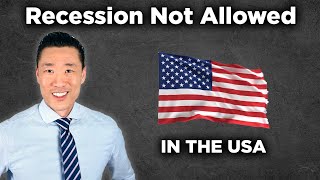
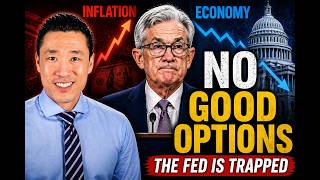
The video breaks down the Federal Reserve's FOMC meeting where interest rates were held at 3.75%, highlighting an unusually large number of dissents and Powell's final press conference as chair. The creator argues the Fed is trapped between cutting rates (spiking inflation) and raising them (crushing the economy), leaving incoming Chair Kevin Warsh with no good options.
Chapters
The Fed chose not to change interest rates, keeping them at 3.75%.
Four of the 12 voting members dissented, which is uncommon because Fed members usually stick together; four dissents have not happened since 1992.
Stephen Moran wanted to cut interest rates by 0.25%; three other members supported the rate decision but objected to keeping the easing-bias language.
The Fed is signaling that it is more likely to cut rates than raise them, though a growing number of members wanted a more neutral stance.
Powell emphasized there was no rush to make a decision and that the next 30 to 60 days could change the picture around the guidance language.
This was J. Powell's last meeting as Fed chair; he deferred a question about oil and the easing bias to likely successor Kevin Warsh.
Powell described the policy stance as at the high end of neutral or mildly restrictive, allowing the Fed to wait and see before acting.
Powell reiterated the Fed's goal of bringing inflation back down to 2% sustainably, even if it takes time and requires trade-offs.
The creator concludes the Fed is trapped: cutting rates would spike inflation, while raising rates would crush the economy.
The Fed held rates steady but showed unusual internal division, while Powell signaled patience and deferred to incoming leadership. The creator's key takeaway is that the Fed faces a difficult trap with no good options, leaving new Chair Kevin Warsh with a tough road ahead.
Mentioned in this Video
Study Flashcards (7)
What did the Federal Reserve decide about interest rates at this meeting?
easy
Click to reveal answer
What did the Federal Reserve decide about interest rates at this meeting?
They chose not to change interest rates; it remains at 3.75%.
00:01
How many of the 12 voting members dissented, and when did that last happen?
easy
Click to reveal answer
How many of the 12 voting members dissented, and when did that last happen?
Four members dissented; four dissents have not happened since 1992.
00:17
What rate cut did dissenting member Stephen Moran want?
easy
Click to reveal answer
What rate cut did dissenting member Stephen Moran want?
He wanted to cut interest rates by 0.25%.
00:48
What is core inflation, according to Powell?
medium
Click to reveal answer
What is core inflation, according to Powell?
Core inflation is 3.2% now.
03:17
What did Powell say about the current policy stance?
medium
Click to reveal answer
What did Powell say about the current policy stance?
The Fed is at the high end of neutral or perhaps mildly restrictive.
08:50
What is the Fed's goal for inflation?
easy
Click to reveal answer
What is the Fed's goal for inflation?
To get inflation back down to 2% sustainably.
11:49
What is the creator's conclusion about the Fed's position?
medium
Click to reveal answer
What is the creator's conclusion about the Fed's position?
The Fed is trapped: cutting rates would spike inflation, while raising rates would crush the economy.
13:13
💡 Key Takeaways
Rare Four Dissents
A level of Fed disagreement unseen since 1992, signaling deep internal division.
00:17Fed Keeps Easing Bias
Despite rising inflation, the Fed still signals cuts are more likely than hikes.
01:14Growing Push for Neutral Stance
Powell confirms more committee members now want neutral guidance, a key shift in sentiment.
03:02Powell Defers to Kevin Warsh
With his last meeting as chair, Powell leaves a major oil-price question to his likely successor.
04:38The Fed's Trap
The creator's central thesis: any rate move carries severe economic consequences.
13:13Full Transcript
[00:01] meeting and they chose to not change the interest rates. It remains at 3.75%. highlights of the Federal Reserve FOMC press conference, the video highlights, into the video clips, I want to show you this first.
[00:17] There are 12 voting members of the Federal Reserve. Four of the 12 members dissented, which means that they didn't agree. not common because they usually stick together with their decisions. Four
[00:32] together with their decisions. Four dissents have not happened since 1992. the Federal Reserve and it gives us more details on page two. And as you can see actually cut interest rates at this meeting. Of course, the decision was to
[00:48] keep interest rates unchanged. But here it says voting against this action was Stephen Moran, who wanted to cut interest rates by 0.25% at this meeting. And here's where the other three members dissented. Here's
[01:00] what actually happens. It says that three members supported the decision to not change interest rates at this meeting. However, they did not statement that says that the Federal Reserve is leaning towards interest rate
[01:14] So, basically the Federal Reserve is signaling that they're more likely to cut interest rates than to raise interest rates. want to signal that. They didn't want to signal that rate cuts are more likely
[01:28] than rate increases. So, listen, some people might say that we have a divided this is just my opinion, I don't think so. Like I wouldn't make much of this, but we can wait until the minutes are released to, I guess, dissect this
[01:42] highlights of the Federal Reserve press conference and Powell opens up with his prepared remarks. Honestly waste of your time. I'm not going to show those to you. Waste your time. So,
[01:56] we're going to jump straight into the Q&A session. So, the first question is, why are you leaning towards cutting interest rates when the rate of inflation is increasing? So, you're going to see Powell say that the rate of
[02:08] direction and for that reason they had a vigorous discussion about this. Vigorous. And basically, you're going to see he says that there's no rush to make a
[02:20] before the next meeting. So, please take statement today preserves language that has taken on some meaning as it was socialized when the committee was actively lowering rates. Why is that
[02:34] easing bias still ripe given how different the inflation outlook is now versus a meeting or two ago? And what more would [clears throat] have to happen for it to get evicted? So, um that was
[02:49] as you will recall, we we had a discussion about that at the last meeting. We had the same today. We had quite a issue and the guidance and is it still
[03:02] I would say that the, you know, number of people on the committee who either could support that language change, changing to a more neutral stance so that a hike is as as likely as as a cut, that number has increased over the
[03:17] intermeeting period. And it's easy to see why. I mean, it's it's it's it's it's a good question, right? You see inflation has moved up over the interim a bit. Core inflation is 3.2 now, moving albeit just a little bit in the wrong
[03:30] direction. And we we know that there will be, you know, that there's Gulf and we don't know how much that will be. We just we're going to need to see. So, it makes all the sense in the world that
[03:43] have a vigorous discussion about that. You saw the three people dissented over people agreed with the with the rate decision. So, the majority of the committee did not want to do that and and and I I was
[03:58] this meeting. It really was just a question of You know, we have so much to learn. There's so much uncertainty about the path ahead. There doesn't need to be any rush to make that decision now because,
[04:12] you know, what what happens in the next 30, 60 days, even by the next meeting, could really change the picture around that around that language. So, you know, it was a it was a it's a close it's it's a much closer thing on the committee
[04:24] makes all the sense in the world, seems to me. Okay, moving on to the next question. If the price of oil remains high up until the next meeting, will you still lean towards cutting interest rates? All
[04:38] right, just so you know, this was J. Powell's last meeting as chair of the Federal Reserve and Powell basically says that that decision's really going going to be Kevin Warsh. So, yeah, Kevin Warsh, any Fed chair,
[04:52] they're going to count for one vote of the 12 votes, but, you know, as I mentioned, the Fed voting members, they usually stick together in their decisions. So, please take a look. So, Claire Jones, Financial Times.
[05:05] Um just just going back to this issue of the the easing bias. Um we've now got oil approaching $120 a barrel when it comes to the benchmark um Brent crude. Um if it stays around those
[05:20] levels 6 weeks from now, what would be your guess best guess as to whether the easing bias will still be in the statement? Thank you. I I wouldn't want we're going to have new leadership in all likelihood by then and and new
[05:34] important role to play in that. So, I won't be standing here at this podium to answer your question. So, I don't know. As I mentioned, that's all I can really say is that we had we had a great discussion about that today. It's
[05:47] a better question in the interim period. We had the discussion. A majority are still on the page of of not feeling the need to move to that level and I I that's where I am. I I get it though,
[06:00] move and that that conceivably could come as soon as the next meeting. Okay, moving on to this question. Do interest rates need to go up in order to fight inflation? And you're going to see Powell say that they're in no rush. Like
[06:14] they're in no hurry to react with higher interest rates. Please take a look. Michael McKee from Bloomberg Television and Radio. I'd like to ask you if you characterize a little more the discussion about the two-sided view and
[06:28] members of the Open Market Committee who've been suggesting that we may need to raise interest rates even absent the war because inflation was not coming down fast enough. Is there any sense that interest rates
[06:43] might have to go up or was this just a setup to sort of warn people that you're worried about the war impacts? So, nobody the three dissenters and and others who could have supported that and others who
[06:58] were, you know, who were voters and preferred non-voters who preferred it, right? So, people are not saying we need to hike now. It's more a question of, you know, don't we kind of feel that we should be neutral and markets are
[07:12] markets What are markets doing? People argue that this is consistent with And again, it's a it's a very fair question, but, you know, these these changes, there is, you know, it's a form of forward guidance and you want to make
[07:26] make them in a way that that will be sustained and continue to make sense and not something you need to take back you know, fairly quickly. So, I think we a group of us including me, didn't feel like we needed
[07:40] markets are not confused about our reaction function. We don't have a side of the argument is a good argument, too. As I as I mentioned, it's perfectly good argument to be having, good discussion to be having. So, and it came
[07:54] out the way it came out. And now, moving on to this question. How do you see inflation and basically, what are you going to do about it? So, you're going to see Powell go to his, you know, go-to answer, which is take a wait-and-see
[08:08] approach. I mean, my interpretation is that, you know, they don't have a plan. Please take a look. In your view as a soon-to-be governor, how do you see the risks of oil prices bleeding into core
[08:23] was, it seems like the commentary that was Reserve Bank presidents, they were elevated concerns about the bleed into three dissents now. What do you see as the prospect of of of core inflation?
[08:38] >> those prospects are real. Remember though, our we're going to have to wait and see. We're going to need to see. And the good news is we think our policy stance is just is in a very good place for us to
[08:50] wait and see. We, you know, we're right kind of at the high end of neutral or perhaps mildly restrictive. The labor market shows more and more signs of stability, whereas inflation is kind of misbehaving and so maybe a little bit of
[09:05] of restriction or the high end of neutral is just the right place to be. So, we can wait here and see and see how things work out before we act. And we'll see how much that, you know, how much does come through into
[09:18] core. You see it already in airfares, of course, but you may see it in many other course, but you may see it in many other places. unknowable because how how long will the strait be closed? You can develop any
[09:30] number of scenarios that you want, but we really won't know till we know. So, fortunately, we're in a good place to to wait wait and let things develop. And now, moving on to this question. Are interest rates too low right now? So,
[09:44] that the rate of inflation was actually going up higher before the war even low? And you're going to see Powell say that, then we're going to raise them and if they're too high, then we're going to
[09:58] And you're going to see Powell say that he believes that the interest rate right now, what they set it to, is appropriate. So, please take a look. Thank you. Colby Smith with The New York Times. If I could follow up on Mike's
[10:11] assume that the hawkish [clears throat] outcome for the Fed is still one in which the committee just extends the pause in rate cuts? And to what extent is there a growing sense within the committee that monetary policy really
[10:25] isn't just restrictive at all right now. The economy is holding up relatively well despite this major energy shock. The unemployment rate has ticked lower. Inflation was moving sideways even before the war and is now moving higher.
[10:38] So, so where is the committee at on that debate? You know, really we think our policy rate is in a good place. If we need to hike, we will we will certainly signal that and we will and we
[10:50] will certainly do it. And if we need to to cut, then if it's appropriate to cut, then we'll we'll signal the opposite. I think we because we feel like we're direction. Nobody's calling for a hike right now.
[11:06] it really is going to depend on how things how things evolve. it is. You know, as I mentioned close you know, much closer question this cycle on changing the guidance, but but ultimately we didn't. Now, here's the
[11:22] Americans suffering from the consequences of inflation over the past few years? And for this one, like I'm not going to I just want you to see it. Just take a look. Misbehaving inflation then. You
[11:36] talked about those four big shocks, supply shocks over the past five years What's your message to American families who feel like inflation has not been under control for them really since since the COVID reopening?
[11:49] inflation back down to 2% and and sustainably. That's that's our goal and we will we'll stick at it until that happens. We keep getting these events keep happening which keep driving up
[12:03] And you know, the best thing we can do is to use our tools to guide inflation back down to 2%. I think trying to get there really quickly could be very costly in terms of of of job loss and things like that, but
[12:19] we try to get there over time in a way that does the least damage possible and you know, our commitment to that is never ending and unshakable. Okay, I really enjoyed this question to Jay Powell. What's your legacy going to be?
[12:31] believe that Jay Powell's legacy is going to be inflation is transitory. think that's his legacy. Or it could be that meme. Like you know
[12:43] that meme of him just printing away like the money printers go burr. Like I can't get in trouble, but please take a look. Thanks Chair Powell. Christine Romans, NBC News. I want to ask about legacy. When the history books are written, how
[12:58] do you think your stewardship at the Fed will be remembered for the past eight You know, I'm going to just say that that's for that's for someone else to Okay, I just want to conclude with my interpretation of the Federal Reserve
[13:13] meeting. My belief is that the Federal Reserve right now is trapped in a very Because if they cut interest rates, then that's going to spike the rate of inflation. And if they raise interest rates, then that's going to crush the
[13:26] So, all I can say is that the new Fed chair, Kevin Warsh, he is walking into a very difficult position. So, all I can say is good luck. Thank you for the support and I wish you a very nice day. Take care.