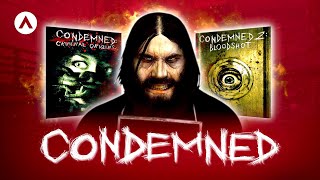

Why Condemned 2 Failed?
60sFans of the cult classic will be drawn to the mystery of why the sequel flopped, sparking debate in comments.
▶ Play Clip"Delivers a thorough history of the series and addresses the mystery of the third game, though the title slightly oversells the 'mystery' aspect."
This video explores the history of the Condemned video game series, from its origins at Monolith Productions to the development and reception of its two installments, and the mystery surrounding a potential third game. It covers the creative vision, development challenges, and critical reception of both Condemned: Criminal Origins and Condemned 2: Bloodshot, concluding with the franchise's uncertain future.
Monolith Productions aimed to explore interactive horror from a brutal, in-your-face perspective with themes of violence and human nature, resulting in Condemned: Criminal Origins (2005) and its sequel Condemned 2: Bloodshot (2008).
Founded in 1994, Monolith Productions initially worked on games like Blood and Claw before gaining recognition with The Operative: No One Lives Forever and T.R.O.N. 2.0, leading them to revisit horror.
Lead Game Designer Frank Rooke researched horror in culture and concluded that the twisted mind of a serial killer was the perfect subject, leading to the game's focus on in-your-face horror, suspense, and psychological horror.
Condemned originally was titled The Dark, featuring a protagonist with telekinetic abilities. This was later changed to focus on a psychic link to killers, and the forensic specialist's gender and tool capabilities were altered.
Monolith prioritized chaotic and unpredictable enemy behavior, with foes retreating, searching for weapons, and calculating tactical advantages. Melee combat was designed to be visceral and primal, without complex combos.
Condemned was built from the ground up for Xbox 360, leveraging its power for graphics and gameplay. The development cycle was intense, with only 15 months to complete the game, leading to crunch and cutting a planned co-op mode.
The game was praised for its enemy AI, visuals, sound design, and melee combat, but criticized for subpar story presentation, basic forensics, dull level design, and a lackluster payoff.
Monolith aimed to address criticisms with deeper combat and less claustrophobic levels. The sequel introduced combo chains, varied gunplay, and environmental finishers, but the narrative took a darker, more fantastical turn.
Developers were divided on Ethan's character, leading to a darker tone with alcoholism and anger issues. This resulted in replacing voice actor Greg Grunberg, a decision later resented by fans and developers.
Bloodshot reviewed well, with improved combat and forensics, but the narrative and character changes were divisive. A third game never materialized, and the franchise's future remains uncertain, with Bloodshot unplayable on modern hardware.
The Condemned series, particularly Criminal Origins, remains a cult classic, but its sequel's divisive changes and lack of a third installment have left the franchise in limbo, with its legacy preserved mainly through the original's status.
What was the original title of Condemned: Criminal Origins?
The Dark
06:17
Who was the Lead Game Designer for Condemned?
Frank Rooke
03:46
What supernatural ability did the protagonist have in The Dark?
Telekinetic-like skills
06:49
How long did Monolith have to develop Condemned: Criminal Origins?
15 months
10:11
What were the four pillars of Condemned 2's combat system?
Fisticuffs, weapons of opportunity, attack and defense chains, and environmental finishing moves.
15:11
Why was Greg Grunberg replaced as Ethan Thomas's voice actor?
The darker turn with Ethan required a voice that better represented that edgy darkness.
17:25
What was the name of the survival mode in Condemned 2?
Fight Club
14:57
Who owned the Condemned IP and expressed interest in licensing it?
Jace Hall, Monolith co-founder and former CEO
19:13
Serial Killer as Horror Subject
The decision to focus on a serial killer's twisted mind set the series apart from other horror games.
03:46Original Concept: The Dark
Reveals the game's evolution from a supernatural-focused concept to the grounded psychological thriller of Criminal Origins.
06:17Unpredictable Enemy AI
The emphasis on chaotic enemy behavior was a key innovation that enhanced the horror experience.
07:3215-Month Development Crunch
Highlights the intense production schedule that shaped the final game and led to cut content.
10:11Ethan Thomas's Darker Turn
The character's evolution was controversial and divided both developers and fans, impacting the series' direction.
16:38[00:17] The representation of horror in gaming wore many faces by the advent of the seventh console generation. Developers equipped with a knack for guiding players through terror-laden adventures had covered everything from zombie narratives and psychological horror to tales of
[00:32] suspense and the supernatural. For its Xbox 360 launch title, Monolith Productions endeavored to explore interactive horror from a different angle, a more brutal, in-your-face point of view teeming with themes about violence and the nuances of human nature. It accomplished
[00:48] as much with 2005 s Condemned: Criminal Origins, then pushed the envelope further upon delivering Condemned 2: Bloodshot in 2008. Condemned s claustrophobic setting and
[01:00] discomforting atmosphere were complimented by then-unparalleled hand-to-hand combat mechanics. And the decision to centralize an FBI agent following the trail of a serial murderer turned what could ve been a typical first-person experience into
[01:13] a memorable psychological thriller. Thus, the first Condemned has long enjoyed the status of a revolutionary cult classic, yet many would argue its sequel faded into obscurity not long after hitting the market. Why the second outing failed to garner the
[01:28] adoration afforded to its predecessor has puzzled series faithful for years. But there were some aspects of Condemned 2 that didn t exactly gel with the path that some assumed the franchise hopes of its potential return linger, Condemned constitutes one horror classic
[01:45] that may not get the opportunity to claw its way through the genre s latest renaissance. This is the history of Condemned.
[02:48] Founded in Kirkland, Washington in 1994, Monolith Productions got its feet wet with a host of different interactive experiences. The studio s debut project, Blood, sank players into one of the goriest first-person action adventures of the day. A 2D side-scroller named Claw followed not
[03:05] too long thereafter, starring a puzzle-solving pirate cat as the main protagonist. But some of Monolith s most well-known efforts didn t come to fruition until the turn of the century, with the likes of first-person stealth game The Operative:
[03:18] No One Lives Forever cementing the development house as a force to be reckoned with. The licensed title T.R.O.N. 2.0 on the original Xbox further boosted the team s reputation, but the developers
[03:30] longed to create a different style of game, something more than another action-heavy romp that would allow them to leverage their talents with first-person shooters and storytelling. Coming off a series of action-based endeavors, revisiting the company s horror roots seemed a
[03:46] step in the right direction. Lead Game Designer Frank Rooke dove into researching horror in today s culture, hoping to find a hook for the studio to latch onto. The designer scoured countless films, books, and headlines in search of a subject that exemplified the creepiest and darkest of all real
[04:02] horror. In so doing, he and the team concluded the twisted mind of a serial killer fit the bill. Fleshing out the idea motivated the close analysis of several different aspects of the genre,
[04:14] each one implemented to present players with unique challenges and opportunities. What Monolith deemed in-your-face horror acted as one type of thrill that would be employed for the project. Such terror emphasized jump scares, a classic clich the creators believed was effective
[04:30] when least expected. Threading these scares in so users couldn t anticipate them proved tricky; thus, Monolith reasoned that actions shouldn t always sit at the center of attention in this regard. Some jump scares relied on visual or audio cues as a result.
[04:45] Suspense informed the horror-driven experience as well, as the team found it useful for tweaking the pacing and testing the player s apprehension to conflict. Finally, psychological horror
[04:57] played its part by directly influencing user behaviors through hallucinations that blurred the line between imagination and reality. Monolith wanted its carefully orchestrated mind games to also reflect the main character s deteriorating mental state throughout the course of the story.
[05:12] Rooke explained in an IGN interview that these combined efforts supported a vision predicated on an attempt to understand violence. Studio CEO Samantha Ryan elaborated further in the press release accompanying Condemned s announcement, claiming the goal was to
[05:26] marry a disturbing atmosphere with realistic physics, devious AI, and a sophisticated combat system. While the title arguably achieved these ends in spades, the Condemned that creeped onto store shelves in 2005 did not constitute the game Monolith Productions built from the outset.
[06:01] The Extras content included with Condemned: Criminal Origins boasted behind-the-scenes footage, concept art, and gameplay-related details dating back to the project s incipient production phase. One Extras segment revealed that Condemned originally bore a different name,
[06:17] The Dark. This version cast players in the role of a disenfranchised FBI agent Agent Cross[a] who scoured the underbelly of a nondescript city for clues about a string of brutal murders that appeared inexplicably linked to him. Leads from an anonymous source would ve led the agent
[06:34] s investigation to a deserted youth center, the supposed location of the killer s next victim. Footage from The Extras showcased a lengthy look at The Dark s prototype gameplay[b], which highlighted a few key differences between earlier builds and what would later become Criminal
[06:49] Origins. Most notably, the protagonist possessed supernatural abilities that manifested in telekinetic-like skills. At one point in the demo, for example, the federal agent used his powers to
[07:01] disarm an enemy of their shotgun[c] from several feet away; Condemned merely displayed Ethan Thomas s personal connection to the supernatural as a psychic link to certain killers. Meanwhile, the gender of the agent s forensic specialist and the forensic tool s functional capabilities
[07:16] counted among the smaller changes between the two iterations[d]. Larger enemies appeared more unhinged in The Dark, too, indicating the game s impressive AI technology didn t come online until after the concept evolved into Condemned. Monolith s efforts with enemy behavior were
[07:32] nothing to scoff at, either. Producer David Hasle noted in a 360 Gamer interview[e] that the company prioritized supplementing combat encounters with chaotic and unpredictable" foes. As a result, the criminals Ethan faced rarely charged on-sight; the enemy design worked such
[07:48] that they were more likely to retreat or search for weapons. AI behaviors additionally allowed adversaries to calculate tactical advantages, thereby permitting actions such as breaking lights and seeking out weapons stronger than whatever the protagonist wielded.
[08:02] Once these encounters began in earnest, melee fighting the core of the combat system came into play. Developers acknowledged that most games contemporaneous to Condemned s creation lacked adequate melee mechanics, encouraging an emphasis on making hand-to-hand feel as
[08:18] satisfying as dispatching rogues with firearms. That meant taking the time necessary to ensure the impact of trading blows with enemies felt visceral. Visual feedback proved equally integral, so successfully landing strikes often culminated in foes recoiling or spitting out blood.
[08:34] Despite the combat system s intensity, it bore a fairly barebones structure, without combos or inputs that mandated complicated button sequences. Monolith designed the mechanics around basic, raw,
[08:46] and primal types of fights, the thinking being that such a style was appropriate for Condemned s setting the fictional city of Metro whose denizens had suddenly been driven towards madness. This line of thought further explained the average vagrant s crude combat
[09:00] skills and their penchant for utilizing whatever weapons lay scattered around the environment. Each detail serviced the game s atmospheric tension and cinematic qualities," providing a psychological thriller unlike anything else in gaming. VP of Entertainment Marketing at Sega,
[09:16] Scott A. Steinberg[f], claimed the more unique facets of Condemned were previously impossible to realize on older hardware. Criminal Origins, thus, owed its acclaimed intricacies to the power of the Xbox 360.
[09:39] Monolith built Condemned from the ground up for Xbox 360, leveraging its horsepower for the horror title s graphics, gameplay, environments, and mature tone. But targeting
[09:54] a release alongside Microsoft s seventh-generation console made for an intense development cycle[g], even with assistance from the platform holder and Monolith s publishing partner, Sega. Speaking with YouTube channel Dead Domain, Frank Rooke revealed the crew only had 15 months to
[10:11] complete its opus in time for 360 s November 2005 debut. In fact, an extreme time crunch weighed so heavily on production that developers conducted very little testing outside of Quality Assurance.
[10:25] Rooke s claim echoed earlier statements Producer David Hasle made in a pre-launch interview with 360 Gamer[h]. Hasle told the publication Monolith didn t receive 360's final hardware build until five weeks before rolling into certification, a process that ensures software won t brick the
[10:43] console or run afoul of certain regulations. Consequently, long hours of crunch were required to maintain its scheduled due date. The short deadline additionally forced several ideas to the cutting room floor, chief among them being a planned cooperative mode. Setting aside
[10:59] resources for the multiplayer component would ve significantly stifled progress on the campaign, the very reason Criminal Origins has long been held in high regard. Sega published the unsettling horror experience in November 2005 to reviews that deemed it a
[11:14] harrowing journey worth taking for fans and non-fans of the genre. The enemy AI, stunning visuals, and unnerving sound design blew away critics and players alike. Condemned s melee mechanics garnered high marks, too, with some counting The Chronicles of Riddick: Escape
[11:30] from Butcher Bay as its only rival in terms of first-person hand-to-hand combat. And an absence of reprieve from tension amplified the immersion to the degree that many forgave Condemned s flaws. Yet, its shortcomings still hampered the adventure because of subpar story presentation,
[11:46] overly basic forensic investigations, dull level design, and the lingering threat that a few reviewers felt lacked a satisfactory payoff. Not unlike other studios, Monolith gave the
[11:58] criticism much thought and mulled over how best to augment the series for a subsequent entry. The result came across as a sequel that, in overcorrecting its predecessor s faults, lost sight of the brand identity it tried so hard to expand.
[12:33] Criminal Origins, targeting a two-year development cycle and Fall 2007 release window. The process began with a hard look at critiques, which informed the core areas developers wanted to tackle for Condemned 2: Bloodshot,
[12:49] namely deeper combat mechanics and less claustrophobic play spaces. Work on the latter kicked off early in the pre-production phase, with level theming centered on figuring out the best new environments for the sequel. According to Senior Level Designer
[13:03] Jonathan Stein, designing maps that formed a cohesive whole didn t exactly sit at the top of Monolith s list of priorities. Staffers pitched locations that appeared in the final product if they grew popular enough internally. Once the environments were settled on,
[13:18] threading the story in and around them took precedent next. Senior World Designer Casey Burpee told Dead Domain the building blocks behind this pieced-together structure were proposals for
[13:30] scary environmental situations, such as the Walker Doll Factory level. Attempts to fit in interesting scenarios became the name of the game whenever someone brought forth a chilling idea.
[13:42] This approach worried those who thought Condemned 2 would feel erratic and incoherent in the hands of players. On the other hand, the notion that the sequel s perceived incoherence played into its narrative s strangeness offered some semblance of comfort, especially when
[13:56] considering the questionable mental state of returning protagonist Ethan Thomas. In spite of its rather rudimentary qualities, players by and large were fond of the fighting mechanics in Criminal Origins. The crew at Monolith knew they could do better, however,
[14:10] and established grander ambitions when crafting Condemned 2: Bloodshot, endeavoring to build responsive and satisfying gameplay. Obsessive iteration on Ethan s combat abilities culminated in the addition of varied gunplay options, combo chains, and hand-to-hand attacks that didn t force
[14:26] the use of accessories like the first game. Condemned s reconstructed gunplay mechanics, in particular, were what Producer Martin Caplan described[j] as low cost implementation since Bloodshot ran on the same engine that powered Monolith s FPS horror series, FEAR. Still,
[14:42] melee combat remained at the heart of Condemned, necessitating regular testing that one staffer facilitated by designing a combat pit wherein developers could experiment with the mechanics. Animation Lead Richard Lico recalled that the combat multiplier must ve been derived from
[14:57] these playtesting sessions. In addition to laying the groundwork for the melee system, the combat pit also informed the creation of Condemned 2 s Fight Club, a survival mode where players could test their skills against whichever vagrants they encountered during the campaign.
[15:11] As Senior Producer Constantine Hantzopoulos[k] explained while speaking with GameReactor, the combat system itself was based on four separate pillars the first being what Criminal Origins lacked, good old fashioned fisticuffs. Weapons of opportunity like bricks
[15:26] and pipes strewn throughout the environment made up the second layer. Though players could pick up similar weapons in the original, the ability to throw them in Bloodshot added an exciting twist. Attack and defense chains elevated the moment-to-moment action, as well. Typically,
[15:40] enemies in Condemned attacked Ethan one or two at a time; the sequel saw upwards of five foes swarm the character, requiring the use of vicious, bone-breaking moves" in quick succession to keep them at bay. Environmental finishing moves comprised the fourth and final combat pillar,
[15:55] inviting users to perform finishers of their choosing on downed opponents. Much like Criminal Origins, the brutality on display in Condemned 2 wasn t for the faint of heart. But even while pushing the boundaries in this regard, Monolith Productions took care not
[16:10] to veer into Mortal Kombat fatality territory. The studio, thus, worked closely with the ESRB, the ratings board s watchful eye keeping the developers in check about any potential red flags. Since violence held more purpose this time around, the combat represented only one
[16:25] part of the franchise that developers felt a need to completely makeover. Internally, developers were divided about the next evolutionary step for Ethan Thomas,
[16:38] as some believed the character failed to hit the mark in Criminal Origins. Correcting this in Condemned 2 meant darkening the game s tone and giving the protagonist an added layer of depth, specifically in the mold of flaws that manifested as alcoholism and anger management issues. Still
[16:55] reeling from the events of Condemned, a descent into madness further hounded him throughout the sequel, forcing Ethan and the player to question reality. The new direction opened the door for fantastical elements, with government conspiracy theories
[17:09] taking precedent over investigating deranged serial killers. It all coalesced into an experience that bore superficial commonalities to the original, the darker tone and newly affixed fantastical themes stretching the brand into uncharted territory. But for the paradigm shift
[17:25] to succeed, the lead character had to reflect these changes hence Monolith s replacing Greg Grunberg as Ethan s voice actor, though Senior Producer David Hasle claimed the Heroes star did express an interest in reprising the role. Hasle explained in an IGN Q&A that a darker turn with
[17:41] Ethan" stimulated the need for a voice that better represented that edgy darkness. Developers and fans would later resent this decision, however. Bloodshot landed on PS3 and Xbox 360 in March
[18:01] 2008, reviewing just as well as[l] Criminal Origins if not better in some cases. The overhauled combat and improved forensics with its accompanying rewards system were the highlights of the experience for most. Even the multiplayer component, which Monolith added
[18:15] later in production to keep users invested long-term, proved a winner amongst critics and players. Impressions of the narrative and Ethan s evolution between games were divided at best; interestingly enough, the development crew also seemed split on the matter.
[18:30] Richard Lico shared with Dead Domain his retrospective realization that the fantastical-driven themes didn t mesh all too well with the Condemned universe. The animator further divulged that some of his colleagues resisted the changes directed at Ethan,
[18:43] thinking the protagonist had become too different for the sophomore effort. To the chagrin of many, a third chance to expand upon the horror series never materialized. Most staffers either joined FEAR 2 s production or exited the studio after shipping Condemned
[18:58] 2. By most accounts, there weren t any serious attempts to begin work on a third Condemned. Yet, Monolith co-founder and former CEO Jace Hall, who reportedly conceptualized ideas for two more entries during Bloodshot s development, once expressed hopes of seeing the franchise revived.
[19:13] Because he owned the Condemned IP, the industry veteran penned a Facebook message in January 2015 about potentially licensing the property to an interested and proven indie development team. The
[19:25] arrangement would ve given fans a much-coveted third installment, while providing a smaller crew with the opportunity to apply their vision to the reawakening of a beloved IP. Whether or not Hall ever entered negotiations on such a partnership remains unknown,
[19:39] but nothing concrete came of the proposition regardless. The future of Condemned continues to dangle in the wind, hanging on by the cult status of Criminal Origins because Bloodshot never received a PC port and remains unplayable on modern PlayStation
[19:54] and Xbox hardware[m]. But that cult status has given the brand a lot of mileage over the years, guaranteeing the harrowing terrors of Criminal Origins, in particular, won t soon fade memory.
⚡ Saved you 0h 21m reading this? Transcribe any YouTube video for free — no signup needed.