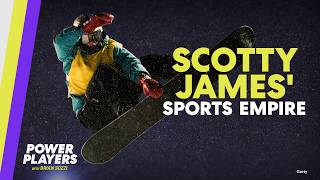

Pro Snowboarder Reveals Training Secrets
45sHigh-value insider knowledge on elite training methods, appealing to fitness and sports enthusiasts.
▶ Play Clip"Title promises a strategy for focus and success, and the video delivers with Scotty's insights on saying 'no' and balancing priorities."
In this special episode from Cannes Lions, Olympian and world champion snowboarder Scotty James discusses his training evolution, the impact of safer training environments on risk-taking, his transition into entrepreneurship, and the importance of saying 'no' to maintain focus. He shares insights on mentorship, the changing media landscape in action sports, and his commitment to the 2030 Olympics.
Scotty trains year-round, including summer training at Mount Hood, Oregon, where they maintain a halfpipe. He emphasizes gym work six days a week even when not on snow.
Training has evolved from his early start at age 6-7, turning professional at 12. Now at 31, he competes against 17-year-olds, requiring a more demanding physical and mental approach.
He focuses on explosive training, core work, and lowering his center of gravity. He avoids heavy weights to minimize upper body mass, and does cycling and aerobic/anaerobic fitness for high-altitude halfpipes.
The new generation may take fewer risks because training environments are safer (bigger halfpipes, airbags). However, the learning curve is steeper, and they improve faster.
Scotty created two new tricks: switch backside double cork 1440 and backside 1440. He spends time on trampolines, watching footage, and ideating before bringing tricks to the mountain.
He looked up to Shaun White (competitive dominance), Danny Davis (creativity), and Kevin Pearce (mixture of both). He now feels imposter syndrome when kids look up to him.
He holds back advice from close competitors but shares everything with young kids who will be professionals in 10-15 years, to prepare them for the sport.
Scotty is transitioning into entrepreneurship, investing in X Games and other ventures. He emphasizes learning through experience and broadening horizons beyond the halfpipe.
He admires Alex Rodriguez's real estate investments and team ownership, seeing a model for his own future in sport business.
He is a 'sponge', learning from business partners at MSP Sports Capital and friends in various sports, including Formula 1 and cycling.
Inspired by Eliud Kipchoge, Scotty emphasizes the importance of saying 'no' to stay focused on his goals, balancing training and business.
Sponsorship opportunities often come before the Olympics, not after. He notes increased recognition from Netflix appearances, especially in North America.
Climate change is a real concern for snowboarding. He advocates for mindfulness and giving back to the mountains that have given him his career.
The sport is adapting to how Gen Z consumes content, with streaming playing a key role. This influences what mountains build, like parks and pipes.
He donated a mini halfpipe cutter to Thredbo, Australia, creating 'Mookie's Mini Pipe' to engage locals and provide access to the sport.
Scotty is committed to the 2030 Olympics, aiming for gold after winning three medals (none gold). He emphasizes honesty, physical and mental readiness, and learning from experience.
Scotty James exemplifies how elite athletes balance peak performance with strategic life choices, leveraging the power of saying 'no' to maintain focus and transitioning into business while staying committed to future Olympic glory.
At what age did Scotty James start snowboarding and when did he turn professional?
He started at age 6-7 and turned professional by age 12.
02:24
What training methods does Scotty James use to lower his center of gravity?
He avoids heavy weights, does explosive training, core work, cycling, and aerobic/anaerobic fitness.
03:03
Why might the new generation of snowboarders take fewer risks?
Because training environments are safer with bigger halfpipes and airbags, reducing the consequences of falls.
04:11
What two new tricks did Scotty James create?
Switch backside double cork 1440 and backside 1440.
06:14
Who are Scotty James's role models in snowboarding?
Shaun White, Danny Davis, and Kevin Pearce.
07:08
What is Scotty James's approach to sharing advice with competitors?
He holds back advice from close competitors but shares everything with young kids who will be professionals in 10-15 years.
08:15
What did Eliud Kipchoge say was the key to his success?
He said, 'I've had a very good dose of vitamin no. I've been able to say no.'
13:18
When do sponsorship opportunities typically arise relative to the Olympics?
They typically arise before the Olympics, not after.
14:27
What is 'Mookie's Mini Pipe'?
A mini halfpipe cutter donated by Scotty to Thredbo, Australia, to engage locals and provide access to the sport.
17:32
How many Olympic medals has Scotty James won and what color?
He has won three medals, none of which are gold.
18:43
Power of Saying No
Scotty attributes his focus to Eliud Kipchoge's advice about saying 'no', a key principle for success.
13:18Safer Training Reduces Risk
The evolution of training environments has changed risk-taking behavior in the new generation.
04:11Athlete to Entrepreneur
Scotty's transition into business while competing shows a new model for athletes.
09:07Climate Change Awareness
Scotty acknowledges climate change's impact on snowboarding and advocates for mindfulness.
15:21Commitment to 2030
Scotty's determination to win gold in 2030 highlights his long-term goal-setting.
18:15[00:05] Players and this is a special episode. I'm just out in the middle of a a pier great conversations and one of those most amazing guests we got for this one. Scotty James, Olympian, world champion um snowboarder. It's ironic we're
[00:19] man. It's like 90° plus. >> This is a this is definitely a different scenery and my fair skin is um is screaming right now. But look, I'm not It's great.
[00:32] for having the best arrival to our can lions. And I look I This is early in our called like a tender. I thought it was like a boat. Yeah. We pulled up right here on the pier, walked, saw you. I mean, what a
[00:46] of all, is this your first can lines? >> Uh, yeah. I mean, it's my second can line, actually, and to be honest, um, yeah, it's amazing to be here. I think every CMO in the world is here. Uh,
[00:59] it's just cool. I mean, as an athlete, obviously doing a lot of brand partnerships over my career and then obviously making new connections now as I moved into the entrepreneur part of my life and also the being really
[01:12] interested in the in the business um perspective. It's just great to be here and connect with people and see a lot of athletes here which is also really great. So um and of course the weather is unbelievable. So why not come to Ken?
[01:24] I I I feel bad talking to you because like should you be out training? Am I another medal? >> You're not you're not keeping me from anything right now. Honestly, this is exactly where I want to be. Uh no, I
[01:36] just got back, you know, funnily enough last night. I was uh last week I was in Mount Hood, Oregon. We train out there every summer. Um we have a halfpipe there and it's hot temperatures, but you know, we we managed to get a halfpipe up
[01:48] there, which is amazing. So, no, still in full-time training and I'm not on the board on the mountain. I'm in the gym 6 days a week, so the show goes on regardless of the snow. Um, and I can still do the training here in Can. It's
[02:00] >> I, uh, I've declared myself a recreational athlete, uh, having done my for like two years. What a kick in the ass that event is. How, um, how, how, do
[02:12] you train for what you do? Like, what is it like training and how is it different now compared to when you first started? Yeah, training has definitely evolved from when I was uh when I started the sport was pretty young and six or seven
[02:24] years old and really pursued it as a profession by the time I was 12. You got to start pretty young in snowboarding. You know, even now I'm 31, been in the game for a long time and I'm veteran and I'm competing against 17y olds. So, it's
[02:38] I'm competing against 17y olds. So, it's a yeah, it's a young sport. But how it's snowboarding generally, you know, the stigma around snowboarders and action sports is that we kind of all we do is
[02:50] just what we do on the mountain and we train, we're very happy, golucky, relax, which is, I would say, the majority of our character, but the tricks and the evolution of the sport now is so demanding physically and mentally that
[03:03] there has had to be a bit of a swing in the sense of how we or at least myself how I approach it. So there's a lot happening in the gym. Do a lot of explosive training, a lot of core work. I'm taller for my sports, so I need to
[03:15] try and lower my center of gravity as much as possible. So you'll never see me pick up a weight, beach weights I call them. Um yeah, so the more things that I do to minimize any um weight upstairs is super important. Do a lot of cycling,
[03:27] aerobic fitness, anorobic fitness. Half pipes are can be very high, 2500 m to 3,000 m um when we're doing our pre-season training in the glacias. So you need to be pretty fit um ready to go. So I think there's so many without
[03:43] going in too deep there's um I mean many facets that obviously help snowboarding early days the way that we're learning to adapt um training off the mountain to everything you do is extremely risky like everything from even just getting
[03:57] on the snowboard. How do you see this generation different this generation little bit different those 18-year-olds in terms of taking risks? Are they more are they taking more risks than you took when you were 17? It's a really good
[04:11] question to be honest. Uh I think the majority would say no. Reason being is because the training environment has evolved. It's become safer. We have bigger half pipes which when you look at it seems more daunting and scary but
[04:27] actually a little bit well it's a little safer because you've got your your room for error is still very small but you have a little bit more room on the wall if you land in our case we would say if you land flat or if you um land a little
[04:41] forgiving than the pipes were back in the day. They're much shorter. Um the big airbags now. Uh, so if you're learning a new trick, you can obviously
[04:53] fall a thousand times into the airbag without too many consequences and then you can really bring that into the halfpipe. So I would say the new generation, whereas when I grew up, I didn't have the airbags. The margin for
[05:05] error was an OG. You are an OG OG. Um, but look, it is still dangerous and I still think that if you want to be uh the cream of the crop or the best of the best, you're obviously going to have to take those take those risks. Um and the
[05:18] learning curve now is getting much steeper because of those because of the access to these different um training environments that the kids are actually environments that the kids are actually getting better quicker. So it's um
[05:30] learn that grit and I'm fortunate in the era that I grew up in I've still uh yeah I guess I had to train and learn to deal with that that grit and falling down and airbag on >> these airbags shouldn't be allowed. I
[05:45] sport. Let's just be clear. I mean, you'll break an arm practicing a trick. even come from? >> Tricks typically, I mean, there's been so many evolutions. You could do so many different evolutions of the same trick.
[05:59] Add an extra 180 or add an extra cork. Um, but you know, where the most really revolutionize a sport. That's been something that I've really leaned into the past 12 months, 12 to 18 months, and that's creating something
[06:14] from scratch. And the two tricks that I did were a switch backside um double did were a switch backside um double cork 1440 and the backside 1440. And the reason that they were hadn't been done before was obviously from a technical
[06:26] perspective very difficult. But it was more so the axis hadn't been done before. So you spend a lot of time in the trampoline um if that's what you prefer or you could look at video footage for hours and try and figure out
[06:39] a different way to do it or you just get on the mountain and give it a go. So, um, yeah, I think there's a bit of a learning curve from the ideation, the and accomplish it off the board first and then bring it to the board is
[06:53] >> Of course, any sport has their icons, their their OGs. Who did you look up to in the sport when you were coming up? >> Gosh, I looked up uh to so many people. Uh, most notably obviously Shawn White is a huge name and um, yeah, one of the
[07:08] greats in our sport and I loved watching um, Danny Davis, another guy named Kevin Pierce. I mean, the list went on. I I loved so many different snowboarders for so many different reasons. Sean was obviously competitively dominant. Um,
[07:22] Danny Davis was incredibly creative. Kevin Pierce was like the almost the perfect mixture of both. He was super creative but also very dominant in competition. So, I mean, I had so many peers, it's hard to name the whole list.
[07:35] >> Is it weird to have now this generation looking up to you? >> Yeah, it is. I feel a little bit of imposter syndrome. Definitely when um imposter syndrome. Definitely when um you know kids come up and um I guess um
[07:48] have have watched me or are looking up to me now in terms of inspiration for halfpipe snowboarding but and I pinch myself and I'm really grateful for that and to and I'm hold myself accountable to be a good role model and try and
[08:02] as well when those moments happen. asked that because you're still actively competing. You're you're at the top of your sport. Is it? Do you give them all of your advice or do you hold a little
[08:15] the secrets, right? >> Absolutely. I hold back. [laughter] I can't tell them. I only give them give them an inch and they'll take a mile as they say. But, uh, no, I think, yeah, you find a balance, right? I think it's
[08:28] Obviously, I'm still a competitor. I still want to be spearheading my sport and uh standing at the top of the podium, but I'm talking about the really young kids that, you know, probably will be professional in the next 10 to 15
[08:41] years, I usually try and spill all the beans, to be honest, because I think it's important that they understand what they're getting into and signing up to. And then my closer competitors that kind of grew up and now are still competing
[08:54] with me now, then sure, you got to keep some secret like a breadcrumb. just let >> You know, you [snorts] mentioned now you're entering your entrepreneur state of your life and your career. How do you plan for that as an athlete?
[09:07] >> Yeah, I think entering this uh phase in my career is been really exciting. And I think even for me every day has been a challenge in the sense of changing the narrative. Um what I mean by that is, you know, I'm still very ambitious on
[09:22] the mountain. I still want to win. and then finding the balance uh well teaching myself every day that I still have the ability to win and then teaching myself to open my eyes up and and and broaden the horizon in the sense
[09:36] of what's actually possible as an athlete not just in the halfbite but also from a business perspective. I think you see a lot of athletes now obviously being entrepreneurs and business owners and all these things and
[09:48] um and I think a lot of athletes throw it around. I'm usually try the best I it around. I'm usually try the best I can. When I say that, I I'm usually in it and doing it. Uh, and I'm really trying to learn through my experience in
[10:01] investing in the X Games, our biggest action sports platform in the world. Um, and doing a couple other investments, but that one's been closest to me living now. I'm still competing in it and I'm getting information off the
[10:15] business and it's been a really amazing learning curve. Um, and I hope uh I'm we grow it uh moving forward. I have and we're actually talking to him here at K. It's it's Alex Rodriguez um
[10:31] of course legendary baseball player. >> He's bought real estate since 1995. He then oh yeah, he now also owns a Timberwolves. Like is that a model you see yourself like he is clearly
[10:44] see yourself going? >> Absolutely. I want to be in sport for competing or if it's um being an investor or being in team ownership. The reason is is because I think it it's very unique in sport I find where you
[11:01] can make a decision on Monday and it can change on the weekend. So if you're in a sport of Formula 1 or if you're in Tour to France or and you actually need to make a change from a business but also the athletes being the the road map of
[11:16] changing the business, I like how if we can change a result on the weekend and then obviously improves the franchise over time. I really love that quick u return um in terms of feedback. So I
[11:31] it's pretty unique to sport in that sense. Um, so yeah, I want to be in it >> Do you have a mentor? You have a mentor you go to as you're making this this you're still competing. Do you have someone you go to and say, "Hey, look, I
[11:46] do?" >> I think I'm bit of a sponge in that sense. There's not one particular person that I go to for advice. I mean, I'm my business partners in the XG Games in Investment is MSP Sports Capital. They
[11:59] have so many amazing um sports properties in their portfolio. X Games being one of them. They were in Formula 1. Now they've gone into sale GP. So those guys have a lot of >> I was talking to those guys. What a
[12:11] >> It's unbelievable. So they are in involved in that now. So I think my Formula 1 and um >> what's Lance? >> Yeah. And my my brother-in-law races Formula 1. And then, you know, I have
[12:25] friends now in the cycling business. So it's I really just listen to all of them. And it's funny, they're all obviously very different sports, but at achieve the same thing. Um, you have
[12:38] would obviously reach success in in those respective fields and sports, but And we're all competitors. Some wear suits and some are actually out there performing. Um, and it's been really fun. And I mean, I've got many mentors.
[12:53] >> That's a good group of mentors for sure. So, when you come to Can Lions, how do that want to work with you given everything you've achieved in your to say no to? >> It's a good point. Um I listened to this
[13:06] great podcast actually with Aloid Kip Chigi, the ultra the marathon runner, one of the greatest of all time and and they it stuck with me um forever when he
[13:18] know, what's the key to your success? and he said, "I've had a very good dose [laughter] And they said, "What do you mean?" He said, "Well,
[13:30] >> vitamin no. I've been able to say no." And that's what's actually kept my, you know, kept my train on the tracks and with what I'm actually trying to achieve in running, it's very demanding and um physically it's demanding. So, I think
[13:45] stuck to. But obviously, you know, you don't want to say it too much because you want to be here and you want to be meeting people and um so yeah, trying to find that balance between training and business is actually something that I'm
[13:59] day. It's tough for sure because if you have a late night, then you start training tomorrow late and then you'll miss a commitment and it's this constant um it can be a spiral if you let it. >> Uh and being an athlete naturally you
[14:13] and then that's kind of the priority. Whereas here you you got to just find >> After the Olympics, do the floodgates open in terms of sponsorships. >> After the Olympics, I wouldn't say the floodgates opened in terms of
[14:27] sponsorship. I would say that uh it's usually before because a lot of the brands the uh with the Olympics. um usually doing a lot of campaigns before the Olympics and um so a lot of the partners typically that you do get
[14:41] surrounding the Olympics is typically before uh and then after depending how before uh and then after depending how it goes um is kind of what depends you know how much the floodgates open but I think that's for me it's been a it's
[14:54] think that's for me it's been a it's been great uh I think also just from a a public perspective you know being able to reach out to more people more uh communities and particularly in Australia and even in the US now. Um we
[15:08] Netflix which I noticed had a huge impact in North America. Yeah. Thank you. >> And um so yeah I think it's recognition game for athletes. >> Uh
[15:21] the public from what I can tell the resorts out there they they've talked out of snow like they're getting less snow. How does that impact the sport that you love so much? Yeah, I mean it's a it's definitely a topic we talk about
[15:35] all the time. I think climate change is a real thing. Um snow snowboarding and the mountains and those natural elements have given me my career. So we have to of time on glaciers um in the preeason and we all actively
[15:51] um in the preeason and we all actively talk about it a lot and as athletes and as users of the mountain all the time, we need to be very mindful of what we're doing and um and being very honest about what we can do to give back to what's
[16:04] given us so much. And uh yeah, I mean hope's around for the rest of my career >> my son's career and his son's career and forever. So I think as a community from
[16:16] a snowboarding perspective we need to be mindful but also globally. >> Do the resorts still want to build these build big structures and if they don't is there a solution for it? I think I think in the past decade we I mean 10
[16:29] years ago we hit an inflection point particularly in action sports where we had to try and adapt and change and I really think now is it's starting to really think now is it's starting to happen the past two years mainly through
[16:41] media and marketing and how we're actually selling the sport to new consumers people wanting to tune in and watch and the Gen Z's of the world that don't consume sport like we did 10 10 years ago and um linear television is
[16:54] still such an important plays a huge important role in snowboarding and skiing and generally in every sport. Um, but I think obviously with the streamers now and then how the younger generation consume the content is really important.
[17:07] Why that obviously goes into the ecos ecosystem of whether mountains are the mountains will respond to what's popular and what the kids and the next
[17:19] generation are demanding when you go up on the mountain. Um, and if they start to see a change in what people want to consume when they go up to any mountain around the world and they want to see a halfpipe or a mini pipe or some jumps,
[17:32] then I think they'll start to be more open-minded and and want to build more parks. And that's that's the goal. I mean, I bought a little mini halfpipe cutter I donated to the mountain in Australia called Threadbo. It's my home
[17:44] resort. We call it Mookie's Mini Pipe, which is my nickname, Mookie. And to be access again and also the locals. And it's been so fun. It's been one of my most rewarding and fun uh projects to work on. Um and I think if that's the
[18:01] way we went is a smaller scale of the super pipes just to get people engaged really good place to start. >> Lastly, have you committed to another Olympics? And as you assess your performance from the one we just had,
[18:15] what gets you the gold? >> Absolutely. committed to the next games rock sessions with you [laughter] to keep me in shape. >> I will give you my number and I will gladly do it with you. Please.
[18:27] >> I think what uh I think what gets me there is being very honest about the people that can help me get there. Being very honest about myself and what it takes to get there. To go to Olympics is hard. To stand on the podium is even
[18:43] harder. And to win is even harder again. So, um, I've had an amazing experience. been able to win three medals, none of which are gold yet. Uh, and in 2030, I think I will have learned many valuable lessons through my experience that can
[18:59] that can get the job done. Physically, need to be very mindful, make sure I'm staying in tune, mentally staying in tune. And, uh, look, I think it's possible. I've always been a I'm a snowboarder from Australia whom from day
[19:14] one probably was in on the back foot. So for me naturally, you know, taking on a challenge uh which it will be is in my DNA to do it and take it on in my stride and uh that's the plan. And feeling fit as ever and healthy as ever.
[19:29] >> Yeah. Keen to take. You're still a young guy. See how we go. Like again, anytime me, I'm I'm in. Um sounds good. Scotty, good to see you. It was a real treat.




⚡ Saved you 0h 19m reading this? Transcribe any YouTube video for free — no signup needed.