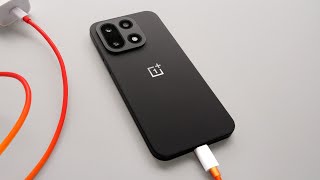

5,000mAh vs 10,000mAh: Same Size?
45sShocking battery capacity difference in same-sized phones sparks curiosity about new tech.
▶ Play Clip"The title accurately reflects the video's focus on the problems delaying Silicon Carbon battery adoption."
This video explores why major smartphone manufacturers like Samsung and Apple are hesitant to adopt Silicon Carbon batteries, despite their higher energy density. The creator reveals that concerns about battery swelling and longevity, particularly in real-world conditions, are the primary reasons for this caution.
Silicon Carbon batteries offer higher energy density, allowing for larger capacities in the same footprint, as seen in phones like the Xiaomi 14 Ultra with a 10,000 mAh battery.
Chinese manufacturers like Honor, Oppo, and Huawei have adopted Silicon Carbon, while Samsung, Google, and Apple have not, despite the benefits.
Silicon expands up to 300% when absorbing lithium ions during charging, causing mechanical stress that can lead to cracking and potential thermal runaway.
Lab tests show a failure rate under 1 in 250,000, but real-world conditions (heat, cold, humidity) may increase risks, making companies cautious at scale.
Apple and Samsung have less incentive to take risks due to ecosystem lock-in and a focus on reliability, especially in markets where users are less likely to switch brands.
Silicon Carbon batteries are a promising but still immature technology. While they offer significant capacity gains, concerns about swelling and long-term reliability have led major Western manufacturers to wait for more real-world data before adopting them.
What is the main advantage of Silicon Carbon batteries over traditional lithium-ion batteries?
Higher energy density, allowing larger battery capacities in the same physical footprint.
01:25
Why does silicon cause swelling in batteries?
Silicon expands up to 300% when absorbing lithium ions during charging, causing mechanical stress.
03:52
What is the potential consequence of silicon cracking in a battery?
It can lead to thermal runaway, which is dangerous.
05:12
What failure rate do lab tests show for Silicon Carbon batteries?
Under 1 in 250,000.
06:05
Why are Apple and Samsung hesitant to adopt Silicon Carbon batteries?
Due to concerns about swelling and longevity, and because they have less incentive to take risks due to ecosystem lock-in.
07:05
Capacity Leap
Demonstrates the dramatic improvement Silicon Carbon enables, resetting expectations for battery life.
01:39Swelling Concern
Reveals the core technical challenge that makes manufacturers cautious.
03:13Thermal Runaway Risk
Highlights the safety implications of silicon cracking, a critical issue for consumer devices.
05:12Testing vs Reality
Explains why lab tests may not fully capture real-world failure rates, a key reason for caution.
06:05Market Strategy
Connects technical risk to business strategy, explaining why Apple and Samsung are waiting.
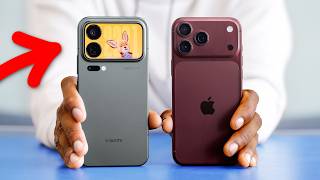
07:05[00:02] It has about a 5,000 milliamp-hour battery, yes, it's absolutely a clone of the iPhone, but it's also thinner than the iPhone and has a 10,000 milliamp-hour battery.
[00:16] There are many phones out now with absolutely massive batteries, but without actually making the phones any thicker... called Silicon Carbon.
[00:30] So if you're a subscriber, then you've already heard me talk a lot, Silicon Carbon batteries and how great they are and how they're even perfect like enabling the ultra-thin ones like Galaxy S25 Edge and iPhone Air,
[00:45] But still with Silicon Carbon, have normal battery capacities. In fact, a lot of phones, competitive flagship phones, that have skipped the Silicon Carbon battery.
[01:00] and Apple are just waiting on the sidelines and not touching this new battery And I finally think I know why.
[01:12] these new smartphone batteries. it would seem like Silicon Carbon is a no-brainer. especially if you're just looking at the benefits.
[01:25] out graphite and use silicon, So the main advantage is higher energy density. way bigger battery capacities in the same footprint as always.
[01:39] and it made this huge jump from 5,400 milliamp-hours to... And then later the same year
[01:51] So it just felt like we are resetting what to expect from a smartphone battery. But of course, like I mentioned, new Samsung phones keep coming out, New iPhones have been coming out, no Silicon Carbon.
[02:05] and so people of course are talking about it. and a couple other YouTubers have also shared, these are huge companies that are going to ask for massive quantities
[02:19] So with a brand new tech like Silicon Carbon... 10 million of these things for your new iPhone. understandable if that's true. But then again,
[02:34] and they're using Silicon Carbon in all their flagships and Honor and Oppo and Huawei and all these companies using tons of Silicon meanwhile, Google's over here with the Pixel,
[02:47] So maybe that's not the whole story. So then I recalled I've gotten a few emails in the past year and I won't say which companies they work for,
[03:00] individually, they'd each reached out to me that there are some concerns with Silicon Carbon batteries... and all of their stories matched up about a totally different concern
[03:13] swelling and longevity. Now, I had only seen that in these emails, and people that I know... and now that I've heard back from them,
[03:25] this is the main reason that we're not seeing this tech one thing about batteries is that as they charge and discharge, just like almost any other material.
[03:39] It's why bridges have expansion joints. Basically, right? expands while cooling,
[03:52] and if that happens too fast, it cracks. the silicon heats up and absorbs lithium ions. And when that happens, the silicon can expand to three...
[04:07] imagine a sponge that triples in size when wet and then shrinks back down Eventually things are probably going to crack.
[04:20] if you want to clean the ice off your car windshield really fast, that because that could literally shatter your windshield because in the battery,
[04:34] really finely ground instead of a solid block to avoid the mechanical stresses... is actually there just to absorb the expansion.
[04:46] So everyone's messing around and trying to tune it... Some companies are willing to include a higher and higher percentage of silicon because that lets you get a higher and higher battery capacity in the same space.
[04:59] And so they also have to do their best to manage the inevitable It's just physics or chemistry. that have a literal
[05:12] And then the cracking in this case... which is obviously really bad news... some type of thermal runaway, which
[05:26] And so you might be thinking, "Oh, what about all the testing?" Like, that's one of the most common things we hear from these companies is 80% battery capacity after 1,000 charge cycles.
[05:40] So trying to give us some confidence in the longevity of these batteries because that should make it survive years of regular use. batteries obviously go through a lot more in regular use than
[05:53] they deal with a lot of outside heat and cold, there's humidity changes, So testing is really important, of course!
[06:05] a battery might experience my source mentions that with all the thorough testing going on, down to a rate of under... 1 in 250,000
[06:20] Like if you have an error rate of something that's under 1 in 250,000, that's a very rare issue and you should be good to go. scale, if it's tens of millions of phones,
[06:35] That could still be So since there isn't quite enough real-world data yet, some companies are choosing
[06:49] regular lithium-ion batteries. And you know, not using Silicon Carbon? But there's also something else they all have in common,
[07:05] operate or at least have a big presence... in America. especially There's all this ecosystem lock-in and inherently
[07:17] So if people aren't going to buy the new iPhone because they're not switching off of the iPhone because of some other
[07:29] then there is no reason for Apple to take that risk But in other markets where people can just use WhatsApp and be happy about it, So if one phone has a...
[07:44] and the other one feels like they're being left behind, this will be fascinating to watch it play out. Silicon Carbon batteries are still a bleeding-edge technology.
[07:59] and lithium-ion batteries are still the safe bet. there's this divide now. So we'll have to keep an eye on how these the first ones came out about three years ago,
[08:12] but there's been a lot more out in the real world in the past year. and maybe in a year or two we'll have a lot more real-world data. Thanks for watching.
[08:25] Catch you in the next one... Peace!

⚡ Saved you 0h 08m reading this? Transcribe any YouTube video for free — no signup needed.