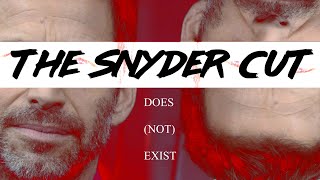

The Snyder Cut Is Real... But It's a Mess
59sThis reveals the shocking truth that the Snyder Cut is only a rough workprint, not a finished masterpiece, which will surprise fans.
▶ Play Clip"Title is clever and accurately reflects the nuanced argument, but the video is longer and more detailed than expected."
The video explores the controversial existence of Zack Snyder's director's cut of Justice League, known as the 'Snyder Cut,' analyzing what it actually is versus fan expectations. It explains the technical and economic reasons why a finished version is improbable, and examines the political barriers at Warner Bros. that have prevented its release.
The creator originally wrote about the Snyder Cut in 2017, but the topic re-emerged in December 2019, prompting this analysis.
Justice League opened November 17, 2017, to middling reviews, grossing under $660M worldwide against a $300-350M budget, falling short of Warner Bros.' billion-dollar expectations.
Fans blame studio meddling and a critic conspiracy, but the video states that the first is wishful thinking and the second is fantasy.
Zack Snyder stepped away due to a family tragedy, and Joss Whedon took over. Whedon's role expanded from minor additional photography to a full two-month reshoot period.
A notable reshoot conflict involved digitally removing Henry Cavill's mustache for Mission Impossible 6, resulting in poor VFX. The final film feels like an uneven mashup of Snyder and Whedon's styles.
Fans started the 'Release the Snyder Cut' petition. Snyder has leaned into the phenomenon, posting a photo of film canisters labeled 'Justice League Director's Cut' with a 214-minute runtime.
A version of the film exists on hard drives, but it is a work print from about three months before release, with incomplete VFX, temp scores, and ungraded scenes. It is not a finished film.
Effects-heavy films are made piecemeal. Picture lock is a social agreement, not a physical state, meaning the film was never fully completed visually.
Many scenes were planned for reshoots or were never shot. The Snyder Cut would have holes where shots were changed or never completed.
Reshoots are routine in blockbusters, but extensive reshoots like those for Justice League indicate a film in dire straits. The core plot remained unchanged despite changes.
The planned 170-minute runtime was cut to 118 minutes for theaters. A 214-minute cut was never viable due to theater turnaround times and scheduling.
The Snyder Cut was probably bloated, unfocused, and overly long, similar to Batman v Superman. It would be an incomplete work print with unfinished VFX and missing connective tissue.
The creator expresses interest in seeing a work print, but Warner Bros. is unlikely to release it due to political reasons, potential union issues, and the cost of finishing VFX (estimated at $30-40 million).
Rumors suggest the Snyder Cut might be released on HBO Max as a subscriber draw. Gal Gadot, Ben Affleck, and Jason Momoa tweeted the hashtag, possibly as part of a promotional campaign.
Unconfirmed reports claim Snyder self-funded completion of his cut and is negotiating with Warner Bros. Even if released, it would still be compromised due to unfilmed scenes and limited resources.
The Snyder Cut exists as an incomplete work print, but a finished version is unlikely due to cost, political barriers, and potential quality issues. Rumors of an HBO Max release might be the only path forward, but even then it would be a compromised product.
What is 'picture lock' in film production?
A social agreement between departments to stop changing shot choices, length, and order so that post-production can begin.
05:42
How much did Justice League cost to produce (excluding promotion)?
Between $300 and $350 million.
00:44
What was the worldwide box office of Justice League?
A little under $660 million.
00:59
Why did Zack Snyder leave Justice League?
To focus on grieving a family tragedy.
01:45
How long is the director's cut work print that Snyder posted?
214 minutes (3 hours, 34 minutes).
03:59
What does the term 'soft lock' mean?
A euphemistic term indicating a loose picture lock where changes are still possible.
05:54
How much would it cost to finish the incomplete VFX in the Snyder Cut?
Estimated $30-40 million.
14:17
Name three films that underwent extensive reshoots late in production, mentioned in the video.
Fantastic Four (2015), Suicide Squad (2016), Rogue One (2016).
08:03
Why is a 214-minute runtime problematic for theaters?
It makes it difficult to schedule three showings per screen per night without staying open until 3 a.m.
11:06
What evidence suggests a possible promotional campaign for the Snyder Cut in 2019?
Gal Gadot and Ben Affleck, who rarely tweet, posted the 'ReleaseTheSnyderCut' hashtag on the two-year anniversary of the film's release.
16:19
The Snyder Cut is an incomplete work print
Clarifies that the fan-desired cut is not a finished film but a rough assembly with missing VFX and temp elements.
04:17Picture lock is a social agreement
Demystifies a technical term often misinterpreted by fans as meaning the film was complete.
05:42Theatrical runtime constraints
Highlights economic realities that prevent directors from releasing overly long cuts, even if they exist.
10:16Cost to finish the Snyder Cut
Quantifies the financial barrier to completing the film, making release unlikely.
14:17HBO Max rumors and political cover
Explains how a streaming release could provide a face-saving way for Warner Bros. to release the cut.
15:51[00:00] So, I originally wrote three pages of this script about the Snyder Cut of Justice League in December 2017, and I figured that by the time I got it out it would have blown over, and no one would care anymore.
[00:15] Well, now it's December 2019, so let's talk about why the Zack Snyder cut of Justice League both does and does not exist.
[00:31] Warner Bros.' Justice League, the last Snyder-helmed entry in the DC Extended Universe, and a direct sequel to 2016's Batman v Superman: Dawn of Justice, opened on November 17th 2017
[00:44] to largely middling reviews and lukewarm audience reception. The film, which cost between 300 and 350 million dollars, excluding promotion, underperformed at the box office, surpassing its strict production budget
[00:59] with a worldwide box office of a little under 660 million, but falling far short of the billion dollar return Warner Bros. was hoping for, which would have placed it in the same competitive category as Disney's Star Wars and Avengers films.
[01:14] The film has turned a reasonable profit in the long run, between box office and home release, but you don't put 350 million dollars into a movie just to get a reasonable profit. on a combination of studio meddling and a conspiracy of critics who, fans claim,
[01:33] The first of those is wishful thinking, while the second is pure fantasy. Now, the final run of Justice League's development was troubled.
[01:45] Zack Snyder withdrew as head of the project to be with family and focus on grieving. Simultaneously, Joss Whedon was brought on board to take his place and helm the final delivery of the film.
[01:59] While this was initially presented as Joss essentially just running it in and overseeing some minor additional photography Joss's involvement rapidly ballooned. Rumours had already been circulating that Warner
[02:13] Bros. weren't happy with the film, including specific allegations that executives called the film unwatchable after a screening in April. The suspicion is that while Snyder stepped back for reasons of personal tragedy, this provided the opportunity for executives at Warner Bros. to cut him out entirely.
[02:30] This suspicion is supported by the expansion of the additional photography from two weeks to two months, This additional photography included a particularly high-profile conflict
[02:44] with Superman actor Henry Cavill's role on the then-upcoming Universal film Mission Impossible Six that required Warner Bros. to digitally remove Cavill's mustache from all the new footage, an effect that is...
[02:56] not very good. As an end result, critics and audiences largely agree that the final film distinctly feels like an uneven mashup of the two directors' styles. Not a merger,
[03:08] films starring the same actors had just been cut together. A particularly aggressive slice of the fandom has, in response started, a petition the film as it was before Whedon was brought on board, under the banner
[03:27] "Release The Snyder Cut". Zack Snyder himself has, over the course of 2019, increasingly leaned in on the "Release the Snyder Cut" phenomenon, which I, I mean It directly serves his ego and the fact that Warner Bros. hasn't let him anywhere near a director's chair since 2017,
[03:45] to the point that Snyder had to take Army of the Dead to Netflix after a seven-film run with Warners. In early December 2019 Zack Snyder, posted a photo on Vero of a rack of film canisters labeled "Justice League Director's Cut, running time
[03:59] 214 minutes," with the overlaid text "Is it real? Does it exist? Does the Snyder Cut exist? depending on your definition of "exist."
[04:17] Now, just to be clear, there is, saved to a hard drive somewhere, a version of the film Justice League that could be called "The Zack Snyder Cut." There is a rack of film canisters containing a three-and-a-half-hour version of Justice League.
[04:31] The problem is that it doesn't look like this, It looks like this:
[04:46] a version of the film as it existed about three months before release. It is highly instructive for our purposes here because it clearly demonstrates the piecemeal nature in which effects-heavy films are finished.
[05:01] Films aren't made like Apocalypse Now anymore where, there's a million feet of footage the director can endlessly recombine into a more or less finished movie. Almost every single frame of Justice League involves some degree of manipulation.
[05:16] Elements like sky replacements, fog and particle effects, vehicle replacements background, signs, logos, costumes, Now, the petition writers assert that there is a more or less complete Snyder version of the movie,
[05:30] stemming from misunderstanding some tweets by Larry Fong The petition's conspiracy hinges on a misunderstanding of the term "picture lock,"
[05:42] It is not the point where the image is complete, but the point where these shot choices, shot length, scene order, and core editing are more or less done.
[05:54] In practice, It's a very loose term, and the euphemistic phrase "soft lock" is often thrown around on productions. It's not a physical state, but a social agreement between departments to stop changing things.
[06:09] The point of picture lock is to get the film to a point where other post-production departments, like digital graphics, digital effects, Foley sound mixing, and score can start working
[06:22] without too much of a risk that their work is going to go to waste, that they're not going to spend a week rotoscoping wires just for the shot to be replaced with an alternate take or a different angle once they're done.
[06:34] This all means that picture lock-on effects heavy films tend to roll out in chunks, basis in order to allow the effects team to get to work.
[06:47] Since digital effects on films like Justice League can take upwards of two years, this even leads to some scenes being edited and locked while the movie is still being shot. There are scenes and shots that are identical to their theatrical versions, including Foley, score, and colour grade,
[07:06] but these are right next to scenes that are ungraded, incomplete, with temp effects and score. And, remember, this version was a mere three months before the film was released.
[07:18] A version of Justice League from over six months before release is going to be even more extreme, especially since there were segments Snyder was already planning to reshoot, So, when Justice League went into 8 weeks of additional photography,
[07:33] there were three possible outcomes for any given scene that Snyder already planned to reshoot: one, the scene was shot according to his instructions; two, the scene was shot, but changed from his plan;
[07:47] That leaves a lot of potential holes in any possible Snyder cut, including scenes that now So, now let's take a bit to talk about what reshoots and additional photography are,
[08:03] following a series of films that underwent extensive reshoots late in production, and this includes Josh Trank's Fantastic Four, David Ayer's Suicide Squad, Gareth Edwards' Rogue One.
[08:18] Modern, effects-heavy films all have a phase of additional photography and reshoots. The movies are so big and complex with so much that involves actors working opposite tennis balls in an empty greenroom
[08:32] that it's inevitable that some of it just isn't going to stitch together. Typical, routine, boring reshoots consist of correcting eye lines, maybe redoing a few lines or a bit of action to make it all flow.
[08:45] Maybe a subplot is dropped during editing and a new minute or two of dialogue is written to patch the gaps left behind, or test audiences don't understand why a thing happens Or maybe in the case of Suicide Squad, in addition to being six hours long,
[09:02] the producer decides that Steppenwolf is now going to be the villain of Justice League, so you now need to rewrite and reshoot everything in your movie that directly involves the antagonists. These more dramatic instances in recent years are films that are in some state, real or imagined,
[09:18] that the studio considers to be dire, whether they consider it to be unmarketable, The released version of Fantastic Four is abysmal, but the Trank cut was probably not in and of itself any better,
[09:33] because the Trank footage... isn't good. It's worth noting here that while the theatrical cut of Justice League is substantially different from the state of the film when Snyder left, no one has disputed that the core plot remained untouched.
[09:47] I mean, it's still a sequel to Batman v Superman. There are still the fundamental problems with the way that Snyder tells a story especially when Snyder himself has talked a lot about how much dropped footage
[10:03] What I'm saying is the Snyder Cut almost certainly had very real problems. The next critical factor is the substantial change in planned runtime.
[10:16] As of August 2017, Warners were telling film buyers to expect a 170 minute runtime, a length that was cut by almost an hour down to 118 minutes in October. 44 minutes shorter than the 10-reel director's cut photographed for Vero.
[10:35] That 10-reel version was never going to go to audiences. The economics of theatrical distribution are pretty hostile to films over three hours long, even during the aughts. While Lord of the Rings was riding high, and movie runtimes definitely crept upwards,
[10:51] blockbuster films like The Dark Knight and Watchmen still came in under three hours. Exhibitors really aren't super fond of any movie over two and a half hours, because that's getting into the range where there's not a lot of time to turn over the theatre between shows
[11:06] if you still want to fit in three showings per screen per night, it's basically impossible to do three showings without paying staff to stay until 3:00 a.m.,
[11:18] which is really not worth it unless it's a film that can guarantee butts in seats. Even in 2019, shady-ass corporation Disney, were worried about the 3 hour, 9 minute runtime of Avengers: Endgame,
[11:34] and that was the sequel to the fourth highest-grossing film of all time. So unless Zack Snyder is incredibly bad at his job and completely oblivious to the economics of making and releasing films, he wasn't done editing his movie.
[11:49] These issues: the movie being visually incomplete at the time Snyder left the project, planned footage that was never shot, and a work print runtime that was never going to go to theatres,
[12:02] this gives us a pretty good idea of what the Snyder Cut would look like. It's a work print full, of unfinished VFX, overly long scenes, bloated side content, and missing connective tissue. And, like Fantastic Four, or even just Batman v Superman before it,
[12:18] By the accounts that have trickled out over the past couple years, it was probably in a very similar state to Batman v Superman, and the pre-reshoots version of Suicide Squad:
[12:33] bloated, unfocused, overly long, pointlessly grim, and just not particularly good. The list of cut characters, including Atom, Elinore Stone, Nuidis Vulko, Darkseid, Desaad, Martian Manhunter, and Heggra,
[12:46] points to a movie suffering from all the same problems as the films that preceded it: overstuffed with setup and cameos at the expense of pacing, payoff, and plot. I would actually be really interested in seeing the Snyder Cut,
[13:04] I have no problem watching an incomplete movie where 10 minutes are just storyboards or previous comps of a t-pose Superman flying at a static image of Steppenwolf,
[13:16] or actors in a green room wearing motion-capture pajamas. If anything, I think a work print would be more Interesting than a finished version not impossible, but really, really unlikely.
[13:33] The biggest problem is that Warners, and Snyder himself, are unlikely to be willing to release a work print, never mind that there might be substantial complications with various guild and union contracts, stemming from commercially releasing a work print when a theatrical version exists.
[13:48] Now, that part can probably be sidestepped by releasing it as a "bonus feature" with a special edition Blu-ray, but I, I don't know, because no one to my knowledge has ever done it,
[14:02] But, springing from that problem, that Warners and Snyder don't want to release an incomplete movie, is the cost: VFX experts have estimated that the combined cost of finishing scenes that weren't completed
[14:17] would probably cost another 30 to 40 million dollars, and it's a big question mark as to whether or not that would be worth it when the result is unlikely to draw mass attention or even substantially improve the end product.
[14:33] Warner Bros. just doesn't want to, because they hold all the cards and don't want to look like they caved From a political perspective, it is seemingly a lose-lose for Warner Bros.
[14:51] Like, okay, either the Snyder Cut sucks just as bad as Batman v Superman, being the same bloated, incoherent mess as Snyder's other two Superman movies, If the movie isn't particularly good or it's even only kind of slightly better,
[15:07] finishing a movie that only the most hardcore fans and cinephiles will care about. then they look like the dumbasses who ruined a movie,
[15:20] and the people who would get fired are the same people who currently get to decide if it ever gets released. either as a work print or as a finished movie, and this is almost certainly why it didn't surface as an
[15:39] extended edition, director's cut, or even in chunks of bonus features on the home video release. All that's unlikely to change without substantial internal changes in priorities or leadership.
[15:51] There are rumours that began circulating in November 2019 that the Snyder Cut of Justice League will be available on Warner Media's HBO Max streaming service when the service launches in May 2020.
[16:06] Using the cut as a teaser to draw subscribers to a subscription platform might just provide enough layers of politically convenient cover for Warners to feel like it's a win,
[16:19] especially since the margins on a subscription service are much higher than on a single Blu-ray. that on the two-year anniversary of the film's release, Gal Gadot, Ben Affleck, and Jason Momoa posted the hashtag on social media.
[16:35] Now, the reason that's persuasive is the Gal Gadot and Ben Affleck don't tweet. There's functionally no personal content, in contrast to Jason Momoa, whose Instagram is full of personal stuff,
[16:49] from selfies to political statements defending the land rights of Native Hawaiians. The point is that Affleck and Gadot are unlikely to have just tweeted the hashtag for fun, and it is reasonable to assume it's part of a promotional campaign.
[17:04] insinuate the Snyder self-funded the completion of a cut of Justice League, and is at present in negotiation with Warners there are also conflicting reports that the version that might maybe
[17:19] possibly be released to HBO Max might in fact be a work print; a rumour seemingly supported by Snyder posting numerous screen-grabs of incomplete effects shots to his Vero account. but the rumours are an interesting narrative in and of themselves,
[17:36] regardless of whether or not the Snyder Cut does surface on HBO Max. This possibility actually presents a really interesting third outcome to all of this. If Snyder has self-funded completion of his version of the film,
[17:49] it would still be a compromised version, owing to scenes that remain unfilmed, the lesser resources available when self-funding the finished work, and it will remain a hilarious setup for now-cancelled sequels and spin-offs,
[18:02] but it will probably at least be a really interesting comparison.


⚡ Saved you 0h 18m reading this? Transcribe any YouTube video for free — no signup needed.